
Adam Richman Delves Deep Into Pizzas, Drive-Thrus & More in ‘The Food That Built America’



Exclusive
What To Know
- The Food That Built America returns for its seventh season on April 19.
- Host Adam Richman highlights how the show connects viewers to the personal and historical stories behind beloved brands, evoking nostalgia and deeper appreciation for their origins.
- The series also reflects on the evolution of food culture.
If you were hungry for more of The Food That Built America, you’re in luck. The History Channel series is serving up more helpings of its popular series with its Season 7 premiere on April 19. Some of the origin stories this time around include top brands of bubblegum (Fleer, Life Savers, Wrigley’s), crackers (Triscuit, Ritz, Cheez-It, Wheat Thins, Goldfish), rice (Uncle Ben’s, Minute Rice, Rice-A-Roni), iced-tea (Snapple, Arizona, Lipton), the drive-thru (In-N-Out, Jack in the Box, McDonald’s), and more.
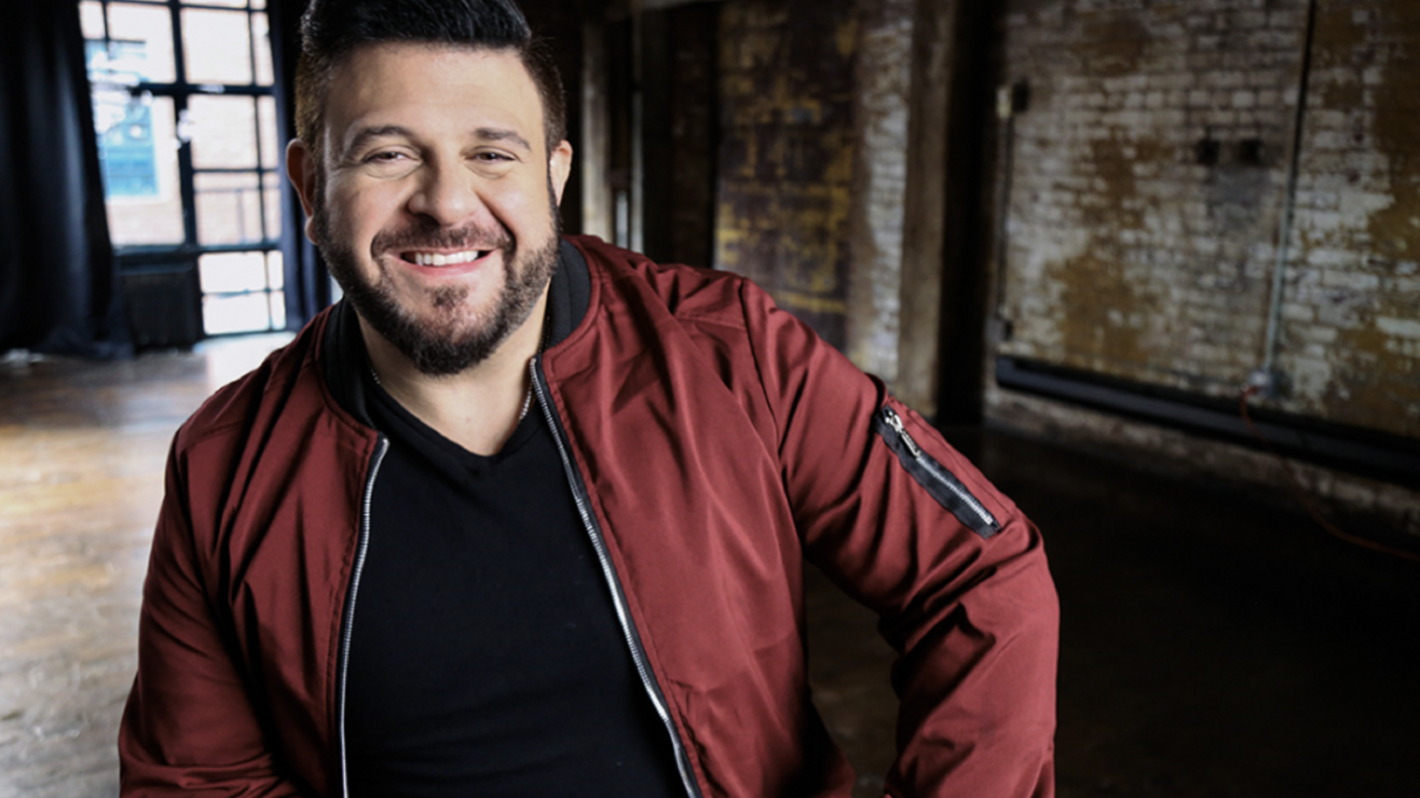
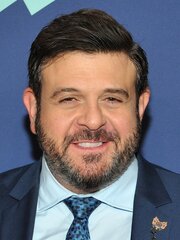
Kicking things off is an episode centered on four pizza power players Little Caesars, Pizza Hut, Domino’s, and Papa Johns. Each episode is chock-full of insight about the movers and shakers who often went from humble beginnings to big business. Among those who help tell these tales, complemented by the reenactments, is Adam Richman. The Man v. Food TV personality and author has been an authority on various culinary projects over the years. Here the 51-year-old opens up about his emotional connection to The Food That Built America.
We’re going into Season 7 of the series. How is it for you to see viewers still have such an appetite for the show?
Adam Richman: Honestly, you have a more educated and interested eater. When this show began or even when my show started in the late 2008, you had the food landscape that was pretty much this non-scripted place of stand and stir TV shows. Maybe 40 percent of the population might have known what Sriracha was. Now you have Lay’s making Sriracha flavored potato chips. One of the hottest shows on TV is called The Bear, and it’s about chefs. Then you have music producers like Benny Blanco super mired in the food world. I think you have people that have a vested interest in food. It’s much greater than this passing interest people might have had.
Now people want to dig deeper and want to go off the beaten path to find the best empanadas. They want more knowledge about the food landscape of which they live. I think the show is able to impart these amazing origin stories behind these iconic brands that in no uncertain way built the country. But it does it in this wildly entertaining, really immediate human kind of way. I think people grew up on these brands. The thing is they love the brand, but I would venture to say a fraction of them know where they came from or the human story behind them. I think it’s compelling. I’m a big Oasis fan. There is something about listening to the music and liking the music versus finding out where they come from and suddenly the music comes alive in a whole new way. So, that is what this show does.
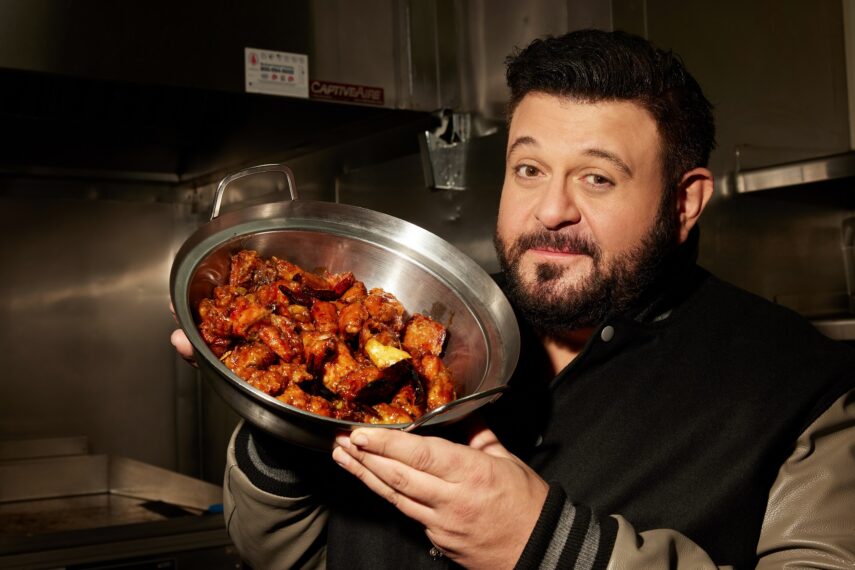
Adam Eats The 80’s Panda Express (History Channel)
Is there an episode you were most excited to tackle?
I think that every season always finds a way to top it. They’ll tell me what brands are going to cover before I start doing the research for The Food That Built America or Mega-Brands That Built America. Sometimes I have an inkling for the story, and sometimes I don’t have any clue. I wish I could put one above the other. To me, there is a certain brand I have a direct personal memory with. I have a very clear memory of my first pouch of Big League Chew on the bench of Little League. I have a very clear memory of going to my first Pizza Hut because they didn’t have them in Brooklyn. Going out to Long Island for a sports practice, and my mom was driving my buddy and I home, and we begged her to stop at Pizza Hut.
I remember very clearly actually getting teary. This might sound silly to someone who isn’t me. There was the peanut butter episode. I love it as an entity or religion or fact it exists in the world. There used to be this great commercial I think for Skippy where it was a dad and his son, and they were making a little snack with peanut butter on one slice of bread. The dad folded it up in half. I’m going to get weepy here. The son asked why the dad folded the bread in half. “Well, my dad used to do that. I wanted to be like my dad.” The son folds his own. My parents were divorced and my parents had joint custody of me. I was at my dad’s house. We had seen this commercial. We were taking a break from what we were doing and made that thing. My dad folded his, and I folded mine. I remember talking about it on camera and in spite of myself weeping. It’s what the brands are that connect with you.
Watching the premiere with the pizza episode I thought about Book It for Pizza Hut, even though it wasn’t covered. So I get how these shows bring up memories.
That’s a perfect example. I didn’t have Little Caesars until well into my adulthood because geographically there was no access point. I grew up in Brooklyn, so I was having neighborhood pizza. Run away to college in Georgia where you can order Domino’s with your meal card. It was just this commercial, so I had no connection with the brand. You get older and there are corporate parties for the places you work. You go, “Oh, now I want to know more about the brand.” The story of the brand is bananas. The way the owner came up with the idea of Crazy Bread. Taking something that would have been a waste stream and turned it into a revenue stream is so brilliant. To me, it’s those moments. Let me get this straight Mike Ilitch played minor league for the Detroit Tigers. Then starts Little Caesars. Then when the dude who founded Domino’s [Tom Monaghan] needs to raise capital he sells the Detroit Tigers to Mike Ilitch. The guy who was cut from the minor league there now owns the team. Those full-circle stories are so cool. The fact one of the founders of Pizza Hut left to co-found Papa John’s too. That stuff is so incredible.
The episode on drive-thrus delves into In-N-Out Burger. They stuck to a regional model for so long. What are your thoughts on these companies branching out?
I think of Jack in the Box too, which is a very regional chain where I remember Johnny Carson saying disparaging stuff about them in his monologue one night. The idea was that someone with military experience took a military CB radio and put it in the clown’s head to create this brilliant thing. In-N-Out is interesting because they resisted expansion east of the Mississippi simply because of their quality control. They wanted to make sure you get meat from this place, potatoes from this place, etc. It’s how they are continually respected and lauded because their consistency and quality. I think the demand is there. With the internet and influencers going to film things suddenly, somehow someone is reading about Double-Double Animal Style in New Jersey and wants one of those and doesn’t want to have to go to Vegas or Arizona or California. They want to go to Union Square. There is a Jollibee right now. There is Hey Donuts. The internet makes the world smaller with a more informed eater and how to know these things and try these things. That’s why we have viral foods simply because oh I saw this empanada in queens pop on my algorithm and get one. Let me hop on the M train to get one.
What do you make of the evolution of food programming and you being a part of it?
It’s amazing. Honestly, to have been part of that wave before the internet really dominated the food space is an honor. I sit on the shoulders of giants. I think about Andrew Zimmern and Anthony Bourdain. When I started on Travel Channel we were the three food shows. Tony had just come over from Food Network and was doing No Reservations. Andrew Zimmern and Bizarre Foods, and I was the rookie. The fact Andrew agreed to be on my show for the first season. The fact Tony and I forged a friendship largely because I didn’t force the matter. Of course, I asked about him when I first got hired. We ended up doing stuff. I did his holiday special. He did my best sandwich show.
View this post on Instagram
Back in the day I watched Molto Mario, Emeril, and Bobby Flay. Now you see where food touches everything where shows like Chef’s Table can make it breathtakingly cinematic. Where movies like Chef, Big Night, The Hundred-Foot Journey, Chocolat, even Wonka to a different degree. We now see food for a conduit for storytelling. You got to the James Beard Awards and there is a whole new class of award that is for an internet series, televised series, host. I think the fact a kid from Brooklyn is able to be a recognizable and knock on wood food entity in the United Kingdom and Australia and Brazil and Italy is out of this world and speaks to the universality of food. I think if you have a good production team and a very clear concept and try to do your own thing…George Motz is the burger guy. Alvin Cailan is a different kind of burger guy. Jack Goldberg has created a tastemakers society with Jack’s Dining Room. People now go, “Okay, it’s more than just a meal.” That’s the colony of good TV and content. The best shorts shows are watched by non-sports fans. If you make a food show for a nonfood show you got something.
Speaking of online, how was it talking steak with Bryan Cranston for the First We Feast YouTube channel?
The man knows food. He appreciates food. We only got him because the guys from Gallaghers knew him and had a connection to him… I knew he didn’t want me calling him Heisenberg or saying, “You’re not the boss of me now.” I knew there had to be this balance and try to get the man…He is just a guy who has a place in Manhattan and lives elsewhere and loves a good steak. Very specific about what he wants on his iceberg salad. Speaking with someone so knowledgeable about television, the fact I was able to go to Dean Norris who played Hank, on Breaking Bad, too. He has a restaurant in the Temecula area. To have filmed with Hank and Walter White within the span of a couple of months is pretty awesome. Talking to Bryan Cranston about his early appearance on Airwolf as much as grassfed and cornfed beef. You think, “Damn, food TV is cool.” We’re building bridges.
The Food That Built America Season 7 premiere, April 19, 10/9c, History Channel



















 Watchlist Easy access to only the shows you care about — all in one simple place
 Alerts Only important notifications — when a show is returning, when it becomes available to stream, and more.
 Special Offers Exclusive products we release related to your favorite shows and streaming services