
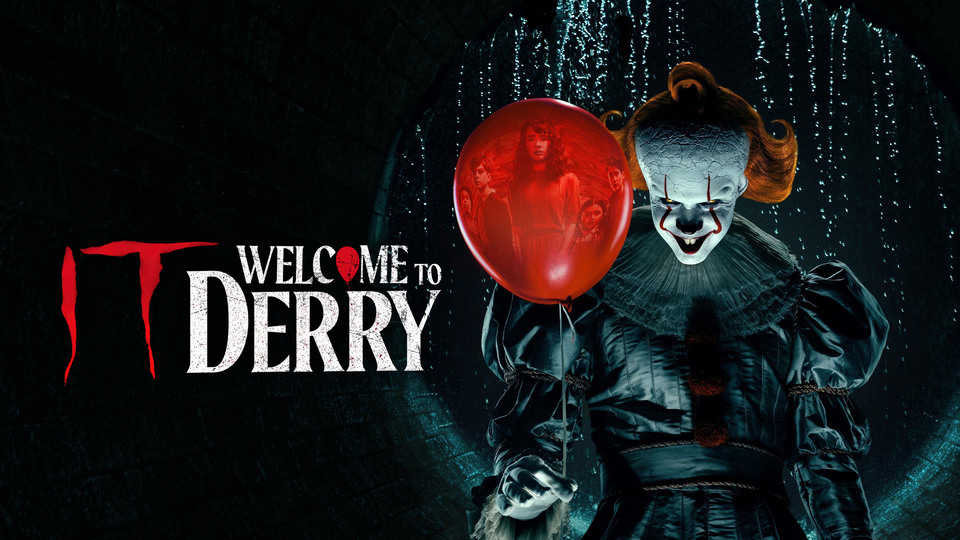
‘It: Welcome to Derry’ Creators on Brinigng the Black Spot Story to Screen With a Pennywise Twist



What To Know
- Episode 7 of It: Welcome to Derry adapts Stephen King’s infamous Black Spot interlude.
- Here, Andy and Barbara Muschietti take us inside the episode’s adaptation, including a few new twists.
[Warning: The following post contains MAJOR spoilers for It: Welcome to Derry Episode 7, “The Black Spot.”]
The book scene we’ve been looking forward to and dreading in equal measure for It: Welcome to Derry has finally arrived. And it was just as epic and horrifying as Stephen King‘s constant readers might’ve expected — maybe even more so.
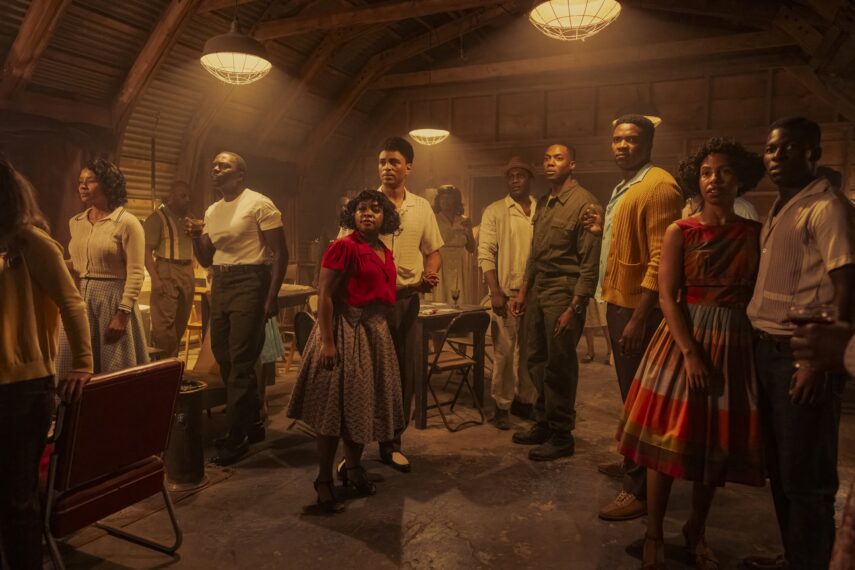
While the Black Spot hangout was a rather joyous locale in Episode 6, which saw the airmen and the kids enjoying their new dance hall with music, booze, and general merriment, things turned deadly in Episode 7 when the white nationalists stormed the place to demand Hank Grogan (Stephen Rider).
Though Hank offered to turn himself over to them, his new friends refused; after a standoff, the racists barricaded the entrances and burned the place to the ground, flaying dozens of people alive. Dick Hallorann (Chris Chalk) managed to save Hank and Ronnie (Amanda Christine), but Rich (Arian S. Cartaya) and Marge (Matilda Lawler) were trapped. Rich, citing his duty as a knight to save fair maidens, tricked Marge into crawling into a cooler and sealed it up to protect her inside, while he remained outside of the box to face asphyxiation.
Brooke Palmer / HBO
Even more horrifying, perhaps, was the revelation that this was orchestrated by Hank’s own lover, Ingrid Kersh (Madeleine Stowe), in hopes of summoning Pennywise (Bill Skarsgård), whose visage of Bob Gray convinced her It was her long-dead father.
The Black Spot sequence was one of the interludes in It that Andy and Barbara Muschietti (along with cocreator Jason Fuchs) planned to feature from the very inception of Welcome to Derry, so we caught up with the Muschiettis to talk about this pivotal penultimate episode, below.
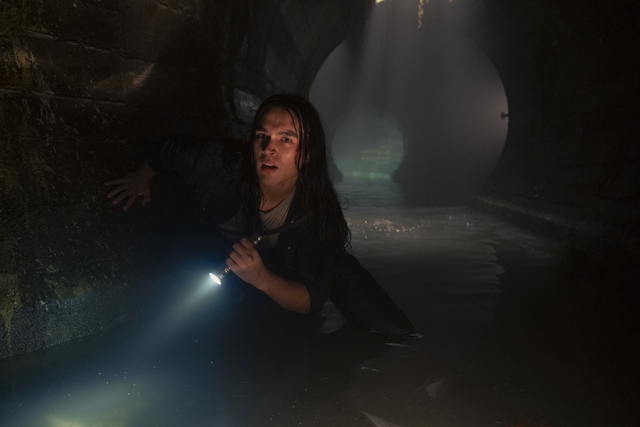
(Also, be sure to check out our brand-new aftershow for Episodes 6 and 7 above, with cast commentaries from Arian S. Cartaya, Chris Chalk, Stephen Rider, Joshua Odjick, and executive producer Brad Caleb Kane.)
To start, how did you decide on how to bring the Bob Gray storyline into how Pennywise becomes the dancing clown figure?
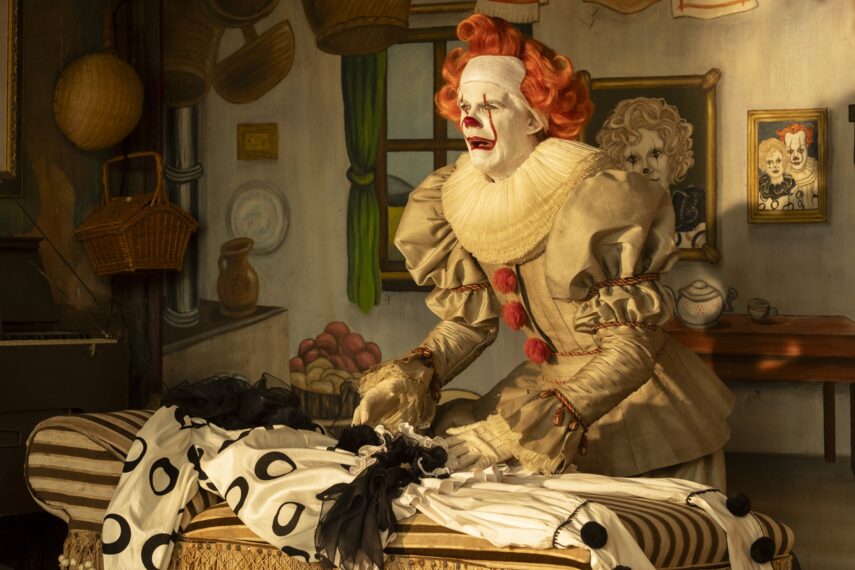
Andy Muschietti: So that was the very genesis of the project. I remember talking with Bill in 2018, we were doing It 2, and already, we were sort of speculating about, “Who was Bob Gray? Wouldn’t it be cool to make like an origin story of It?” So, it’s arguably the thing that really started the whole thing of Welcome to Derry, which is my curiosity.
Barbara Muschietti: Because in It: Chapter 2, there is a flashback to Bob Gray. It’s a short flashback, but…
Andy Muschietti: Yeah, exactly. So Bill sort of got a taste of Bob Gray, and he really liked it, and we started talking about it. And even though Bob Gray in Chapter 2 is nothing but an incarnation of It, you can tell how perverse he is. That ignited our desire to go back into it, and, as I said, arguably the reason we ended up doing Welcome to Derry. And yeah, there was a lot of consideration, “Who was Bob Gray?” A lot of questions [were] unanswered in the book. It’s such a cryptic character that we don’t really know who he was. We barely know that it’s the guy that was the clown, but that’s all. We don’t know if he was a serial killer, he was a good guy. So we had to create Bob Gray for this story, and that’s what we did.
Brooke Palmer / HBO
So you mentioned that’s a little bit from the book, but really, the main thing from the book in this first season is the Black Spot storyline. Can you just talk about the approach to that and maybe the pressure to bring that to screen life, knowing that’s the one thing book readers will already be familiar with?
Andy Muschietti: Well, the Black Spot also was one of those big tent poles when we decided to create the story. This story has a conclusive moment, even though that there’s a third act, as you will, of things happening after the Black Spot, but it is one of the big catastrophic events around which the story is built, which was the idea of the show in big terms, is making three seasons and making one season where there’s a big climatic moment based on one of the big catastrophic events of the interludes. So the Black Spot was very important for us. It was sort of like a finish line for us, and so basically everything that you see, that builds to this. It’s a buildup towards the Black Spot. All the stories converge there. And that’s why it was very important.
And also because we have to make justice to the impact of the Black Spot in the book. Such a tragic event. Such an atrocity committed, not by It, but by the people of Derry. And it’s another layer, another bit of information that tells us basically one of the big truths of the book, which is: Humans are capable of doing things as bad or worse than this monster.
Can you talk about the decision to bring Pennywise in for that beheading scene? That was one thing I did not see coming, and it was truly a showstopper right there.
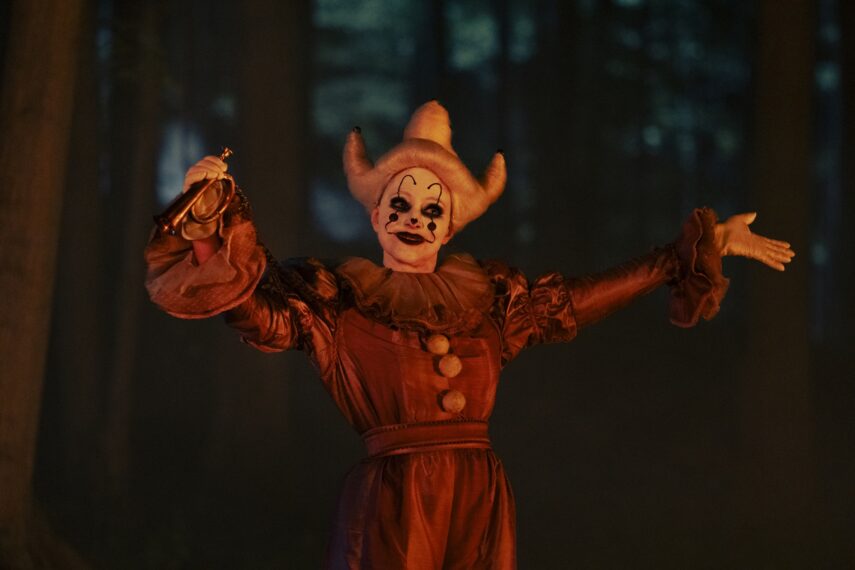
Andy Muschietti: Well, yeah, for people who read the book, Pennywise appears in the Black Spot as a huge bird in the outside. And it’s a bird that has a lot of balloons around its wings. We wanted to explore that and make a Pennywise that is more insidious, and it’s more personal to the people that are the victims of the Black Spot and targets in a more granular way… The bird was a little bit generic. The bird was very related, actually, to the generational fear of the Hanlons of birds, of crows. Mike Hanlon, in the book, he’s terrified of a crow because It basically incarnates in a big bird because when he was a child, apparently, he was attacked by a bird when he was in his stroller. But apparently, it goes back generations, and it’s one of those generational fears.
We wanted to do something a little different because we didn’t explore the bird in Mike’s story. We went for something else, which was a little more nuanced, which was the hands in the fire because of the deaths of his parents. So yeah, we definitely wanted it. Also, we wanted to sort of articulate a little more the idea that It doesn’t create these events of violent paroxysm, but basically … is attracted to them. Sometimes, of course, he creates these horrible attacks where he kills kids and lures them, but very often, especially on what we call the auguries, which are the big catastrophic events at the beginning or at the end of each cycle, he basically surfs the wave of something that is nefarious but was not created necessarily by him. He just goes there because he knows that there’s gonna be pain, and there’s gonna be fear, and he’s gonna be able to eat a lot of people losing their faith.
Brooke Palmer / HBO
It was very gross in the best way. The person Pennywise credits with that is Mrs Kersh. You were talking about him riding the wave; that whole backstory is just wild. Can you talk about creating that and how it kind of dovetails into what we already know about the character, but adds so much layer to it?
Andy Muschietti: Yeah, so it’s again, picking up the crumbs of the book. Stephen King does it masterfully because he creates these crumbs that are never solved for a good reason, which is to create tension… When adult Beverly goes back to this childhood house, expecting to see his dad, but a little lady comes, receives her, and says, “Oh, your dad has been dead for a while, but why don’t you come in and have tea and cookies?” And that turns out to be an incarnation of It, which is Ms. Kersh, who says, basically, “I’m the daughter of Bob Gray.” She turns into a crone, which is the big old witch, but that is another crumb that you can’t ignore… I think that if the daughter of Bob Gray has been in Derry all this time, we need to tell her story. So we were so curious about it: “What is her stance on all of this?”
So we created the story where basically Ms. Kersh is the daughter of the clown that was killed by the monster, but she is not aware, or she doesn’t want to recognize, that her dad is dead. She is basically tricked, because It is a trickster, into thinking that with the clown, her dad is there. And this trickster, the monster, will use her and that delusion to basically have her as its ally. And as you see in Episode 7, we understand that the one that called Clint Bowers and said, “Hank Grogan is hiding at the Black Spot,” is no one other than Ingrid Kersh. And as I said before, it’s not an event created by It. It’s an event created by a human because she knows that when there’s a large concentration of pain and fear, It seems to be attracted by it, and It appears, and she just wants to see her dad.
Stay tuned for more from our chat with the Muschiettis when It: Welcome to Derry‘s finale airs next week!
It: Welcome to Derry, Sundays, 9/8c, HBO & HBO Max








 Watchlist Easy access to only the shows you care about — all in one simple place
 Alerts Only important notifications — when a show is returning, when it becomes available to stream, and more.
 Special Offers Exclusive products we release related to your favorite shows and streaming services