
‘The Miniature Wife’ Stars Tell All About Epic Wedding Scene, That Ending & More Spoilers



Spoiler Alert
The Miniature Wife has arrived in full on Peacock, and the 10-episode dramedy has a little something for everyone: There’s raucous humor, lots of sight gags and visual dynamo, and a truly touching emotional throughline with the familial and relationship elements. Warning: Spoilers for all 10 episodes of The Miniature Wife ahead!
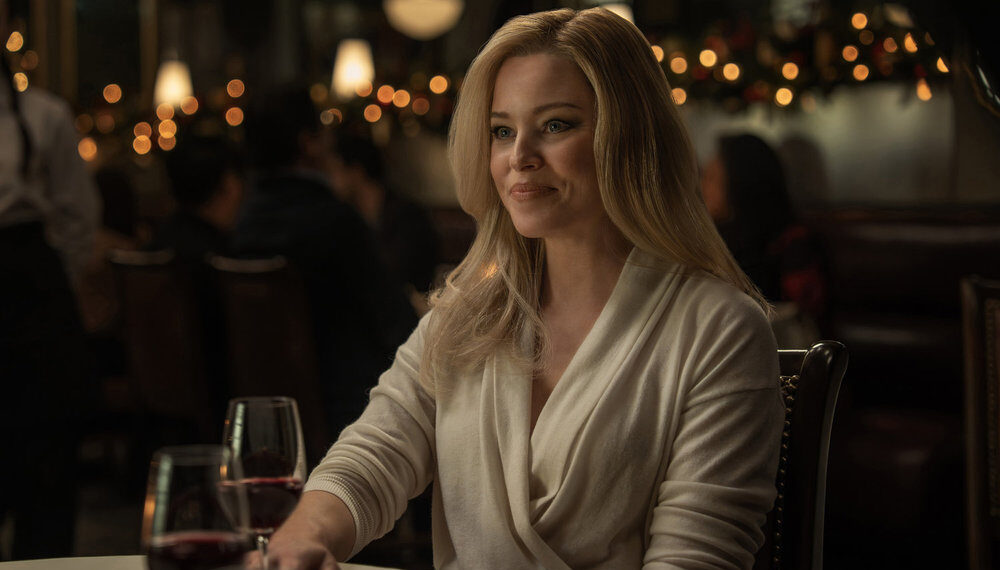
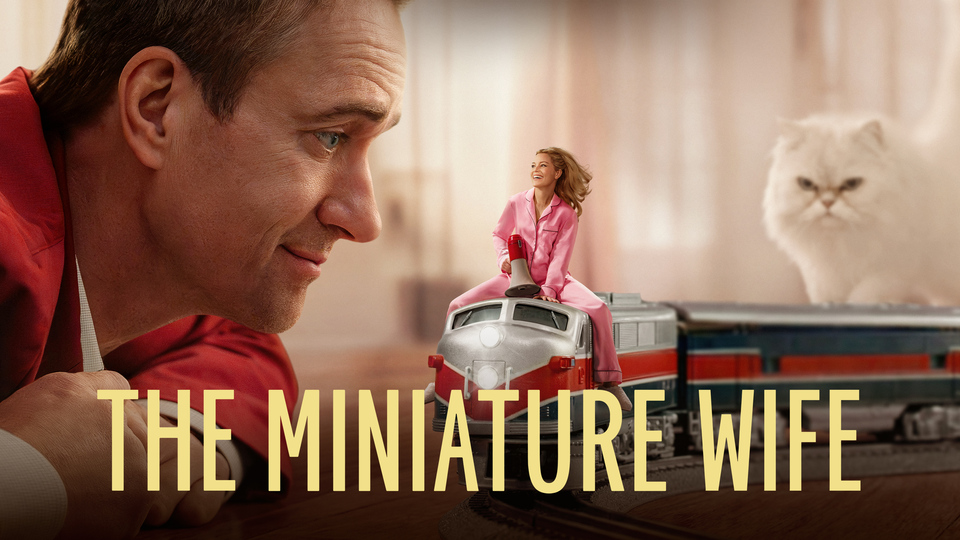
The series introduces us to Lindy (Elizabeth Banks) and Les Littlejohn (Matthew Macfadyen), a Pulitzer Prize-winning author and Nobel-hopeful scientist, respectively. The two have had a long, storied marriage that’s starting to falter, due in part to their individual ambitions. Lindy is resentful that Les’ “turn” at pursuing his dreams has landed them in St. Louis instead of New York, and he no longer respects her career aims, since she hasn’t written anything new in decades, and what she did write was essentially a fictionalized version of her own childhood experience.
Things come to a big (or little, as the case may be) head when Lindy is sprayed with his top-secret shrinking serum and wakes up to find herself 6 inches tall, living in the elaborate and mostly functional dollhouse replica of their house that he built for their daughter Lulu (Sofia Rosinsky).
From there, it’s a mad dash for Les to finalize the equation to regrow her to original size — he’s so far only had luck miniaturizing things that actually explode when he tries to blow them back up. He’s on a deadline for this not just because Lindy is impatient; his invention is also subject to a potential takeover by a billionaire if he can’t get it done on time.
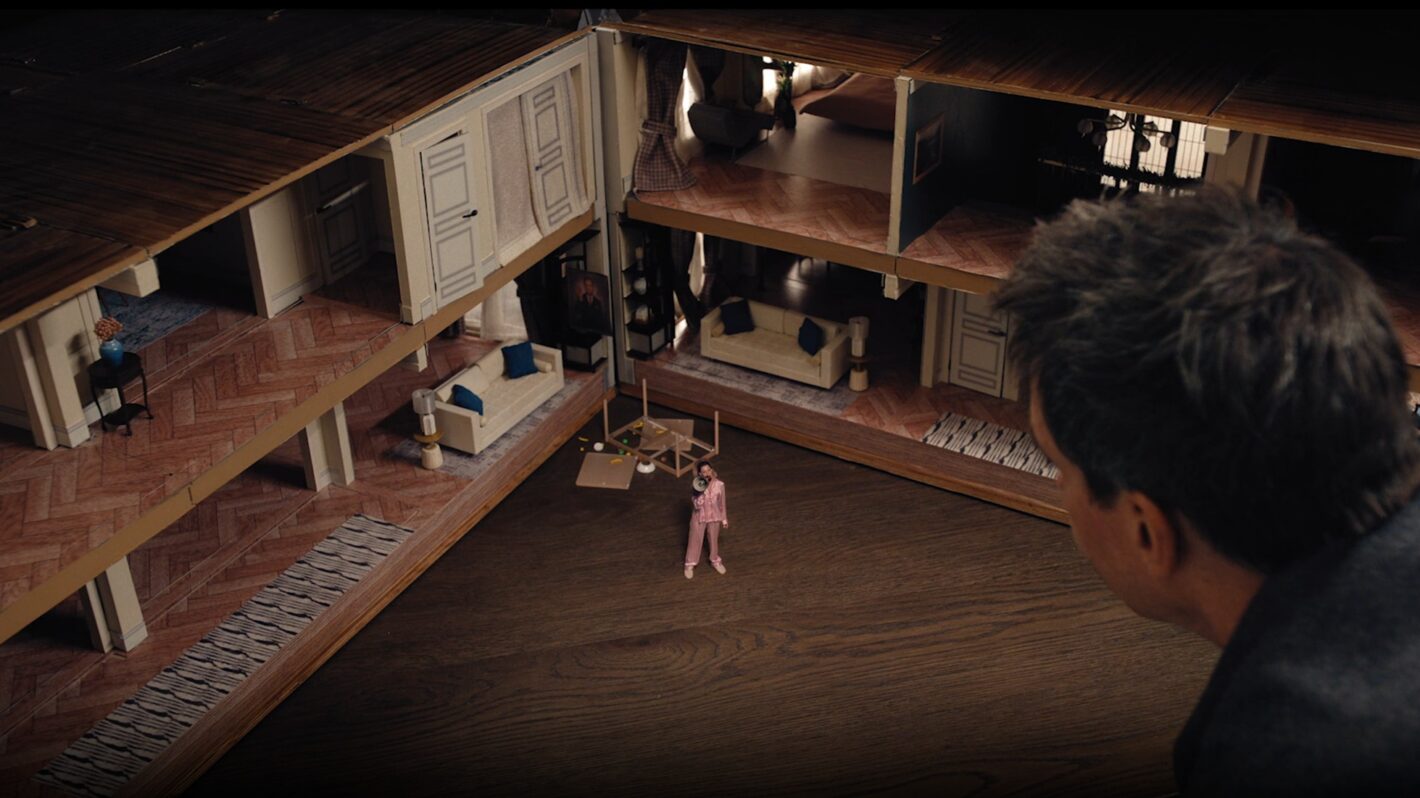
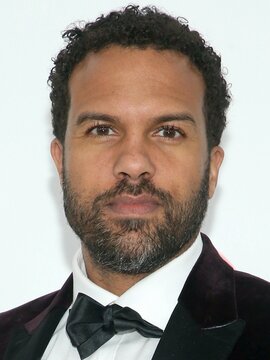
This massive change in size leads to an obvious power imbalance for the couple, but soon she gets the upper hand on him, and it becomes an all-out war between the two. We learn that Les brought Lindy down to size on purpose, and Lindy gets revenge with the help of her biggest admirer, Richard (O-T Fagbenle), Les’ physicist who joins her in becoming Polly Pocket-sized as a grand gesture for her affection.
Along the way, the series traces back to happier days for the couple while also exploring their complex dynamics with their own parents and their daughter, Lulu, who’s been under the impression that her mother secretly hates her for years, thanks to a manuscript she once found on her mother’s computer.
After a major lab break caper and the very grand gesture of Les miniaturizing himself and then becoming his own guinea pig for the restoration formula, things end on a happy note… Well, mostly. Lindy still plans to take back her “turn” and write a book about the whole experience.
To unpack everything that has happened (so far) in the series, TV Insider caught up with the cast and creatives of The Miniature Wife. Read on for their takes on the highlights!
Being miniaturized might be just what this pair needs to make it
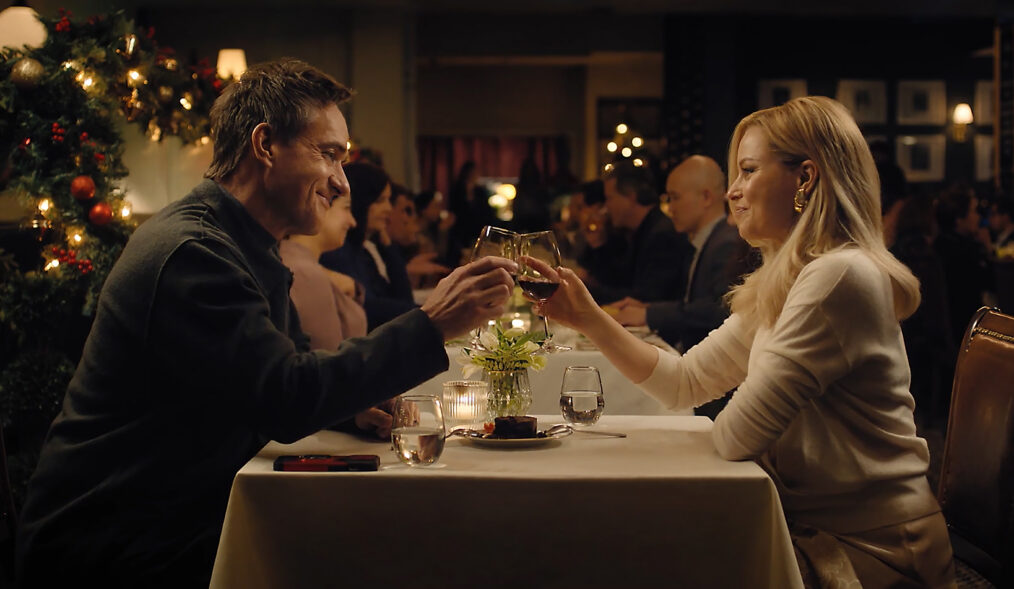
At first, the miniaturization of Lindy is a nightmare unlocked, but over time, she regains that ferocity and confidence she had as a result of being made small. Cocreator Steve Turner sized it up by saying, “There’s a thing in science called the square cube law, where when you get smaller, you truly, actually get stronger. It’s part of physics and quantum physics. That’s why an ant can lift 50 times its weight: because it’s condensed. So weirdly, the metaphor of her getting small is the way for her to find her strength again and find her voice again.”
The wedding scene is a highlight for absolutely everyone involved
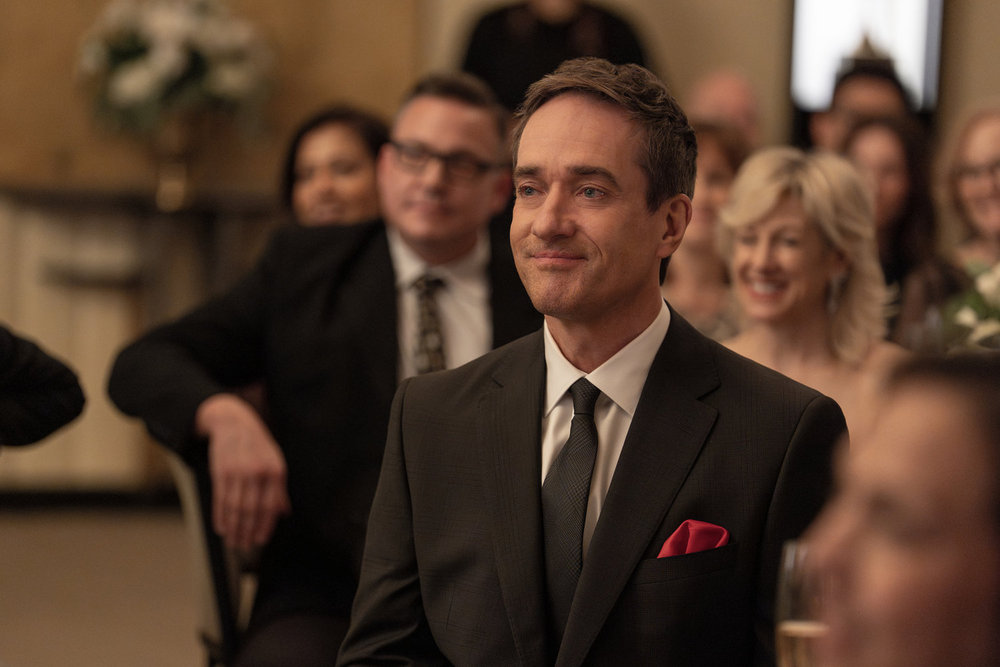
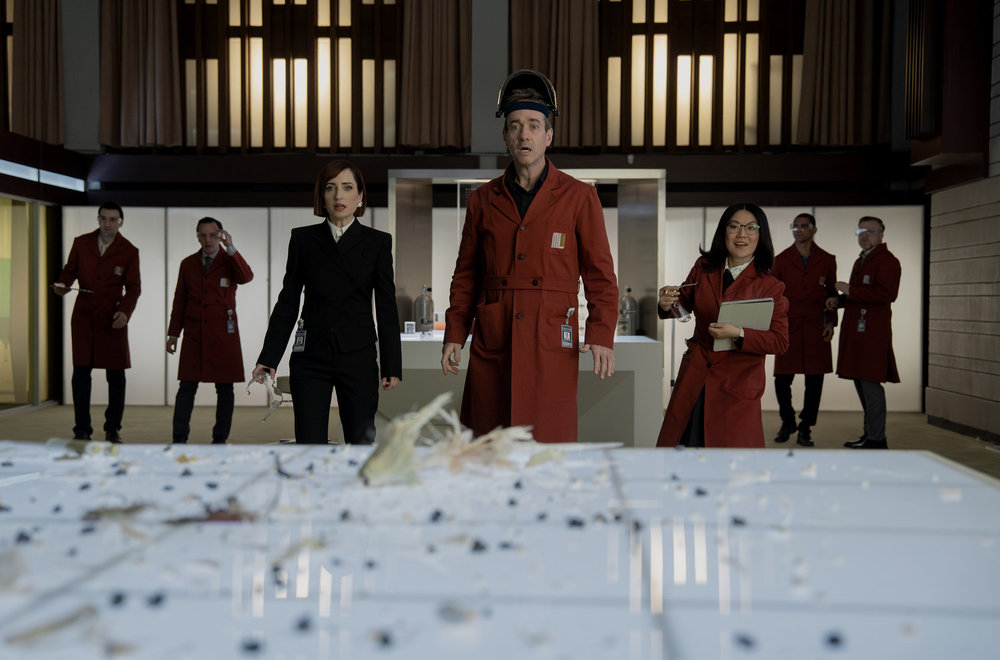
An instant highlight of The Miniature Wife is its penultimate episode, which journeys back to the couple’s earliest days, when they got engaged despite their lack of desire to get married and had a wedding that steadily escalated into a booze-soaked disaster of epic proportions.
“That was my favorite episode to shoot,” Elizabeth Banks told TV Insider. And it’s not just because it gave her an opportunity to work with the sprawling cast involved after so much time with a green screen. “It was Les and Lindy at their best, and I feel like it sold the audience on what they were rooting for, which really made everything leading up to that feel right for me as a character. We can get really dark and crazy because I know what’s coming is that we’re going to tell the audience that they really loved each other, and made a pact to do it together, and we just have to find that again and get back to it.”
Matthew Macfadyen vehemently agreed, saying, “The episode was a joy. It was like doing some mad French [film], and we do these long takes, like eight, nine pages. It was really lovely.”
Cocreator Jennifer Ames also found it to be a major inflection point in the storytelling. “There’s a lot of set pieces and hijinks in the other episodes. We didn’t want to lose that, so I think the thinking was, ‘Well, this has got to get a little out of control,'” she explained. However, “It’s almost its own emotional reset within the episode that gets you to Lindy’s dad, Jim, talking about, ‘Come with me. This isn’t you,’ and that competitive edge between even the two of them. And then you get Diane talking to Les and saying, ‘Yes, you may think I’m a monster, but my heart broke, and you’re one of the good ones.’ So I think again, really into the emotional reset with these two.”
The grand gesture is crucial to saving their marriage
In the end, the best way for Les to show his commitment to Lindy is to not only shrink to her size, steal his new formula from the lab, and save her before it explodes, but to become his own first test subject for the serum to return to his normal size.
“I thought his sacrifice at the end is very moving,” Banks reflected. “It’s all she’s been looking for the entire time. I love that the show opens with, ‘We’re doing a grand gesture.’ But we don’t really get the grand gesture until there’s an actual sacrifice. Because neither of them are sacrificing anything with their grand gestures. It’s like, ‘We’re gonna do us anyway.’ And it’s not until they’ve truly sacrificed their comfort and their freedom that they can move forward.”
Richard may or may not get brought back to human size
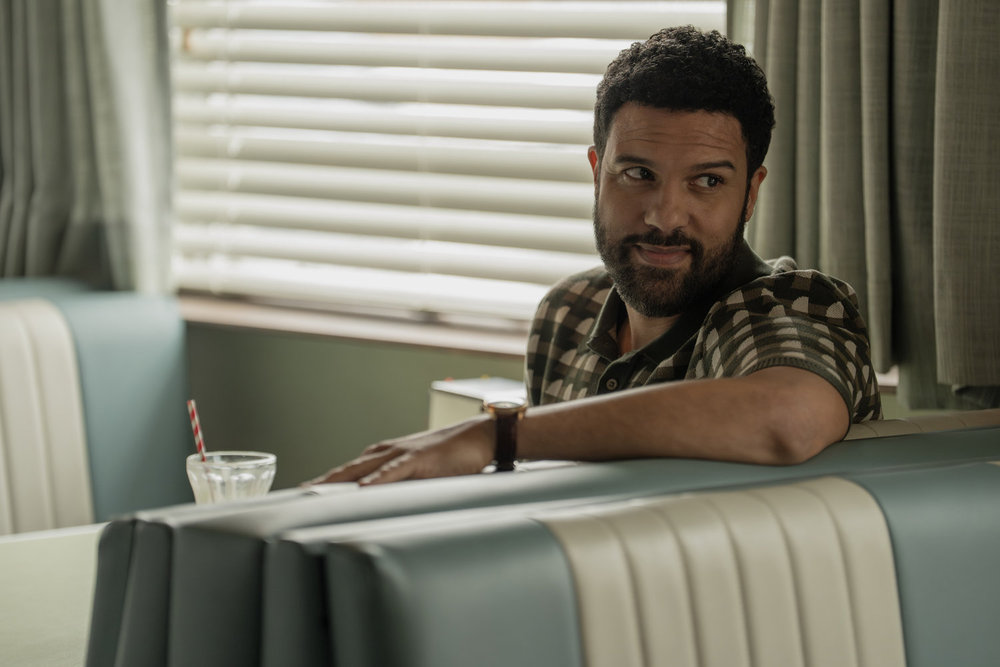
While Lindy and Les are safely restored, we don’t get to see what’s next for Richie, who also becomes fun-sized in the name of love, but O-T Fagbenle wouldn’t mind if he stays shrunk-down for a while.
“You know what? Yeah. As long as love is large, then that’s the direction that he’s gonna head. I hope so. But I gotta say, it is quite fun being small. Going to set every day and playing with giant props? Count me in,” he said.
The actor also didn’t know if his character could be truly happy for the couple’s reconciliation, even though he did step up to help with the rescue effort. “I don’t know if ‘happy’ is the word I’d used to describe it. I mean, gosh, it’s so complicated. There is a light of a new love out there, and so he can kind of become monomaniacal in his vision. So he probably is just kind of slightly pushing her to the side and focusing on what’s next. But I don’t know if anyone could be entirely happy for them because it’s gonna not be happily ever after, more like conflict ever after,” the actor said.

Lulu has finally made peace with her mom — and herself
After finally learning the truth about Lindy’s “Dear Daughter” manuscript — that it was written while channeling her own mother’s resentments of her, not how she felt about Lulu — everything changes between the long-fractured mother-daughter pair.
“There’s more work and growing that comes from that, but that definitely is a huge breakthrough for her. She’s kind of created this hard shell around herself. She’s like this salty crustacean just going through life with this huge shield. And this is the moment where she finally gets to toss that aside,” Sofia Rosinsky posited.
Banks also found the backstory reveal with Lulu to be truly touching, as a real-life parent of children around that age. “I found with Lulu, that misunderstanding that they have really hit me very deeply,” she said. “I find with young people, you just don’t know when something’s going to hit them that really sticks. And as a parent of two teenagers right now, you have to be careful what you say. One comment that you don’t really mean in any significant way, but they’re taking everything so seriously and so earnestly as they’re learning how to be human and how to interact… I can think of a few comments that were made to me as a young person that really stuck with me, and if I think about them… As an adult, I go, ‘I bet that person didn’t care about saying that to me at all. They never thought about it again. It was nothing. It was a casual comment, but I took it to heart.'”
Before discovering the plagiarism scandal, Lulu also reads her mom’s book for the first time, and it unlocks a newfound respect for her that might’ve been a turning point on its own. “She, for the first time, is allowing herself to learn more about her mother. She’s, for the first time, opening her eyes and really listening through reading the book.”
Les is coming to grips with his own family drama, too
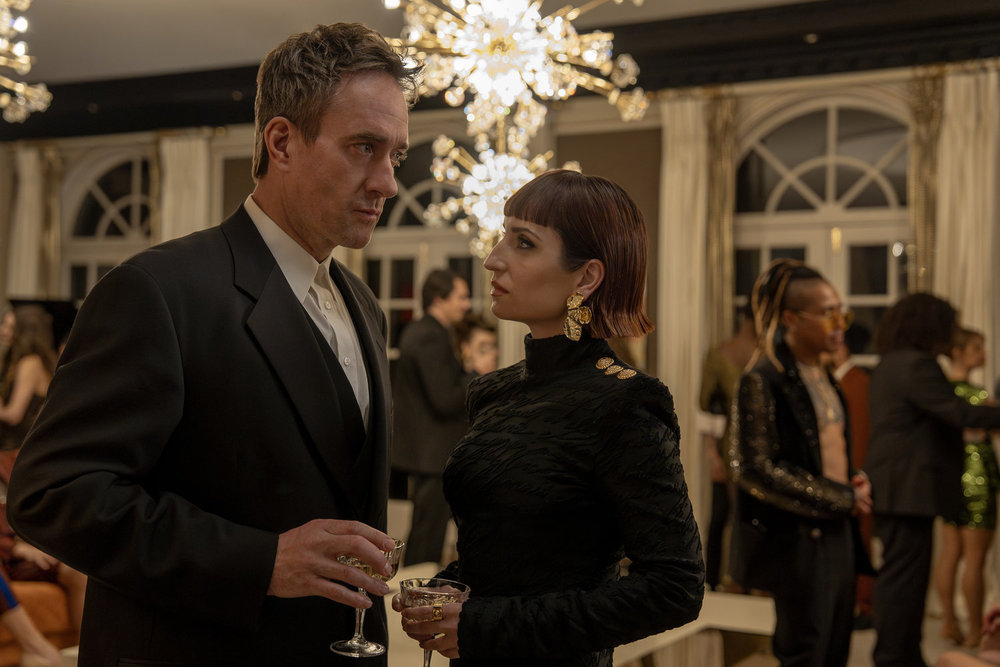
All series long, Les claims to have had a happy and affirming childhood experience, but we soon learn that is not the case when his mother finally unleashes the truth that she hates her father and thinks Les is just like him.
“It was very satisfying to play because it came quite late on in the sequence, in the story, the narrative. It was great,” Macfadyen said. “I loved that Les’ father gave him no attention whatsoever, and it actually turns out he has three or four very sort of jock-y brothers. And so Les had a sort of tricky upbringing in that sense, which sort of makes sense.”
It’s another feather in Lindy’s cap, of course, as she’s been insisting he’s been in denial about his own past. Per Banks, “It’s a great reveal because it’s so obvious that Lindy had this traumatic and icy relationship with her mother and her stepfather, and her father left. There’s real childhood trauma there that she gets to explore and sort of own. And he’s like, ‘That’s yours. I don’t have any of that.’ And then I love the reveal that, ‘You are seeking validation because your father doesn’t love you enough.'”
Macfadyen agree with Banks’ take, adding, “Also, it resonated in a really lovely way, because being in a marriage… if you’re very invested in your partner’s parents, how they affected them, you get a perspective and an understanding of what’s made them the way they are, and that’s touched on very tenderly and wittily and truthfully in our show.”

Vivienne is going to do … something with her rediscovered toy journalist
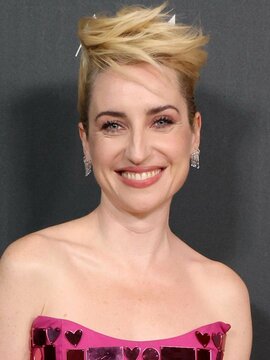
One major cliffhanger in the finale is what is to become of the poor Scientific American journalist who was taken hostage in tiny form by Vivienne. Zoe Lister-Jones guessed, “She’s so obsessed with power that she’ll probably use him to gain the power that she’s seeking. I think her version of love is that anyone who stands in her way, she will destroy. And that is really romantic, and I hope that we can all really engage with that.”
Lister-Jones also contended that the one thing that attracted her to Les in the first place was her respect of his ambition. “I think she is really attracted to his brain and to his ambition. I think they share a deranged ambition. I would say the show is a cast of deranged in general, and they’re sort of attracted to each other’s insanity, but I think Vivienne is so lonely, and she’s looking to be the other half of a power couple, and Les sort of feels like the perfect match for that,” the actress said.
Yes, Lindy is miniaturizing Les in her own way at the end… and it might have a big impact on Season 2
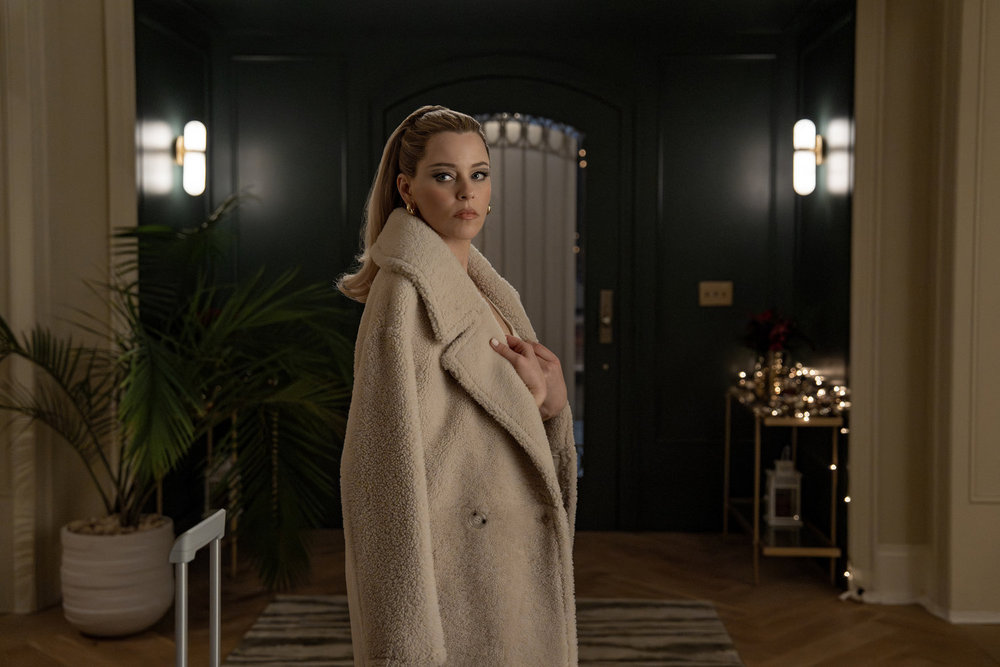
After they’re back to normal(ish), the ending sees Lindy telling Les that she feels the need to write down everything in a book called The Miniature Wife. He quietly agrees with her decision, but, after everything they’ve been through together, it seems like another bit of flag-planting on her part. And that was completely intentional, per the creatives.
Michael Ellenberg, CEO of Media Res, revealed, “It’s a genuine moment where he is submitting to her, and that was always by design, the arc, and then the launch into Season 2. What does it really do to him? … The characters claim to want to be equal, but can they actually be equal? How much do they need someone to be on top, and someone to be on the bottom, and so, yeah, Jennifer and Steve have a lot of brilliant ideas for the future, but yes, the impact of this book and its possible success, I will tease that it’s a big question for what life might be like for the two.”
The visual and emotional inspirations for the series are vast
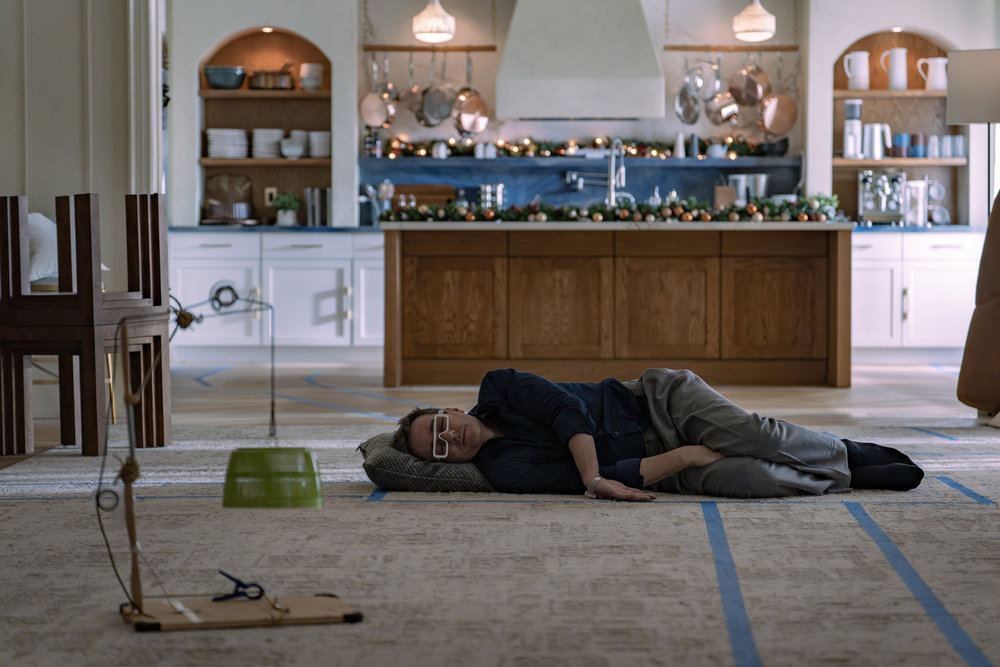
Though The Miniature Wife is its very own kind of story animal, there are plenty of cinematic moments that pay homage to Hollywood’s past.
“We were inspired by The Incredible Shrinking Woman, Big, [and] Home Alone even, and then more recently, Spike Jones’ Being John Malkovich — these kinds of absurdist comedies that take where the emotional ideas are real… What’s great about genre storytelling is the extreme premise lets you let your hair down, you let your guard down, and so you can look at real issues between a couple without feeling so grim,” Ellenberg said. As for the use of flashbacks sprinkled throughout the story, he said, “We always want to balance the really high-concept story in the present with — we compared to the Richard Linklater’s trilogy, the Before Sunrise trilogy, where you’ll get snippets and vignettes of who they really are as a couple and how they got to be who they are, both when they were good and when they were not so good.”
The executive producer also pointed to key scenes as standouts with specific influences. “I love when she kills the fly. It’s like the kind of Matrix-level war with the fly in the house. I thought that was pretty exceptional,” Ellenberg said. “Rube Goldberg is another inspiration for all of this, and when Matthew’s running down the stairs, and she’s laid out multiple traps throughout the house, and she falls off, both stabs his feet and slips on the marbles, every household has this… What’s delightful about the show is we’ve all experienced these indignities, one piece or the other, never in its absolute totality, even the fly.”


Latest Headlines
- Jean Smart Returns for ‘Hacks’ Final Season, Elizabeth Banks Is a ‘Miniature Wife,’ Dan Levy’s ‘Big Mistakes,’ ‘Hunting Party’ Pays the Piper
- 'The Miniature Wife' Sneak Peek: Elizabeth Banks Is Big Mad in a Tiny Body (VIDEO)
- 'Today': Craig Melvin Accidentally Reveals Jenna Bush Hager's Major New Project


 Watchlist Easy access to only the shows you care about — all in one simple place
 Alerts Only important notifications — when a show is returning, when it becomes available to stream, and more.
 Special Offers Exclusive products we release related to your favorite shows and streaming services