
‘Industry’ Creators on How Yasmin’s ‘Exploitation’ Line Defines the Entire Series



Spoiler Alert
What To Know
- The Season 4 finale of Industry sees Yasmin embracing a morally ambiguous worldview, justifying her exploitation of others as a form of agency and survival, echoing her own traumatic past.
- The show’s creators explain that Yasmin’s “exploitation or opportunity” line encapsulates the series’ central theme.
- The show’s creator reveals why Marisa Abela was scared for this scene to be Yasmin’s last one, had Industry not been renewed.
Yasmin (Marisa Abela) said something devastatingly dark in the Industry Season 4 finale, a scene that marks a major shift for the character, but unfortunately, it’s not all that surprising.
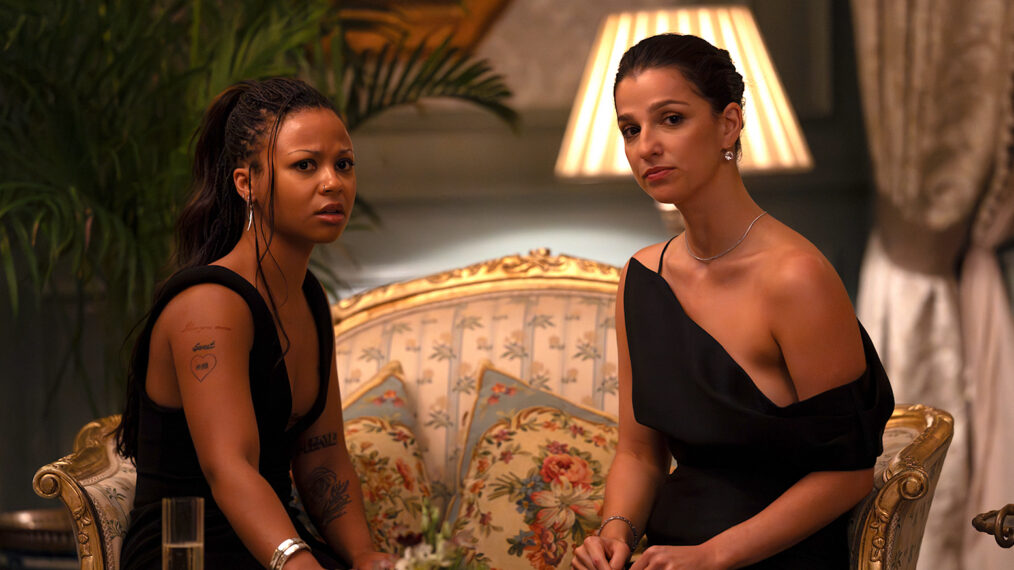
Harper (Myha’la) and Yasmin reunited in Paris after Yasmin’s divorce from her disgraced nobleman husband, Henry Muck (Kit Harington). To Harper’s horror, Yasmin was basically a madame looking after girls as young as 14 after having taken over the shady business run by Whitney (Max Minghella). Hayley (Kiernan Shipka) was with her. When Harper tried to knock some sense into her, Yasmin said that she “became a woman” when she “wanted someone” for the first time, a chilling echo of something her sexually abusive father said in a previous season. Yasmin argued that she’s giving these girls agency by giving them the “power” to exploit the men who would abuse them.
Yasmin said, “The world is not exploitation or opportunity. It’s both/and.” Harper was kicked out of the party after she expressed her disgust and concern, and tried to get one of the teenage girls to leave with her. The experience left Harper feeling hollow. This, paired with Eric Tao’s (Ken Leung) unexpected (and unexplained, at least to her) departure, had Harper feeling empty by the end of the season. But in cases such as these, it’s good to feel in the depths of despair about the circumstances. That’s an appropriate emotional response to something so horrid (she’d feel even worse knowing that Eric’s sudden exit was the result of a teen hired by Whitney). Yasmin, meanwhile, completely numbed herself to the horrors as a form of survival, opening herself and others up to more abuse.
We asked Industry‘s creators, Mickey Down and Konrad Kay, to explain the “exploitation or opportunity” line and how Industry Season 4 challenged that perspective — or didn’t. They said that the answer defines the entire series.
“The show is also always rising to ambiguity. It’s sort of a Rorschach test for people’s prejudices and what people believe. People project what they want onto the characters or how they feel constantly. I think that’s why it’s interesting, and it’s a good show to debate, and it’s a good show to talk about,” Down says. “That line is a justification for Yasmin’s own behavior. It’s justification for what she’s doing in that moment. It’s a justification about what’s happened to her up to that point. It’s justification for the pain that she feels and the pain she’s trying to work through.”
“The person that’s been abused and the person that abuses charter that line,” he continues. “I think it’s what you tell yourself to justify your actions. And it’s a thing that Yasmin has been struggling with or thinking about since the first theme of the first episode, where she’s in that environment of Pierpoint, and she’s sat next to Kenny, who is in some ways an abusive boss, and she’s thinking, ‘Is this just the way it goes in order to succeed?’ That’s something that she’s been banking and banked and has been struggling with, internalizing or debating internally for the whole season. That’s what all the characters have been [debating]. It’s like, how much am I willing to take to be successful?”
“‘Am I going to exploit people, or am I going to be exploited? And is that opportunity?’ That’s the central thesis of the show in some ways,” Down goes on. “It’s something that’s obviously made really acute in that last scene, but it’s a tragedy.”
Abela feared that these would be Yasmin’s final words of Industry when they filmed this scene, Down reveals.
“I spoke to Marisa on the day when we were filming that, and she was like, ‘This is a tragic end for Yasmin if the show doesn’t go back,'” Down says. Thankfully, it’s not the end. Industry has been renewed for a fifth and final season at HBO. But Down explains Abela’s perspective on the tragedy of this scene.
“It’s her buying into her own trauma and then using it to exploit other people, and it leaves no room for redemption,” Down shares, “which I’m not saying the show would ever give her, but it’s something that actually, in that moment, feels very, very, very distant.”
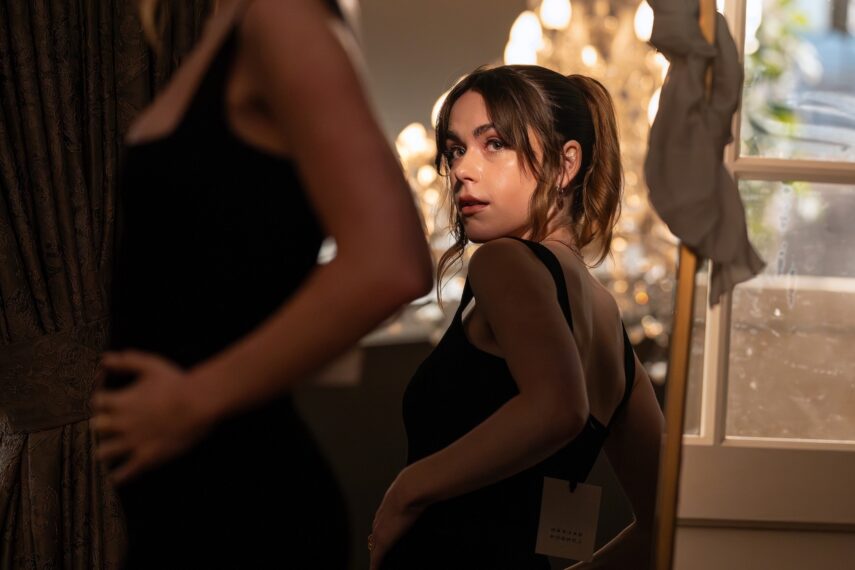
Simon Ridgway / HBO
“How many evil people think of themselves as evil?” Kay adds. “I mean, I think a pretty low percentage unless they’re outright psychopaths. Most evil people in history have been psychopaths, but there’s a kind of different kind of everyday evil which is rationalized through, as Mickey says, your own relationship to your past, but also these justifications she’s coming up with in that room in Paris about giving people access, about leveling up their lives. These are things that she can sell to herself as an internal logic for her own behavior. And I think she truly believes them, which makes it scarier than someone who is just boldly doing things for malice, which I don’t think she is.”
“The show, we’ve always said from the start, even when it was dealing with stuff that wasn’t as thorny as it is now, we never thought the show was didactic, and it’s still non-didactic,” Down adds. “Obviously, there’s an inherent criticism of certain aspects of life in the show, but we never asked a question, ‘Is this right or is this wrong?’ We just asked a question: what does the person need to believe that they’re doing the right thing? What acrobatics does a person do to convince themselves that what they’re doing is right? As I said, no one thinks they’re a villain, and the show operates in that world. It feels like even someone like Whitney, who has villainous characteristics, or even Yasmin’s father, Charles [Adam Levy], who is the apex of horrificness in this show, goes through the world thinking he’s got a target on his back, thinking that he’s a victim, and that’s the way that people move through the world.
“I really don’t think anyone wakes up and thinks I’m going to be a heinous individual today,” Down adds. “I just think, ‘I’m going to do what I need to survive, world be damned.’ The justification is there, the intention.”
There’s no predicting where Industry goes from here, given how the show reinvents itself every season, but we’re following along for the messed-up ride.
Industry, Season 5 Premiere, TBA, HBO

Myha'la Herrold

Marisa Abela

Harry Lawtey

David Jonsson

Nabhaan Rizwan

Freya Mavor

Will Tudor
Conor MacNeill

Ken Leung
Alex Alomar Akpobome
Adam Levy

Indy Lewis

Sonny Poon Tip

Katrine De Candole

Sagar Radia
Caoilfhionn Dunne

Kit Harington

Kiernan Shipka

Jack Farthing
Toheeb Jimoh

Amy James-Kelly

Max Minghella
⨁Full Cast & Crew







 Watchlist Easy access to only the shows you care about — all in one simple place
 Alerts Only important notifications — when a show is returning, when it becomes available to stream, and more.
 Special Offers Exclusive products we release related to your favorite shows and streaming services