
‘Unlocked: A Jail Experiment’: Everything You Need to Know About the Unorthodox Study Before Season 2



The United States faces a serious crisis within its prison system. Overcrowding has turned many American jails into volatile, dangerously understaffed environments, where as few as two correctional officers may be responsible for supervising nearly 300 inmates. To maintain control, facilities often resort to extreme measures, including locking inmates down for up to 23 hours a day. Rather than improving conditions or safety, these tactics frequently exacerbate tension, violence, and mental health deterioration. And, alarmingly, the situation continues to worsen.
Unlocked: A Jail Experiment examines this broken system by asking a radical question: What would happen if inmates were given more autonomy instead of less?
By temporarily removing guards from the housing units and placing responsibility in the hands of the incarcerated population, Unlocked explores whether trust, accountability, and community can succeed where punishment and isolation have failed.
Before Season 2 of Unlocked: A Jail Experiment premieres on Netflix on Wednesday, January 8, here is a refresher on the controversial experiment, as well as what else to expect in the second season of the reality series.
What Is Unlocked: A Jail Experiment Season 1 About?
Netflix
“How do we hold them accountable but empower them at the same time?”

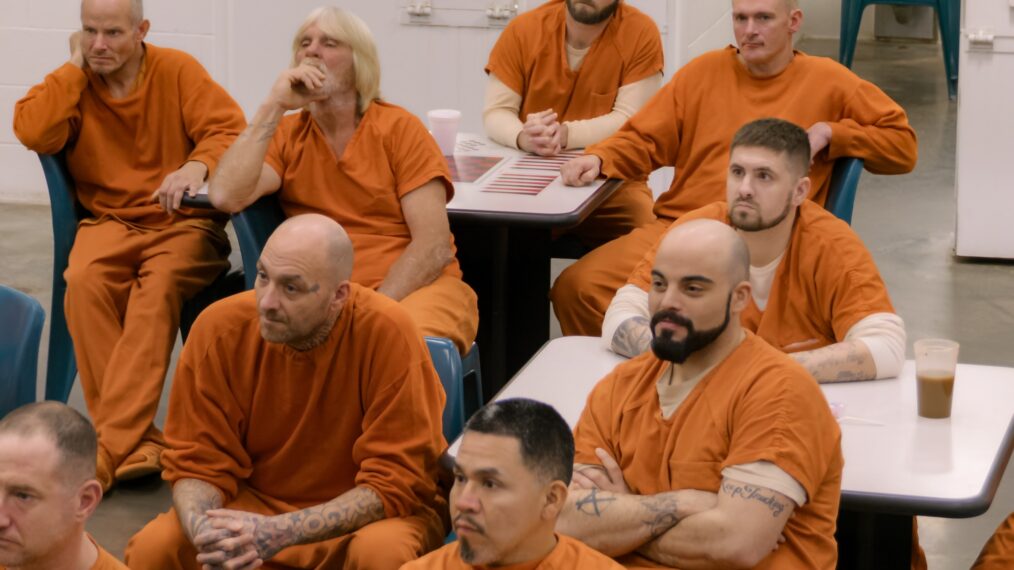
Concerned about the abysmal conditions of Pulaski County Regional Detention Facility in Little Rock, Arkansas, Arkansas Sheriff Eric Higgins tried an experiment in which he gave detainees an alternative to prison life.
“We thought, ‘What can we do to create some ownership for those detainees in that unit?” Higgins said to Tudum. “How do we make the facility safer, and what can we do to still hold them accountable but empower them at the same time?'”
As part of a six-week social experiment, cell units in specific pods were unlocked to foster a community-oriented living environment for the prisoners, where detainees were encouraged to take more control of their daily routines. Higgins also installed a tier-based reward system for prisoners who showed good behavior.
Men who chose to participate were briefed on what to expect. “We didn’t automatically open the doors,” Higgins explained. “We talked to them about the possibilities and about behavior. We gave them a list of responsibilities and [made] personnel available to them to ask more detailed questions.”
Did the social experiment work?
There was some measured degree of success, as Sheriff Eric Higgins noted improved behavior, cleanliness, and inmate ownership, leading him to keep the open-cell policy in place and even expand it. However, in an investigation by ABC News, critics questioned the ethics of filming prisoners for reality television and whether those in charge were paid by Netflix. It also sparked a debate over whether the experiment addressed the root causes of crime or just made incarceration more comfortable.
While Higgins did receive support from several social advocacy groups for his attempts to address issues within the prison system, other groups and studies have noted that the approach fails to meaningfully confront the broader problems of the prison-industrial complex as a whole.
What is Unlocked: A Jail Experiment Season 2 about?
Set over eight episodes, Season 2 will move viewers to Pinal County, Arizona, where Sheriff Ross Teeple begins the six-week experiment in a new pod, unlocking the doors to a fresh set of inmates and giving them unprecedented control.
When will Season 2 premiere?
Unlocked: A Jail Experiment Season 2 premieres with eight episodes on Netflix on Wednesday, January 8.
Is there a trailer?
Indeed. The trailer for Season 2 is available above.

Where to Stream







 Watchlist Easy access to only the shows you care about — all in one simple place
 Alerts Only important notifications — when a show is returning, when it becomes available to stream, and more.
 Special Offers Exclusive products we release related to your favorite shows and streaming services