8 ‘Little Women’ Adaptations, Ranked
For some reason, every girl has that one Little Women adaptation that just hits different. Honestly, how does a book written during the Civil War somehow feel like it happened to us between TikTok binges and mall trips?
Little Women is a timeless coming-of-age tale following four sisters, crafted by the legendary Louisa May Alcott. Written in the 1860s, it somehow nails sisterhood, family struggles, grief, ambition, and heartbreak in a way that still feels 100% relevant in the 2020s. It also features love confessions to rival even Jane Austen.
Over the years, countless directors and screenwriters have tried to make the “best” Little Women adaptation. Some succeeded, some flopped, and some left us completely confused.
We’ve ranked eight Little Women TV shows and films, just because we could. Do you agree with our ranking? Let us know your thoughts in the comments below.
Little Women

Universal Television took a swing at Little Women in 1978 with a two-part NBC miniseries — and let’s just say the warning signs were right there in the casting. They packed it with sitcom royalty: Family Ties’ Meredith Baxter Birney as Meg, The Brady Bunch’s Eve Plumb as Beth, The Partridge Family’s Susan Dey as Jo, and yes, William Shatner as Professor Bhaer. We’re confused too. Deeply.
The adaptation also decided that Jo should be our narrator. We get what they were going for… but we’re not exactly enjoying it.
And they didn’t stop there. A follow-up series aired in 1979, and for reasons known only to the TV gods, Plumb returned — not as deceased Beth, but as a random cousin named Lissa. Why? Truly, why?
Overall vibe: aggressively sweet, pastel-washed, and determined to sand off every bleak edge of the original. Hard pass.
Little Women

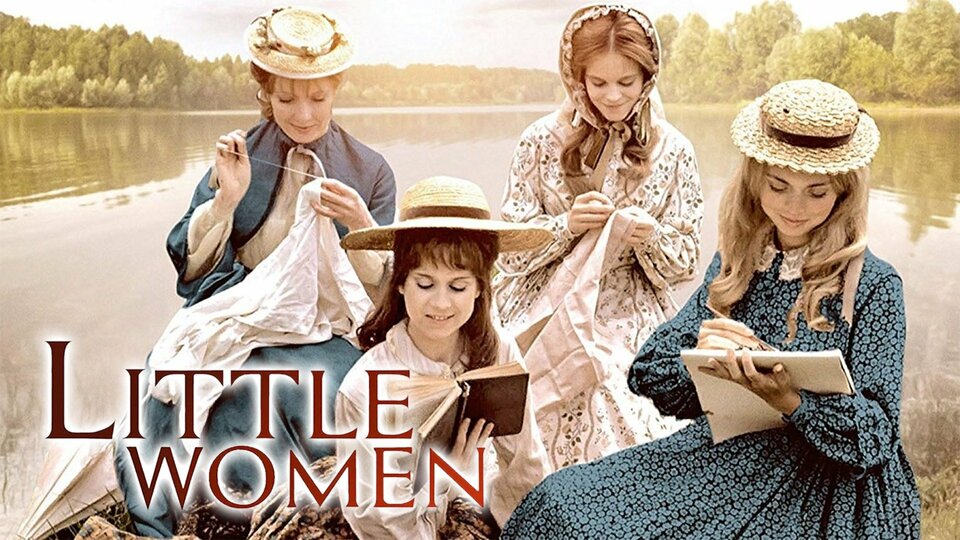
Usually, we adore a BBC adaptation. But this one? It missed the boat and then sort of… waved from the shore.
It’s not one of the more fondly remembered versions of Little Women, likely because it was made on a tiny budget and shot almost entirely in-studio. The nine-episode, 25-minute format didn’t do the story any favors either. Little Women is many things, but bite-sized isn’t one of them.
And listen… our girlies were not exactly girlies. The actresses playing the March sisters were widely considered too old for their roles, and a few struggled valiantly (but not successfully) with American accents.
But let’s not be too harsh. Laurie is a genuine bright spot here — more developed, more sympathetic, and honestly more compelling than in many later adaptations. We’ll always give points for a well-done Laurie. This version also lets the March sisters argue. A lot. It’s true to the book and extremely relatable to anyone who’s ever had a sister and fought over literally anything, from a missing t-shirt to hair ties to life choices.
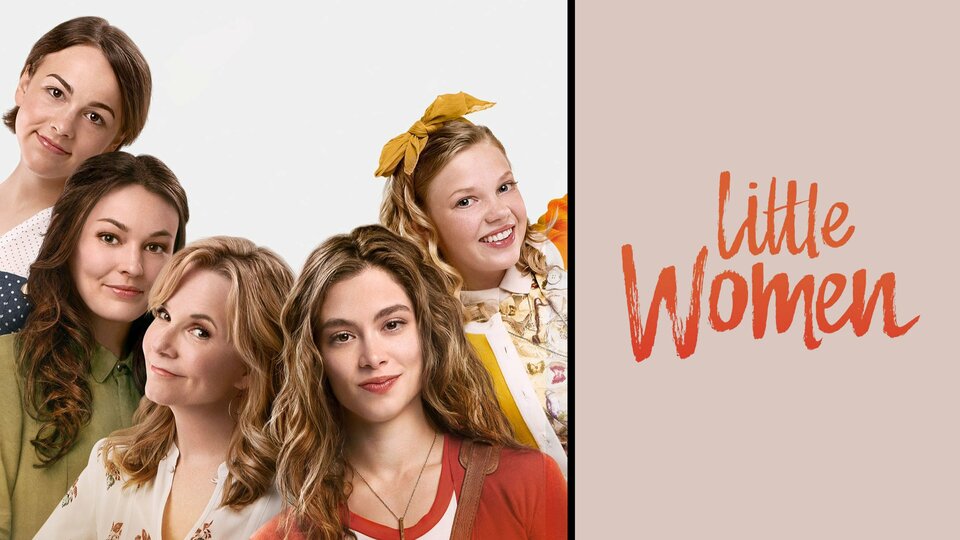
Little Women
This was the sixth Little Women adaptation to hit the screen, but the first to take a fully modern swing at the story. Released to mark the 150th anniversary of the novel’s first volume, it stars Sarah Davenport, Allie Jennings, Lucas Grabeel, Ian Bohen, and Lea Thompson. And yes, you do recognize Grabeel. That’s Ryan from High School Musical, jazz squares and all.
The March sisters keep their original names and ambitions, but the whole thing is transplanted into the early 2000s. Surprisingly, it nails the emotional core of Jo and Beth’s relationship — especially during Beth’s illness (spoiler, but come on). There’s a moment where Beth tells Jo she’s ready to die, and it… hurts. Like, genuinely.
Unfortunately, critics were less touched. The film sits at a 4.9/10, which is basically the cinematic equivalent of “we tried our best.” It preserves the essence of the story and those chaotic, loving sister dynamics, but the characters themselves feel sanded down. Too neat. Too simple. A little flat. In other words, nowhere near messy enough to be truly interesting.
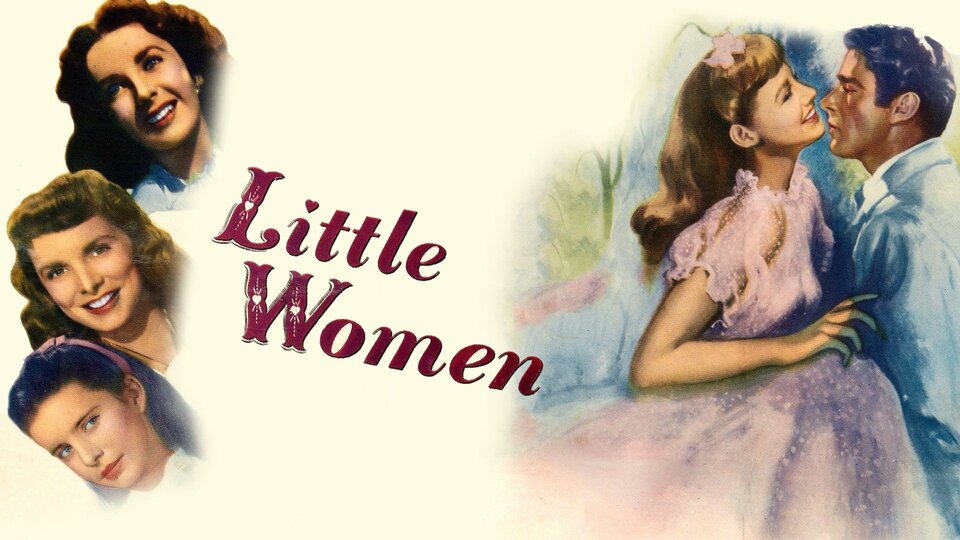
Little Women
Now we’ve reached the first-ever color adaptation of this beloved classic, starring June Allyson as Jo, Margaret O’Brien as Beth, Elizabeth Taylor as Amy, and Janet Leigh as Meg. Seriously, what is it with Little Women attracting the cream of Hollywood’s crop?
They also made some… eyebrow-raising changes. Beth is younger than Amy, and several memorable scenes vanish into thin air — no group picnic, no icy river mishap, and no European romance between Amy and Laurie.
But the real heartbreak? Jo and Laurie. In the book, they’re best friends, and Jo even gives him the nickname “Teddy.” In the film, their bond is much less intimate, which makes Amy’s eventual “betrayal” hit way less hard.
Many thought Allyson’s Jo lacked the punch of previous adaptations. She’s perky and upbeat rather than the moody, fiery girl we love. Critics called this adaptation old-fashioned, but most reviews were generally favorable.
Fun fact: They basically used the same script and even tried to bring back the same director from an earlier version — he declined because Hepburn wasn’t reprising Jo. The result is a technically strong film with star power galore… but it just doesn’t have the bite we’ve come to love.
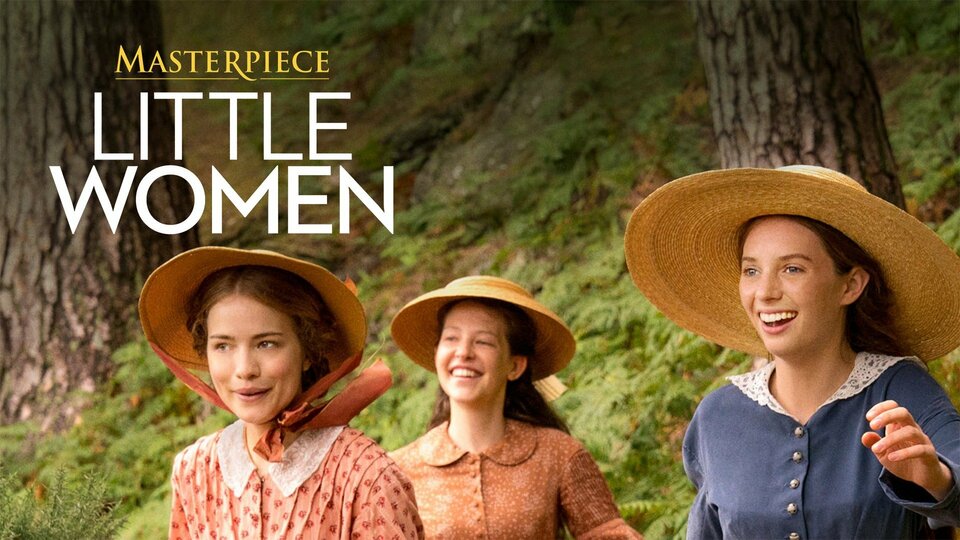
Little Women
Thanks to three episodes of almost an hour each, this adaptation finally gives each character room to breathe.
Stranger Things’ Maya Hawke takes on the tumultuous role of Jo, leading her in a fresh — and surprisingly faithful — direction. She’s a true tomboy, tumbling around and dodging responsibilities like a pro.
A real standout? Meg (Willa Fitzgerald). Usually, the “boring” sister who settles down, here she bursts with life and quiet passion. Her story isn’t about compromise — it’s about finding contentment on her own terms, and honestly, we’re here for it.
Kathryn Newton plays Amy pretty well — we’ve seen better and worse — and finally, Annes Elwy tackles Beth. The series also featured the esteemed Angela Lansbury as Aunt March, which did color us impressed.
And let’s talk love interests: This is one of the rare adaptations that actually makes us lust over Professor Bhaer (Mark Stanley). Fierce, bearded, and devastatingly charming, he quickly gives Laurie a run for his money.
Little Women
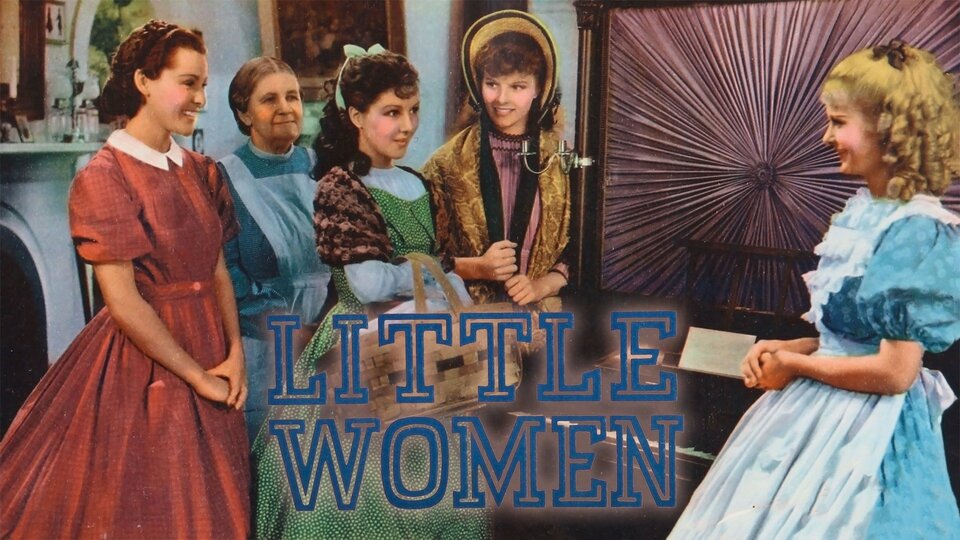
Technically, this wasn’t the first Little Women adaptation — the two prior versions were silent films, now lost to the annals of time. But for our ranking purposes, we’re counting this as the first.
Directed by George Cukor, this first sound adaptation stars Katharine Hepburn as Jo, Joan Bennett as Amy, Frances Dee as Meg, and Jean Parker as Beth. Yes, that Hepburn, but no relation to Audrey Hepburn from Breakfast at Tiffany’s. The cast was a powerhouse, and the film smashed box office records in the fall of 1933. It even won an Academy Award for Best Adaptation and scored several more nominations.
A follow-up adaptation of Little Men arrived the very next year.
Hearing the characters speak was a game-changer for bringing Alcott’s story to life. And in 1933 Hollywood, a female-focused film like this was revolutionary. Today, modern audiences might find black-and-white cinema harder to appreciate since we’ve been spoiled by color, cinematography, and cinematic spectacle.
This version also leans into the Marches’ financial struggles, something Depression-era audiences could deeply relate to. That relevance, plus its cultural and historical significance, makes it a crucial entry in the Little Women legacy — and an important contender in our ranking.
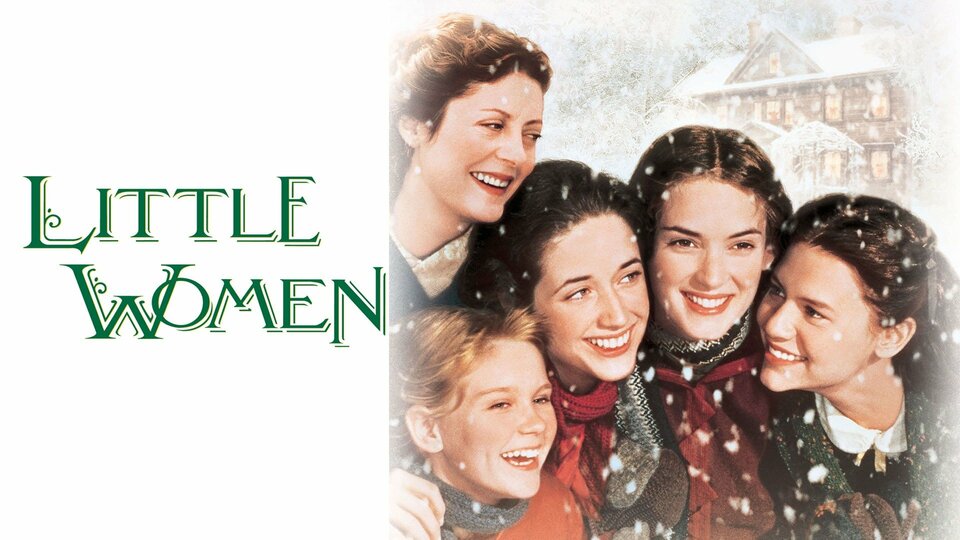
Little Women
Gillian Armstrong directed the 1994 adaptation, starring Winona Ryder as Jo, Trini Alvarado as Meg, Samantha Mathis and Kirsten Dunst as Amy, Claire Danes as Beth, Christian Bale as Laurie, and Susan Sarandon as Marmee. Star-studded, right? And let’s give a round of applause: This was the first female director to tackle Little Women.
The film leaned into a Christmas-y vibe, releasing on December 25, 1994, and in some ways, it’s become the definitive holiday Little Women. It earned three Academy Award nominations: Best Actress (Ryder), Best Costume Design, and Best Original Score, and was followed by a loose sequel, Little Men.
What makes this adaptation extra special is just how hard it was to get made. It took 12 years to find a studio. Writer Robin Swicord and producer Denise Di Novi explained that “people just weren’t interested in a movie with a lot of women.” One studio even suggested a ’90 modern take… no, thank you. At the time, films centered on women were assumed to have no appeal to male audiences and were considered too risky. Ultimately, it was Ryder signing on as Jo that convinced Columbia to greenlight the project.
This adaptation also tackled more mature themes than its predecessors, exploring family, growing up, and progressive feminism. Fun casting tidbit: It’s the only adaptation to have two actresses play Amy. Producer Di Novi said it felt “weird” to have one actress portray both child and adult Amy. Reese Witherspoon almost took the adult role, but the part eventually went to Samantha Mathis.
Critics loved it, especially for ditching the soft, children’s story feel of previous versions in favor of a sharper, smarter, more intelligent approach — a Little Women film adaptation for grown-ups, finally.
Little Women
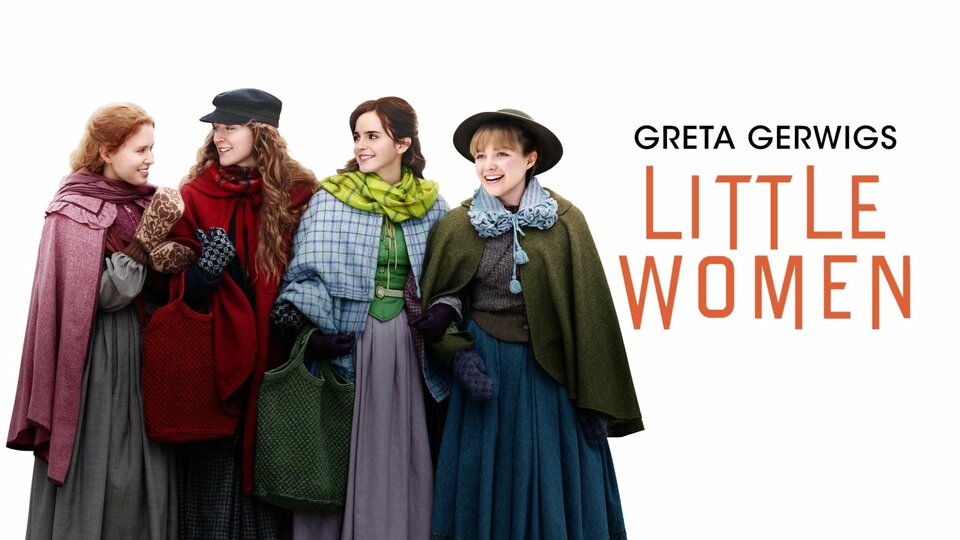
The girls lost it when we heard Greta Gerwig was taking on the latest of Little Women adaptations. For timeline context: This was pre-Barbie but post-Lady Bird. Gerwig wrote and directed, drawing not only from Alcott’s novel but also her letters, diaries, and even other writings — a key difference from past adaptations.
The cast? Pure fire: Saoirse Ronan as Jo, Emma Watson as Meg, Florence Pugh as Amy, Laura Dern as Marmee, Meryl Streep as Aunt March, Eliza Scanlen as Beth, and Timothée Chalamet as Laurie.
The accolades were stacked. Six Academy Award nominations, including Best Picture, Best Actress (Ronan), Best Supporting Actress (Pugh), Best Adapted Screenplay, and Best Original Score — plus a win for Best Costume Design. Add five BAFTA nominations (again, costume win), and two Golden Globes. It was that kind of year.
What makes this adaptation so extraordinary? Gerwig went deep. She mined Alcott’s letters, diaries, and 19th-century paintings of young women, even drawing from Alcott’s other stories for dialogue. The overlapping lines perfectly capture the chaos and charm of sisters yapping all at once.
She also incorporated a nonlinear timeline to “focus the film on [its characters] as adults,” which critics loved, along with the ensemble work of the cast. Time even named it one of the “100 Best Movies of the Past 10 Decades,” praising it as proof that classic stories can always feel fresh.
And here’s why it’s #1 on our list: Every adaptation of Little Women has been driven by Jo’s fierce, untamable spirit. Most of us grow up wanting to be Jo. But Gerwig’s version made us stop and realize… we’re Amy. Pugh’s Amy is pouting and petulant, bold and vulnerable, jealous and wistful. She is the aching heart of the film, forcing us to see the story — and ourselves — in a completely new light. That, right there, is the mark of a phenomenal adaptation.