
‘Euphoria’ Star Adewale Akinnuoye-Agbaje Breaks Down Alamo’s Triggers & Teases Darker Turns After That Death




Spoiler Alert
What To Know
- Euphoria star Adewale Akinnuoye-Agbaje breaks down his role as Season 3 antagonist Alamo Brown.
- The actor discusses the Western influences behind his character as well as the motivation behind his anger.
- Plus, he teases darker twists ahead as Rue becomes more enmeshed in his world.
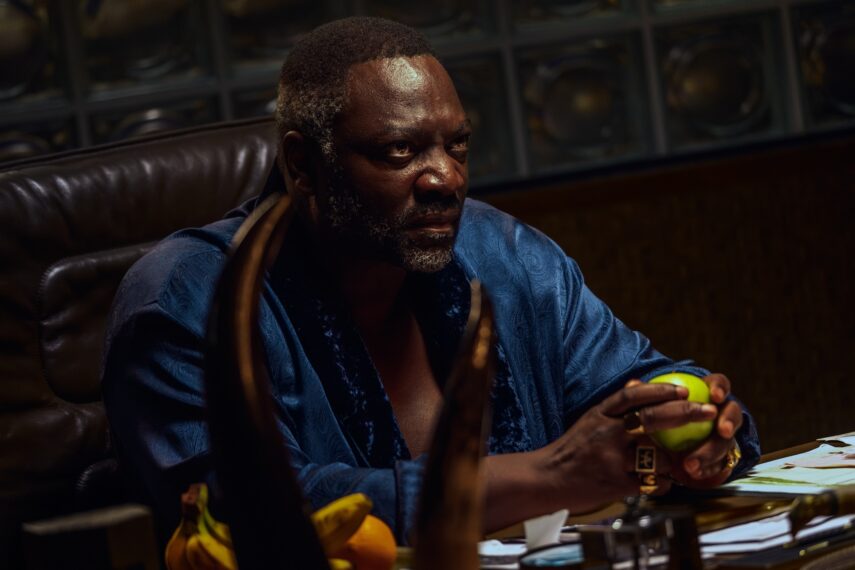
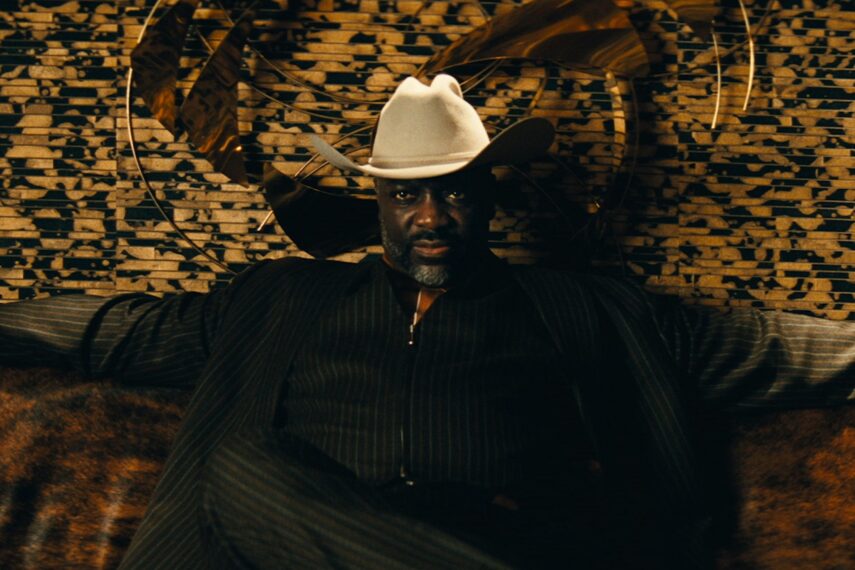
Euphoria‘s Season 3 antagonist is a trigger-happy modern-day cowboy played by Adewale Akinnuoye-Agbaje, who embodies the larger-than-life, Alamo Brown.
The proprietor of five California-based strip clubs, Alamo is a businessman first and foremost, who has found himself at odds with Laurie (Martha Kelly) after Rue (Zendaya) delivered tainted drugs to his party, leading to a fentanyl overdose in one of his dancers. Since that fateful first encounter, Rue has joined Alamo’s ranks, working for him at the Silver Slipper, his most coveted club.
When Laurie exchanged words over the phone with Alamo regarding Rue, she called him a pig, leading him to send swine into her house. In retaliation, Laurie sent the animal back, having it released in the Silver Slipper, leading to a bloody encounter with Alamo’s golden gun. Angered by the bold actions of a woman he helped raise in the criminal underworld, Alamo devised a plan, sending his best man, Bishop (Darrell Britt-Gibson), and Rue to poison Laurie’s beloved bird, Paladin.
If it feels like a war is only just beginning, that’s not a coincidence as Akinnuoye-Agbaje teases darker turns ahead. Below, the actor opens up about the Western inspiration behind his role, Alamo’s triggered response to certain words, and where this brewing battle with Laurie could go.
HBO
Alamo is a really compelling antagonist for this world. What drew you to the role, and what can you share about the influences behind his onscreen presentation?
Adewale Akinnuoye-Agbaje: He was so clear with the vision that I knew whatever I was gonna do, he would make me look great. I just needed to show up. We talked initially, before I came on board, and Sam shared his vision for Season 3, which was quite epic and heavily influenced by the Sergio Leone Western iconography and John Ford, and characters that were in those movies. Particularly for Alamo Brown, he was influenced by Jim Brown, hence the Brown in Alamo’s last name, and Woody Strode and Eli Wallach, great characters and especially villains like Eli Wallach. He wanted a larger-than-life character, but that was grounded in a gritty modern-day Western reality, so I just thought that was really exciting.
We do get a chance to delve into his backstory, which you don’t always get with a villain. They’re presented as that, but here we get to see the making of the man. And so there are layers, there’s texture, there’s nuance, and I thought that was really interesting to be able to unravel who this man is with each episode. Objectively, people see him as the villain or kingpin, but I never look at them like that. I always look at them as humans who are trying to deal with the circumstances that they’ve been given, and there were a lot of interesting circumstances that came along with Alamo Brown.
We’ve discovered over the episodes that Alamo is easily triggered by certain words, whether it’s Laurie calling him a pig or Rue mentioning that she wants to go legit. Can you explain why those terms seem to be so offensive to him in particular?
We will definitely learn as to why he is triggered by certain words, the first being pig, which, for him, was worse than being called the N-word. I really had to dig deep and figure out why, and Sam and I kind of played around with it, and he gave me license to actually run my thought process before we went into the scene, where I was actually asking, “What is a pig?” In my research about the notion of a cowboy… boy was a derogatory term given to a freed slave, and a slave that tended cattle was called a cowboy, and it’s very derogatory before Hollywood made it popular.
HBO
Alamo, I kind of surmise, would have come from that background, that culture of pulling up his bootstraps out of post-slavery and building this empire, albeit upon illegal and illegitimate means, but he has built this empire through the acquisition of material possessions, whether it’s five strip clubs, whether it’s money, he does fancy himself as somewhat of a connoisseur of tastes and arts, and so he’s building his whole identity on these materialistic and superficial acquisitions. When he’s called a pig, it literally triggers his self-worth; it pulls the rug right from under him because being called a pig by somebody who he would regard as beneath him, it really triggers his self-worth, and who he believes he is, because no matter how big an empire he builds, and you’ll see this throughout the show, there’s a level of insecurity in Alamo Brown that comes out in the form of a paranoia, but it all emanates from his low self-worth.
It’s the same with Rue when she says going legit. He feels he is now legit because he’s an enterprising businessman, and he’s employing all these people; he has the ability to discern that not everybody in a suit and tie is legit. He breaks it down for her, but I think again, her just saying that, it kind of triggers his self-worth. He considers himself the American dream, a symbol of it, and when she says that, she’s actually saying he’s not. And so that’s why we get such a visceral reaction.
There is a mention by Alamo that he helped Laurie get to where she is, business-wise. Does Rue realize the position she’s put herself in between these opposing sides?
No, and I think what this really shows is the level of naivety that you have as a young adult. She has no idea that she’s jumped from the frying pan into the actual fire with Alamo. She doesn’t really know the history between Alamo and Laurie, and she discovers it as the series proceeds, and as she does, she realises just how deep and dark the world is. But no, I think if she knew, she wouldn’t have asked to be employed in his world. Through her naive eyes, because everything’s shiny, he’s got gold guns, he’s got beautiful exotic women, he’s got this castle on top of the hill, he’s got everything that you would see as indicating success plus he’s a Black man and I think coming from Laurie’s camp there might be an identification with that, “this is a Black man who’s made it. I can make it. This is the world I want to be in.” So I think there’s a level of naivety with her that gets ruthlessly shattered.

Why does Alamo shoot the pig in his club? Is it anger towards Laurie, a flex at his marksmanship skills, or something else?
Well, look, there’s a tit for tat going on between him and Laurie. It’s clear who sent that pig, and also somebody’s not done their job cause there are men on the door, and so that person is gonna have to be held accountable for that. [The pig’s] also gone into his preferred strip club and defecated on his rug and urinated. We can get it out, but that is blasphemy. Do you know what I mean? If you look around that place, he’s got crocodile skin wallpaper, he’s got snakeskin sofas. It’s really decked out. This is the apex of his sex business, the strip joints, and this pig comes through and basically s**ts on it, so it’s like s**tting on him.
This is a woman whom he set up in the business. There’s a bit of rivalry and somewhat jealousy that she’s broken free and now challenging him, but not only challenging, but she’s doing it in a public place. She’s s**tting on him in public. He has to execute, and I think the showmanship instils fear so that nobody else around even gets an inkling of thinking of doing any kind of rebellion against him. He’s got to lay down the law, in a way.
Euphoria, Season 3, Sundays, 9/8c, HBO













 Watchlist Easy access to only the shows you care about — all in one simple place
 Alerts Only important notifications — when a show is returning, when it becomes available to stream, and more.
 Special Offers Exclusive products we release related to your favorite shows and streaming services