
How ‘Bachelor’ Contestant & Other Women Were Lured Into ‘Twisted Yoga’ Sex Cult



Exclusive
What To Know
- The Apple TV docuseries Twisted Yoga investigates the global tantric yoga movement led by Gregorian Bivolaru, exposing allegations of sexual exploitation, trafficking, and cult-like practices experienced by women seeking spiritual enlightenment.
- Ashleigh Freckleton shares her traumatic experiences.
- The filmmakers navigated complex, evolving stories across multiple countries, centering survivors’ voices.
Many of the women featured in Twisted Yoga were searching for spiritual enlightenment and belonging. Instead they faced trauma that unfolded within a cult-like environment under the teachings of a tantric yoga guru named Gregorian Bivolaru. The three-part Apple TV documentary series explores what drew followers to the movement across the globe, as well as the dark underbelly and criminal activities associated with it.
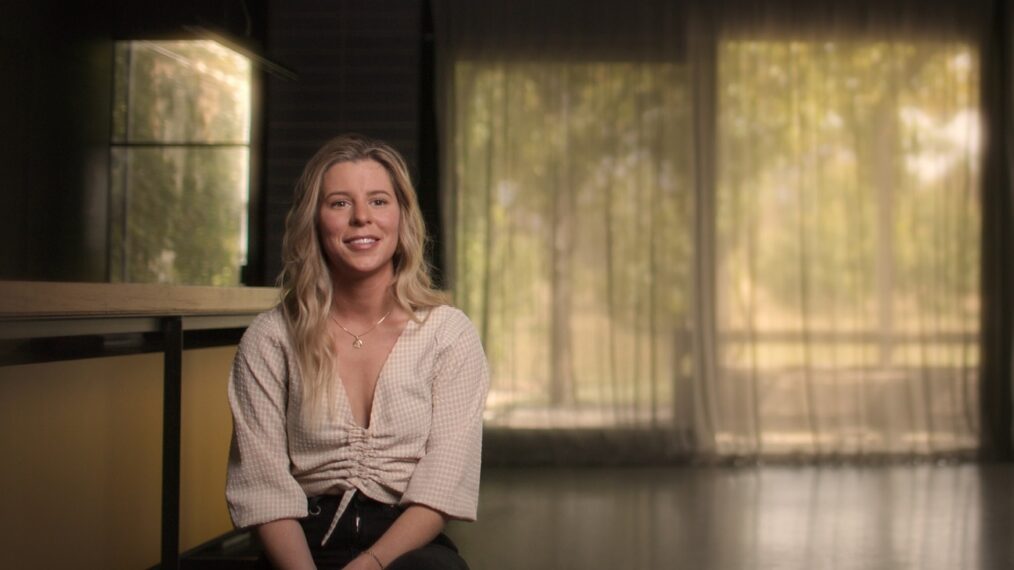
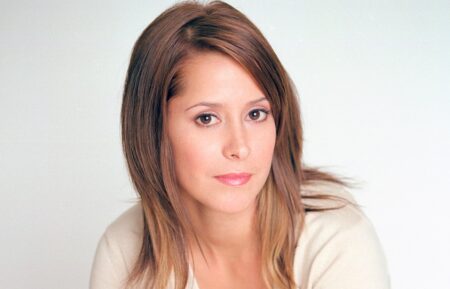
This community has been shrouded in controversy with women speaking about their accounts of sexual exploitation and trafficking. Among those at the center of the project include Ashleigh “Ash” Freckleton, who has opened up about her harrowing experiences. A past cast member of The Bachelor Australia, she recounted living in London when first being part of a school in 2018. What followed in Romania and Paris going through the initiation process gave her PTSD. She was able to escape before being formally indoctrinated into the group.
Freckleton has since become an advocate and spoken up through varying avenues including social media. Bivolaru was arrested during a raid in November 2023 and charged in France in November 2023 with human trafficking, organized kidnapping, and rape. Ahead of the March 13 premiere, we caught up with director Rowan Deacon and producer Suzanne Lavery at Lightbox to talk about how they tackled the complexities of the stories across multiple countries.
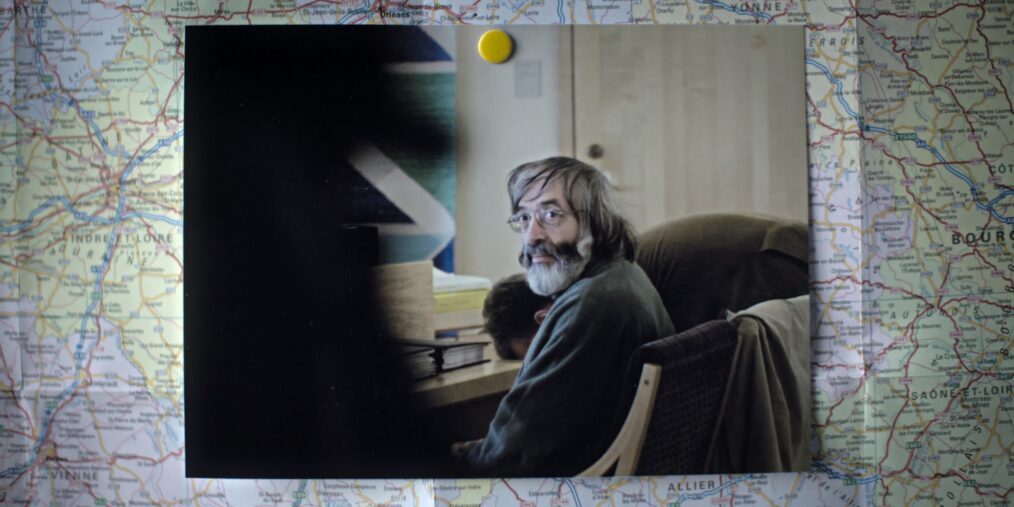
Archival photo of Gregorian Bivolaru in “Twisted Yoga,” premiering March 13, 2026 on Apple TV. (Apple TV)
What kind of challenges did you face as you work to maintain your journalistic integrity while also respecting the fact these women are coming forward giving these traumatic accounts?
Rowan Deacon: I think we knew from the very beginning when we started speaking to contributors and former members of the organization and the schools we explore in the series that we were most keenly interested in telling the story of a kind of psychological crime. That we wanted to put the women’s testimonies and their experiences front and center. We were going to approach this as an investigative piece, but more of an experiential, subjective, psychological drama. I guess we knew that would be the best of it. In terms of how we balanced that in terms of my feelings when I’m interviewing women and making sure I stay kind of critically distanced, I think it was more of we didn’t want to simplify things. We couldn’t simplify it in a way.
This is one of those stories where you kind of read the headline, and it kind of doesn’t make sense. Like did they go willingly? It raises a lot of questions. It had to be approached by a very complex approach where we tied in the nuance of very different women’s experiences. Some of the women testified to having had positive experiences in Paris. We are also tying their POV with the French police that see this criminal activity and eventually arrest Gregorian. It has multiple perspectives. That is how we balance those things. It’s not cut and dry. It was also unfolding as we were making it, so we played catch up a little bit with ourselves.
What was it like to get to know these women?
Rowan: One of the reasons I wanted to make the series and join Suzanne was after already speaking with two women and one man at the very beginning. They were so articulate and so reflective, self-reflective, prepared to be honest and open, I just knew they would be able to take the audience to some quite strange places. I think getting to know them was a privilege as they trusted us. We had to practically immerse ourselves and practically join the school to understand the ideologies and dogma and the practices that went on inside once you join the school. We were also conscious as we met the women that this was a huge ask of them to share these stories. It’s quite intimate, quite shocking. We were really just clear of our vision for the series and really clear about our boundaries, what their boundaries were for what they were going to talk about and how they were going to do that. We were conscious this was an extraordinary story, but also an incredibly sensitive one.
When it comes to Ashleigh, how important it was to have her on board for this. Did one follow the other as far as building trust?
Suzanne Lavery: Ashleigh was one of the main catalysts for having the whole story come to the screen. Ashleigh and Ziggy and Miranda, they approached producer Bernadette Higgins, who brought the story to us at Lightbox. They were really the people who were saying we have a story and want to tell it in the best possible way. Ashleigh was absolutely key to proceeding really. The three of them were. Having those three onboard were what started the production and went wider where we had a longer research period where we went on to investigate the scope of the story and how many other people have had similar experiences. They really unlocked it and then it was on us to find people to corroborate their stories and to find a way through this extremely complicated story that is happening at so many different locations and timeframes. Ashleigh was pivotal, but there were a lot of other people we needed to speak to as well.
What was the most eye-opening aspect of this story to you?
Rowan: For me, the fact this had been going on for so long, I couldn’t quite believe when we found out. We started with some very recent experiences that we wanted to share with the women that wanted to share their stories. It’s a story that needs telling. Ashleigh was a unique person in the story in that she had been taken to Paris, but then left and flown straight home. We describe it as a glitch in the system because it meant she had seen inside the deeper or the more extreme parts of the school, but she hadn’t been through it or taken part in it. This made her a sort of whistleblower I guess. For the women who went through it, they didn’t just go in and walk out into a police station.
Ashleigh was this whistle-blower in ways. It helped to have her, but if we were to tell this story we needed to put in a position of women who had been in it as deep as possible within the organization because we wanted to journalistically reveal some of the more extreme and potentially criminal activities going on. It helped to a degree because it helped us with introductions, but what was complicated was the schools aren’t just like in one place, they are an umbrella organization with lots of almost franchise schools in lots of countries. So we had to infiltrate former member groups in those areas. Because it was going on for 20 years, there were pieces of journalism spread all over Europe that we tapped into. A program was made in 2003 in Portugal where we were able to track down and meet her. The fact it had been going on for so long. [Gregorian] had been hiding for 20 years really. It was just extraordinary that this tantric secret had been kept.
Considering the story was still unfolding, how was it coming to a stop point when laying out the format?
Suzanne: There is a degree of planning and also a degree of we are on this journey and follow what happens because it was an unfolding story as we were filming. It meant we had a huge amount of material to really work through in the three episodes. It did take a long time in the edit for it to find its shape. Where we would share this information and when we would hold something back, or at one point, would we see the guru? At one point, when it would be useful to introduce each character? So there were multiple storylines at play, which made it a process in editing, but I think we cracked it in the end.
What was your timeline for production?
Rowan: Suzanne, your commission I think came in 2022. Then you went into production in 2023 and with me. Two years of production I’d say. The story was unfolding while we were in production. We started and the guru was still receiving women in Paris, so he wasn’t in custody at that point. Then he was arrested while we were filming in Australia. Then it sort of both gave us the potential of a sort of endings, I guess, because we were thinking of alternative endings at that point. It gave us a conclusion, at least this part of the legal story. It also opened up and gave us access to the French police, which was a sort of whole other story and angle because previous to that we had only been focusing on the Romanian backstory. Someone needs to write a book about that because there was only so much we had screen time for. It’s an extraordinary piece, the rise of a guru through communist Romania. That is the surprising place you’ll find a yogi, but there he was.
He certainly leaned into the idea of being persecuted in Romania.
Rowan: Yeah, he was slipping into an accident of history in the way. Another thing we found out is he kept this narrative. He was a communist dissident and enemy of the communist regime. It’s true that there were enemies of the communist regime who left as dissidents and were given safe refuge in Western Europe. When he was charged with crimes in Romania, he fled the country and was given asylum in Sweden as a dissident oppressed because of his religious beliefs and then he opened the school. We need to check the files and files and find if it was true, and it had been true because the Romania part nobody had pulled it together in the longform. So we’re having to do a lot of firsthand research to understand that.
What kind of update can you provide viewers following the documentary in regards to Gregorian?
Rowan: He is currently in custody. He has been in custody for two years awaiting trial. There is absolutely no certainty the trial will go ahead. The judiciary in France is still deciding if they have the evidence to take the case to trial. I think that in itself is fascinating and what gave the series a journalistic purpose because there are no guarantees for that. Of course, he denies the allegations which the film sets out. In terms of where it’s going next, one hopes there will be a trial, but the schools are all still opening and functioning.
Suzanne: We believe so, but because it’s such a large organization, we don’t know exactly what is going on in each specific school because there are many.
Rowan: The one around the corner from us is still open.
Twisted Yoga, March 13, Apple TV
If you or someone you know is the victim of sexual assault, contact the Rape, Abuse & Incest National Network‘s National Helpline at 1-800-656-HOPE (4673). If you or a loved one is in immediate danger, call 911.



 Watchlist Easy access to only the shows you care about — all in one simple place
 Alerts Only important notifications — when a show is returning, when it becomes available to stream, and more.
 Special Offers Exclusive products we release related to your favorite shows and streaming services