
‘Take That’: The British Boy Band’s Fall and Rise, Explained



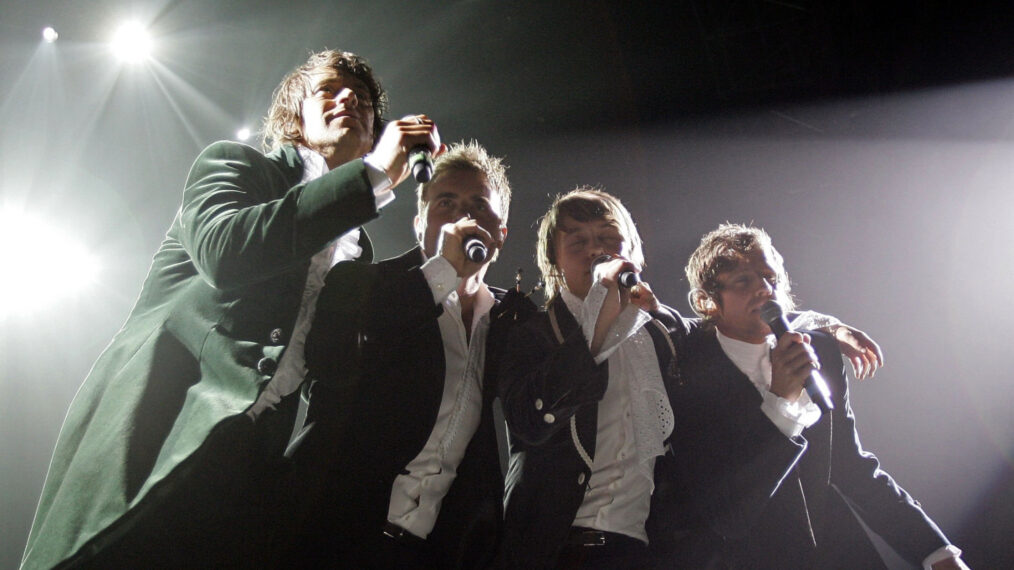
After the Beatles and before One Direction, another British boy band had fans enthralled. And they’re narrating their own history in the new Netflix docuseries Take That, debuting on Tuesday, January 27.
“Our story is amazing — and we were all excited about sharing it in a way people haven’t seen before” Take That member Gary Barlow told BBC News. “Some of the headlines from our early days made it seem like there was a lot more drama than there was. So, we felt that if we were going to tell our story properly, it needed to be more representative.”
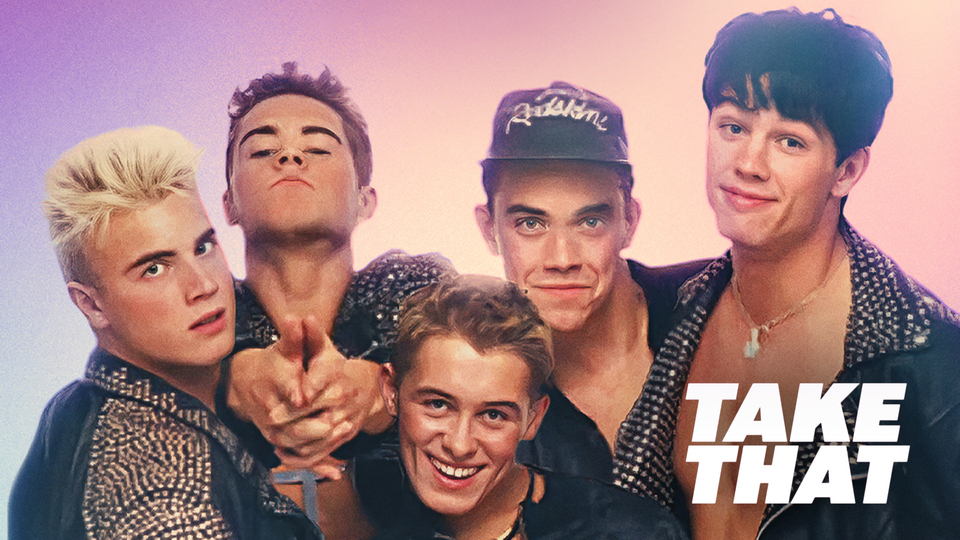
Barlow and fellow bandmates Howard Donald and Mark Owen have all contributed commentary for the docuseries, which tracks the rise, fall, and reunion of a band that also included Robbie Williams and Jason Orange.
Take That has topped U.K. charts as a quintet, quartet, and trio.
The group formed in Manchester, England, in 1990 under the supervision of band manager Nigel Martin-Smith. The very next year, they broke into the Top 40 of the Official Singles Chart (the U.K. equivalent of the Billboard Hot 100) with “Promises,” a single from their 1992 debut album, Take That & Party.
The following year, they hit the Top 10 with “It Only Takes a Minute.” And the year after that, they scored a No. 1 single with “Pray,” off their 1993 sophomore album, Everything Changes, which hit No. 1 on the albums chart, as did their follow-up, 1995’s Nobody Else.
Williams left Take That in 1995, however, and the group broke up the following year, much like how One Direction split the year after Zayn Malik’s departure.
That wasn’t the end of the Take That story, though. The boy band reconvened with Williams in 2006 and released two No. 1 albums as a quartet: 2006’s Beautiful World and 2008’s The Circus. Williams did return to the fold, however, for the group’s 2010 album Progress, another chart-topping release.
Both Williams and Orange departed the group in 2014, but the trio of Barlow, Donald, and Owen have continued the group’s success, releasing even more No. 1 albums with 2014’s III, 2017’s Odyssey, and 2023’s This Life.
The docuseries chronicles the band’s dramatic hiatus.
The Take That docuseries’ first episode culminates with Williams’ departure, and the second delves into the pain and depression that followed, per The Telegraph.
“I’ll be honest with you, it took me about a week to get through that second episode,” Barlow told the newspaper. “It was a really, really hard watch. A lot of the things in it, I haven’t thought about for a long, long time, and they’ve actually stuck with me since viewing it.”
For starters, Barlow’s bandmates perceived him as the favored talent of Martin-Smith, their manager. “That’s kind of how it felt,” Donald told The Telegraph. “First time around, it was almost like the four of us against Gary.”
But Barlow’s solo career had bottomed out by 1999, and he became a depressive recluse, the newspaper reports. Donald also struggled with depression during the hiatus. “It was a difficult thing to handle, feeling sorry for yourself, thinking that this band of the Nineties was going to go on forever, and what am I going to do now?” he remembered.
Making matters worse, Williams was enjoying a successful pop career post-Take That, and he trashed his former bandmates in 2006 — when he told the press Barlow’s solo efforts were “awful” and Orange would be better off as a painter — and again in 2005 — when he claimed at the Brit Awards that he was “always the talented member of the band.”
The bad is on “happy” terms now, and the documentary combines old footage with new insights.
Now, though, the current and former members of Take That are on much better terms. Barlow says the idea of Williams and Orange rejoining the group someday is “bloody great,” but he notes the trio is a “a very happy band” now.
And Take That offers the gents a chance to walk down memory lane, with documentarian David Souter (Bros: After the Screaming Stops) using footage Donald videotaped himself.
“I gave some of my camcorder tapes and old diaries — from the 1990s to 2015 — to the production company, and they delved in and picked up the right bits for the documentary,” he told BBC News.
And with Take That ready to hit Netflix, the namesake band is reflecting on 35 years of making music, sometimes together and sometimes separately. “A moment that sticks in my mind was when we wrote and recorded the Progress album at Electric Lady Studios — which was [Jimi] Hendrix’s old studio — in New York,” Owen recalled to BBC News.
“That was the first time the five of us had ever been in a room making music together, and there was so much energy flying around… It was beautiful, magical, and, at the same time, incredibly fragile.”
Take That, Series Premiere, Tuesday, January 27, Netflix




 Watchlist Easy access to only the shows you care about — all in one simple place
 Alerts Only important notifications — when a show is returning, when it becomes available to stream, and more.
 Special Offers Exclusive products we release related to your favorite shows and streaming services