
‘Top Guns: The Next Generation’ Director on How Docuseries Will Take Your Breath Away



Exclusive
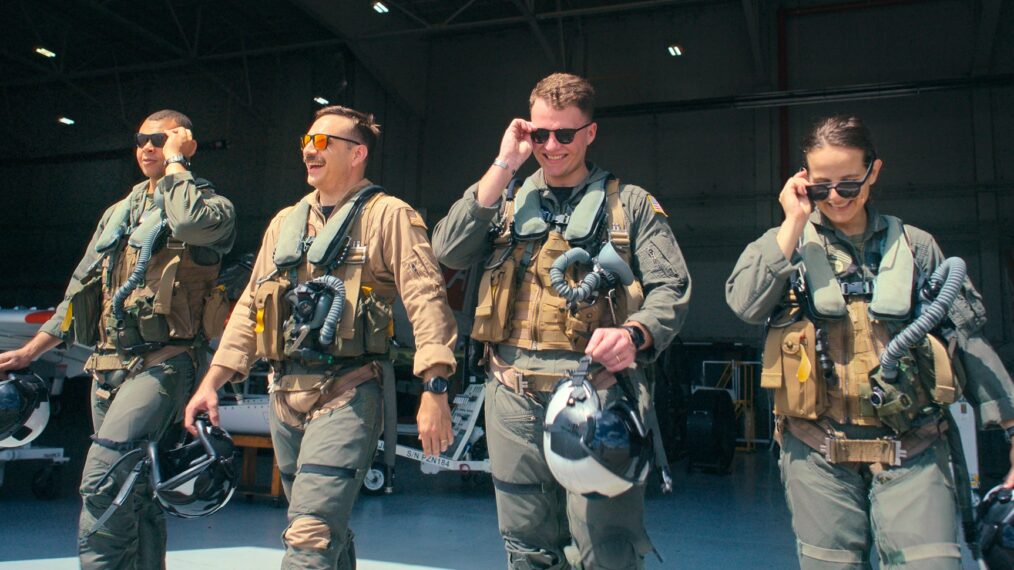
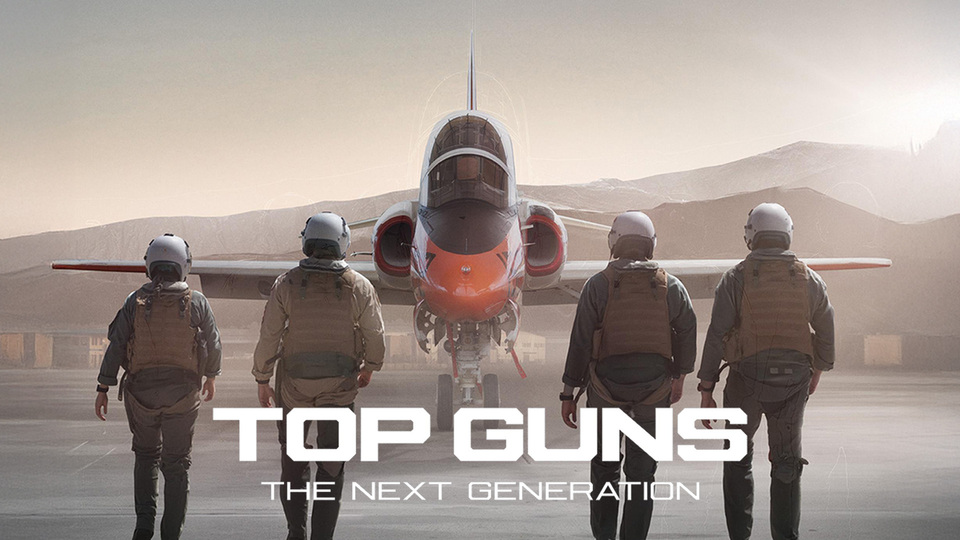
The pilots of Top Gun: The Next Generation have the need…the need for speed! This new National Geographic docuseries follows a class of Navy and Marine Corps student pilots on their journey to receiving their sought after wings. Though becoming elite strike fighter pilots is no easy task as evidenced in the six episodes chronicling the different phases of training.
Some of the same creative talent behind Top Gun: Maverick helped capture the adrenaline-filled aerial sequences from bomb drills to close-ranging dogfights. Beyond the pulse-pounding moments in the cockpit, cameras chronicle the candid moments as the recruits feel the immense weight and pressure only the most driven accomplish.
Here Director Lana Salah breaks down what went into why this show will take your breath away.
You got unprecedented access for the project. Take me through what the logistics were for that?
Lana Salah: The access took quite a long time. My colleague Karen [Edwards] had made the U.K. equivalent of a fighter pilot that trained here and part of that she filmed with the U.S. Navy. That’s how the conversation started. That was about six years ago. It has taken quite a long time. It’s like everything. There are a lot of conversations, a lot of trust and mutual respect. But we have a really good relationship with the U.S. Navy and press team there. They have been brilliant.
The individuals featured have some great backstories. Some are following in their family’s footsteps. Some are just inspired by someone or an experience and are first-generation military. What went into finding these individuals who are willing to share their journey during this high-pressure time?
When it came to casting, the truth is we could have ended up with any of them. They have a rolling class system. Every two or three weeks a new class starts. It just so happens there is a certain number of students across sections. Then it was up to them, if they wanted to be involved or not. As fantastic and brilliant I think all the characters and cast are, it was quite arbitrary and random who it was. It’s a cross-section of what anybody might find at any one time if they went in, if they met a bunch of students. They are the top one percent of America. They are incredibly intelligent and physically fit and have an incredible work ethic and team ethic, but all have different personalities and backgrounds. All were amazing people.
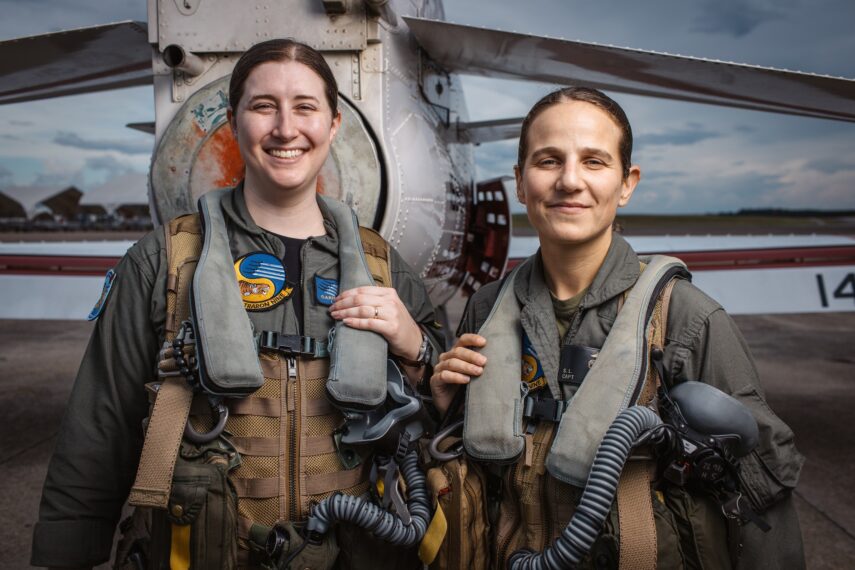
Students LT Carissa Meinster and Captain Steph Harris pose behind a T-45. (Credit: National Geographic/Freddie Claire)
When you think of this line of work, it’s usually male-dominated. So, it was great to follow Carissa [Meinster] and Steph [Harris] on their journey.
There are a lot fewer women than men statistically. I think for them, they are used to being highlighted and looked at more than the men. In a way, I think it was a bigger ask for them to be involved as they are already in the spotlight. I think they are incredible. They are both incredible people. Steph actually won the Golden Stick Award in the end. That means she is the highest achieving student in her year. She is an incredible pilot as is Carissa. They all are. That’s the thing. Even though it looks like they are struggling, the margin of difference is so tiny that we are talking about. They are all brilliant pilots.
What made this phase of their training what you wanted to focus on?
The reason we chose this portion of the training is this is the first time the students are training to do strike bombing runs. They are training to try to land on an aircraft carrier and doing all these things for the first time like navigation, dogfighting and then doing it solo. That’s why we chose it because it lets you walk in the footsteps of those doing it for the first time. That was the most exciting part of the course. There is so much that goes into it, and we have already done a load of safety training and other work before that, but we thought this was the most exciting part.
People will naturally compare what they see to the Top Gun films. There are even some nods to that with a volleyball scene, for example. What do you think people will find particularly eye-opening compared to Hollywood?
I think it’s a difference between the movie and reality if you feel the nuances. You may see the highs and lows and struggles in a way that is maybe more polarized or simplified in a movie. They are students in the beginning of their journey with different hopes, dreams and ambitions. It’s different because you’re getting to know a real person that is more complicated. They are all different in that they are not the stereotypes or the jocks or what you might expect or think. They come from different backgrounds and personality types. They are not all Mavericks.

Student 1st LT Austin Claggett poses in front of a T-45 after it is hosed down. (National Geographic/Lyndsi Gutierrez)
Although is Austin [Claggett] your Goose, you’d say?
When you talk about the parallels, we did want to be playful with it because we knew the audience would be into it. I would ask questions like that and provoke that in a way. Like if you were to liken them to a character in a way, who would it be? I think it was about the way he walked. He had a certain gate the way he walked and physicality. I don’t think when it came to personality-wise he was like that.
There is the level of danger, even in the training portion and before they get their wings. How was putting that on display and filming these cinematic scenes?
It is very, very dangerous what they do. It really is, even in training. Everything we had to do was be Navy compliant with their blessing. We needed the money and time to make that possible. When we put the cockpit cameras in the planes, Pax River, the highly specialized technical team built those mounts for the cameras. They tested them and made sure they were absolutely safe not impede on the students’ learning or visibility or experience in the cockpit. We actually did all the aerial shots with the trained instructors, not with the students. They wouldn’t have let the students do those sort of shots. Everything was with safety in mind, but also the ambition of being able to tell the story in the most cinematic and visual way possible.
What was your big takeaway from working on the project?
To be around young people who are so dedicated, hardworking and ambitious, but also from all sorts of personalities and background types. I think it’s inspiring and humbling and also makes it, in a warm way, believe in humanity and people with what we can achieve and do. That was really special. Getting to see the U.S. Navy in all its glory is pretty amazing, too.
A lot of people are going to watch this and wonder what happens next for these individuals featured. Is there potential for you to continue with them if there was another season or would you rather bring a new crop of recruits?
When they go to the fleet, they are flying very different planes. They are flying an F-18 and F-35. Those are awesome planes and logistically and technically bring a whole other world of problems. If we were lucky enough to do this again, I would do either. I would love to see what they were doing and follow them in the fleet, or you could do all of this again with different people and have a different experience.
Top Guns: The Next Generation premiere, September 16, 9/8c, National Geographic (Next Day Disney + and Hulu
Where to Stream













 Watchlist Easy access to only the shows you care about — all in one simple place
 Alerts Only important notifications — when a show is returning, when it becomes available to stream, and more.
 Special Offers Exclusive products we release related to your favorite shows and streaming services