
‘Star Trek’: A Look Back at the Franchise’s 13 Movies


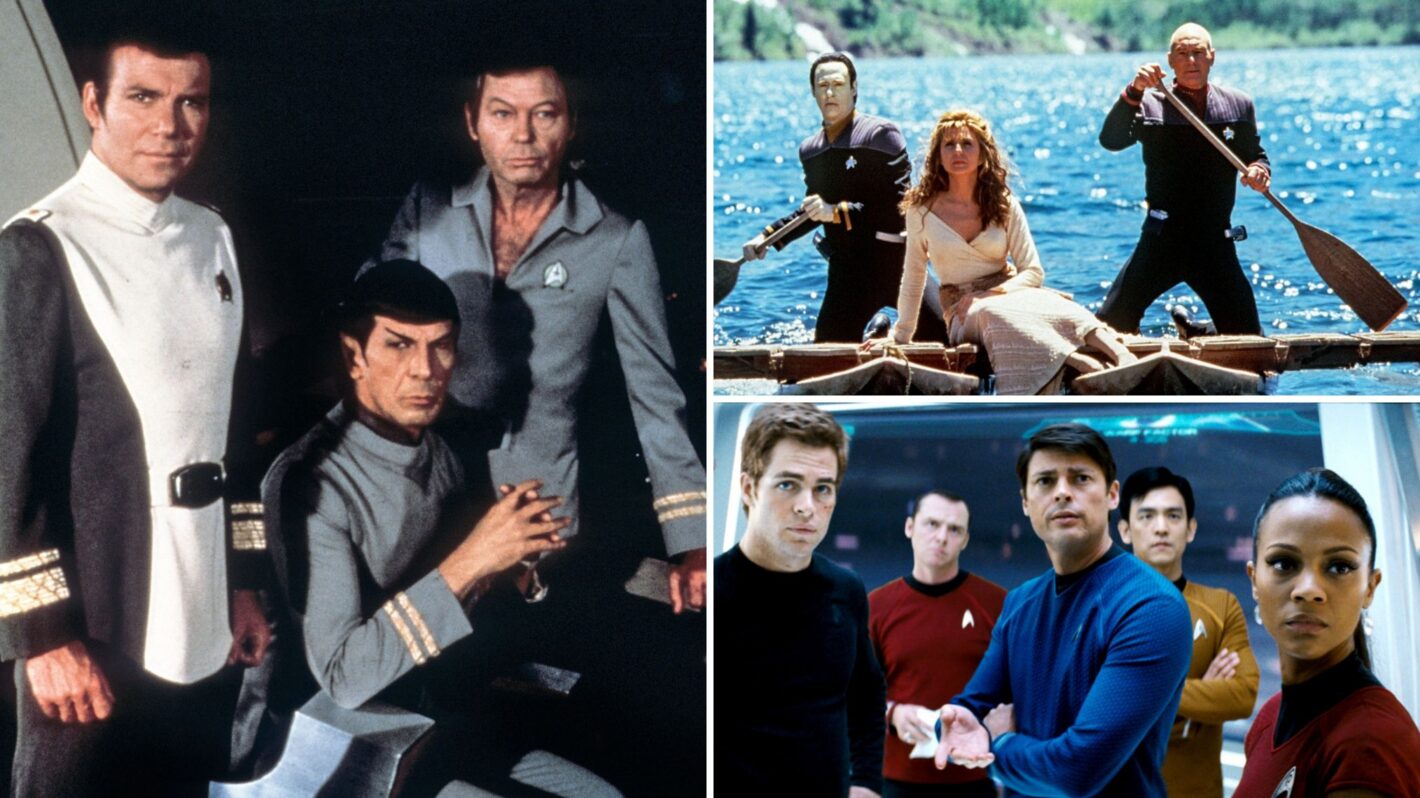
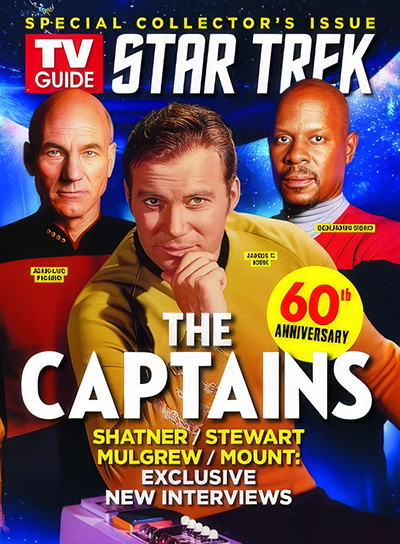
TV was not the final frontier for Star Trek: Gene Roddenberry‘s beloved franchise beamed into theaters 13 times from 1979 to 2016. We take a look back at the movies that launched fan-favorite characters onto the big screen, from William Shatner‘s Captain Kirk and Leonard Nimoy‘s Spock to Patrick Stewart‘s Picard.
Scroll down for a closer look at the Star Trek flicks that expanded the franchise’s horizons, all of which are currently streaming on Paramount+.
TV Guide Magazine’s Star Trek: The Captains Special Issue is available for order online now at StarTrek.TVGM2026.com, and for purchase on newsstands nationwide.
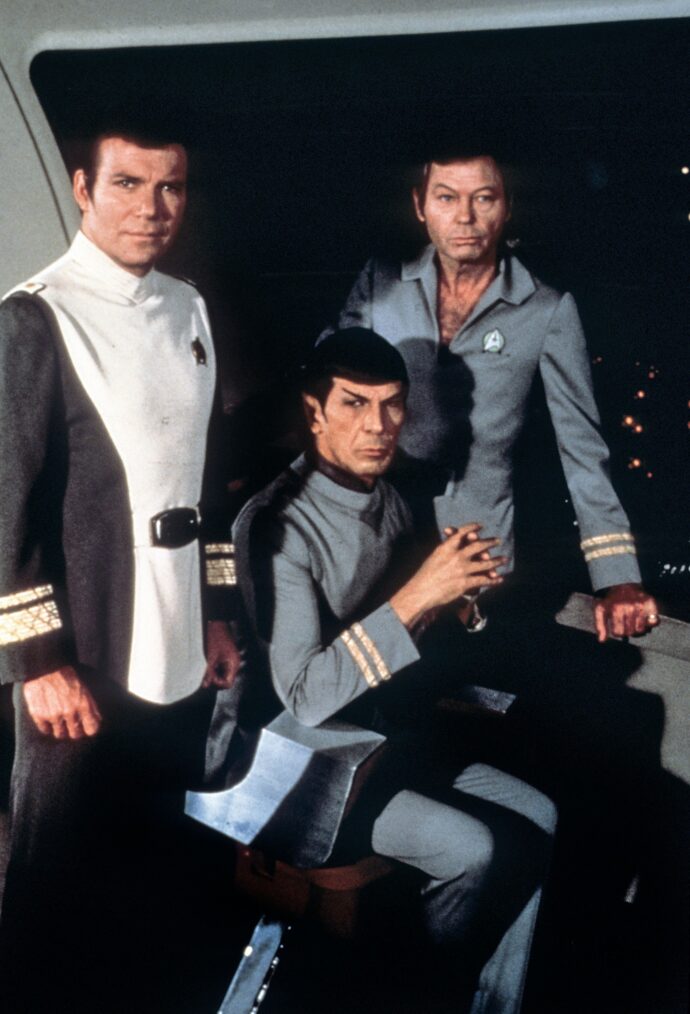
Star Trek: The Motion Picture (1979)
Encouraged by Star Trek‘s popularity in syndication, creator Gene Roddenberry and Paramount started developing movie scripts in 1975. Unable to come up with a satisfying big-screen story, the producers were on the verge of relaunching Trek as a new TV series when both Star Wars and Close Encounters of the Third Kind opened to huge box office in 1977. Reenergized by the success of those sci-fi films, Roddenberry and Paramount premiered The Motion Picture two years later. James Kirk, now an admiral and helming an office at Starfleet headquarters, commandeers an upgraded Enterprise and heads out to confront (successfully) a mysterious, destructive energy cloud headed toward Earth. The original series cast reboarded (including DeForest Kelley, Leonard Nimoy, and William Shatner) but was overshadowed by some new characters created for the planned TV reboot. While it failed to energize critics or fans, The Motion Picture was a huge box office winner, and it relaunched a franchise that still thrives.

Star Trek II: The Wrath of Khan (1982)
The success of The Motion Picture guaranteed the new mission of Trek films. After the staid standalone plot of the first movie, the creative team felt free to write longer story arcs to play out over the span of more than one film, and leaned more into the chemistry of the crew. The Wrath of Khan was a sequel to the 1967 episode “Space Seed,” in which the genetically engineered human Khan, reprised by Ricardo Montalban, and his followers were exiled to a planet after attempting to take over the Enterprise. In the movie, Khan looks to steal Project Genesis, a device that can make a desolate planet habitable — or be used to destroy one. Kirk and Khan engage in a battle of wits and maneuvers, substantially upping the action quotient from the first film. The drama is also raised when Spock sacrifices himself for the needs of the many. Five years before Cheers, Kirstie Alley joined the crew as Saavik, a Spock protégée.
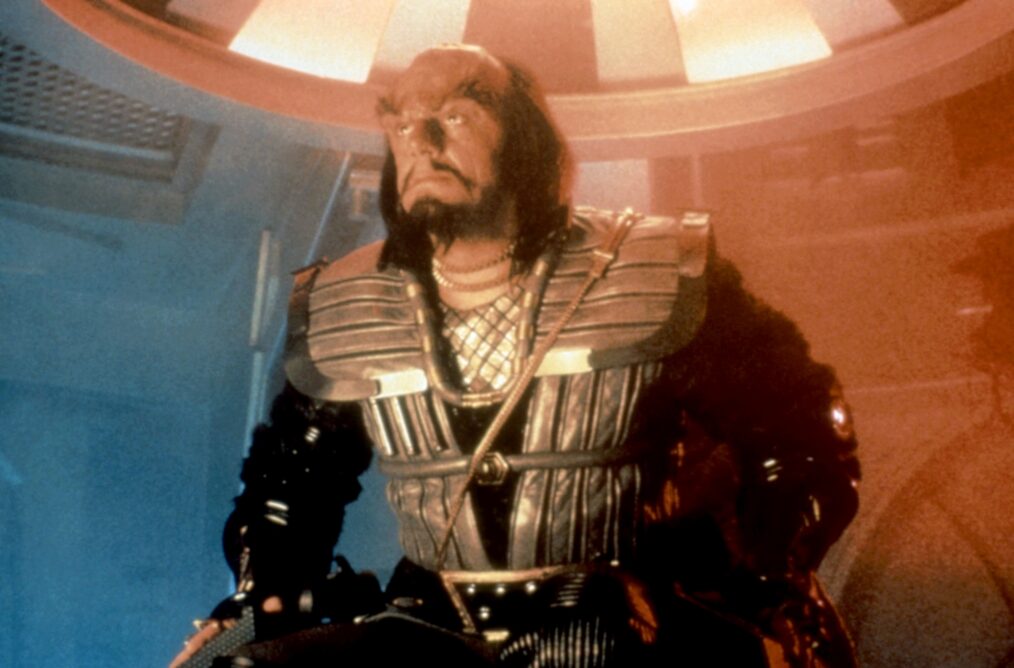
Star Trek III: The Search for Spock (1984)
Search begins right after Wrath of Khan‘s space funeral for Spock, with his launched-out-of-the-Enterprise body conveniently landing on the newly forming Genesis planet. As the Vulcan’s body regenerates, Kirk steals the Enterprise from Spacedock in an attempt to rejoin Spock’s body and soul, the latter of which Spock had transferred to the brain of Dr. McCoy (DeForest Kelley) after a mind meld. Leonard Nimoy, who directed Search, brought an actor’s appreciation to the film and emphasized the supporting cast — Kelley as McCoy, James Doohan as Scotty, George Takei as Sulu, Walter Koenig as Chekov and Nichelle Nichols as Uhura, with Nimoy as Spock — whose stories might have been overwhelmed by the sci-fi action. And Kirk must deal with conflicted emotions — the killing of his son (Merritt Butrick) and the resurrection of Mr. Spock. Right: Outsmarted Vulcan villain Kruge — played by Christopher Lloyd (yes, Doc Brown from Back to the Future!) — battles space worms on Genesis.
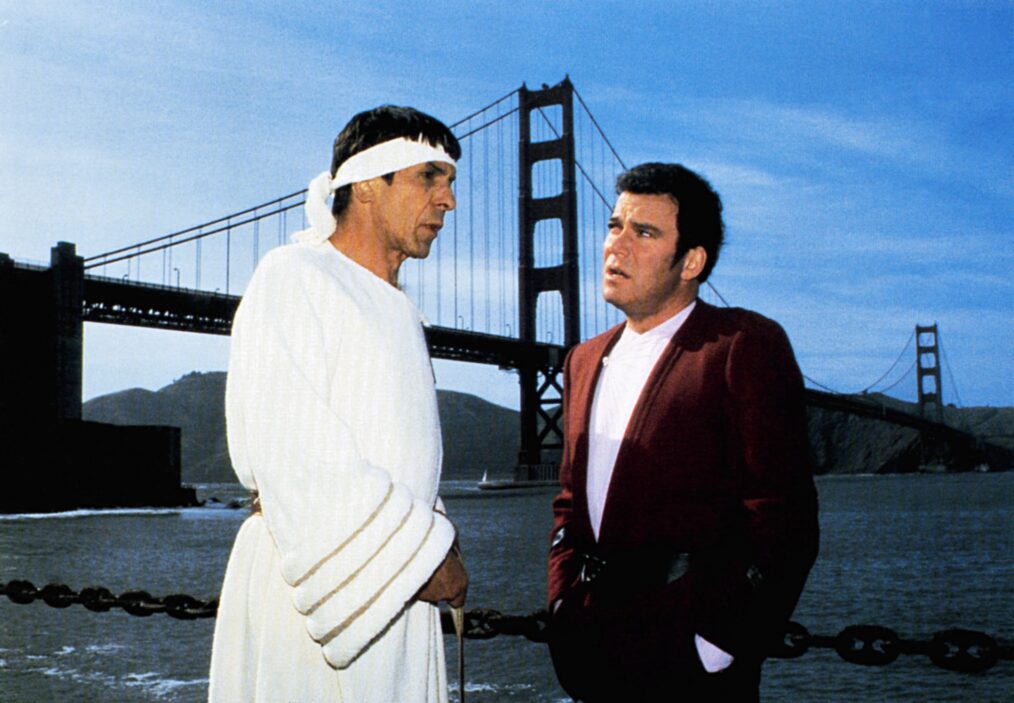
Star Trek IV: The Voyage Home (1986)
Voyage Home is the most Earth-bound movie in the entire Trek franchise, eschewing space battles and Klingon villains to focus on the crew’s attempt to save the whales. After Spock figures out that a probe threatening Earth in 2286 is trying to communicate with now-extinct humpback whales, the Enterprise slingshots around the sun, traveling to 1986 San Francisco, so they can bring a massive cetacean back to the future. The fish-out-of-water adventures make for what is certainly the funniest Trek movie: Spock and Kirk confront punk rockers and try to navigate paying for a ride on a city bus; Scotty maneuvers around a Macintosh Plus computer; and Chekov, who’s looking for an energy source, asks passersby on the street if they can direct him to the nearest “nuclear wessel.” The lighthearted approach paid off. Adjusted for inflation, The Voyage Home is the third highest-grossing flick in the series.

Star Trek V: The Final Frontier (1989)
For the fifth movie, “To boldly go where no man has gone before,” was no longer just a directive from Starfleet but a situation the producers found themselves in. The storylines that started in The Wrath of Khan, including Spock’s death and resurrection and the Enterprise crew piloting their way back to Earth, had all been wrapped up in The Voyage Home. Shatner took over the directing reins from Nimoy and decided to head at maximum warp from Earth…all the way to Heaven. Harve Bennett, a producer on four of the Trek movies, summed up Shatner’s idea: “If you were to reduce the original story down to a TV Guide Magazine logline: ‘Tonight on Star Trek, the Enterprise goes off in search of God.’” In the story, Spock’s half-brother, Sybok (Laurence Luckinbill), hijacks the Enterprise to transport himself to a planet at the center of the galaxy, where he is convinced God resides. They eventually discover that the deity in question is just another alien—albeit one with a vengeful God complex.
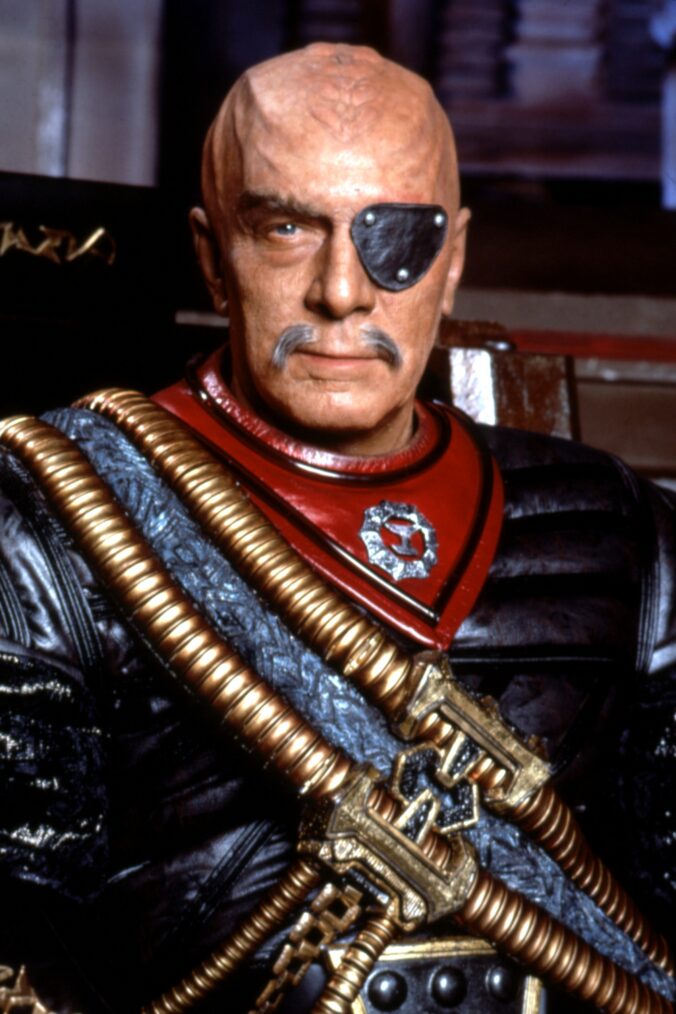
Star Trek VI: The Undiscovered Country (1991)
The writers of the sixth Trek film took a cue from real-world events after the fall of the Berlin Wall in 1989. The adversarial relationship between the Federation and Klingons had always been a stand-in for U.S.–Soviet tension, so now the Klingons were going to undo their belligerent footing just as the Soviet empire was dissolving. After one of their moons explodes and their ozone layer is destroyed, the Klingons negotiate for peace with the Federation. But Kirk and Co. spend most of their time battling the Shakespeare-quoting Klingon Chang (a wonderfully scene-chewing Christopher Plummer), who sabotages the diplomatic efforts. The Undiscovered Country is the last Trek movie to include the entire original cast, as they make way for a new generation to helm the film series. At the end, Kirk gives his last course command to navigator Chekov with a quote from Peter Pan: “Second star to the right, and straight on till morning.”

Star Trek: Generations (1994)
After seven successful seasons — including becoming the only syndicated series to earn a primetime Emmy nomination for Best Drama Series — Star Trek: The Next Generation had come to a close, and it was finally time for Jean-Luc Picard (Patrick Stewart) to beam aboard the silver-screen mothership—but not without receiving the baton from James T. Kirk. The two captains finally meet thanks to an extradimensional “temporal nexus,” existing outside of time. They team up to fight the villain Soran (Malcolm McDowell), who is destroying entire star systems in order to find his own way into the nexus. Befitting such an iconic character, Kirk sacrifices himself twice in the movie, first to rescue the Enterprise-B, then saving Picard’s Enterprise-D and millions of other lives. Now he could relinquish command of the movie franchise, suddenly reengaged with Picard and his own crew.
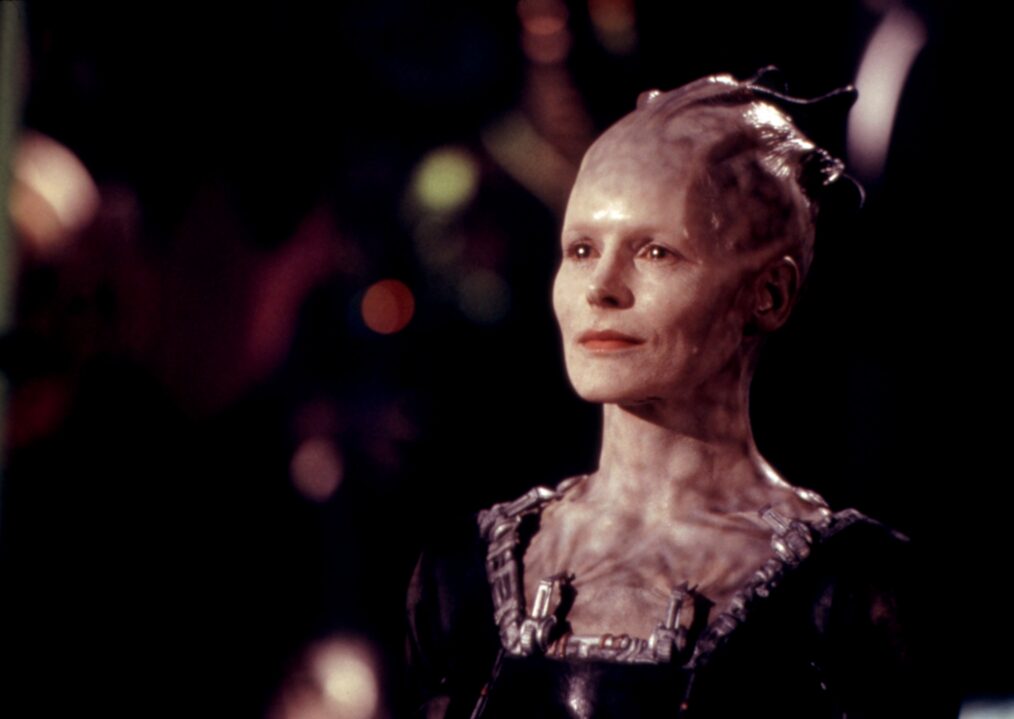
Star Trek: First Contact (1996)
When casting about for story ideas for First Contact, it was futile to resist one of the most popular villains in the Next Generation TV series, the Borg, and one of its most popular episodes, “The Best of Both Worlds.” TV Guide Magazine declared the assimilating cybernetic organisms the No. 4 Nastiest TV Villain of All Time in 2013, and “The Best of Both Worlds” came in at No. 36 among our Top TV Episodes of All Time in 2009. Following in the footsteps of Leonard Nimoy and William Shatner, cast member Jonathan “Will Riker” Frakes was promoted to director for the alien force’s first big film appearance. Led by their queen (Alice Krige), the Borg collective travel back in time in an attempt to stop the initial warp flight that enabled humans’ first contact with aliens (in this case, Vulcans).
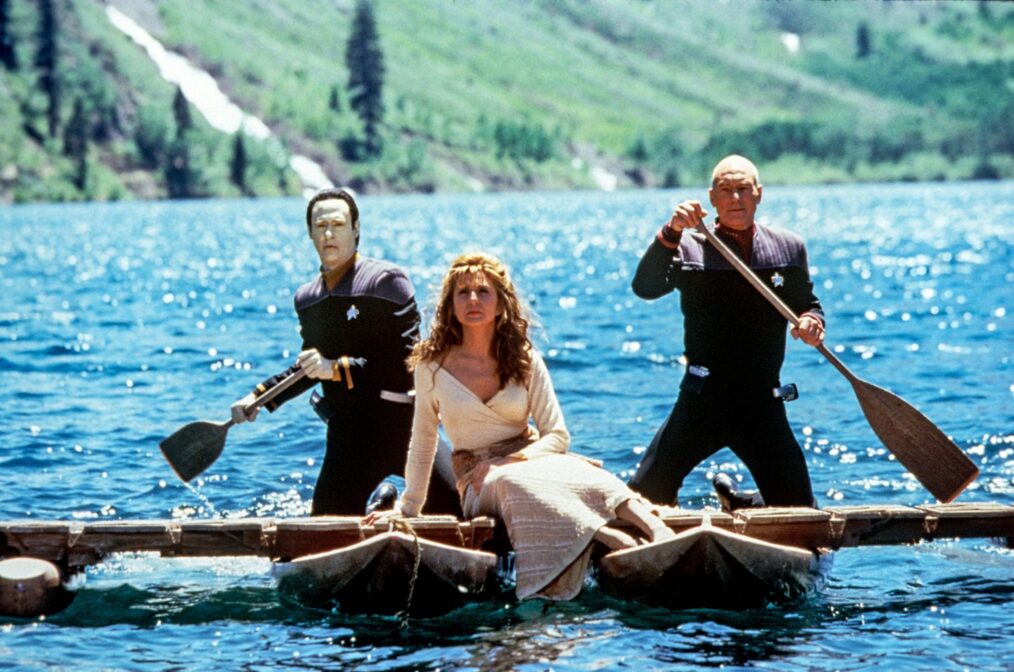
Star Trek: Insurrection (1998)
It’s Starfleet vs. Starfleet in the ninth film as Captain Picard battles a fellow officer who’s gone off the Federation grid. In an attempt to harness radiation particles that grant immortality, Admiral Dougherty (Anthony Zerbe) brazenly ignores the Prime Directive and interferes with the development of an alien civilization. Dougherty is willing to ship the Ba’ku people off their planet, while Picard is committed to upholding the rules. Jonathan Frakes, directing for the second time, balances the action with some rare romance, as the radiation particles also have rejuvenating properties. So, once the crew is exposed, Commander Riker (Frakes) and Deanna Troi (Marina Sirtis) rekindle a relationship, and Picard starts one with a Ba’ku, Anij (Donna Murphy, center, with Spiner and Stewart).
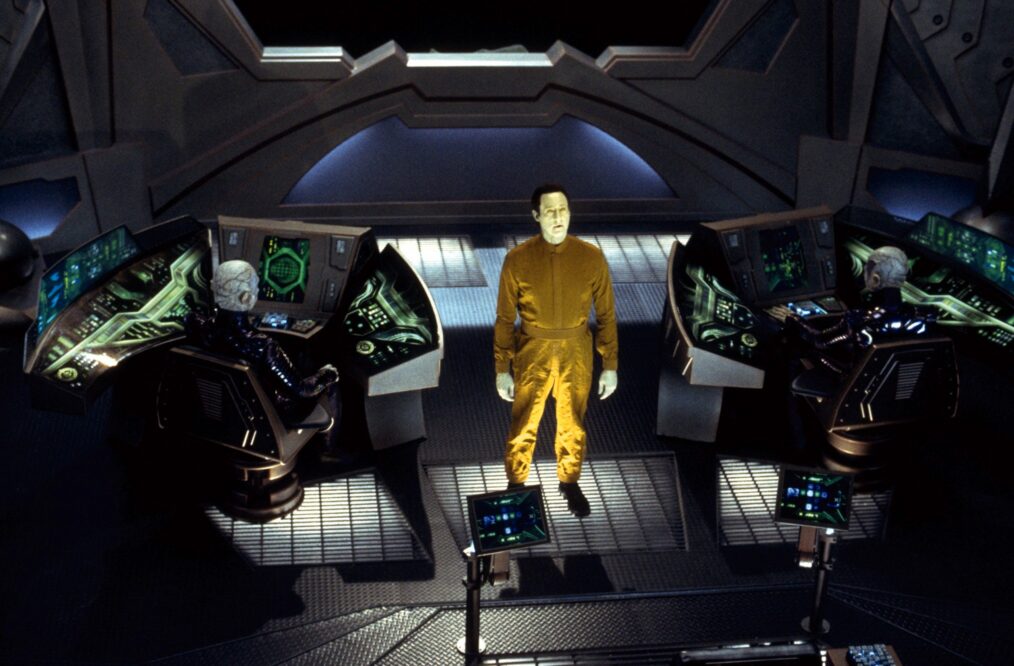
Star Trek: Nemesis (2002)
Now it’s Picard vs. Picard. Well, at least Picard vs. a Picard look-alike. After a reception for soon-to-be-captain Riker and Troi’s wedding, the crew has to face off against Tom Hardy as Shinzon, a clone of Picard originally designed by the Romulans to spy on the Federation. After the Romulans abandoned the project and deserted Shinzon, the clone became intent on destroying the Federation. A few months after Nemesis opened, Patrick Stewart sensed this might be his last Trek. “I’ve probably said goodbye to Picard forever,” he mused during a press tour for X2: X-Men United. Nemesis was indeed the last film to star the cast of The Next Generation, but it wasn’t the end of Star Trek (or, thankfully, Picard). There would be a little more time between movies than usual, but Kirk, Spock and the original characters would return in the biggest blockbuster of the franchise’s history.
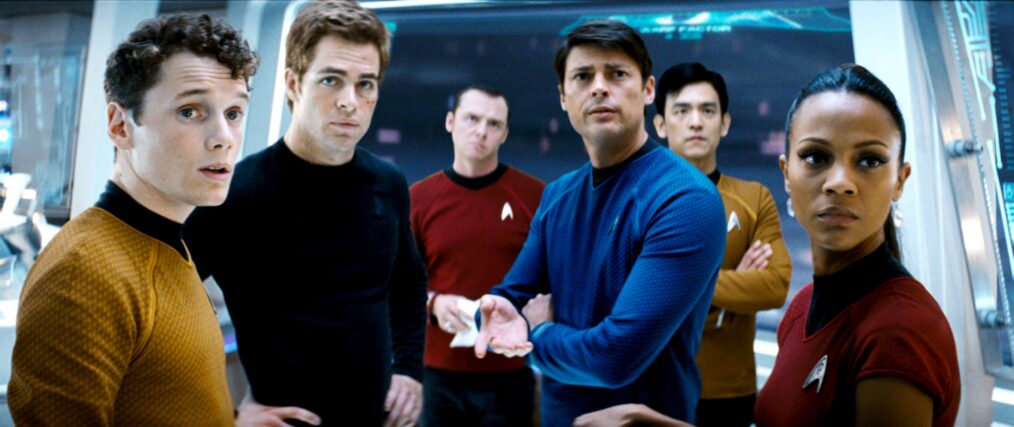
Star Trek (2009)
Three Years after the last movie, and just months after UPN’s Star Trek: Enterprise (captained by Scott Bakula) was canceled in 2005, Paramount decided It was time to boldly go…back. Lost and Felicity co-creator J.J. Abrams, whose only movie directing credit at the time was the well-reviewed Mission: Impossible III, was hired to reboot the franchise with an entirely new cast playing the original Enterprise crew. Time-traveling Romulans set in motion this new origin story — which also created the Kelvin Timeline, the imprimatur for an alternate universe that might deviate from the original Trek adventures. Below: Anton Yelchin as Chekov, Chris Pine as Kirk, Simon Pegg as Scotty, Karl Urban as McCoy, John Cho as Sulu, and Zoe Saldana as Uhura.
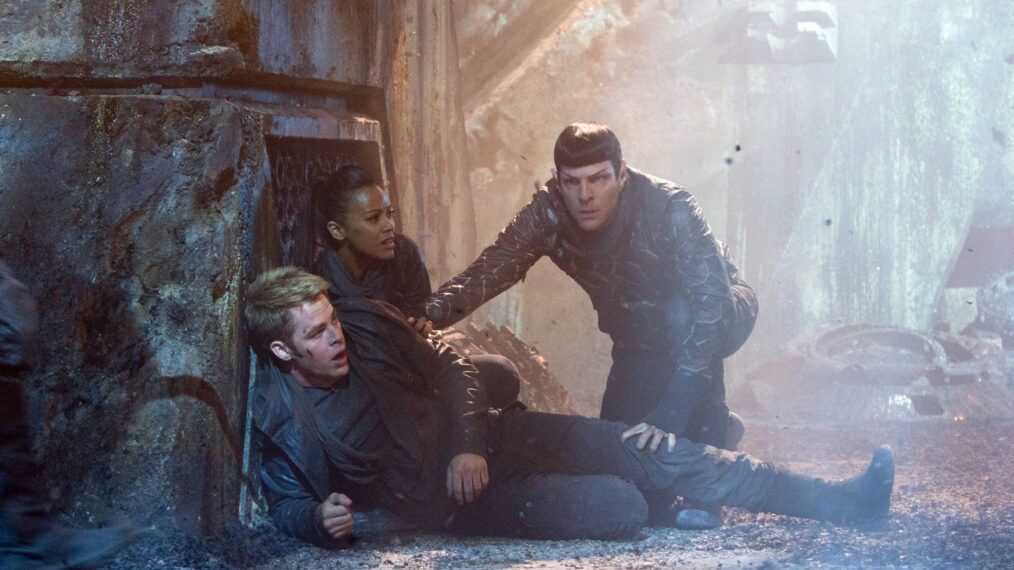
Star Trek Into Darkness (2013)
J.J. Abrams’ Star Trek was the seventh highest-grossing movie of 2009 and remains the biggest Trek movie to date. With the franchise now reinvigorated, he returned for the sequel along with his entire main cast. Into Darkness introduced an updated version of a classic series and movie villain in a script that referenced 1982’s The Wrath of Khan. In this latest take on the character, Admiral Marcus (Peter Weller) awakens the genetically engineered supersoldier (Benedict Cumberbatch, below) from 300 years of suspended animation to help fight the Klingons. Leonard Nimoy again appeared — for his final portrayal of Spock, and his last film appearance before his death in February 2015.
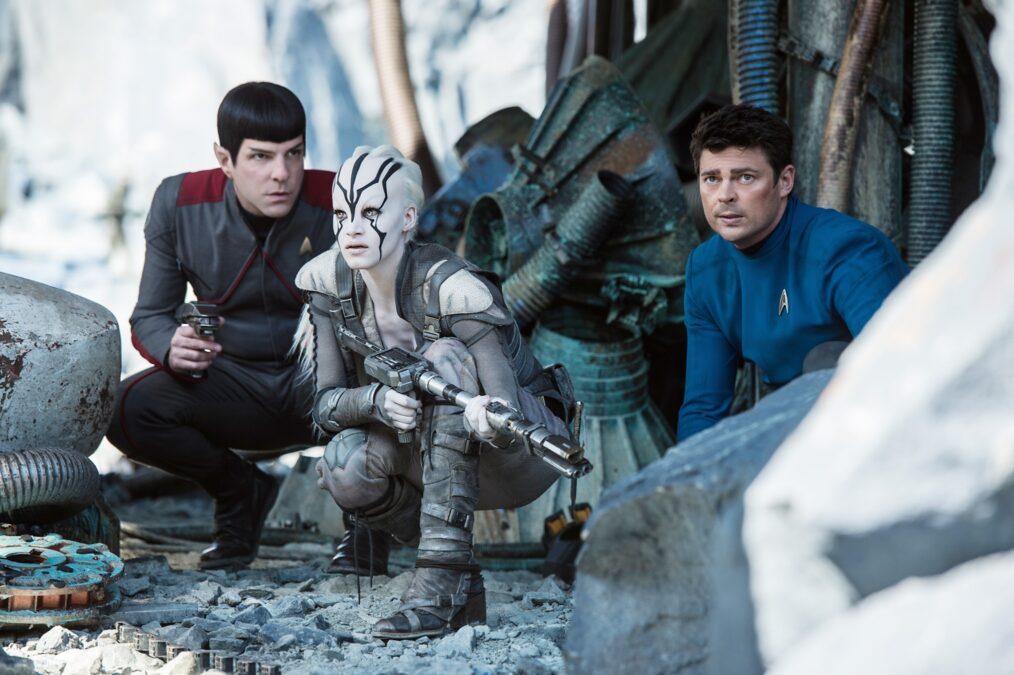
Star Trek Beyond (2016)
With Abrams lost to another little movie franchise called Star Wars (though he stayed on as a producer), Justin Lin, best known for helming five of the popular Fast and Furious films, took Trek‘s directing reins. In this adventure, the Enterprise comes under attack by an alien swarm while on a mission at the edge of the Federation’s 8,000-light-years territory. The crew must abandon ship, many in individual escape pods, and land separately on a nearby planet. Luther‘s Idris Elba stars as a mysterious villain named Krall — from a new alien species — who has a philosophical beef with the Federation. The film is dedicated to Anton Yelchin (Chekov), who was killed in a freak accident a month before the film opened, and Leonard Nimoy, who died before filming began. Above: Spock and McCoy are stranded alongside alien Jaylah (Sofia Boutella), who turns out to be an important ally.
Conversation
Please read the TV Insider Community Guidelines.
Register or sign in to join the conversation.
 Watchlist Easy access to only the shows you care about — all in one simple place
 Alerts Only important notifications — when a show is returning, when it becomes available to stream, and more.
 Special Offers Exclusive products we release related to your favorite shows and streaming services