
Roush Review: Back to Barbary Lane for More ‘Tales of the City’


Review
Just because you can go home again… should you?
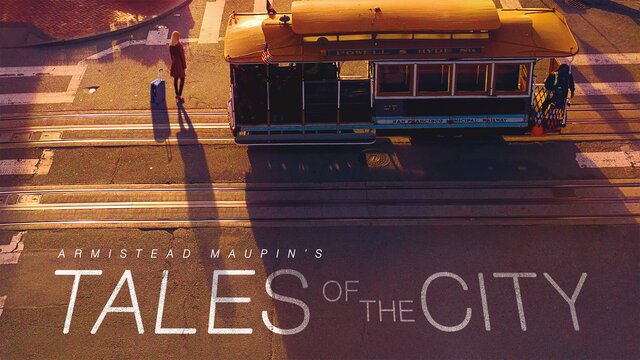
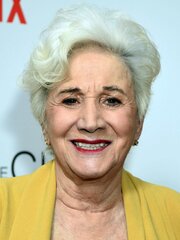
That question haunts Netflix’s revival of Tales of the City in a flawed but genial sequel to Armistead Maupin’s fable of bohemian San Francisco. It should be cause for celebration when the overbearingly naive Mary Ann Singleton (Laura Linney) returns to the magical sanctuary of 28 Barbary Lane after 20 years to mark the 90th birthday of den mother Anna Madrigal (a still-regal Olympia Dukakis).

But with her stuffed-shirt and soon-to-be-estranged husband from Connecticut (Michael Park) in tow, the tone quickly becomes soppily sentimental as Mary Ann awkwardly reconnects with her more laid-back ex, Brian (Paul Gross in silver-fox mode), and their mopey daughter, Shawna (Ellen Page, a real Debbie Downer). With the exception of Anna, few seem all that thrilled to welcome her back, and it’s not hard to understand why.

(Netflix)
Succumbing to Netflix bloat with 10 sprawling and generally uneven episodes, the new Tales feels like a mopey Freeform soap when the focus turns to a new generation of self-absorbed, gender-fluid millennials whom Anna has more or less adopted. One subplot, involving the shifting affections of the transgendered and sexually questing Jake (Garcia) and lesbian girlfriend Margot (May Hong), is at least intriguing. Whereas the chip on Shawna’s shoulder grows old fast, even before she becomes drawn to an obnoxious videographer (a typecast, and unbearable, Zosia Mamet)—who’s not even the worst of these characters.

(Netflix)
That dubious distinction goes to a set of twins (Ashley Park and Christopher Ravin) who document their every feeble action on social media. Even if this weren’t a tired trope, they’re so singularly charmless it never fails to annoy.

Still, the new Tales is not lacking in virtues. The terrific eighth episode — yes, it takes that long to get there — flashes back to 1966 and transgender pioneer Anna’s arrival in the city, during which she is embroiled in a diner riot predating New York’s better-known Stonewall uprising. Jen Richards plays the younger Anna with tremulous empathy, and after failing to heed her fellow travelers’ warnings not to get romantically involved with an admirer (Luke Kirby), Anna learns the hard way that even in a progressive fairyland like San Francisco, times haven’t changed that much. At least not then.

(Netflix)
In the present day, the strongest storyline follows a torrid love affair between fan favorite Michael “Mouse” Tolliver (Looking‘s Murray Bartlett effortlessly assuming the role) and the much-younger Ben (Russian Doll‘s Charlie Barnett). A remarkable scene in the fourth episode brings the couple’s multi-generational divide into sharp focus, when they attend a dinner party attended by a sassy collection of older queens — a remarkable assembly of openly gay (or non-binary) theater and TV stars including Malcolm Gets, Bryan Batt, Stephen Spinella, Taylor Mac, Dan Butler and Brooks Ashmanskas (a Tony nominee for The Prom). When Ben dares to raise his politically correct voice, the response is vicious, including a call-out to Angels in America by Spinella (who famously starred as that play’s original Prior), which is about as meta as it can get.

Too bad the story soon dips into contrived melodrama with a blackmail plot, a silly save — Barbary Lane standoff and a mawkish conclusion that’s more likely to induce eye rolling than wiping away tears of nostalgic reunion. Being a fan of this franchise from way back, it hurts me to say I wish they’d just left well enough alone.
Tales of the City, Season Premiere, Friday, June 7, Netflix






Where to Stream


Latest Headlines
- Elliot Page Reportedly to Continue in Same Role on 'Umbrella Academy'
- Worth Watching: 'Designated Survivor' Survives on Netflix, New 'Tales of the City,' a Whale of a 'Whistleblower'
- Laura Linney Reflects on 'Tales of the City's Return, Mary Ann's Journey & More
Conversation2 Comments
Please read the TV Insider Community Guidelines.
Comments are closed on this story.
-
C
The series is a chore to watch. It's not just bad, it's boring. The book and original series characters were vibrant, well-drawn people who were looking for love and happiness. In this new series, everyone is a Debbie Downer. Long stares have taken the place of character development and situations take the place of plot. Does an all-queer writers' room matter when this is what it turns out?
-
C
Yeah, it isn't great. It felt very preachy, with all the whimsy and joy of the original books removed. Damned if I cannot understand how Dede's Asian-American twins are not part of the story, but there are completely new and different set of Asian-American twin characters in the story, that then end up living with Dede? If they are her twins, I am not sure how we were to know that, they behave as if they don't already know each other, and are not affectionate towards Dede. Yes, their story line was pointless, but this was even more perplexing.
 Watchlist Easy access to only the shows you care about — all in one simple place
 Alerts Only important notifications — when a show is returning, when it becomes available to stream, and more.
 Special Offers Exclusive products we release related to your favorite shows and streaming services