
‘Sense and Sensibility’ Producer & Stars Reveal How the 2026 Film Is Different, From the Sisterly Bond to Hair Choices



Exclusive
What To Know
- The 2026 version of Sense and Sensibility highlights the sisterly bond between Elinor and Marianne Dashwood.
- Daisy Edgar-Jones, George MacKay, Caitriona Balfe, producer India Flint, and more take us inside what makes this adaptation different, the romances, and more.
Like Marianne Dashwood herself, Jane Austen fans require so much when it comes to adaptations of the beloved author’s works. But that didn’t scare the team behind the latest take on Austen’s iconic 1811 novel, Sense and Sensibility. And while this novel already has one outstanding adaptation in Ang Lee‘s Oscar-winning 1995 film, there’s plenty of room for a fresh, inspired take over 30 years later, right?
That’s where director Georgia Oakley (Blue Jean), screenwriter Diana Reid, and the rest of the producing team comes in. “Because it’s such a loved movie, [the team decided that] if we were going to do our own adaptation, we had to do something totally different,” explains producer India Flint. “There’s no point remaking that exact version. It exists in its perfect form. And so, even at the early script stage, we were like, ‘What’s our take going to be? How is it going to be different?’”
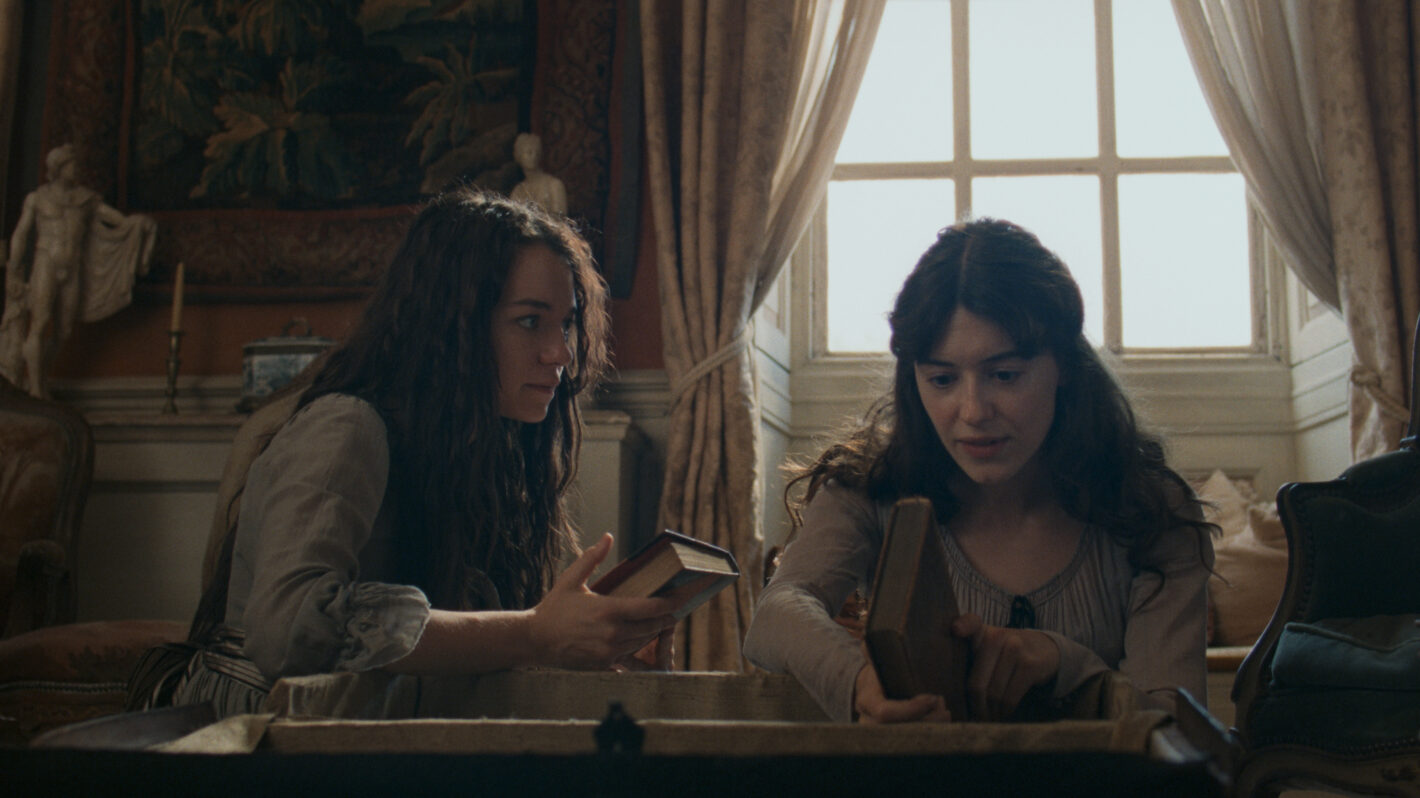
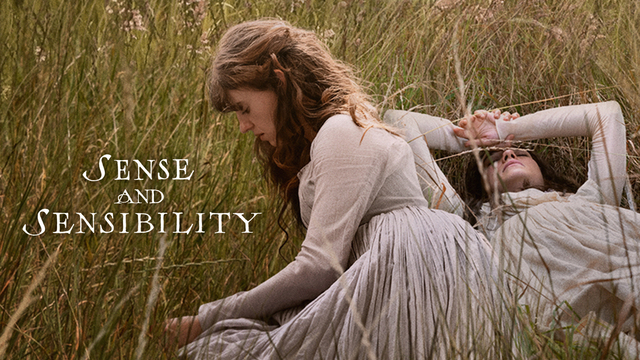
There is still plenty of romance — and all the pining and yearning an Austen story is meant to have — but this fall’s Focus Features and Working Title film is, at its heart, a story of sisterhood. That meant that the casting for sisters Elinor and Marianne Dashwood, played by Daisy Edgar-Jones and Esmé Creed-Miles, had to be perfect. Edgar-Jones “came on quickly,” says Flint, but she admits, “it was really hard to find Esmé.”
“We’d cast Daisy, and she was our anchor casting. So at that point, you’re thinking, ‘Who’s going to really work well with Daisy?’ We had seen so many brilliant actors saying the same scene, and then Esmé came in, and she just did it completely differently,” recalls Flint. “And when Esmé and Daisy did a chemistry read, [we learned that] they had been in a movie together called Pond Life, and they actually had known each other since they were teenagers and had this huge fondness for one another. It was there in the room, you know? There was this sisterly connection.”
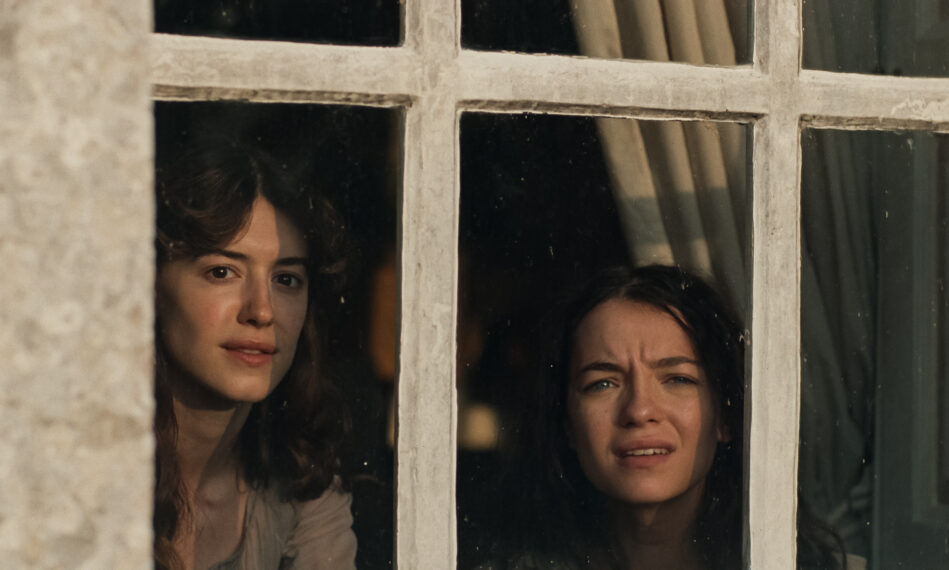
That connection is vital as Elinor and Marianne must navigate grief, poverty, first loves, heartbreak, and societal pressures in late 18th-century England. “I suppose one would assume Sense and Sensibility is a love story,” Creed-Miles tells us. “For me, it’s a story about family, and about women in families, and it’s a love story between two sisters.”
“Diana Reid did the most incredible job of adapting this novel,” adds Edgar-Jones. “I think she brought all of the love and life out of the Austen novel, whilst also allowing us to see these sisters in a slightly different context. And I think she’s also really honored the sisterly friendship and relationship. The true heart and love story of this film is the sisters.”
Courtesy of Focus Features / © 2026 FOCUS FEATURES LLC
“We saw it more as a coming of age story than your typical romance,” confirms Flint. “I think everyone who thinks of [Sense and Sensibility], you think of it being the story of Elinor, who’s driven by sense, and then Marianne, who is driven by sensibility. But I think in our adaptation, we’re saying that actually, both of these sisters have both qualities, even if one is more prominent than the other. We really wanted to show how, in order for the sisters to find their right romantic union, they needed to learn from each other. So Elinor learns to connect more with her sensibility side, and Marianne learns to connect more with her sense side.”
But before they can do that, the two sisters, along with their widowed mother Mrs. Dashwood, portrayed by Outlander favorite Caitríona Balfe, and their youngest sister Margaret (Bodhi Rae Breathnach), must first deal with the death of Mr. Dashwood, and subsequently the loss of their Sussex family estate, Norland Park. Thankfully, the eccentric, but caring, Mrs. Jennings (Harry Potter vet Fiona Shaw, stealing every scene she’s in), a distant relative of the Dashwoods, sets them up with a modest cottage owned by her boisterous son-in-law, Sir John Middleton (Killing Eve‘s Turlough Convery).
Leaving their beloved estate behind, with very little money to their name, the Dashwood women move into the quaint Devonshire countryside, where they call Barton Cottage their new home. (The U.K.’s real-life Ditsworthy Warren House serves as Barton in the film.) “Mrs. Dashwood’s reaction to their situation is one of disbelief,” says Balfe of her free-spirited matriarch. “But she chooses to see the bright side of it. She knows that if she has her girls all together, no matter where they are, they will be happy.”
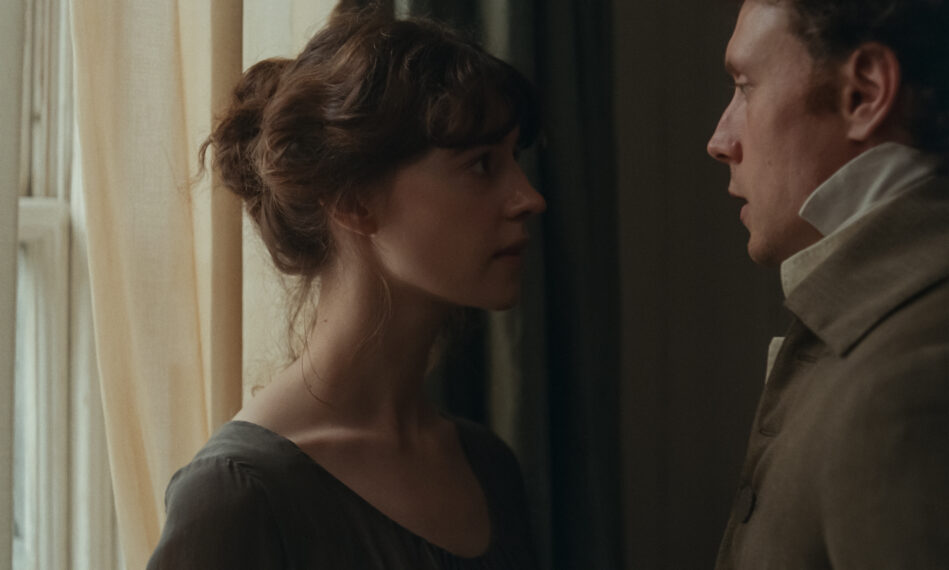
However, Elinor has left her heart behind in Sussex, where she was beginning to grow quite fond of the reserved but charming Edward Ferrars (George MacKay, 1917), the brother of Elinor’s greedy sister-in-law, Fanny (Stacy Martin). “I think this is maybe where we’ve moved furthest from the book,” admits Flint of the film’s portrayal of Edward. “Edward’s very shy in the novel. But [in this film, Edward and Elinor] have this deep understanding of one another and this feeling, like, ‘No, the families don’t understand them, but they see each other.’”
Flint even confesses they were inspired, at the script-writing stage, by the central relationship in Hulu’s 2020 book adaptation Normal People, between Connell (Paul Mescal) and Marianne (Edgar-Jones). “[At the time] we could [only] dream about Daisy wanting to be in this movie, but we were really talking about her performance and what she did with Marianne,” notes Flint.
Edgar-Jones herself is thrilled with the Edward-Elinor connection in this adaptation, telling us, “I think we get to see a lot more of Edward and Elinor, which I really love.”
Courtesy of Focus Features / © 2026 FOCUS FEATURES LLC
MacKay avoided watching previous iterations of Edward (Hugh Grant, Dan Stevens) to be “clear and unaffected in my decisions with him,” he says. But of Edward and Elinor’s bond, he says: “I feel Edward has a greater sense of humor than would be perhaps noticed by others, and it is this wry wit that is shared with Elinor. Their shared humor is how Elinor and Edward communicate underneath things, it’s their love language of sorts, and within the story, it helps to balance things when later their situation becomes more fraught.”
Despite a much smaller social scene around Devonshire, the Dashwood women do make some new friends and acquaintances, aside from John Middleton and his wife Lady Middleton (Chloe Pirrie), including Marianne’s two dashing suitors throughout the story: the stoic Colonel Brandon (Herbert Nordrum) and the adventurous John Willoughby (Frank Dillane). While the charismatic Willoughby, who rescues Marianne when she sprains her ankle on a trek to the seaside (Mothecombe beach, in real life) has Marianne’s heart first, fans of the original know that their fiery passion is fleeting.
Meanwhile, Colonel Brandon makes an entrance that Nordrum teases as a “chaotic meet-cute,” when Marianne runs in front of his horse in the woods outside Barton. “I think he just sees this person [who], to him, seems completely free,” Nordrum notes. “Marianne wears her emotions on her sleeves and has this immense passion about everything she talks about and everything she wants to do. I think he falls in love with the way she sees the world.”
Similarly, Flint says, “I think people are going to completely fall in love with our Brandon. What’s brilliant about Herbert’s performance, but also the way Georgia has cut the movie together, is he takes a while to warm to, but that’s perfect, because that’s Marianne’s journey with him [as well]. Initially, she thinks he’s dull and boring, and she gets distracted by Willoughby. We’re all like this when we’re young — we get distracted by the louder person in the room, or the person who’s dancing, or, can I say f**kboy?” she laughs. “And Brandon, he’s a slow burn.”
After all, as Marianne confides in Elinor, “the man who loves me must burn with it, with all his passions, without the slightest restraint or hesitation.”
Throughout the film, some stories, character backgrounds, and timelines are shifted for dramatic effect, but one of the new exciting things this Sense offers is a look at the pistol duel between Willoughby and Colonel Brandon. “We had a day where we learned how to shoot the guns, walk 10 steps and count and turn around and shoot,” Nordrum tells us. “They were these real guns, from the 1800s. That scene became very cool. The location is so cinematic, and that’s a thing I think George Oakley has done so well — everything feels so heightened.”
Also adding to that heightened effect are an ethereal score by Roger Goula, regency-era costumes by Grace Snell (The Souvenir), and a lens into the natural world that is impossible to look away from. Close-ups on water lilies as Edward and Elinor skip stones, the sheep bleating near Barton, dogs, cats, horses, the crumbling cottage stone walls, and the roaring sea — the romanticism of the natural world that Oakley focuses on here makes it feel like she’s wrapping a warm woolen blanket around your shoulders on a blustery day. It’s messy, muddy and real.
And yes, sometimes that means the Dashwoods’ hair is down and blowing in the wind. “Georgia’s vision for the film [was] to create something really wild and naturalistic and unbuttoned,” Flint says. “This is a movie that’s driven by these raw emotions, and this unbuttoned approach helps bring that all to the surface. To have this wild hair, it’s all just part of the mood and the feeling of the film.”
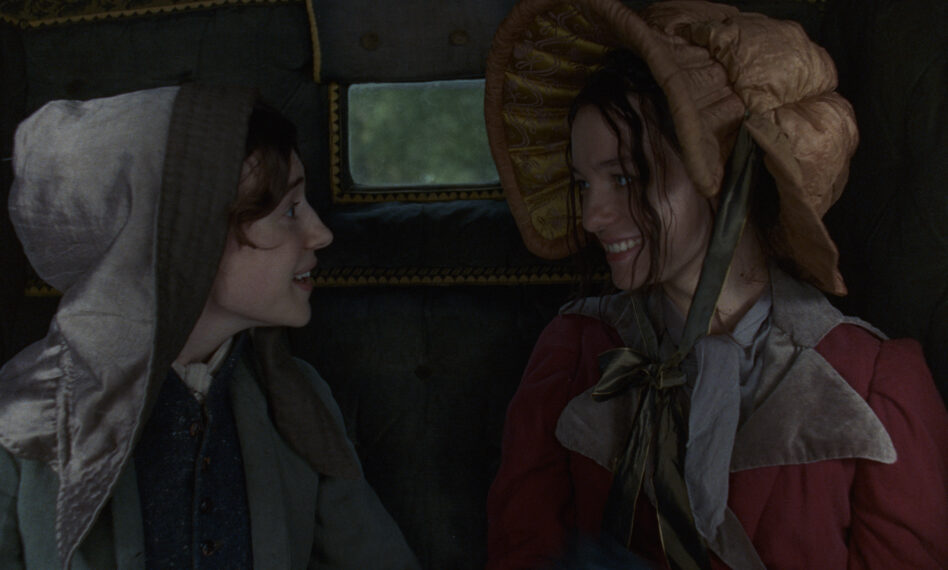
But don’t worry, there are hairpins and bonnets, too, especially once Marianne and Elinor follow Mrs. Jennings to London for a taste of society. Lots of them. While Flint notes that there’s no way for us to know historically how they wore their hair at home around family, for balls and outings, she promises, “there are many bonnets,” crafted in a creative way by hair and makeup designer Nadia Stacey (Cruella).
Courtesy of Focus Features / © 2026 FOCUS FEATURES LLC
Perhaps these untamed locks are just one more step towards targeting a younger audience for the period piece, viewers who “hadn’t grown up with previous adaptations, and maybe hadn’t even read the novel before, who would be discovering this story for the first time,” says Flint.
“It feels like such a modern story in terms of the emotional journeys Elinor and Marianne go on,” she continues. “There’s all this terminology now, like ‘love bombing’ or being ‘gaslit’ or ‘ghosted.’ Just because Jane Austen didn’t have [those terms] doesn’t mean that women weren’t experiencing all of those things 200 years ago.”
In addition to a fresher emotional sense, Marianne and Elinor also have more agency than they have in past iterations, and that’s on purpose. “There’s a lot of sitting around and waiting for things to happen [in the novel], and I don’t think you can get away with that in a movie for a modern audience,” Flint says. “We wanted to make sure that these two women were driving their stories, despite the societal constraints that they faced.”
Now that sounds like something Austen would’ve liked to see.
Sense and Sensibility, Friday, October 16, In Theaters













Conversation
Please read the TV Insider Community Guidelines.
Register or sign in to join the conversation.
 Watchlist Easy access to only the shows you care about — all in one simple place
 Alerts Only important notifications — when a show is returning, when it becomes available to stream, and more.
 Special Offers Exclusive products we release related to your favorite shows and streaming services