
Audible’s ‘Dracula’: Maggie Gyllenhaal on Why a Woman Van Helsing Makes Sense



Exclusive
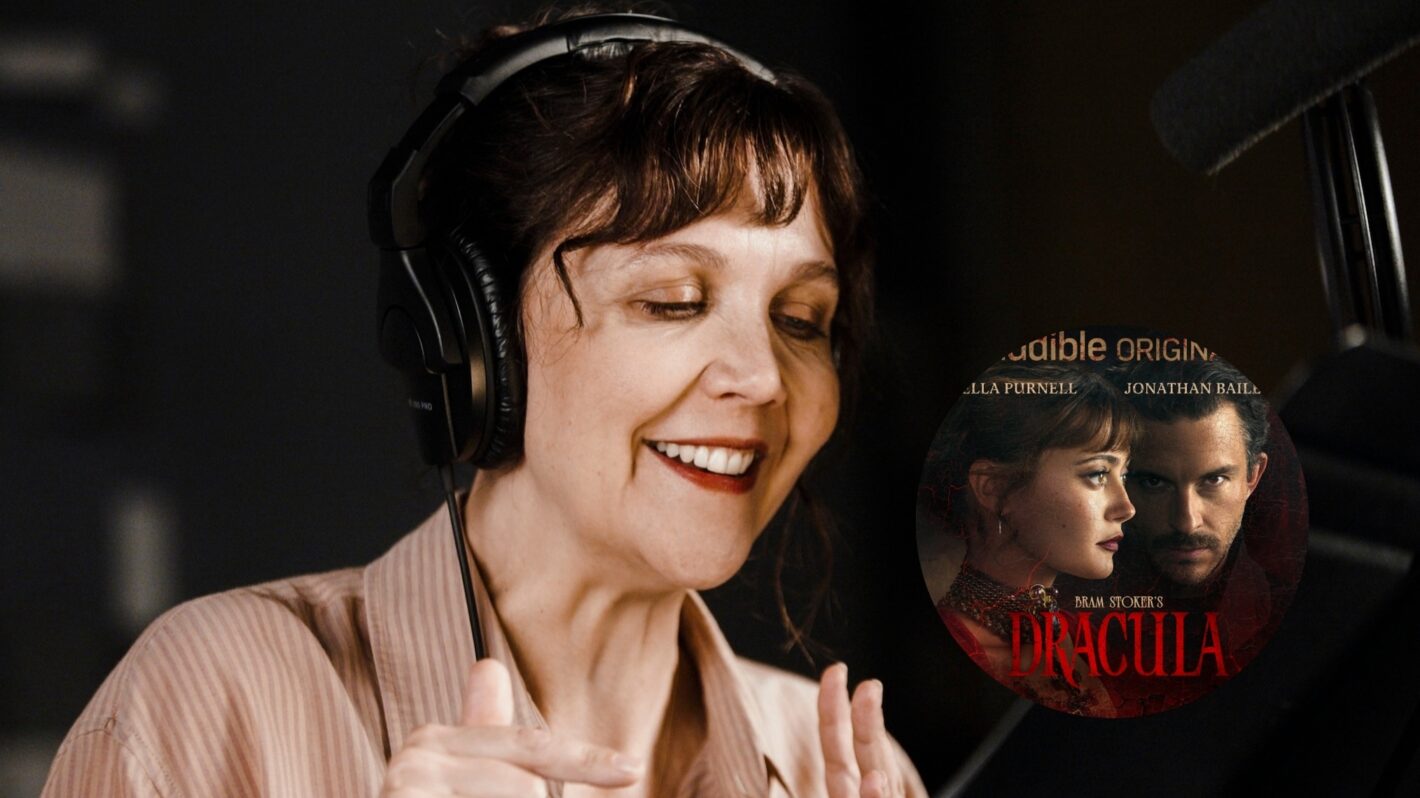
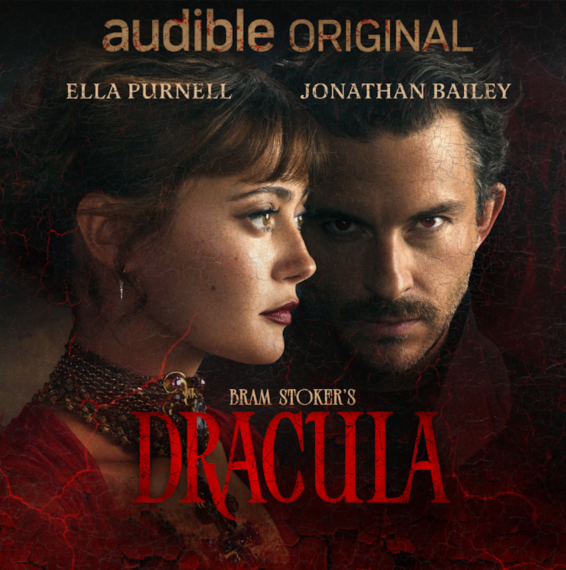
Bring back the radio play! Audible does a version of that with its latest immersive adaptation of a classic novel. This time it’s Bram Stoker’s Dracula, available as of October 1, but previous iterations have included Jane Austen‘s Pride and Prejudice. Maggie Gyllenhaal plays Professor Van Helsing in the psychological thriller, with Jonathan Bailey as Dracula, Ella Purnell as Mina, and a star-studded cast rounding out the ensemble.
Here, Gyllenhaal tells TV Insider why Van Helsing, who is a man in the original Gothic horror novel and previous adaptations, has a way of thinking outside the box that Gyllenhaal feels “fit quite easily into being played by a woman.”
Dracula marks Gyllenhaal’s return to acting after almost a decade away (her last TV role was HBO‘s The Deuce). She’s been focused on directing, writing, and producing, starting with her acclaimed directorial and screenwriting feature film debut The Lost Daughter, followed by The Bride!, a Frankenstein adaptation, and the recent short film about Marilyn Monroe, Flesh Impact.
Dracula didn’t make Gyllenhaal catch the acting bug again (“I’m happy doing what I’ve been doing,” she says), but she did love the challenge of this “wild and new” experience. “Doing something new is always both uncomfortable and exciting.”
In addition to Gyllenhaal, Bailey, and Purnell, Audible’s English-language Dracula cast stars Aimee Lou Wood as Lucy, Louis Partridge as Jonathan, David Jonsson as Dr. Seward, Lesley Manville as Mrs. Westenra, Johnny Flynn as Renfield, and Francis Lovehall as Arthur.
Here, Gyllenhaal takes us inside her Dracula experience.
Audible’s Dracula feels like a modern version of radio plays to me.
Maggie Gyllenhaal: I know! Same.
Was that part of the appeal for you?
You know, I have just been starting things start to finish, producing them, writing them, directing them. I was just invited to join almost like going to a dinner party. I was like, “Yes, I’ll come.” That was part of the appeal. You guys have taken care of everything. I’ll just come in and, I don’t know, just revisit the book. I hadn’t read it since high school, so I was curious to spend a little time with it, and it was really fun.
And fun for you, too, to have a break, just be an actor for a little?
Which I haven’t done in eight years. I mean, this isn’t exactly the same as regular acting. It’s a little different.
Audible
I am curious about that. Did it feel more like theater than voiceover acting? I feel like it might feel like a combo.
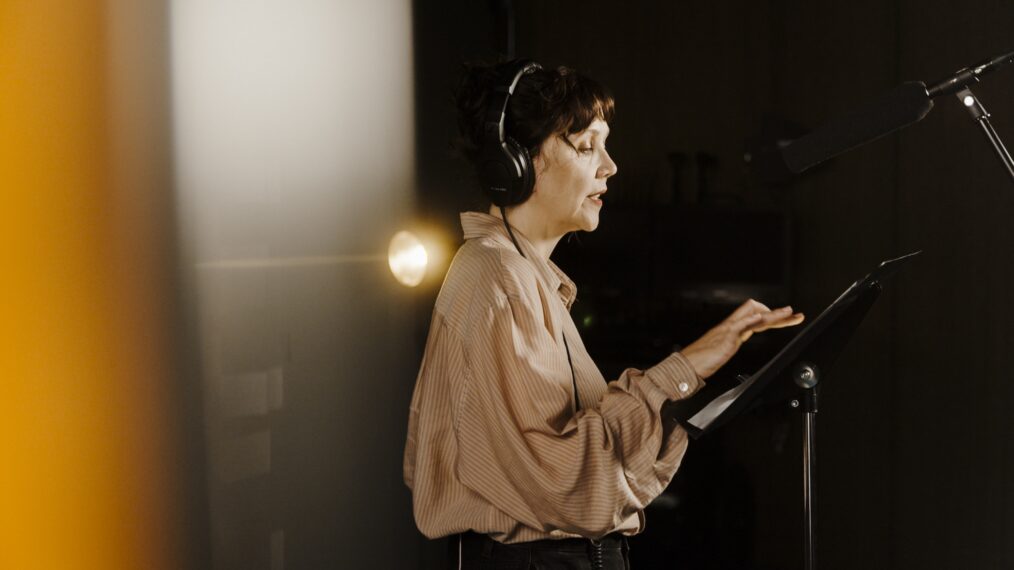
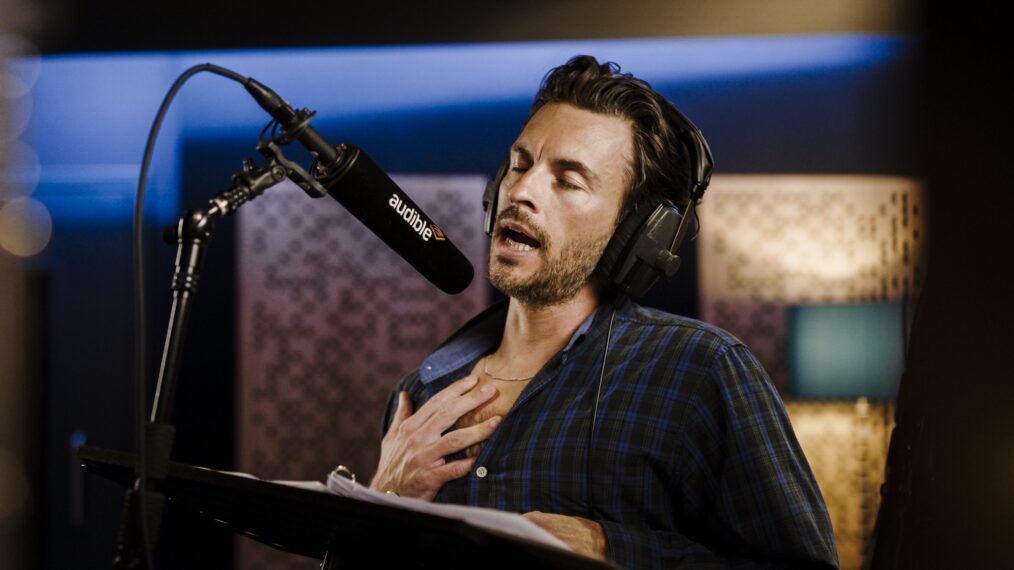
I’ve never really done voiceover acting. I’ve done audiobooks, which is really cool, but it’s just the whole book. And you get to say, “then she picks up a stake and drives it into a vampire’s heart.” You don’t have to act it out, which is different. And you’re not acting it out in the way you would in a film where you have all the visual aspects to tell the story. It’s only sonic, so that was new to me and surprising that it required different muscles. Also, the other crazy thing, which is very unlike a play, is that I wasn’t with any of the other actors.
Paint a picture of that. Was it just you recording alone in a studio, and sound effects were added later? [Radio plays had live sound effects called Foley effects.]
Yeah, I had no idea what it would sound like, but then I was doing it the way I would do any kind of acting, and then they were like, “Oh, no, no, you need to make the grunts of the [character’s movements],” which at first felt kind of manufactured and fake, to be honest. And then I was like, “OK, I just have to get into it. I just have to go for it.” So, it was me in a room pretending to kill vampires with a pretend wooden stake. Yeah, that’s right.
Having to make the grunts yourself was an unexpected side of it. Once you leaned in, was it fun?
Yeah, it was fun. It was kind of wild and new, and doing something new is always both uncomfortable and exciting.
What did preparation for this look like for you? Was it any different from your typical acting process?
It was very different, to be honest. I thought about it, I read it. I try never to make a whole lot of decisions before I’m there, but yeah. I’m thinking about this. I haven’t acted in so long.
Audible
You’ve been wearing many different hats.
I haven’t acted in, I don’t know, eight, nine years.
Did this make you want to go back to it?
No [laughs]. I’m happy doing what I’ve been doing. Because it was so different and unusual, I prepped for it the way I would prep to do a reading — which is something I’ve had to do many times, do a reading of a play, even with an audience — just to understand what it is I’m after, generally where I’m going and what my character needs and wants and things like that. And then I felt like the thing to do was just to jump off the cliff since it was something I’d never done before, almost that feeling if you have to jump into cold water, just do it, just go for it. “OK, I have to pretend I’m killing vampires with fake stakes. Just do it.”
What a fun job. This is far from the first immersive audiobook experience that has been created in the last few years, but I feel like it’s becoming more popular, which I find interesting because podcasting, non-scripted podcasting is so popular.
I know! It goes old-fashioned, like a radio play.
Do you think having this immersive radio play of classic books could, for people who prefer to listen to things and not watch, resurge some interest in classic TV, film, books?
Yeah, or people who struggle to read, but who want to have a connection to something like Dracula. I mean, it’s not an audiobook, but kind of. I think for people who do struggle with books or even to focus on an audiobook, it’s a way of consuming Dracula that’s pretty close to its original form.
And there are some tweaks to it. For the readers, tell me about how your Van Helsing differs from previous adaptations.
Well, he’s a man in the book.
First and foremost.
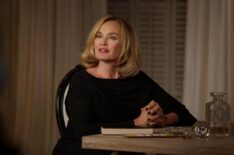
That’s pretty much it, but beyond that, if anyone is going to play Van Helsing, they’re going to have their own take on it. I think it fit quite easily into being played by a woman. He’s a character who is in the book, kind of an iconoclast, very, very smart, but outside the box and interested in incorporating the unconscious and the irrational into his thinking about what’s happening and does end up being correct and right, but you have to take a leap of faith to get on his train. And that all seems very feminine to me, being outside the box, not fitting quite into the generally agreed way of doing things, and also incorporating the irrational and the unconscious.
View this post on Instagram
You said you hadn’t read the book since you were a teenager. What surprised you about returning to the book after so many years?
It’s funny. Sometimes, you have memories of things that you think, “Oh, wait, maybe that wasn’t in the book. That was just how I bounced off the book.” I thought that Dracula was about desire, and in particular, a young woman’s sexual desire and how it can feel at that age, at that time, forbidden and so powerful, it almost feels out of your control. That’s what I thought Dracula was about. I actually kind of still do, but that’s not in this adaptation.
Are there any other classics you would be interested in getting to experience in this immersive format?
Yes, but I also don’t know why they don’t do it with plays, which are actually formatted to be done this way.
I was thinking the same thing.
I read a book recently, and I’m not an audiobook person. It doesn’t go in for me. Whereas my husband [Peter Sarsgaard], he has rediscovered books since audiobooks have been so easy to get. He reads, but then he’ll go on long walks and listen, listen, listen. But this summer, I listened to one because I was doing a lot of walking, and the reader was… I’ve done audiobooks and I do not do voices. It’s just not my way, but this reader was doing that, different accents, different voices. Sometimes I found it so helpful and such a way of illuminating the book just in a regular audiobook. And other times I was like, “Hey, get out of my version of this story. I want to be able to have the space to make my own voice for this character,” which is the beautiful thing about reading.
Audible
And of course, this isn’t your first monster story. Frankenstein has been told in so many different ways, including with The Bride!, and vampire interest never dies. What’s the appeal of monster stories to you?
I’m interested in the ways in which we all have a monster or aspects of ourselves that feel monstrous and that feel terrifying. I think monster stories serve an interesting purpose in our culture. Some monster stories are meant to create something monstrous that we can put all the monstrous parts of ourselves into, and other monster stories, and my favorite kinds, humanize this monster and allow us to feel like, “Oh, yeah, maybe there’s a bit of monster inside of us, and maybe we’re brave enough to look at that.”
That’s my favorite kind of monster as well, which is why my preferred style of vampire is the Anne Rice blueprint of vampire. It’s monstrous, but it’s so human, very recognizable.
Right, right. Same. I prefer that, too. That’s why I think people are so interested in Frankenstein, because he’s so human and has such a strong need, and his need is to connect, which is basically the same need that every human being has.
Bram Stoker’s Dracula, Available Now, Audible
Conversation
Please read the TV Insider Community Guidelines.
Register or sign in to join the conversation.
 Watchlist Easy access to only the shows you care about — all in one simple place
 Alerts Only important notifications — when a show is returning, when it becomes available to stream, and more.
 Special Offers Exclusive products we release related to your favorite shows and streaming services