
Nancy Guthrie Update: Expert Names ‘Most Likely’ Source of Suspect’s DNA



What To Know
- DNA expert CeCe Moore suggests investigators should return to Nancy Guthrie’s home to conduct additional DNA swabbing, as key evidence may have been missed.
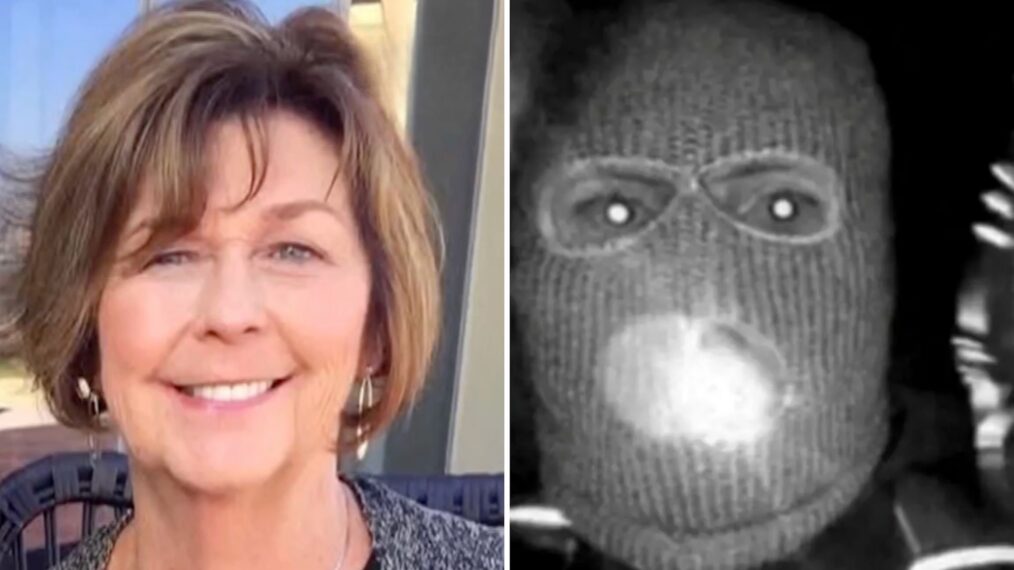
- Moore identifies the “bite flashlight” seen in doorbell-camera footage as a likely source of the suspect’s saliva and DNA due to its use in the suspect’s mouth.
- She believes that even after the Guthrie family re-entered the home, investigators could still distinguish suspect DNA from family members and potentially find new evidence.
As the search for Nancy Guthrie and her suspected abductors continues, DNA expert and genetic genealogist CeCe Moore has an idea of where the investigators should zero in.
In a new interview with NewsNation, Moore said that investigators could return to Guthrie’s home near Tucson, Arizona — from which Nancy, mother of Today’s Savannah Guthrie, disappeared on February 1 — to swab for more DNA.
“It’s hard to know what they have already collected,” Moore said. “It’s possible they collected dozens or hundreds of swabs, and they’re still going through testing those. It’s so hard for a crime scene investigator to know exactly what to swab, since most DNA is invisible to the eye, right? So sometimes, it just is a trained intuition that causes them to swab the correct thing. Now, if they have tested everything and haven’t found a good sample of the perpetrator’s DNA, I do think that it is possible to go back to her home and do some more swabbing.”
Specifically, Moore is curious about the bite flashlight a masked man was seen using in doorbell-camera footage from Nancy’s house that night.
“DNA is hardy. So it’s certainly possible there is still some DNA there, and in particular, I really do think that saliva is the most likely, and that is because of what appeared to be that bite flashlight in his mouth,” Moore speculated. “Somebody wrote to me [and that person] has used one of those and agreed with me that it would produce a lot of saliva, and it would be very difficult not to leave some of that behind.”
Moore expressed confidence in the crime scene investigators, but the DNA may still prove elusive. “As I said, it’s invisible,” she explained. “They may not have swabbed exactly the right thing to find that individual’s DNA — through no fault of their own — just because it’s hard to know, in a house like that, where would you even start other than the obvious places?”

In terms of swabbing more of the crime scene, Moore didn’t think it was a big problem that investigators gave the Guthrie family access to Nancy’s house again, since those family members’ DNA could be ruled out.
“The only issue to me would be more if there was saliva on the ground, for instance, or a rootless hair that could also solve the case,” she said. “It could have been tracked back out, could end up on the bottom of someone’s shoe. But if there is something that is still on a surface, then I think it’s still possible that they could get that person’s DNA if they haven’t done that already. Now, of course, this is a little bit of a Hail Mary, but I think everything in this case right now, based on at least what we know appears to be that at this point.”











 Watchlist Easy access to only the shows you care about — all in one simple place
 Alerts Only important notifications — when a show is returning, when it becomes available to stream, and more.
 Special Offers Exclusive products we release related to your favorite shows and streaming services