
Ashton Kutcher Talks ‘The Beauty’ Deleted Scene & How One Vincent D’Onofrio Quirk Changed His Entire Performance



Exclusive
What To Know
- The finale of The Beauty brings the new FX horror drama to a hectic close (for now).
- Here, lead actor Ashton Kutcher breaks down the highlights of the first season and reveals the monologue we didn’t see.
The Beauty has come to a hectic end — for now, at least. Beware, there are spoilers ahead!
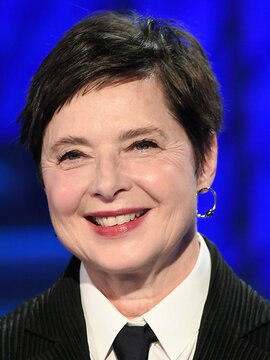
The first season finale for the FX horror drama saw Byron Forst (Ashton Kutcher) experience a massive change of heart about his signature pharmaceutical after his wife, Franny (Isabella Rossellini and Nicola Peltz Beckham), was forcibly dosed with it by her sons and, in a moment of spite, attempted to die by suicide right in front of him.
After learning that cases of STI transfers of the Beauty were causing massive deformities in some people — including turning the infected into slimy monsters or even children — Byron decided to pull the plug on the product, offer free boosters to anyone who’d already taken it, and make things right for those who were harmed. His sons, however, had a different take; they decided to team with Dr. Diana (Ari Graynor), the federal agents on Byron’s tail, and even the Assassin (Anthony Ramos) to target Byron for a takedown.
The season ends on a question mark: Not only are we left to wonder whether Cooper (Evan Peters and Hudson Barry) is successfully restored from his preteen figure by Diana’s reversal agent, but also, what will happen to Byron, now that he’s had such a massive change of heart?
We’ll have to wait to find out the answers to those if and when the series returns for a second season, but for now, TV Insider caught up with Ashton Kutcher to break down some of the highlights of the season for him playing the Corporation.
You’ve got so many monologues. Was there any one in particular that resonated with you the most?
Ashton Kutcher: They’re all very unique, and there are several that are not in here that were …. There was one where it’s actually not even anything to show, but there was a monologue that was I’m in a writer’s room where I’ve hired some big hot-shot writers to help me write the ad campaign for the Beauty, and it was just funny. That was really fun.
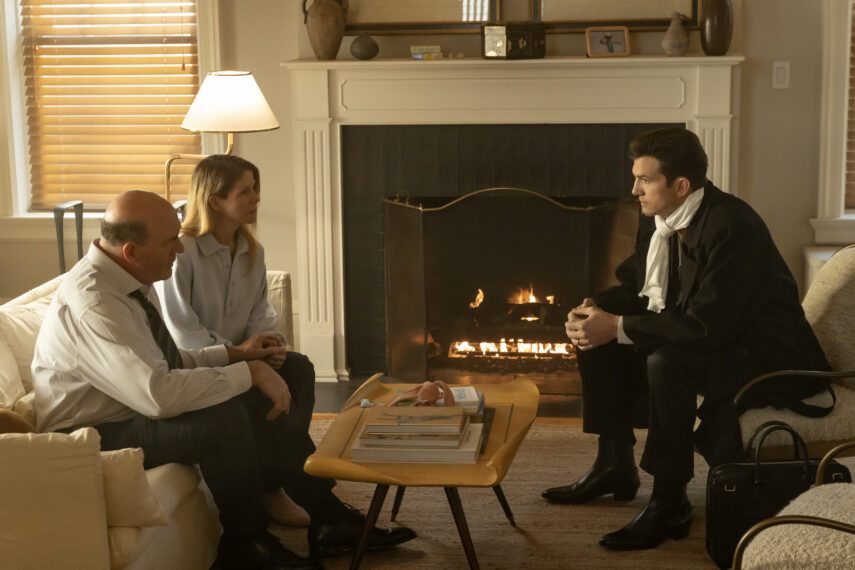
The one monologue that is in there that I most appreciated is probably in that living room scene where it’s he’s selling something. You’re not sure what he’s selling. He has some plan. You’re not sure what the plan is, and he thinks it’s over the line. It’s the real sales pitch, right? And you see how you want to believe that he actually emotionally cares, but you’re also so distrusting of this character that you can’t believe. And so my goal in that scene was to actually traverse the viewer — obviously, to convince them to take the shot and to get their kid the shot — but also to traverse the viewer, to start to doubt what they think about the character. Because I think, oftentimes when you’re convinced that a character is just all bad, you don’t care about the character, and I think that scene, in particular in that episode, is the moment that you go, “Wait, maybe… there is a shred of nobility in what he’s doing?” Or, “Maybe, at the very least, he thinks that it’s there?”
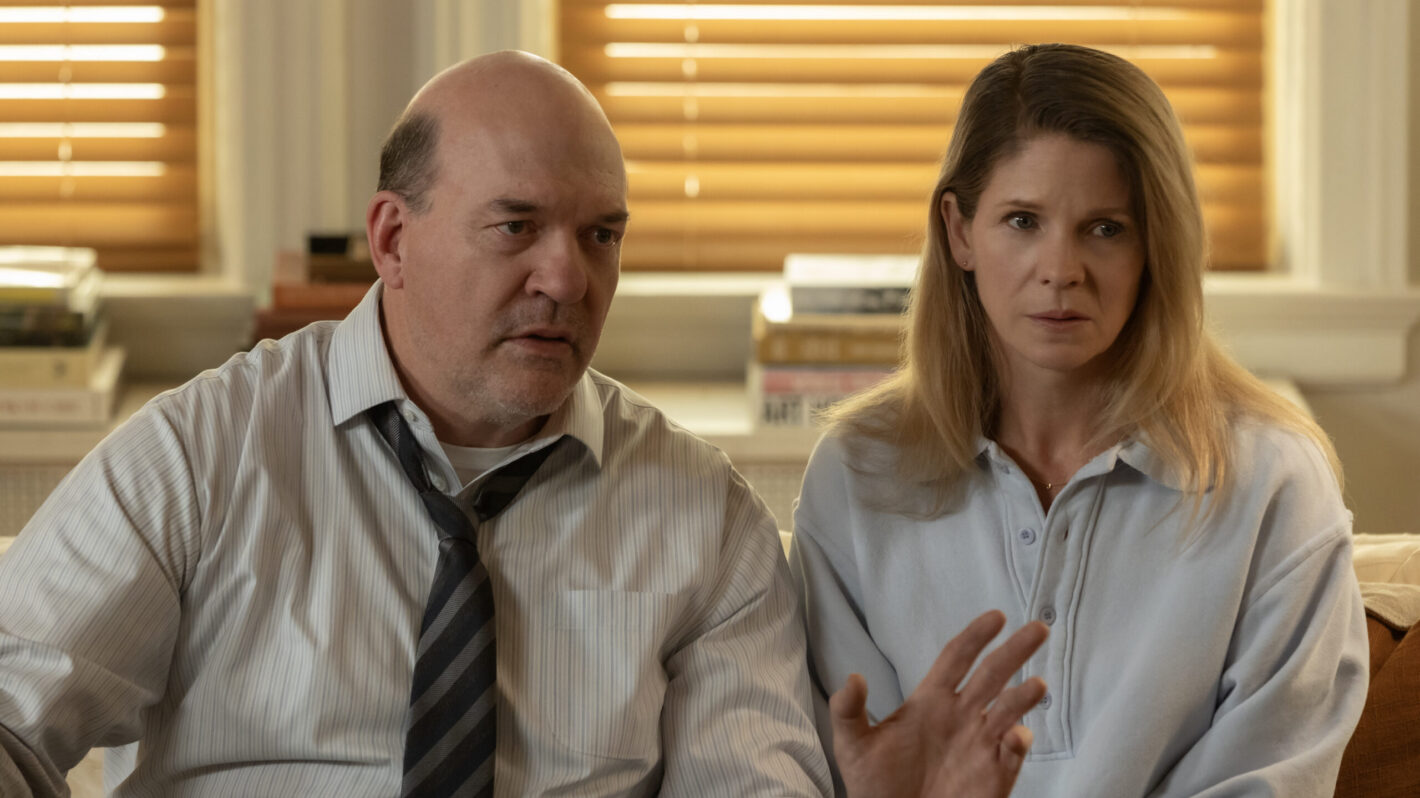
And it also very much connects to his relationship with his kids. In the show, he articulates that he can’t stand them and that he hates them, and he wants them dead, and they’re terrible, but in that scene, you can tell that he cared about them. And so to me, that scene was really important, and that monologue was like fun to play with.
Eric Liebowitz / FX
I’m glad you brought that up, because you’re right, it did have that effect. One of the questions I had afterwards was: There’s a moment when, after that transformation of Sara’s family, he’s watching them. How were you playing that? Because he seemed genuinely moved, but then again, maybe he was just triumphant for getting the FBI off his case.
Yeah, I did like three different versions of it because I wanted Ryan [Murphy] to have the optionality. He chose the right one, which was ambiguous. So I did a version that was somewhat definitively nefarious, and then I did a version that was absolutely not nefarious, and then I did a version that was ambiguous, and I think that that’s the right place.
I’ve said this before, but I think everyone is someone’s villain, and anyone that is so righteous to assume that every thought and idea and action that they’ve had has been noble is wrong. I don’t think anyone’s definitively bad or definitively good. I think good people do bad things, and I think bad people do good things. I think that’s what makes the character fun. Deep underneath every person is some pain that is causing them to act the way that they’re acting. I thought it was important to make Byron a human.
In the finale, we see a big change of heart after what his wife says and what she did to herself. Since we’re talking about the sincerity of the character, do you believe that he was sincere in his remorse over what happened to her?
Those scenes are interesting because there’s no one else in the room, and she is not even conscious. So I think anytime you have an opportunity with a character where there’s no one else in the room, you find out who they really are. So my gut would say that he genuinely loves her more than he loves himself, admires her more than he admires himself, and is on the brink of losing her, and we’ll find out what happens.
FX
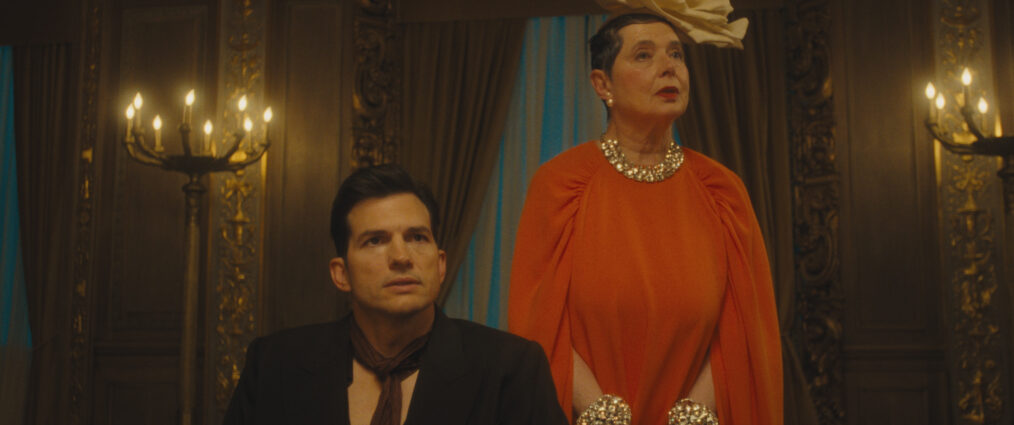
How fun was it for you to chew those scenes with Isabella? Those arguments that they had, like you’re saying, there is that heart underneath, especially when he’s trying to convince her to come to the other side. How fun was it to develop that cantankerous relationship with her?
Yeah, I think all this character wants in the world is the approval of his wife, which is what makes the ending so palpable because he might lose the chance to ever have that. The fun of those scenes, just the back and forth verbal body blows that we throw at each other that are wild, but also, separating myself from the character, having to say those things is brutal. It’s maybe one of the harder things I’ve ever had to do. [Laughs.] But I was like, “Wait, no, that just has to be part of the character, because he wants her approval.” So even when he’s verbally lashing out at her, it’s with some reluctance because he just wants her approval, and is this going to get him closer?
But I also think, sometimes — I’m working on a project with my brother right now, and I had this realization that our friendship was getting farther apart the minute that we stopped giving each other sh**. And I think a lot of my best relationships in life are with people that I can give sh** to freely. I think you always hurt the ones you love the most because you know that they love you, and so whatever frustration or pain or anger you have, you have a tendency to take it out on the people that are closest to you.
Vincent D’Onofrio‘s pre-Beauty Byron was fun to watch, too. That must have been surreal for you to watch. In other movies or things, you get to see flashback versions of a character, not one that’s in real-time, the same age and timeline. So what was that like for you?
OK, so I knew Vincent was going to play this character, but Vincent actually established the character before I ever shot a scene. And so, when I found out… that we were effectively playing the same character, I was like, “OK, I don’t know how he’s going to do this. I don’t know what he’s going to do, so I’m going to watch everything I can find that Vincent has ever done and try to pick off the little things that he’s done in every performance, so that I know that it’s authentically Vincent, so no matter what he does with the character, these aspects will be there.”
So I watched like, 50 episodes of Law and Order and Daredevil and everything. And I was like, “OK, I think I’ve got a hook on this character.” And then I’m watching Law and Order, and I’m like, “Holy sh**, Vincent’s left-handed.” I see this because I’m watching him write with a pen and maneuvering, and, I’m like, “Oh my God, he’s already established a character. I have to call him and ask him if he did this left-handed.”
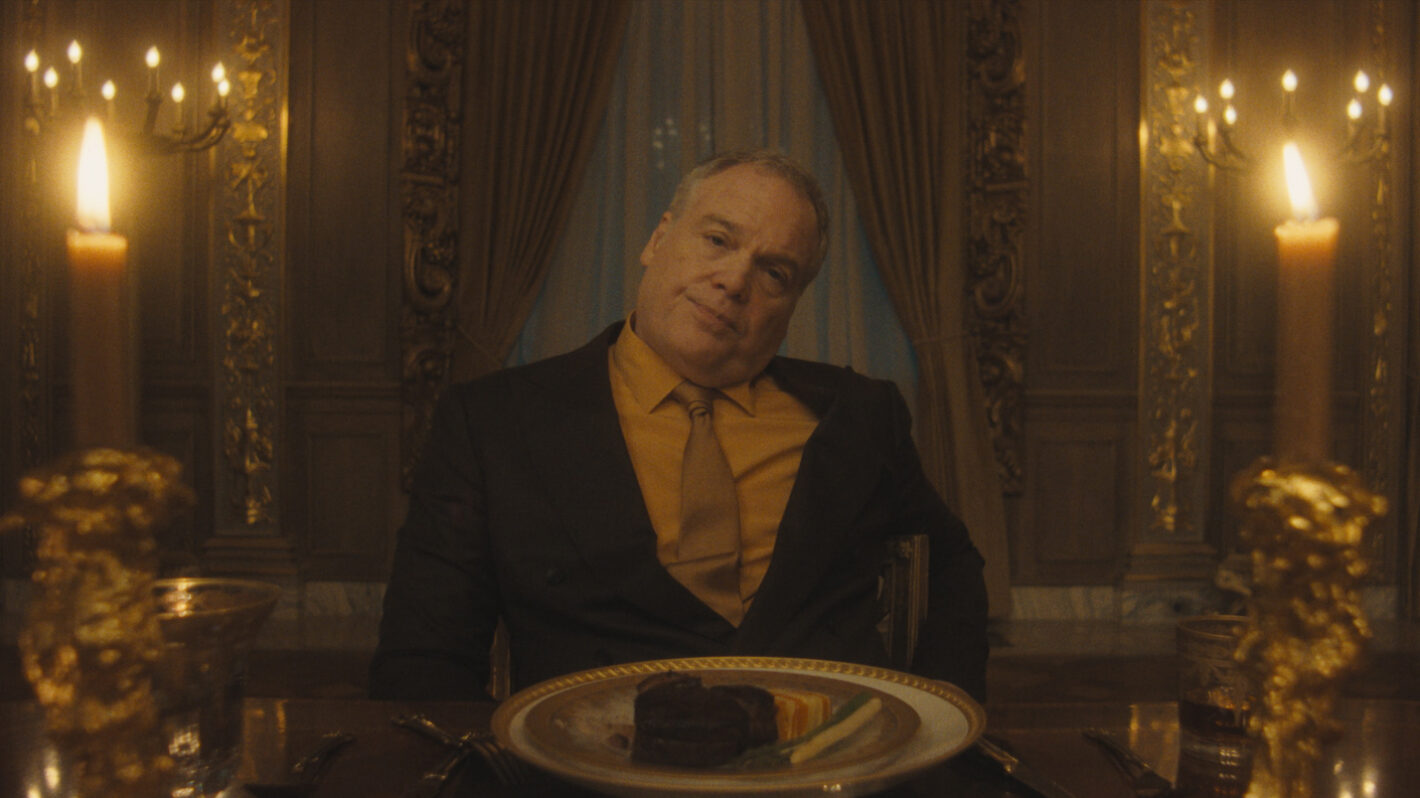
And I call him [and say] something like, “Vincent, did you establish the character as left-handed?” And he’s like, [shrugs] “I’m left-handed.” And I’m like, “Noooo!” So I show up, and now I’ve got to shoot guns with my left hand and manipulate bones with my left hand and hold the drink with my left hand. I’m playing this character left-handed because I was like, “People are gonna notice. They’re just gonna feel that difference.” And so technically, it was fun to do, but also at the same time, I was like, “All right, here we go.”
And look, he’s a gem, brilliant. So part of what I was doing on a daily basis was just trying to sort of be as good as Vincent.
The Beauty, Streaming now, Hulu






 Watchlist Easy access to only the shows you care about — all in one simple place
 Alerts Only important notifications — when a show is returning, when it becomes available to stream, and more.
 Special Offers Exclusive products we release related to your favorite shows and streaming services