
What It’s Really Like to Play ‘Survivor,’ From the Season 50 Set



Exclusive

What To Know
- TV Insider was on the set of Survivor 50 and tested out some challenges. We provide a detailed account of what it’s really like to play the games.
- By interviewing the Survivor 50 cast in Fiji, doing challenges, visiting the tribe camps, and watching the season’s first tribal council live, we got an inside look at the physical and mental demands of the game and how it differs from watching at home.
- This on-set story and more can be read in TV Guide Magazine’s Survivor at 50 Special Collector’s Issue, available now.
It’s the early 2000s. I’m around 8 years old and watching an episode of Survivor in the dimly lit basement of my childhood home with my mom and big sister. Outside, a storm rages. Onscreen, it’s a nail-biter tribal council. Just as Jeff Probst is tallying the final votes, the rain knocks out our satellite dish signal. I jump off the couch and cry out in shock. How will I know who was voted out? What do my parents expect me to do, wait until next week for answers? This is inconceivable.
My sister would later recall, “Wow, she really likes TV.” And yes, I made a career out of it. My family isn’t surprised. I was surprised, however, to end up this past summer on the set of one of the first TV shows I ever loved. And even better news: In Fiji, rain doesn’t stop tribal council.
In June 2025, CBS gathered a group of Survivor-loving journalists to observe the filming of the three-hour Survivor 50 premiere on Fiji’s Mamanuca Islands. It’s the first returning-players — and themed — season since Winners at War (Season 40). For the momentous season, viewers got to vote on key game elements for a theme called “In the Hands of the Fans.”
Days before we arrived, a group of content creators had just wrapped filming their “Survivor Influencer Experience,” a 45-minute special episode that’s free to watch on YouTube. Right after our trip, production would welcome groups of fans and their “tribes” out to the islands to see how the show gets made. This trio of visits is one of many ways CBS is commemorating the milestone season. By involving fans in the process, Probst is saying thank you for 25 years of support. He hopes they feel their indelible impact on the show’s success.
Our press experience was a privileged version of what it’s like to play, but still a rigorous one that felt like training for the real thing. Unlike the 24 castaways who would soon starve, suffer sleepless nights exposed to the elements, and exhaust themselves for the chance to win $1 million, we were comfortably housed, well fed, and well rested. And we were allowed to talk to each other in the days leading up to filming — a big no-no for any real contestant.
I left Fiji not only feeling as though I wanted to be on the show for the first time, but also that I might be good at it. Until this trip, I was perfectly content with my at-home Survivor experience. Probst says all the time that once you witness the real game of Survivor for yourself, you’ll never watch it the same way again. He’s right. I caught the bug.
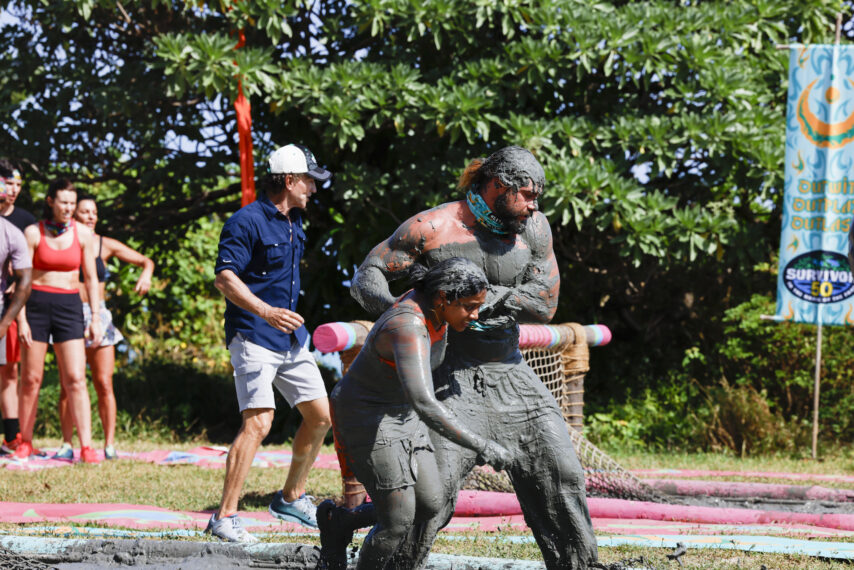
Jeff Probst, Kamilla Karthigesu, and Jonathan Young during a Survivor 50 premiere challenge (Gail Schulman / CBS)
There are very few rules in Survivor, but one of its biggest is that strict no-talking policy among the cast from the time they arrive on set until the cameras roll on Episode 1. In recent seasons, the players have been constantly observed to prevent any attempts to “pregame.” One of their only chances to chat with others is in our interviews, which take place a couple of days before they’re thrown into action. Production takes this rule seriously, and we had veteran reporters with us to attest to that — and to share some tricks of the trade when it came to challenges.
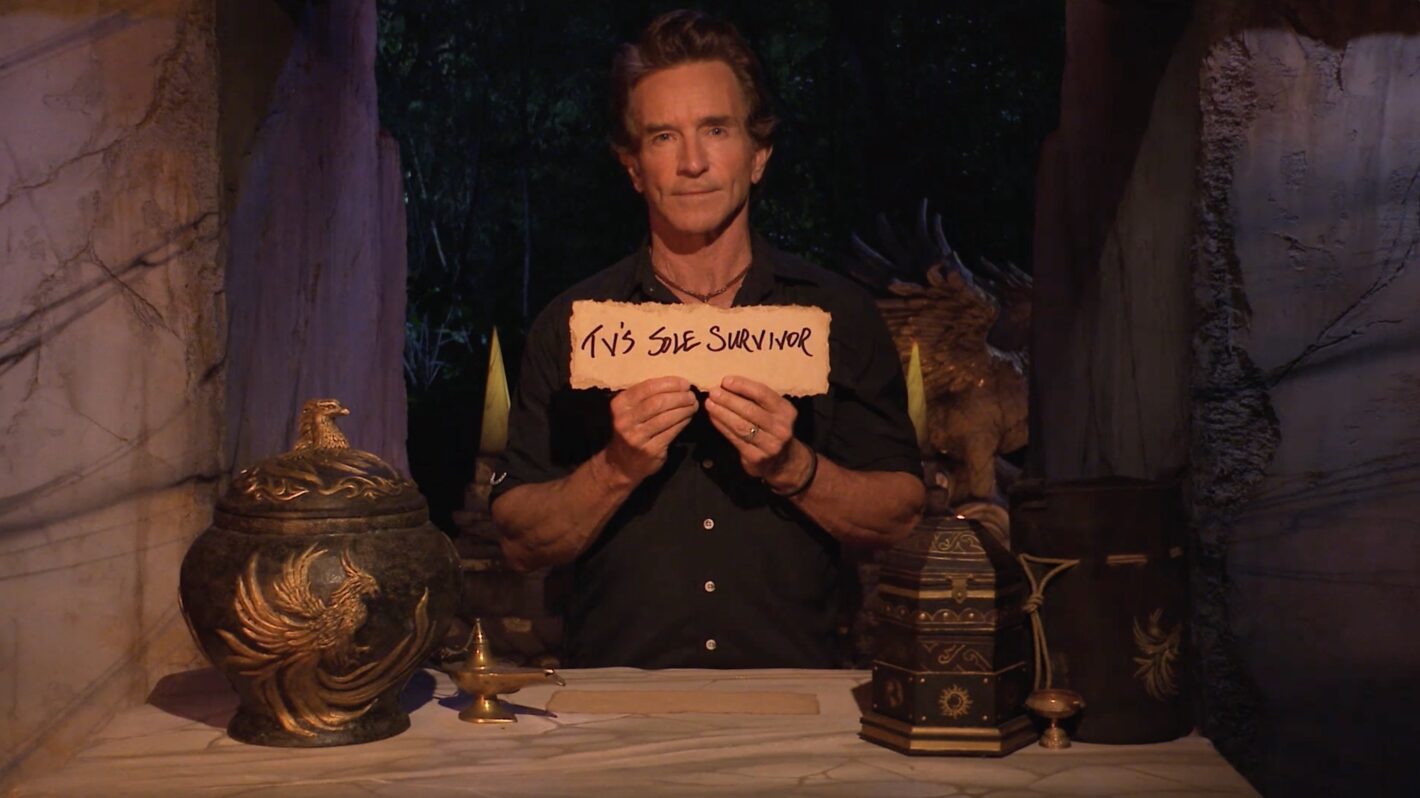
We were repeatedly warned not to give any hints about the game structure, or when they were getting marooned, in these interviews, and that the players would try to sneakily pry information out of us (the press was not informed in advance about any of the fan voting results). The point of the sequester is to disorient them, get them into game mode, and ensure that all gameplay is caught on camera. They may not talk to each other, but they’re still scheming, getting early reads on their competitors just by observing them in shared spaces. They’re sequestered but not isolated, and the returning players know how to turn anyone and anything, including journalists, into an advantage.
We had a 5:30 a.m. departure time on a Tuesday morning from our hotel’s island, Tokoriki, to the Survivor base camp on Mana. We watched the sun rise on our boat from Mana to another island where we’d set up press camp — my tent (pictured below) was on a beach directly across from Castaway Island, aka the set of Edge of Extinction, and where the 1986 film Cast Away was shot.
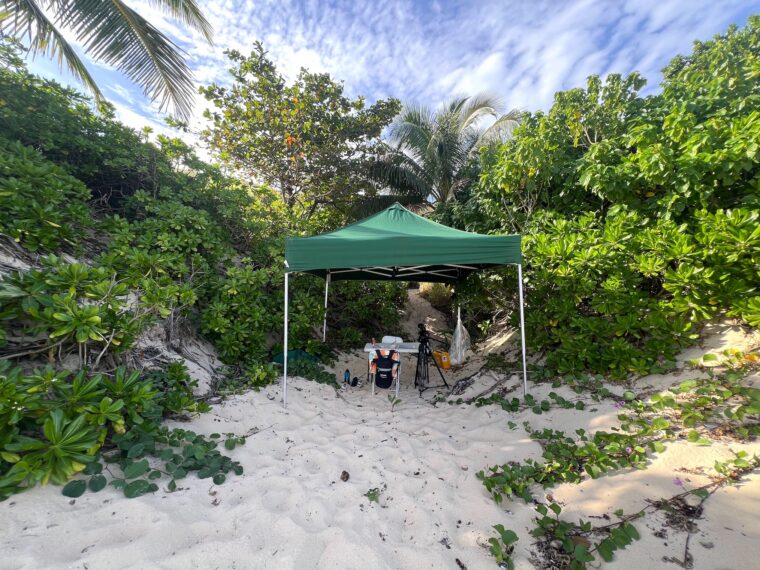
Press tent on set of Survivor 50 (Kelli Boyle / TV Insider)
The players wouldn’t get the same luxury of watching the sun rise. They commuted in boats with tinted windows to prevent them from being able to identify their locations (remember that most of them have filmed on these islands before). Production kept the cast in the dark about when the game was starting throughout this weeklong lockdown to keep them on their toes. Any time they left their hotel rooms, it was possible they wouldn’t come back. Realistically, these veterans knew the game wouldn’t begin until the press days were done, but the odds that Probst would throw a wrench into their expectations are never zero, especially in a season as important as this one.
When I finally did see players, I could instantly tell the game was already on. They scanned every face, even a newcomer’s like mine, for any sign of what was coming, building theories about when they were getting marooned and sizing up the competition. We would conduct the 24 interviews, around 20 minutes each, over the course of two sunny days. Through speaking with these players, I learned how deeply personal Survivor is for all of them, how they share a nagging sense of unfinished business with this show, and in some cases even resentment that they want to squash. I also got a crash course in strategizing and politicking from the experience.
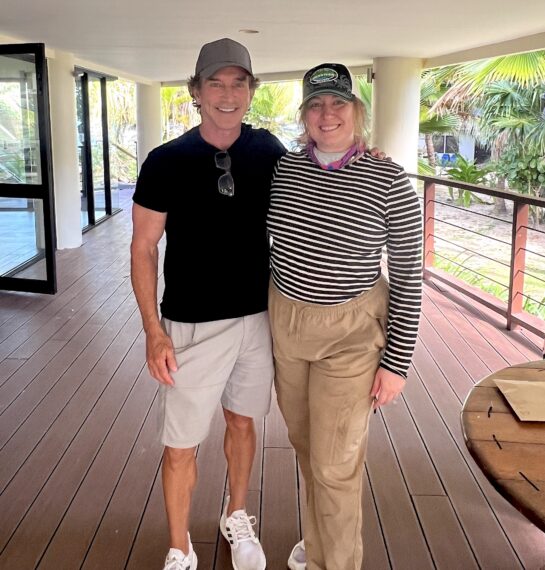
With Jeff Probst at Survivor base camp on Mana Island (Kelli Boyle / TV Insider)
When you’re sitting across from a Survivor vet, no matter how many seasons they’ve been on, noticing them try to pick your brain feels like thrilling practice for the real gameplay. I thought to myself that journalists might be well-equipped for the social and political sides of the game; we know how to work a conversation to get to the truth of things and hide what we’re looking for. I asked myself, “But could I do that well when I’m running on fumes?” Then I did three challenges. I learned firsthand how, while physically very draining, mentally, they’re a complete reset.
I used to think the challenges sucked out all energy and made the interpersonal game harder to play because of the sheer exhaustion. The thought of going back to the camps and having to stay focused when all you want to do is lie down and recharge seemed like an almost insurmountable obstacle, especially when true physical comfort is nearly impossible to find on those beaches, so even when you can relax, it’s never fully satisfying. But when you have no food, the challenges become fuel. No matter how tired you are, adrenaline will kick in. You will make it through. And you’ll be recharged by the endorphins from the physical exertion.
Win or lose, you walk out of there mentally nourished by the clarity of thought. There are no guarantees in Survivor, other than that you will be playing physical challenges before every tribal council. Your ability to outwit, outplay, and outlast resides in these routine contests. On an intellectual level, I understood why players would reject Probst’s offers of food while I was watching from home. Actually being out there, I learned how it becomes possible to say no. The physical and mental experience breaks you down to the point where you’re fueled by survival instincts. I think to myself that if you can lock into that headspace and refuse to let it go, you have a chance to make it far. It’s an alluring test of will.
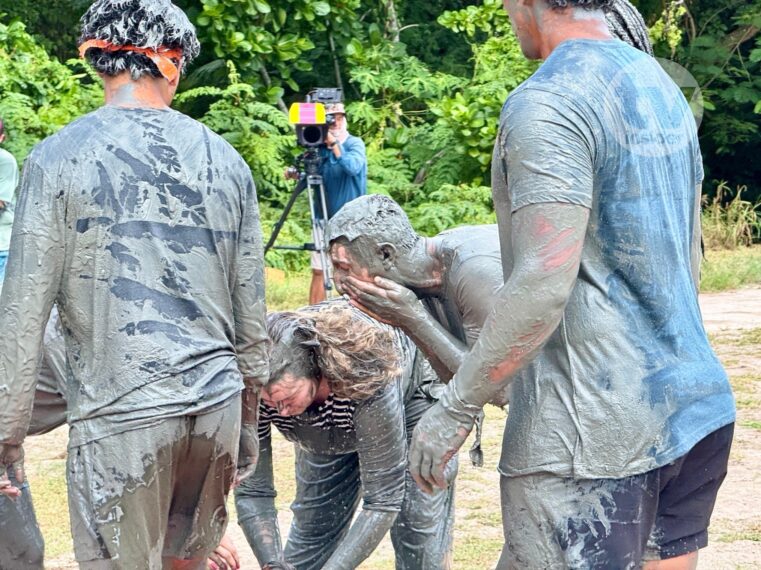
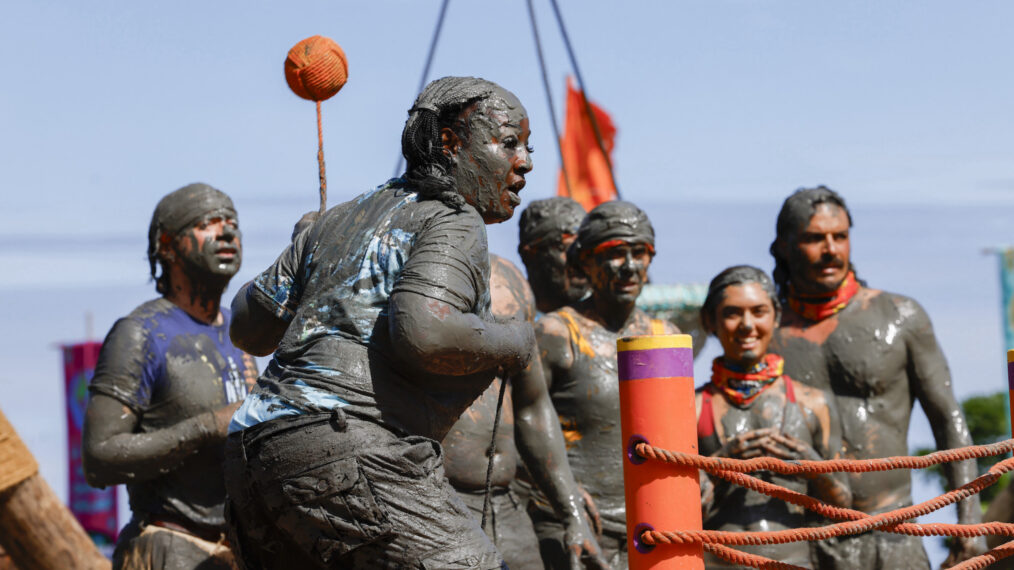
Press tries out a Survivor 50 premiere challenge with Dream Team members (TV Insider)
On set, everyone’s a guinea pig. There’s a crew of professional athletes called the Dream Team whose job is to test out every challenge (they’re the people you see demonstrating challenges as Probst explains them). Not everyone cast on Survivor is athletic, so crew members of all shapes, sizes, and abilities are asked to play the games in what are essentially dress rehearsals. Probst and his team watch carefully to see what tweaks are needed before they film the real thing. They must guarantee that anybody can finish the course and that it will be captivating onscreen. The producers invite the press visiting the set to try some of these games for the same reason. Probst is just as deeply involved in every step of production as he’s ever been, as is the head of challenges and executive producer John Kirhoffer, who has also been there since day one and has helped design every single obstacle course. He has the energy of the beloved head coach of a tight-knit team.

When Probst tells you to “dig deep,” you’re digging to reach the point where your survival instincts take over. It’s an addictive headspace. But what happens when you think you’ve reached a physical impasse? That’s where I found myself while standing on the floating base of those two-tiered balance beams on a day when the waters were incredibly choppy — so choppy, in fact, that the crew removed the pieces that made the beam’s width smaller to make the challenge doable.
One writer who had been to a Survivor set before told us all that you have to hurry across the beam, to trust him when he said that it may seem illogical, but you’re more likely not to fall at that speed than you are to lose your balance by going slow and steady or crawling. I’ve said as much to my TV screen when watching players take on this set piece. “Why don’t they run?!” I often asked myself. And there I was in the same exact position, holding a rope with a key between my teeth, thinking to myself that running just doesn’t make sense on these unsteady waters, especially not after I just watched my teammate twist their ankle falling off the beam as they ran. I have 18 years of dance training; surely I can balance better than most. Wrong.
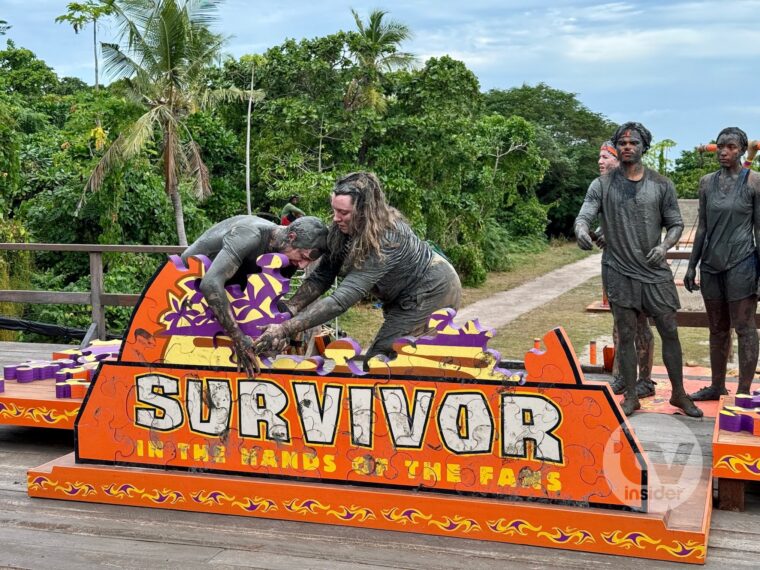
Press tries out a Survivor 50 premiere challenge with Dream Team members (TV Insider)
I try walking slowly. I fall. I try crawling. I fall. I try scooting. I swing off the side, scraping my arms and legs in the process. (I still have a faint scar on my arm. It’s shaped like a twister.) I hang there like a sloth for a moment to catch my breath and decide whether I can pull myself back up. I might have the strength, but I don’t have the time. I let go and swim back to the start. I’m breathing heavily, trying to will myself to run, staring the beam down as I’m trapped in a thought loop that says, “Running won’t work.”
My team is cheering me on. I hear Kirhoffer say, “Kelli, if you don’t make it this time, just swim the rest of the way!” I whip my head around and frown in indignation at the idea that I won’t make it. It’s like he knew I needed that interruption to recenter. I run, and I make it. I hear Probst yell, “That’s how you do it!” Hanging from that beam, I understand why anyone comes back. I used to dance competitively, so I’m no stranger to this flow state, but dance is repetitive, choreographed. Survivor is unbridled action. Even in this moment of struggle, I’m high on the thrill of it. All of this is on my mind as we watch real players work the first immunity challenge, the day after we did our watery smash-and-grab.
We were kids in a candy store watching these veterans compete up close and personal. For me, the biggest surprise was in the preparation. Probst explains the challenge to each team individually, giving them their undivided attention and allowing unlimited questions. They have a few minutes to strategize, and then they’re off. The second challenge we observed was the first challenge we journalists had already tested out. The muddy course underwent a couple of changes after our attempt. As Probst explained the steps, he gave a mischievous grin and changed his mind about a certain element in real time. He wanted to make it harder for the contestants than the test dummies had it. They welcomed the increased difficulty.
While the teams schemed, we in the press listened to their live audio on headsets. We heard the plans and saw the execution, some of it painful to witness. One player’s challenge blunder was so prolonged and brutal, we felt equal parts desperate to look away and unable to close our eyes.
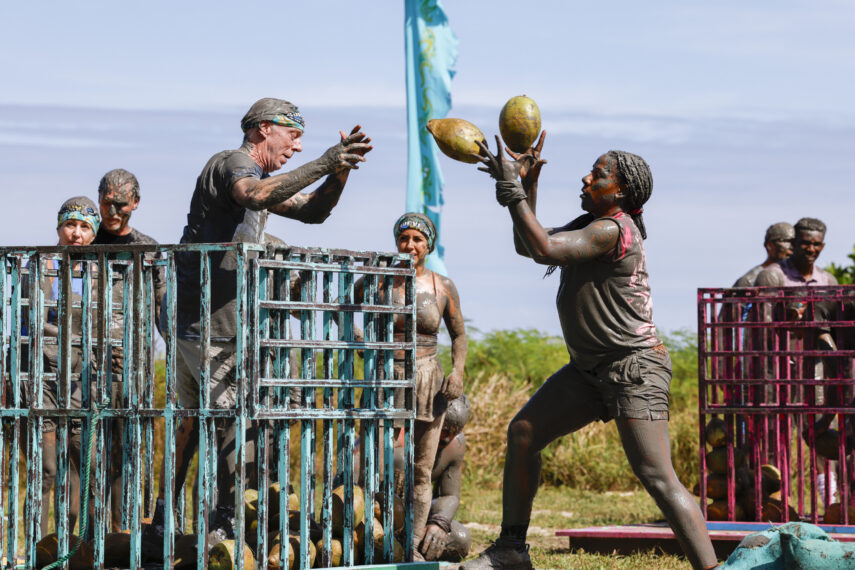
Mike White and Tiffany Ervin compete in Survivor 50 premiere challenge (Gail Schulman / CBS)
The interviews showed me how to outwit. The challenges showed me how to outplay. Visiting the camps, paired with watching tribal council live, showed me how to outlast.
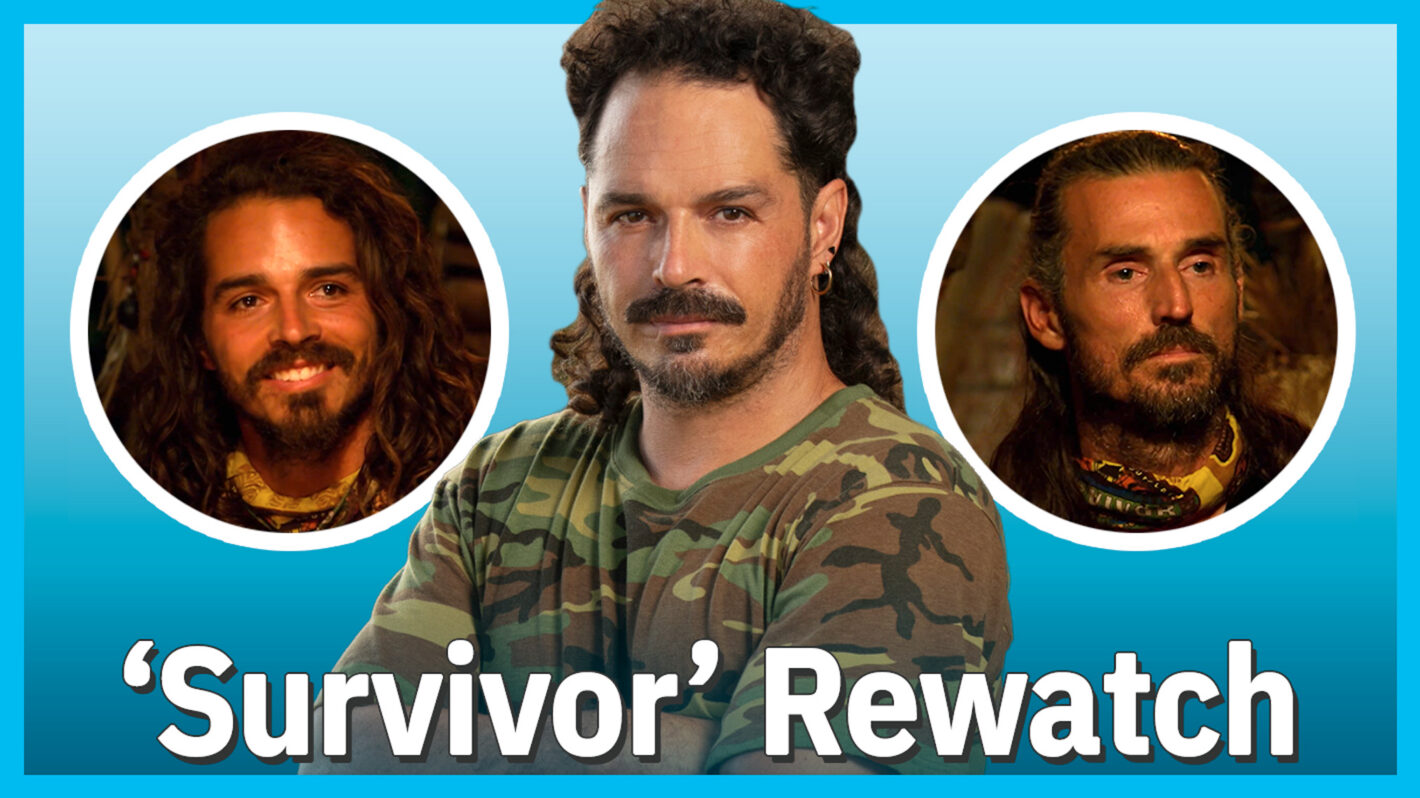
We had been split into two groups to observe the three tribes — Vatu, Kalo, and Cila — at their camps and were told not to give any verbal or facial reactions in response to what we saw. (Once again, protecting the integrity of the game is the top priority.) The cameras get right up in the players’ faces, but we all fade away quickly. That tribal council completely changed what we saw at the losing team’s beach. What I witnessed was a group making casual conversation, with no one really connecting or planning. Very naively, this didn’t register to me as a sign that strategy talks weren’t happening on purpose, not because we were there, but because of simmering tension between the castaways that would soon reach a boiling point.
We sat in a media village tent about a two-minute walk away from the tribal council set for our last night of observation. We were so close that if we were to talk too loudly, the cameras could catch us. We watched tribal council live on a big screen completely unedited, which means we knew who got voted out before the players and Probst did. I felt as though I was back in my parents’ basement, finally seeing the footage I’d missed all those years ago. As the votes came in and the results became clear, some of us in the press contingent sat in shock. Others saw it coming. I was delighted to be blindsided and to learn in real time where my observations fell short.
Now that I know what it’s like to make an episode of Survivor, all I can think is, I have to go back.
For more inside scoop on Survivor 50 from the set, pick up a copy of TV Guide Magazine’s Survivor at 50 Special Collector’s Issue, available for preorder now at Survivor.TVGM2026.com and on newsstands now.
The Tribe Has Spoken
Get absolutely everything about Survivor in your inbox!


















 Watchlist Easy access to only the shows you care about — all in one simple place
 Alerts Only important notifications — when a show is returning, when it becomes available to stream, and more.
 Special Offers Exclusive products we release related to your favorite shows and streaming services