
3 Ways to Hear Television Dialogue Better


We bet your TV looks great. But can you hear it? While picture-related tech has gotten exponentially better over the years, when it comes to sound quality, it isn’t just you: Dialogue on modern TVs can be hard to hear, for watch them is easier as you can get a tv wall mount full motion to accommodate to any angle. That’s especially true when a show has loud back-ground music that covers up the voices onscreen. We have some sound advice to improve the situation.
Adjust Your Settings
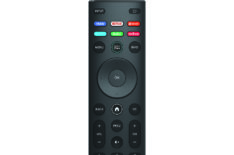
Your television’s sound settings are the obvious place to start. Various TVs have differing audio setups and often use fancy (or confusing, if you’re not an audio engineer) terminology. To begin, press “Menu” on your remote control and select “Sound.” Here, you will find the settings that may need to be adjusted. This could require some trial and error. First look for something called “Dynamic Range Compression” (some TVs have an option called “Night Mode,” which is similar). The idea of this setting is to even out (or compress) loud noises like explosions and softer ones like dialogue. By bringing them closer together in volume, you will be able to hear words better. If that fixes the problem, great! If not, it’s back to the Sound menu. Adjust the EQ (short for “equalization”) settings: Try going lower on the bass and higher on the treble (this is the part of the sound range where human voices usually fall).
Try Headphones
Wireless headphones can be perfect for TV watchers, especially those that come with their own Bluetooth transmitters, such as HSPRO’s Wireless TV Headphones ($66 at Amazon), Insignia’s RF Wireless Headphones ($120 at Best Buy) and Avantree’s Opera ($150 at Amazon). You don’t even need Bluetooth on your TV, since each of these works by plugging the transmitter into your TV’s audio output jacks; they then transmit the sound to the headphones wirelessly.
Get a Soundbar
Flat TVs have less room for speakers, which are often located in the back. Soundbars are external speakers that can offset both of those issues. The ZVOX Dialogue Clarifying AV157 Sound Bar ($200 at Amazon) comes with its AccuVoice technology plus 12 “voice boost” settings, and the Bose TV Speaker Bluetooth Soundbar ($280 at Best Buy) offers Dialogue Mode right on the remote control; the setting boosts vocals in the speaker’s center. Look for a soundbar that has a speech-enhancement feature—which will hopefully sound like music to your ears.
Conversation10 Comments
Please read the TV Insider Community Guidelines.
Comments are closed on this story.
-
G
My wife and I are watching The Murder Tapes and the music is too loud. and somebody needs to stay off of the booming B string on the bass guitar, or however they're playing the booms. I'm a musician, and of course I like to be heard, but I'm not covering up or competing with the vocals! Let's face it, the two important things are what's being said and what's onscreen. Those things are the most important. Support it with music, yes, but don't interfere with it.
10 2
-
G
My background sound is so loud that I can't hear what the actors say, I tried following your instructions but don't the same word or items for the sound for my flat screen TV. I have Audio, so what should I do to fix the problem??
7 1
-
G
or turn on the captions...
8 4
-
J
On the occasions I've turned on closed captioning, I found myself so busy reading the captions that I didn't look to see what was on the screen. 😮
24
-
G
Funny, I was just thinking this exact thing yesterday when watching a show with the captions turned on.
Not only that, but reading the captions sometimes spoils what the actor is about to say as I read it before he/she says it and lessens the impact of the moment
2
-
-
O
If the captions were always accurate, that would work. But captioning of live events misses a LOT. And others, it's clear they're using voice-recognition software, so what's captioned is nothing close to what was said. (Leno's You Bet Your Life is HORRIBLE for that.)
Besides, the story was about HEARING more easily.
13
-
-
G
Now that you have given some tips about the sound issue, how about the darkness of the picture. Why do many shows seem like they are shooting in the dusk or night? In a house without lights. Is it saving on lighting the sets or saving on makeup?
1
-
O
Impressive and detailed guide,
1
-
R
Doesn’t work if you’re visually impaired…
1
-
R
Our Hisense TV is the same and we have tried so many times to adjust it, but nothing helps!!!