
7 Pieces of ‘Star Trek’ Tech That Became Real



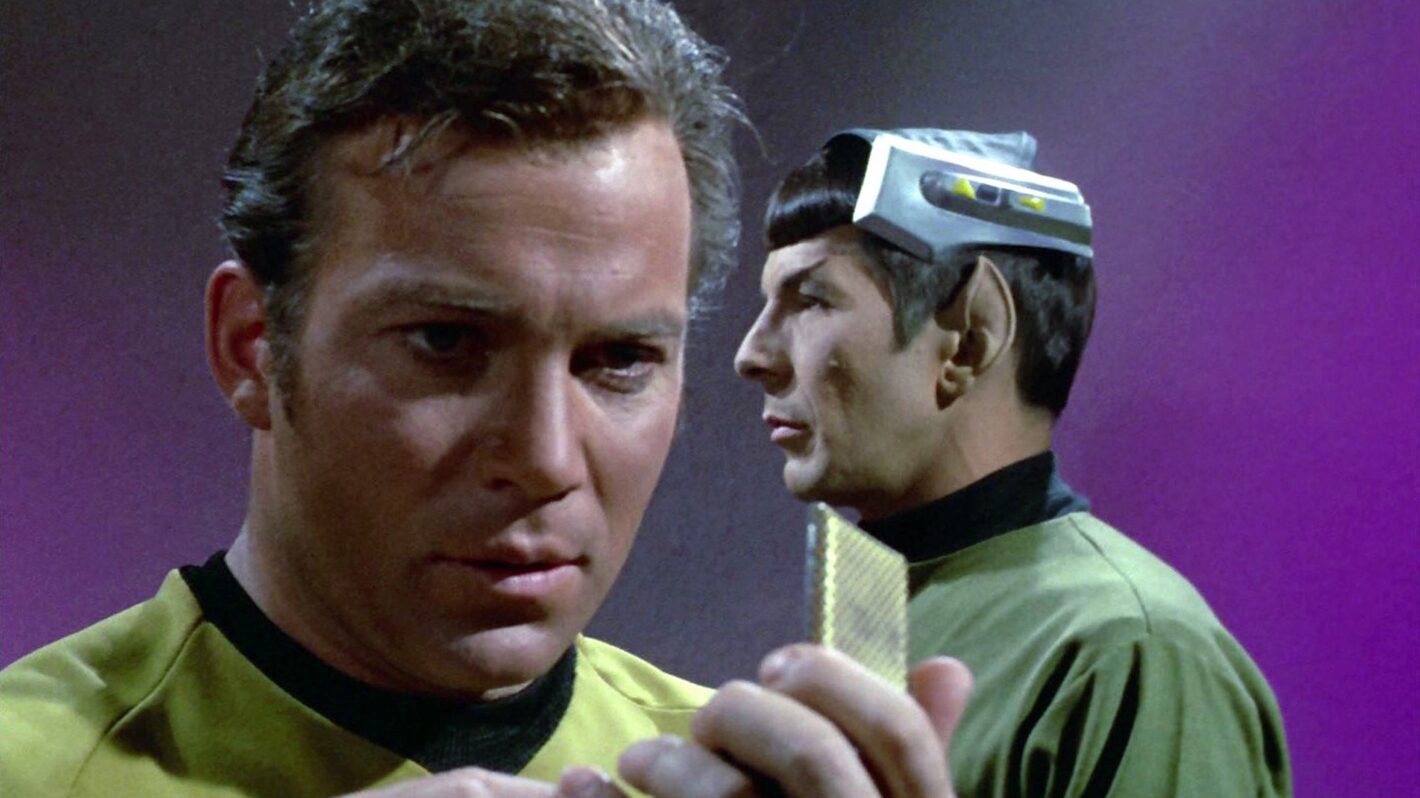
Sixty years ago, Gene Roddenberry imagined a future in which technological innovation had broken down the barriers between humanity, bringing us closer to one another and then to the stars. “It isn’t all over,” he told the Los Angeles Times in 1973. “Everything has not been invented; the human adventure is just beginning.”
Though we have plenty of inventions ahead of us, it’s uncanny how much technology that appeared in Star Trek has already become a reality. How is it that so many modern inventions seem to have sprung right from the Enterprise‘s bridge? The answer is twofold.
First, Roddenberry and his successors grounded Star Trek in real science, working with experts in cutting-edge fields to present a plausible vision of the future. And second, their crystal-clear, hopeful vision has inspired generations of young scientists and engineers to bring the technology they saw onscreen to life.
Here, we’ve gathered up some of the franchise’s most iconic tech to examine just how much science has emerged from the fiction.
TV Guide Magazine’s Star Trek: The Captains Special Issue is available for order online now at StarTrek.TVGM2026.com, and for purchase on newsstands nationwide.
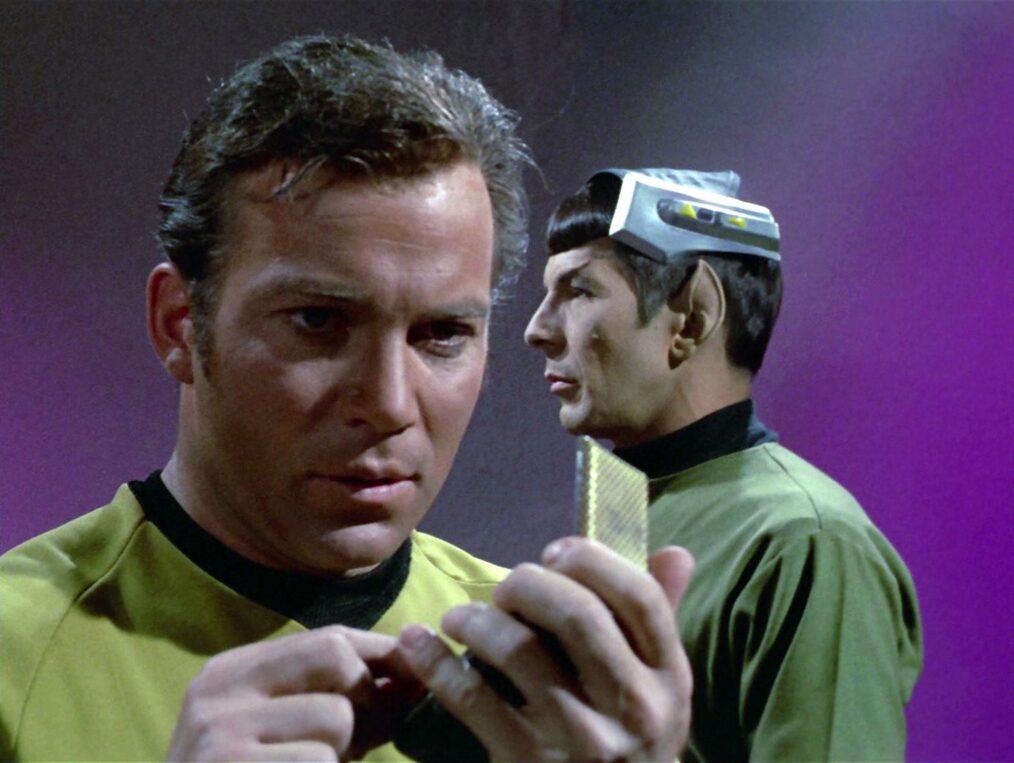
1. Communicator
Perhaps the most significant example of life imitating Trek was the 1973 invention of the cellular telephone—a mobile calling device more than a little evocative of the Enterprise‘s handheld communicators. Cellphone inventor Martin Cooper noted the similarities: “Suddenly, there’s Captain Kirk talking on his communicator. Talking. With no dialing. That was not a fantasy to us, though to the rest of the world it was. But to me, that was an objective.”
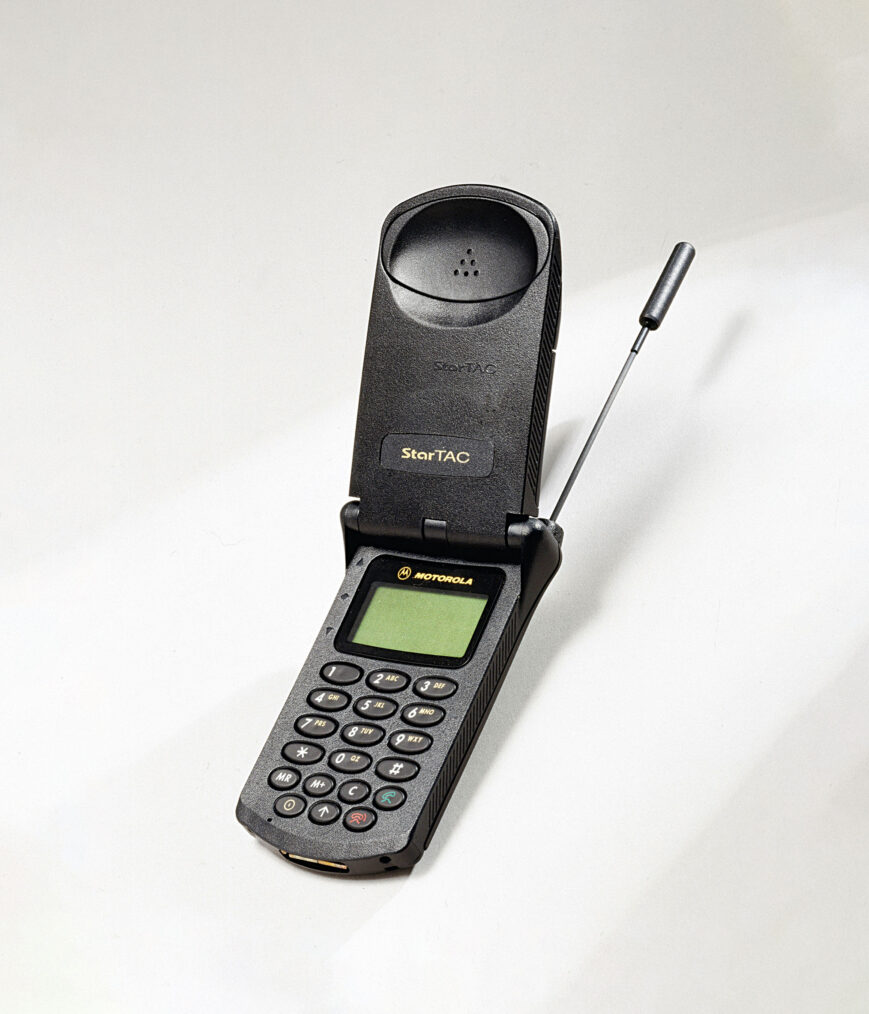
Though the first cellphones were far bulkier than Kirk’s, by the 1990s, we had smaller devices inspired by the Starfleet model. It’s no coincidence that the first widely successful flip phone, circa 1996, was called the Motorola StarTAC (above).
2. Automatic Doors
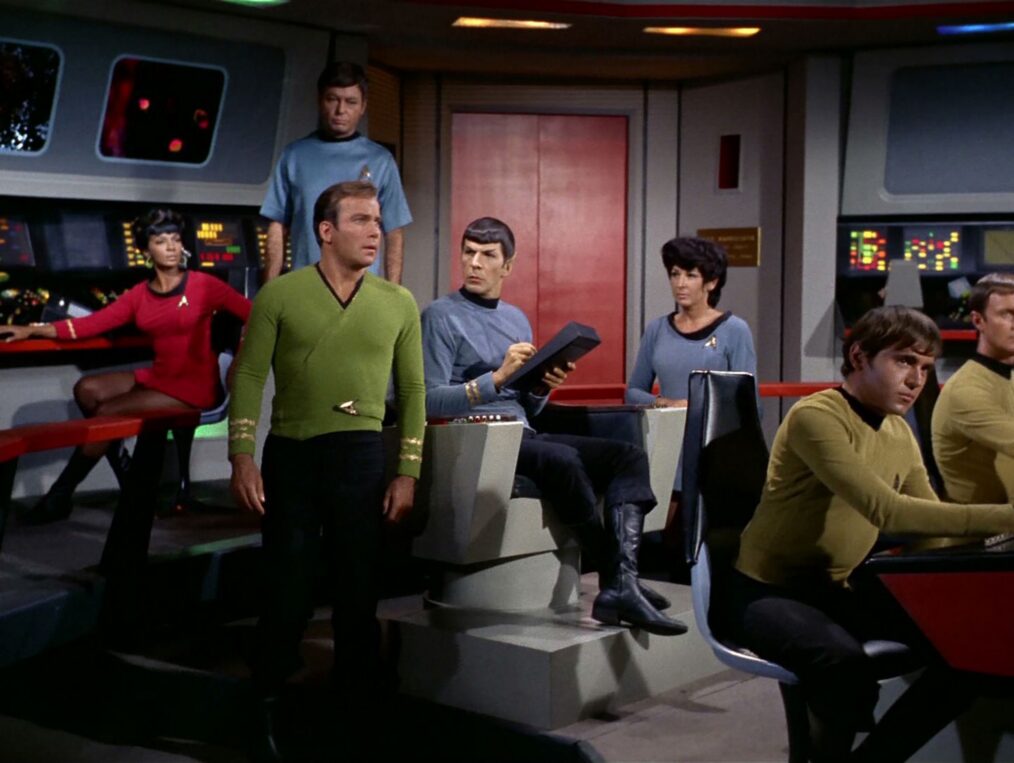
Star Trek‘s self-opening sliding doors helped give the Enterprise its futuristic feel—and some of the franchise’s funniest bloopers. (Seriously, check out a compilation of the best headbonks.) But believe it or not, the idea dates all the way back to at least ancient Greece, where the first such mechanism used fire and hydraulics. Fast-forward to 1954, and the first commercial sliding doors were activated by pressure-sensitive plates. In the following decades, they’d adopt infrared motion sensors, mirroring the doors on Trek. The original series only managed that sliding effect with stagehand-operated ropes and pulleys.
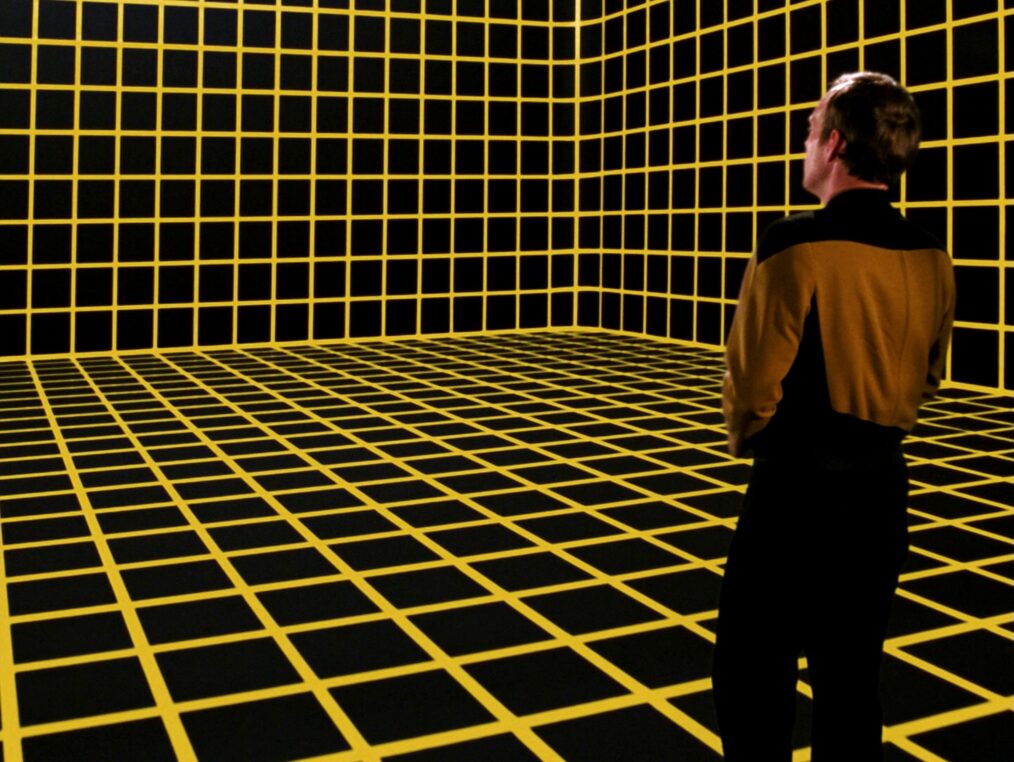
3. Holodeck
Picture a room that can become any place you can imagine, where you can reach out and touch and talk to anyone you meet. You could play poker with Einstein or train for battle against the Romulans. The Holodeck is one of Trek‘s most fantastical ideas, and yet, virtual reality headsets (below) can trick our brains into thinking we’re someplace else.
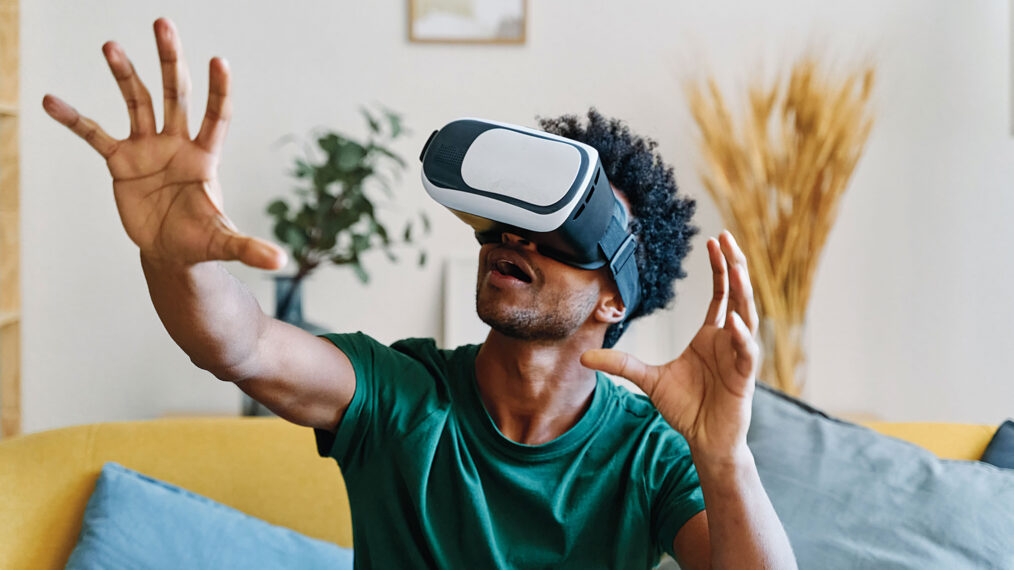
Haptic feedback delivered through wearable gloves can mimic touch. And we’re already having conversations with AI on our phones. Combine all of these in a space that can move beneath your feet? It could definitely happen!
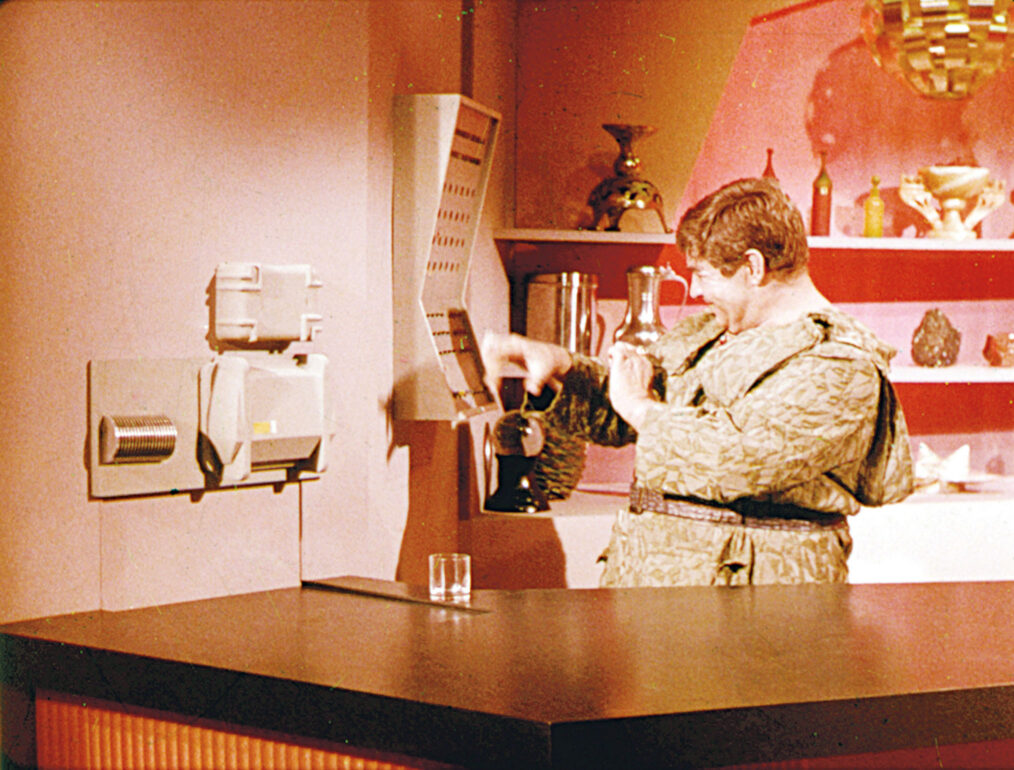
4. Replicator
Star Trek’s utopian future was made possible through the Federation’s invention of replicator technology, which eliminated scarcity and competition for resources. By converting energy into matter, replicators could manufacture nearly any nonliving object at the molecular level, including food, water, clothing, medical supplies—and, of course, Capt. Jean-Luc Picard’s “tea, Earl Grey, hot.” While our 3-D printers (inset) can’t create from nothing, they have improved when it comes to shaping plastic and other materials (some edible!) into almost any form imaginable. But don’t abandon all hope for true replicators yet. Last year, Italian scientists transformed light into a physics-defying “supersolid,” a state of matter with properties of both solids and liquids.
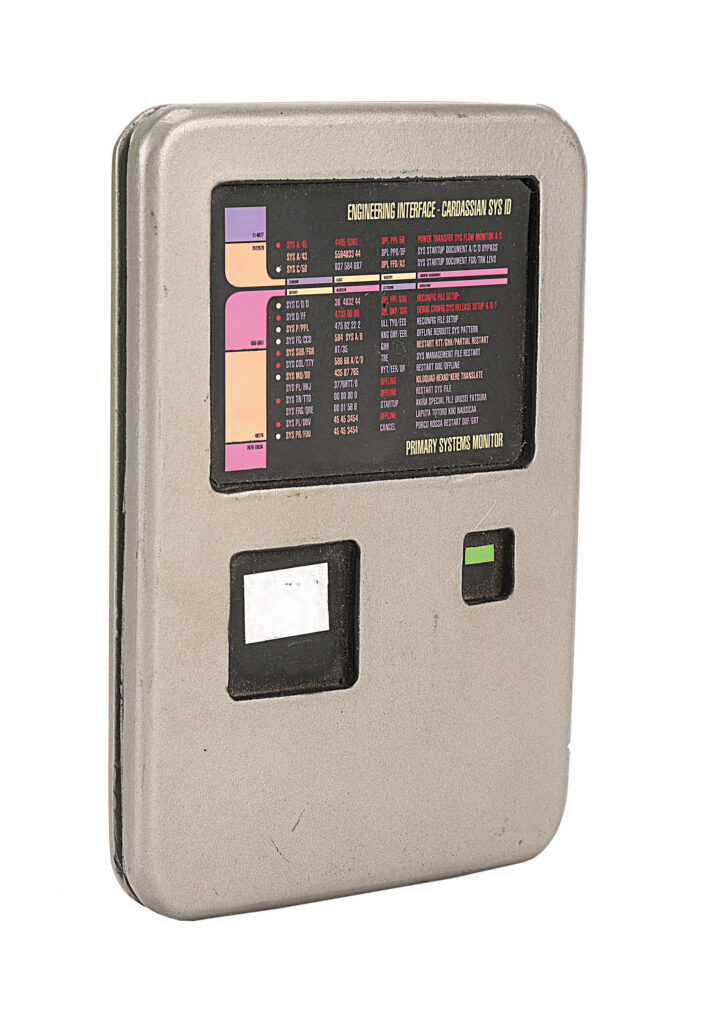
5. PADD (Personal Access Display Device)
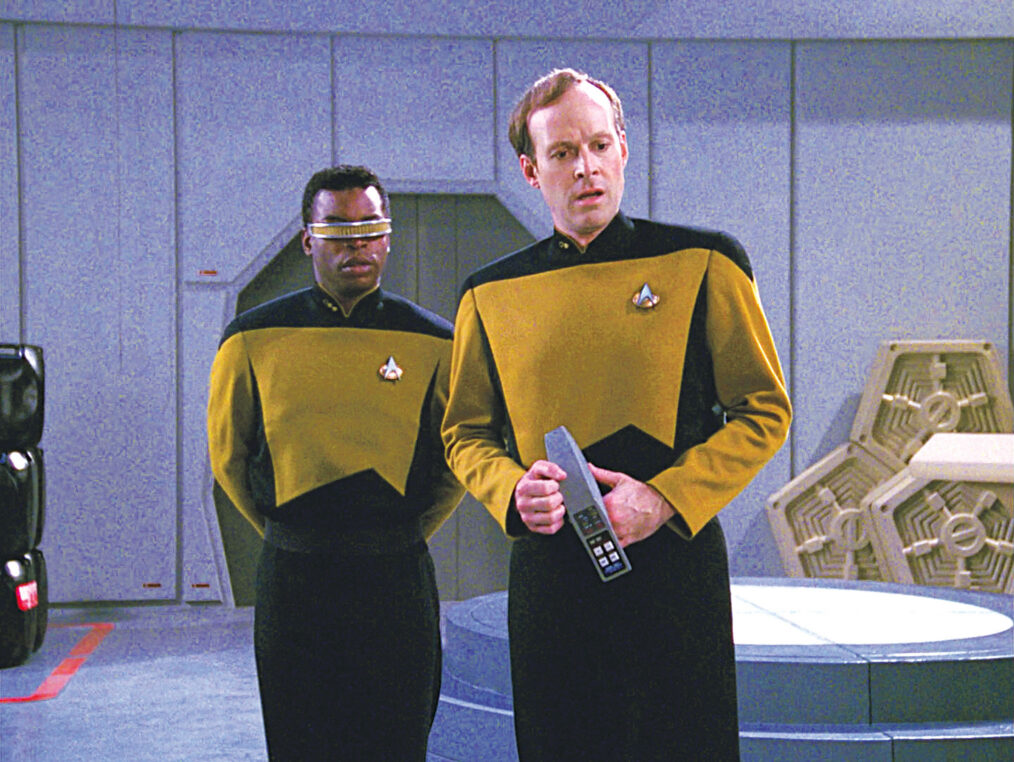
Ubiquitous in the franchise since The Next Generation, personal access display devices, or PADDs, are handheld computers that are operated via stylus or touchscreen. They’re used for a variety of tasks including inputting coordinates, compiling reports, accessing data files, transcribing narration and even watching movies. The similarly named PDAs (personal digital assistants) of the 1980s and ’90s served some of those more basic functions, but it was the arrival of Apple’s iPad (below) and modern tablet computers that truly made us feel like Captain Picard.
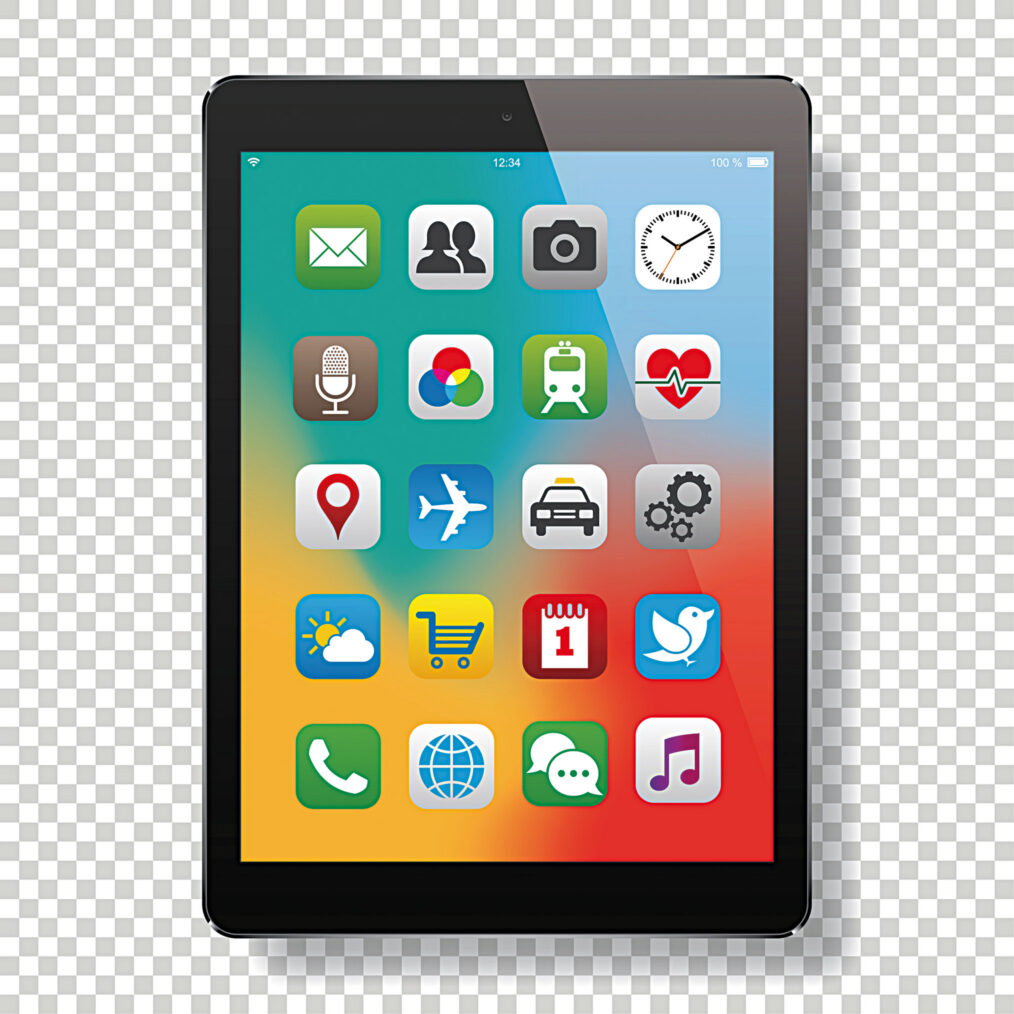
“It’s uncanny to have a PADD that really works,” longtime Trek visual effects artist Doug Drexler told Ars Technica in 2010. “The iPad is the true Star Trek dream.”
6. Universal Translator
Exploring strange new worlds would be a heck of a lot more difficult without a way to communicate with extraterrestrial races. Enter the Universal Translator, which, according to Kirk, deciphered alien languages by scanning brainwaves. Though Google Translate isn’t quite that advanced, it has gotten pretty good at translating one human language into another. By The Next Generation, the Universal Translator had been incorporated into communicator technology in Starfleet’s standard-issue “combadge.” Kind of like the translation apps on wearable tech like Smart Watches (below)?
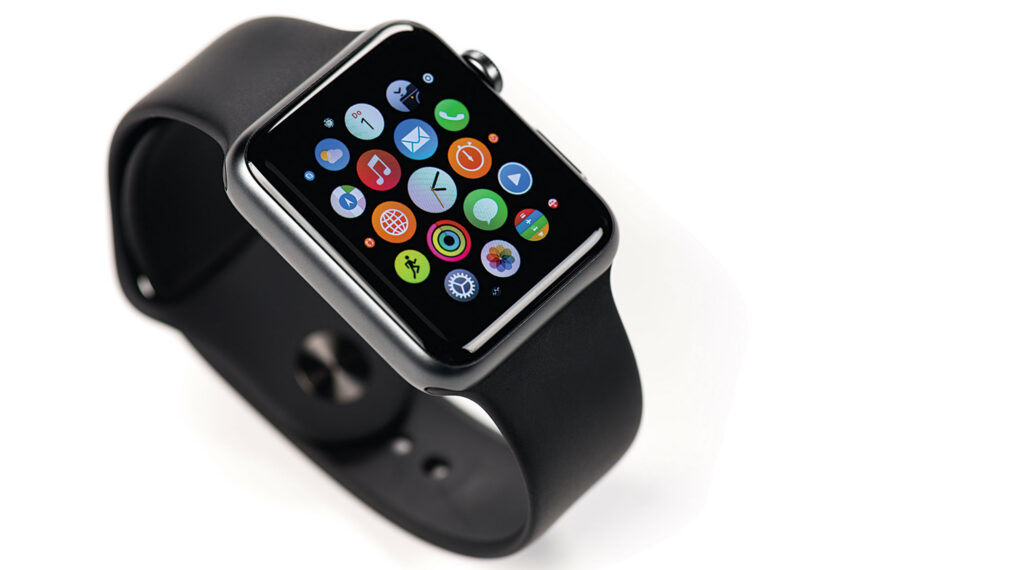
Though our world is far from the United Earth Gene Roddenberry imagined, we think he’d be heartened by how modern technology is breaking down language barriers.
7. Transporter
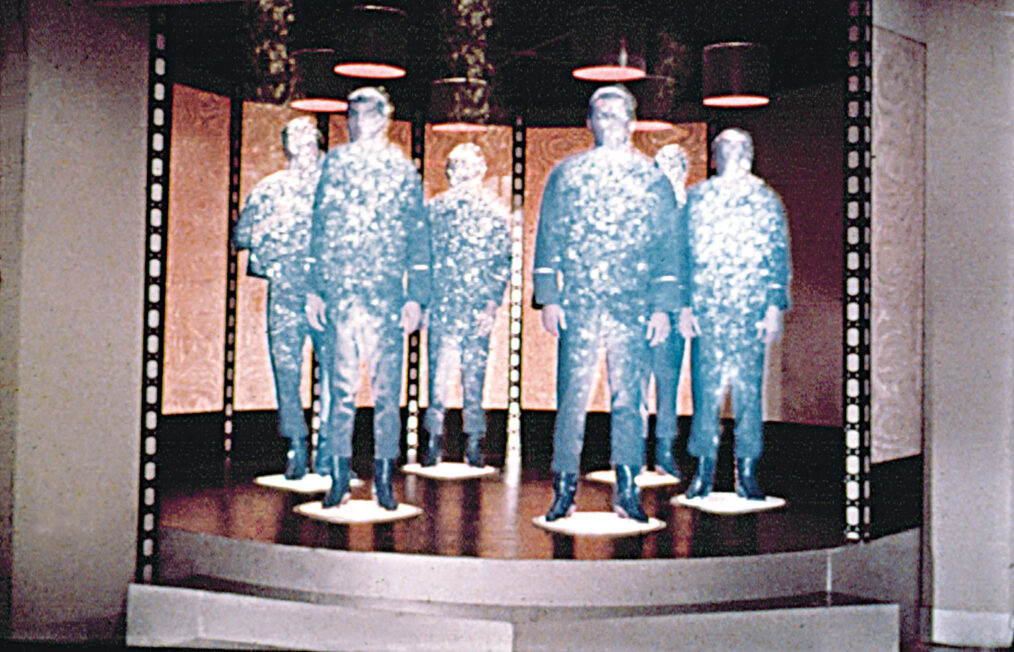
Though Kirk never actually spoke the phrase “Beam me up, Scotty,” the fact that the line has been continuously misquoted for the better part of 60 years speaks to our fascination with the concept of teleportation. Who wouldn’t want to travel tens of thousands of miles in the blink of an eye? Unfortunately, this one is a bit further out of reach than most of Star Trek’s other sci-fi conceits. That said, the “quantum teleportation” of information sure is a real thing and is achieved by the entangling of two distant particles when one transfers its quantum state onto the other. This can’t move physical matter, but it has led to improvements in both communication and computing.

















Conversation2 Comments
Please read the TV Insider Community Guidelines.
Register or sign in to join the conversation.
-
P
VERY surprised re the existence of
' supersolid ' - It certainly may have applications !
And, re space-to-space ' transport',
could A.I. information-gathering
power get to the point of actually identifying ALL the atoms (& each movement) in a human body, recording them ALL, + their precise location, in order to turn them into
a type of ' energy ' & ' transport '
them to a specific location, and there, have them correctly ' re-assembled ' ? - We shall see. . .
-
T
I had a feeling what I was going to see when I opened this clickbait. With the exception of smartphones and tablets, none of the technologies listed is analogous to the version of that technology on Star Trek. There's a big difference between the cell phone and a subspace communicator, a replicator and a 3D printer, and especially a transporter and a quantum physics experiment.
 Watchlist Easy access to only the shows you care about — all in one simple place
 Alerts Only important notifications — when a show is returning, when it becomes available to stream, and more.
 Special Offers Exclusive products we release related to your favorite shows and streaming services