
11 Things ‘Amadeus’ Got Right & Wrong About Mozart and the Music Maestro’s Life




The story of Wolfgang Amadeus Mozart and his rivalry with court composer Antonio Salieri has become the stuff of legend, thanks to the massive success of Peter Shaffer’s play Amadeus, which was later adapted into Miloš Forman‘s Oscar-winning film. The tale of how one man’s obsession with genius slowly curdled into envy, resentment, and self-destruction captivated audiences, turning the composer into a larger-than-life figure in one of cinema’s most celebrated historical dramas. Even if it is mostly balderdash.
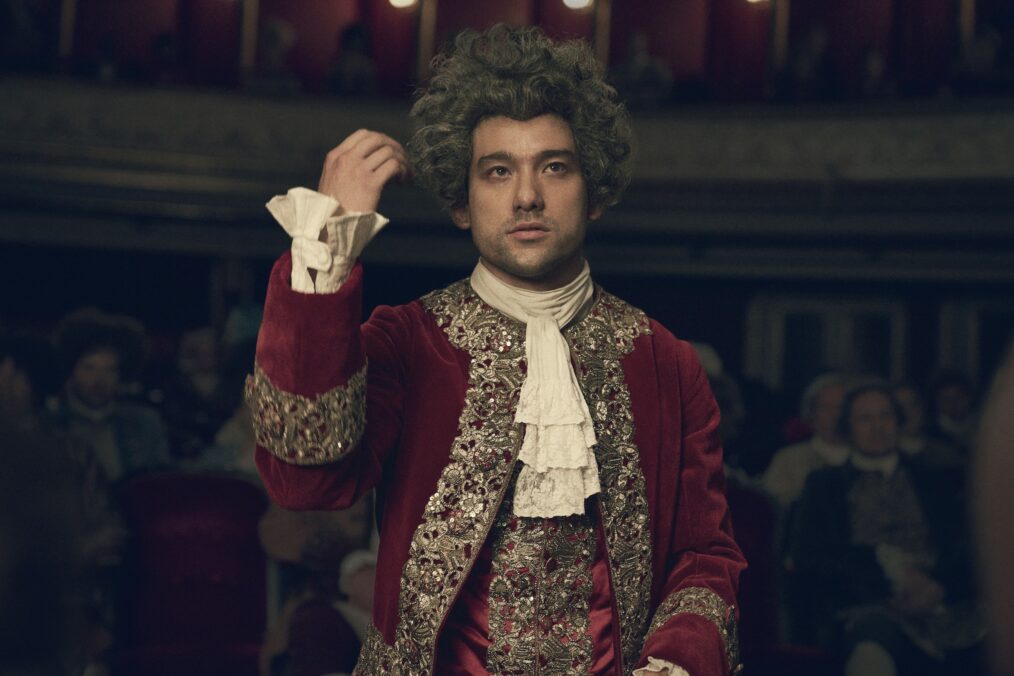
Now, almost five decades later, the story of Mozart and Salieri has been reimagined for the small screen by Joe Barton and Julian Farino as Starz brings the legendary rivalry to television in Amadeus. Starring Paul Bettany as Salieri and Will Sharpe as Mozart, the series promises a deeper and more nuanced exploration of the artistic feud that would ultimately consume both men and cement their places in cultural history.
But how much of it was real? And how much of it was embellished for entertainment’s sake. Here is a look at a few of the series’ basics: the true, the false, and what lies between. Warning: Spoilers ahead for Amadeus Season 1.
Amadeus, Fridays, 9/8c, Starz

Did Antonio Salieri hate Wolfgang Amadeus Mozart?
FALSE. Antonio Salieri was already an extremely respected and beloved figure in Vienna’s music scene by the time Wolfgang Amadeus Mozart first arrived. His success and position at court made him a rival to many composers, not just Mozart. Other than working in the same field, there is no evidence the two men shared the kind of deeply personal vendetta dramatized in Amadeus.
It is true that Mozart’s father, Leopold, accused the Italian composers at court of receiving far more royal favor than Mozart, and there was some truth to that frustration. But there is absolutely no credible evidence that Salieri harbored enough ill will toward Mozart to wish him harm.
For the most part, surviving records suggest a relationship marked by both professional competition and mutual respect. After Mozart’s death, Salieri even taught Mozart’s children as a gesture of respect toward the late composer. Years later, historians also discovered that the two men had collaborated on a composition together titled Per la ricuperata salute di Ofelia. Not exactly the kind of thing one does with a sworn enemy, hmm?

Was Mozart a bawdy, libertine brat with a crude sense of humor?
TRUE. In both the series and the film, Wolfgang Amadeus Mozart is depicted as a brat prince whose fondness for scatological, sexual puns, and crude sense of humor often overshadowed his musical genius, at least in Salieri’s eyes.
This is, in fact, true, and possibly even toned down. In a translation of a 1777 letter from Mozart to his cousin Maria Anna Thekla Mozart, he uses, ahem, extremely colorful language and coarse humor. Read it here.
Though it should be noted that many historians argue that what looks like “brattish” or deviant behavior today was actually common in 18th-century Southern German and Austrian culture, where scatological humor was a standard form of ribaldry. It was all in good fun!
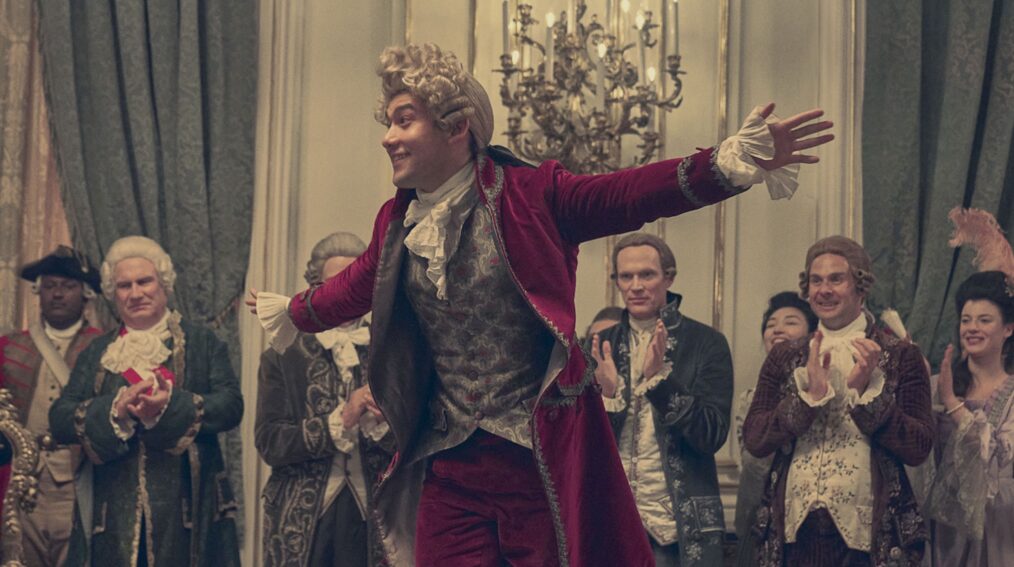
Did Mozart engage in a musical duel with Muzio Clementi?
TRUE. Mozart and Muzio Clementi (Richard Colvin) engaged in a famous piano duel and musical competition on Christmas Eve in 1781 before Emperor Joseph II (Rory Kinnear). The duel aimed to entertain royals for the benefit of Grand Duchess Maria Luisa of Russia. The duel featured improvisations and performances of their own works, and in the end, officially resulted in a tie, though Mozart believed he won.
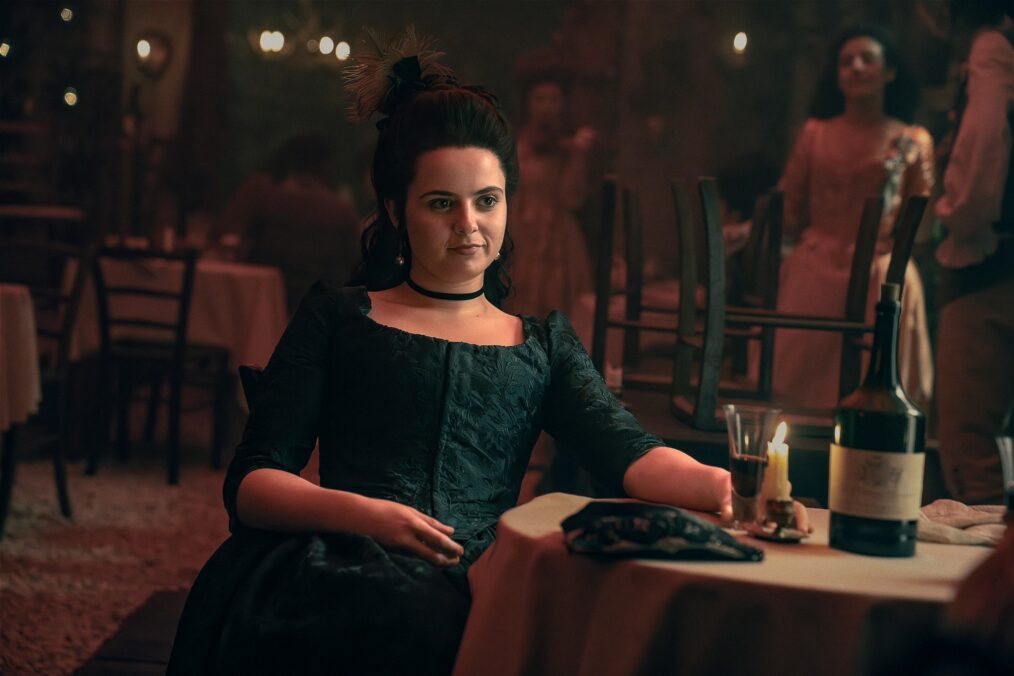
Did Mozart meet his wife Constanze, after boarding with her boorish family?
TRUE. And it was far more scandalous than even the show let on! According to the Madison Opera, Mozart met his wife (Gabrielle Creevy), Constanze Weber, through her family in 1777 in Mannheim, Germany, but only became romantically involved with her in 1781 in Vienna. When the Weber family moved to Vienna, Mozart lived with them as a boarder, falling for Constanze while pursuing her after his earlier failed courtship of her older sister, Aloysia.
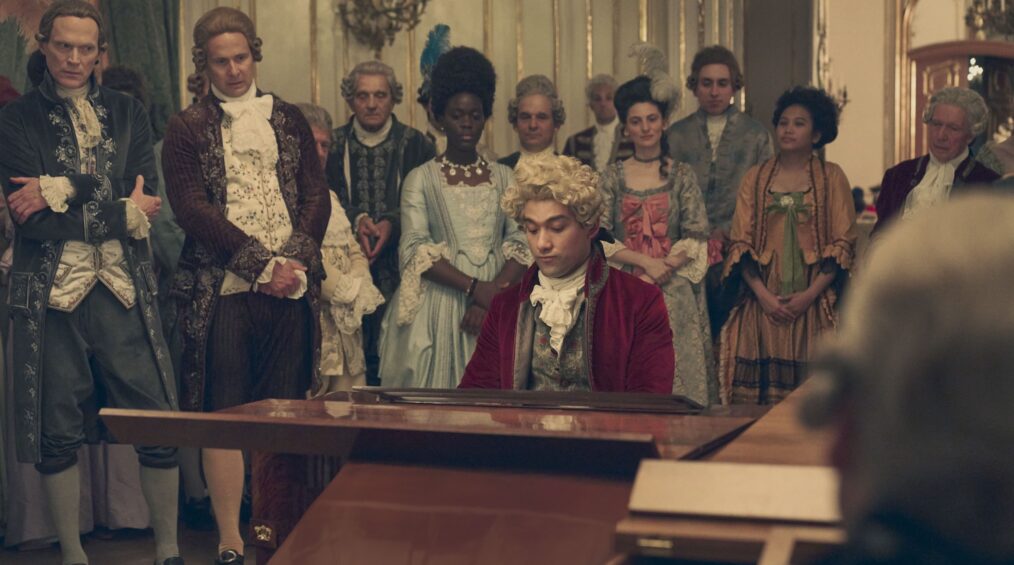
Was "A Little Night Music" ("Eine kleine nachtmusik") written as a slight towards Salieri?
FALSE. In the first episode, Antonio Salieri states to Mozart that he believes God speaks through his music and that it is God’s voice that is speaking through him. When Salieri doesn’t stand up for Mozart in front of the Emperor, the composer is angered, and in a moment of revenge, composes “A Little Night Music,” which he claims was written “as if a voice was speaking to me, and only to me,” throwing Salieri’s words back into his face.
According to Britannica, “A Little Night Music” was composed in 1787 as a light, entertaining serenade and was not published or widely known until long after Mozart’s death.
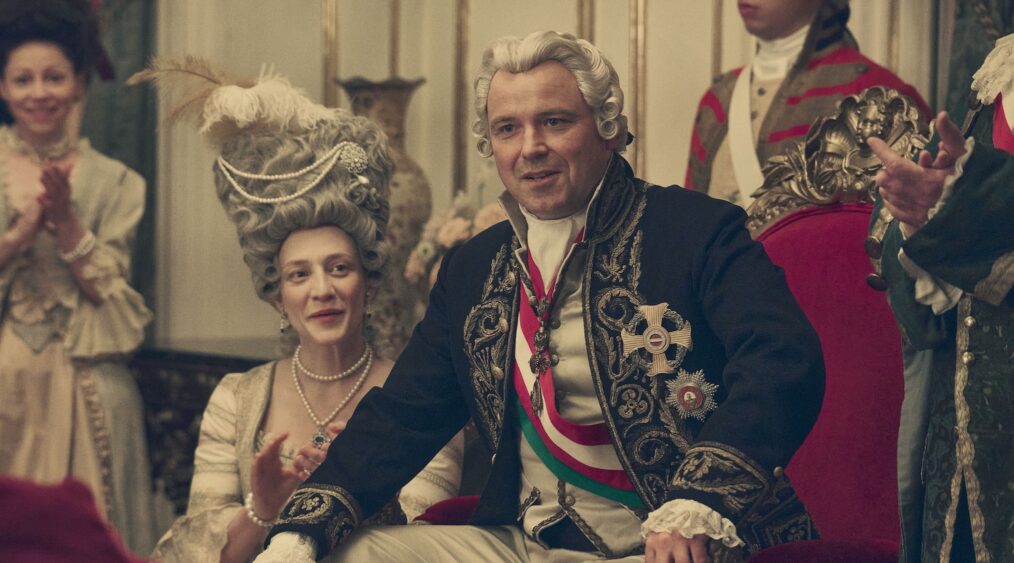
Did the Emperor believe that The Abduction from the Seraglio had "too many notes"?
POSSIBLY TRUE BUT LIKELY EXAGGERATED. In Episode 1, after listening to The Abduction from the Seraglio for the first time, Emperor Joseph (Rory Kinnear) complains to Mozart that the piece is “fine” and suffers from “too many notes,” which greatly insults the composer. The scene likely comes from a well-known anecdote that originated in a 1798 biography by Franz Xaver Niemetschek and may have been a bumbling attempt at a compliment, as the Emperor was highly educated in music. However, according to many scholarly publications, given the story’s age and its consistent retelling over the years, it is likely rooted in truth, though probably not as mean-spirited as it is often portrayed.
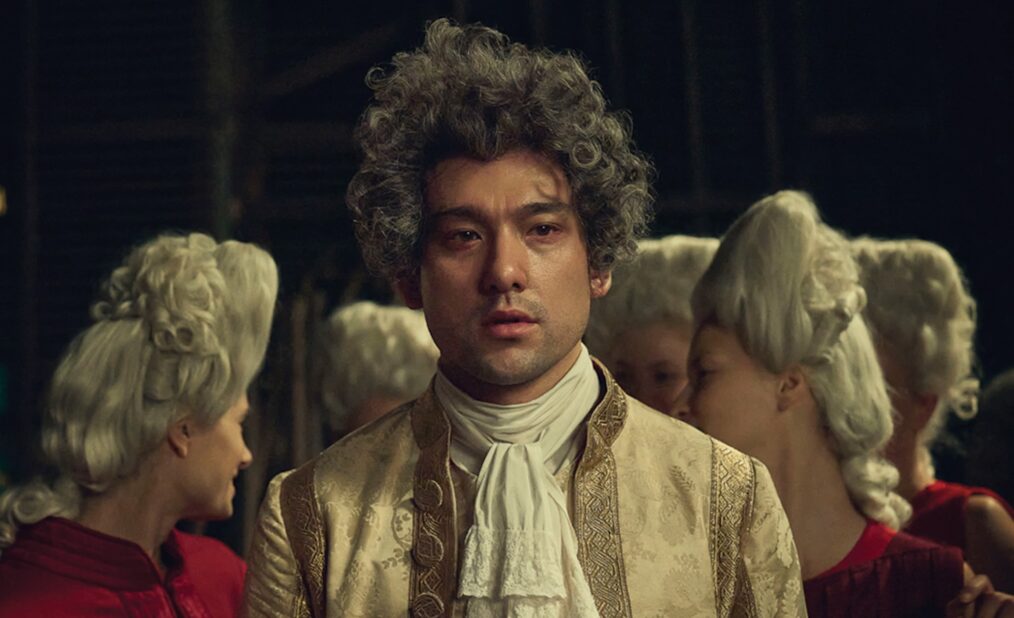
Did Mozart move to Vienna to escape his tyrannical father?
SLIGHTLY FALSE, WITH A DASH OF TRUTH. The primary reason Wolfgang Amadeus Mozart moved to Vienna in 1781 rather than remain in his hometown of Salzburg was to break free from his restrictive employment under Archbishop Colloredo and pursue greater artistic freedom and financial independence as a freelance composer. Frustrated by the limitations placed on him in Salzburg, Mozart believed Vienna offered far greater opportunities and reportedly viewed it as “the best place in the world” for advancing his musical career and establishing himself on his own terms.
It was also well known that he hated the Archbishop. According to Classical 101 Podcasts, Mozart felt he was underappreciated, underpaid, and overworked. While is father was known to be overbearing, he was nothing compared to the Archbishop. According to experts, Mozart wanted a fresh start as he grew to “detest” Salzburg.
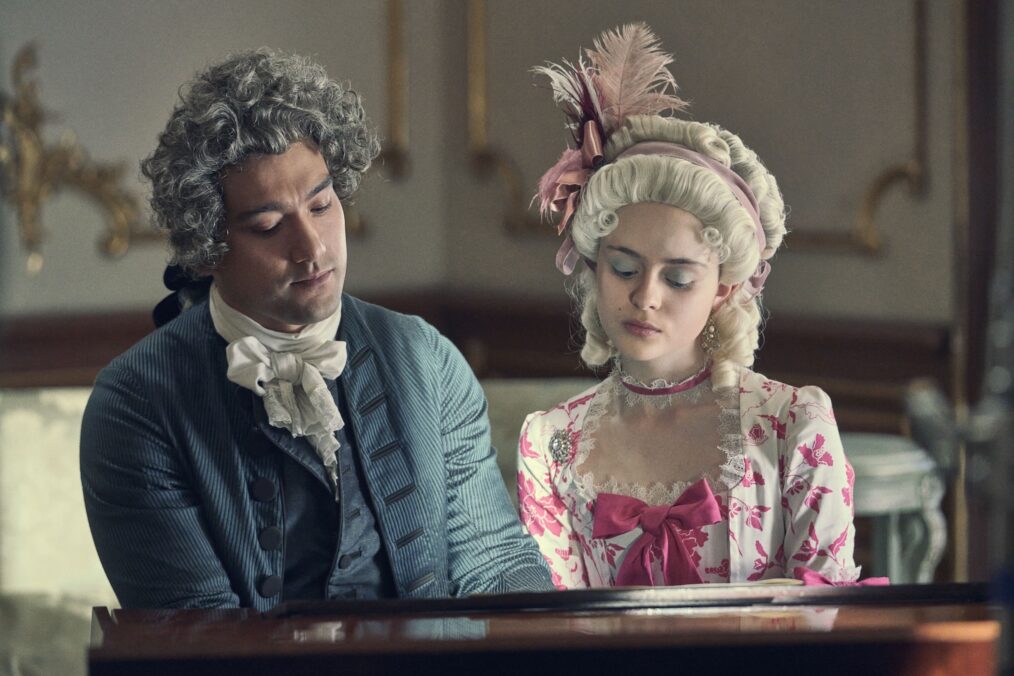
Was Mozart the tutor of Princess Elizabeth?
FALSE. In the show, the Emperor wants Mozart for the position, but Salieri inserts himself into the situation, pretending to act in Mozart’s best interests and asking Constanza to bring him Mozart’s manuscripts so he can “review” them. Mozart ultimately gets the position, but the princess proves to be quite unexpected, possessing a temperament far more similar to his own than he anticipated.
In truth, while Mozart applied for the position in 1781 and 1782, he ultimately did not get the royal appointment, and Salieri was selected instead (as per the Telegraph).
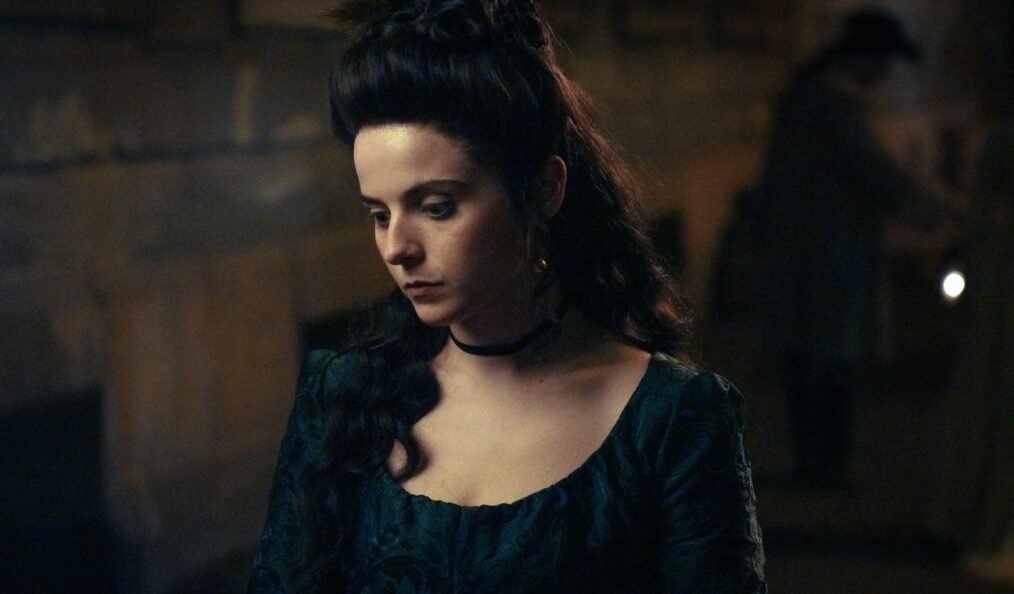
Did Constanze leave Mozart?
FALSE. In Episode 4, Constanze leaves Mozart for another man after witnessing a cruel outburst toward a fan and watching his mental health continue to deteriorate, placing increasing strain on their marriage. One night, she slips away in the dead of night, leaving him behind.
In truth, Wolfgang Amadeus Mozart’s wife did not leave him. The couple remained devoted to each other until Mozart’s untimely death in 1791. By all accounts, they had a loving marriage and was by his side when his died.
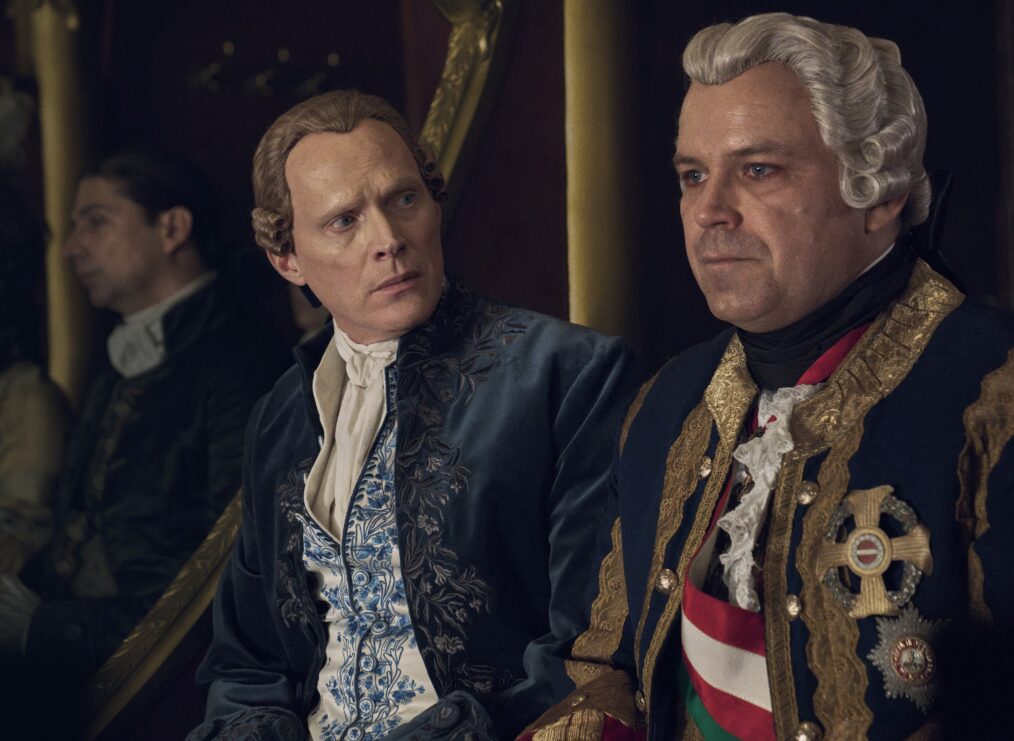
Was Mozarts's Don Giovanni a failure?
PARTIALLY TRUE. In Episode 4, Don Giovanni is depicted as a confusing opera that only Salieri and the Emperor truly appreciate. Salieri works behind the scenes to ensure it fails, and the production runs for only five performances despite both men recognizing its brilliance. During the second half, empty seats are visible.
In reality, Don Giovanni had 15 performances during its original run at the Burgtheater in Vienna in 1788.
When Don Giovanni premiered, it received a lukewarm response. Critics found the music too complex and called it “music is overly learned and artificial.” Its blend of dark tragedy and light comedy also confused the audience, who were accustomed to more clearly defined genres.
However, the opera’s reputation grew dramatically after that opening night as a misunderstood masterpiece. It quickly became a triumph and is today, widely regarded as one of Mozart’s greatest masterpieces (per Medium).
Did The Magic Flute offend the Brotherhood of Freemasons?
FALSE. In Episode 4, Salieri encourages Mozart to use the highly secretive Brotherhood in the play The Magic Flute, which they do not appreciate. As a result, they send in thugs to teach Mozart a lesson by assaulting him up in the back alley.
The Magic Flute did not offend the Freemasons. In fact, both Mozart and the librettist, Emanuel Schikaneder, were devoted Freemasons. Instead of an insult, the opera is widely celebrated as an allegory for Masonic ideals, which, according to the Kennedy Center, help promote Enlightenment-era values like reason, wisdom, virtue, and brotherly love.
Conversation6 Comments
Please read the TV Insider Community Guidelines.
Register or sign in to join the conversation.
-
A
AI told me he also wasn't half Asian and his librettoist wasn't black. His wife also didn't have an affair with a black guy. Hollywood lies
2
-
K
Why can’t a black person play a white person?
1
-
-
D
Also, the librettist Da Ponte was from a Jewish family. DaPonte's widowed grandfather wanted to marry a Catholic woman, and so, converted to Catholicism, along with his children. Da Ponte was originally from Venice. eventually he settled in America.
2
-
L
No reason at all! It should be acceptable for a white person to play a black person, too, right?
1
-
S
Yes though it seems white peoples can’t play black peoples
-
-
S
Well history.
 Watchlist Easy access to only the shows you care about — all in one simple place
 Alerts Only important notifications — when a show is returning, when it becomes available to stream, and more.
 Special Offers Exclusive products we release related to your favorite shows and streaming services