
‘The Rings of Power’ Bosses Recite Scripts for Sauron Kneeling & Ring Forging


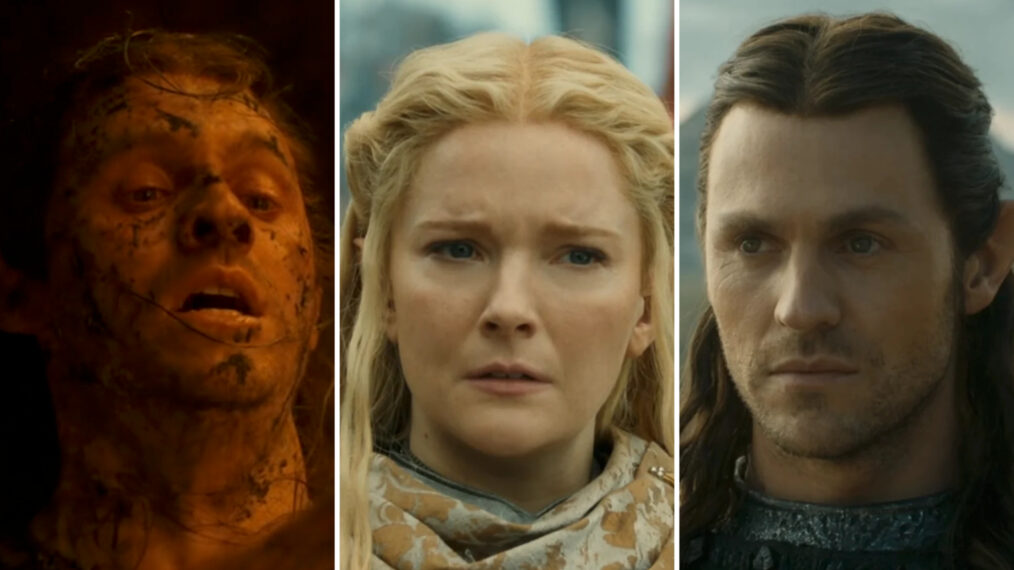
As J.R.R. Tolkien‘s legendarium dictates, Sauron (Charlie Vickers) bows to his foes in submission in The Lord of the Rings: The Rings of Power Season 3 finale, and this comes after he forges his all-powerful One Ring to rule them all. So, what gives?
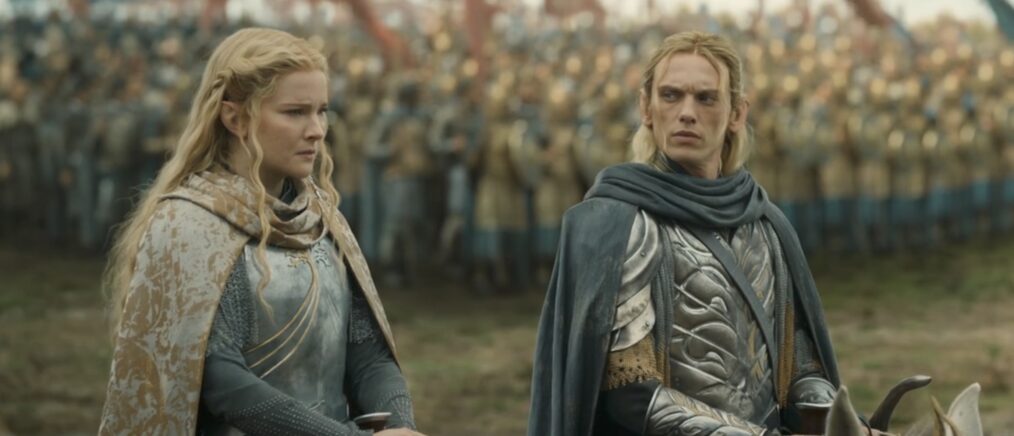
While Ar-Pharazôn (Trystan Gravelle) sees this as the best moment of his life, Galadriel (Morfydd Clark), Celeborn (Jamie Campbell Bower), High King Gil-galad (Benjamin Walker), and Elrond (Robert Aramayo) see it for the trick it is. That final scene of Season 3 is all loaded looks and barely any dialogue. In an interview explaining the finale, executive producers J.D. Payne and Patrick McKay gave TV Insider an inside look at the script and what it described about each character’s feelings.
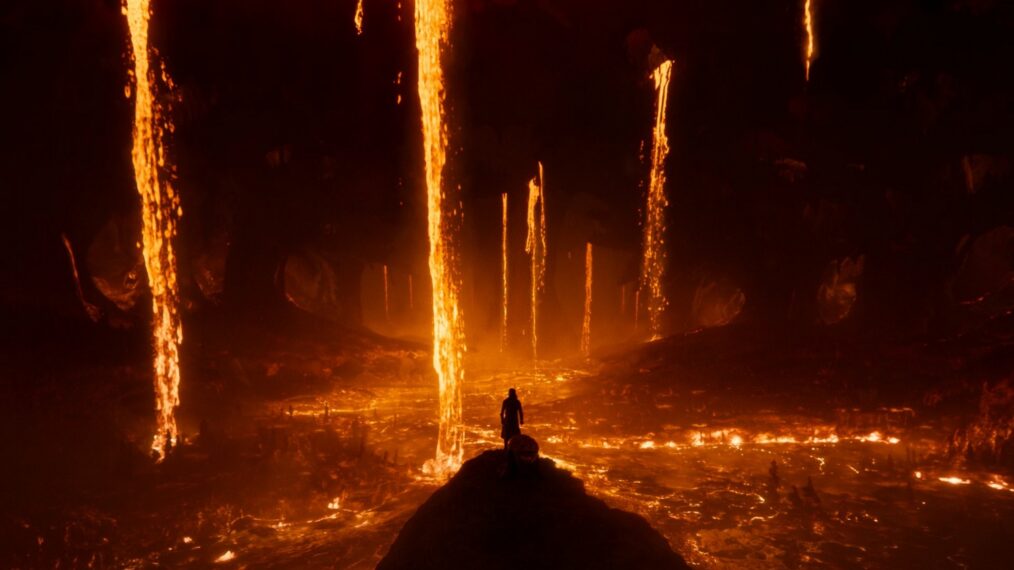
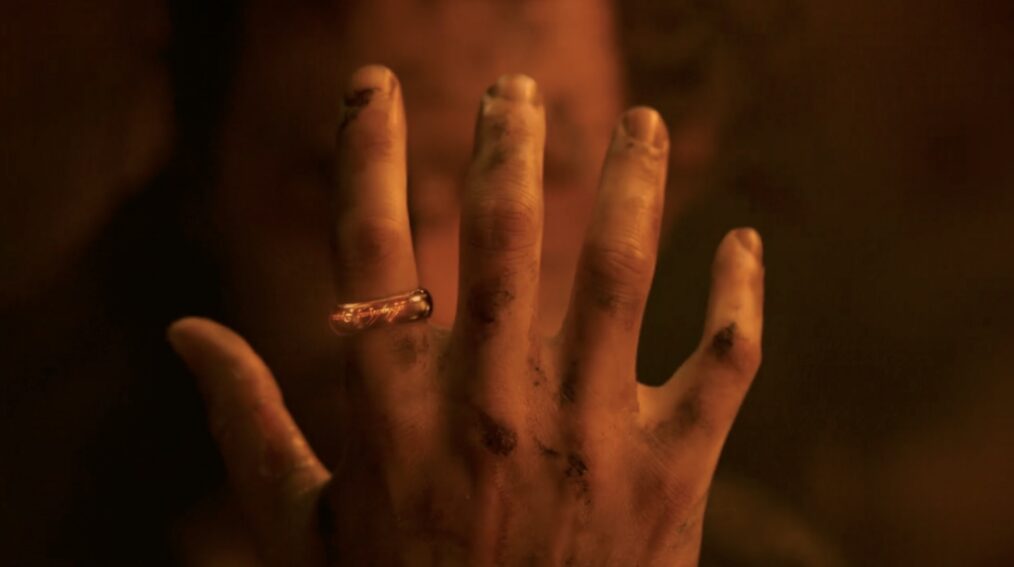
The Rings of Power Season 3 ending, as well as Sauron’s ring-forging scene that was equally absent of dialogue, are explained in the interview below, as well as their ideas for how Season 4 will begin and the big Sauron question it might explore as the fall of Númenor from Tolkien’s legend looms.
Prime Video
In the finale scene where Sauron comes out and kneels before Pharazôn’s army, I want to know what your script described about what everyone was feeling when he walks out and kneels. There are a lot of shots of characters looking at each other with no dialogue. What did you describe to your actors in the text?
Patrick McKay: What I can say is, these cinematic sequences in the show where we go without dialogue, whether it’s the forging of the ring or the assassination on Pharazôn in the top of the second episode or maybe the big rooftop battle at the end of the fourth episode, that stuff is written in completely detailed prose in our scripts. Our scripts are very, very visual. So, something like the ending, which, even though no one raises a sword, is a set piece in our minds. It’s a cinematic set piece that’s all about building that tension and putting the viewer hopefully in a place of what is going to happen next.
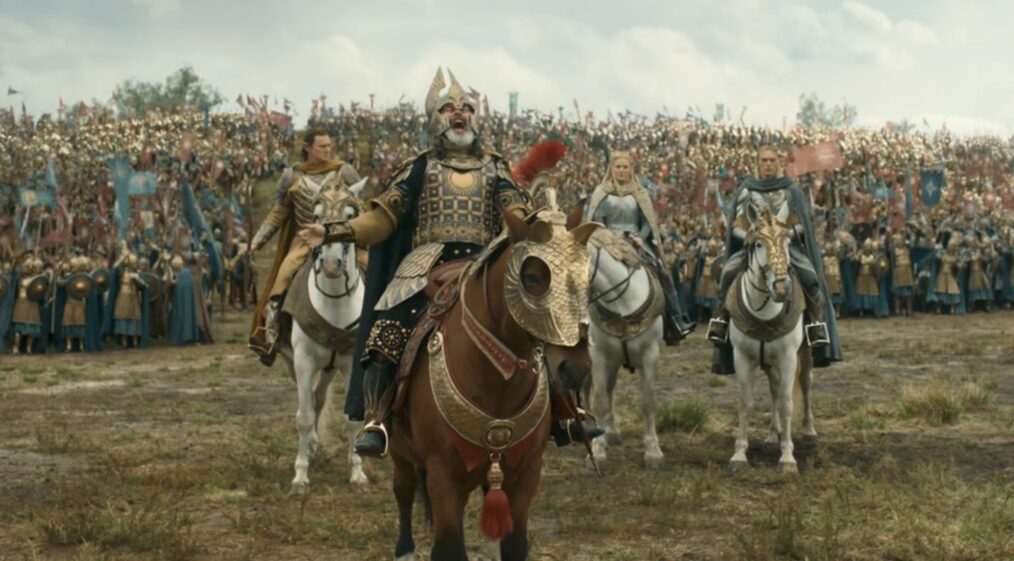
Everything you saw in that ending was scripted in detail, down to what each of those characters are reacting, how they’re looking at one another, so-and-so’s going for their spear, Pharazôn’s reaching for his sword. All of that stuff was first written in prose, then boarded, then you do it on the day, and you rehearse it, and then you find discoveries, but actually it would look like you were trying to describe what you saw on screen when actually it was in reverse.
J.D. Payne: I actually happen to have it right here, and I can read you the paragraph if you’re interested.
Oh my God. Yes, please.
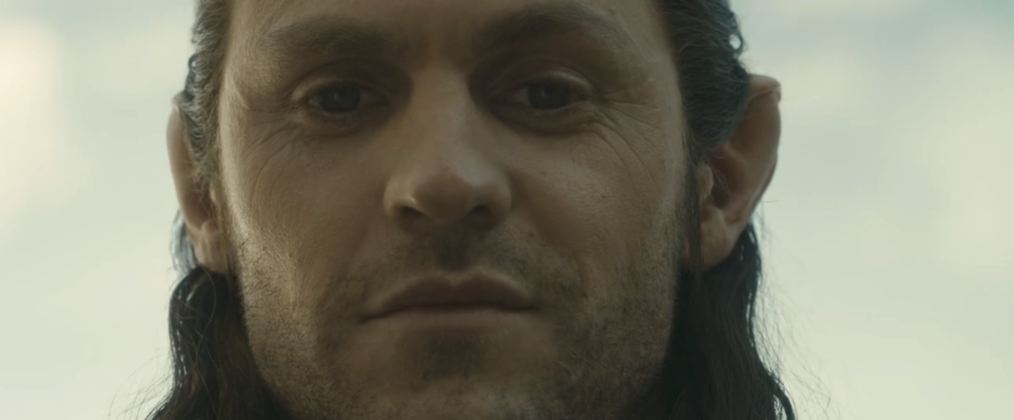
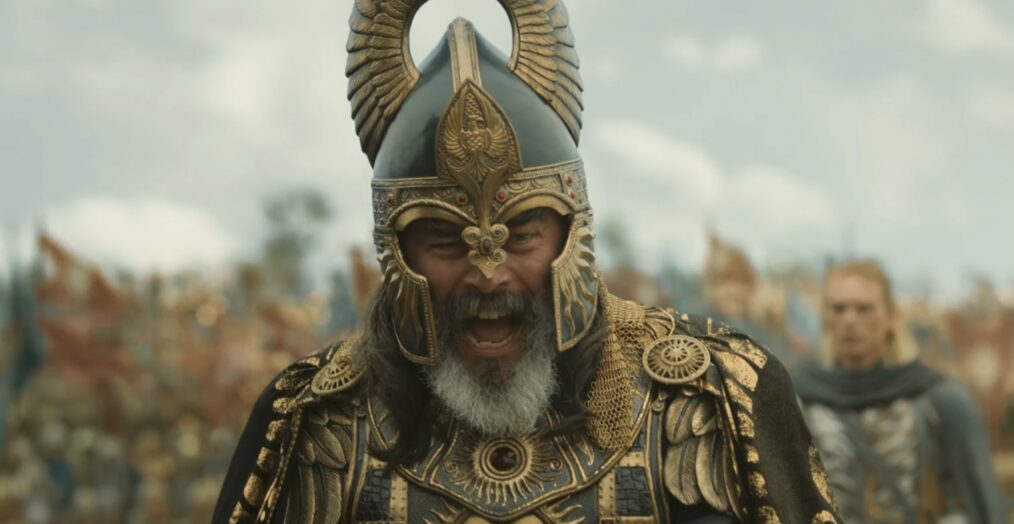
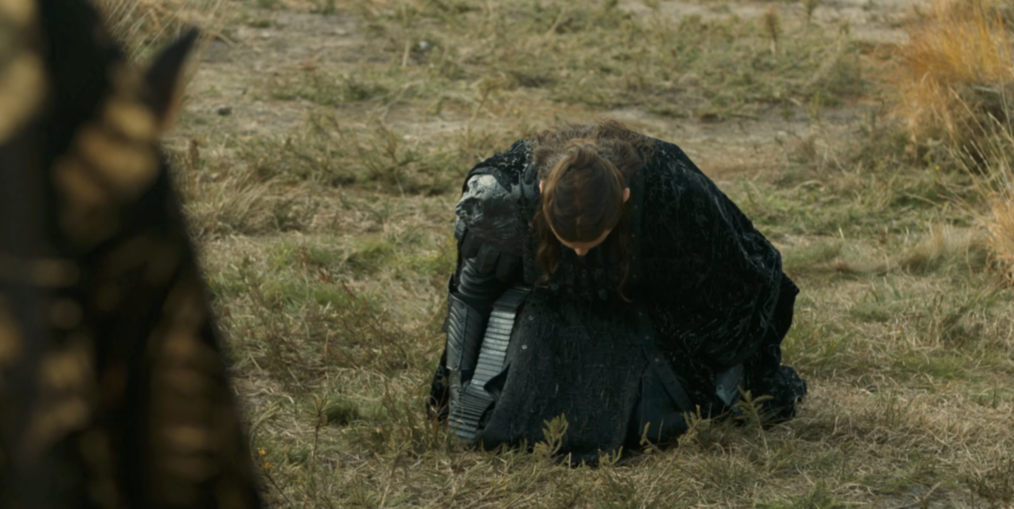
Payne: It says, “Sauron kneels, bowing his head in surrender. A breath catches in Galadriel’s throat, and the entire Númenórean army erupts into roaring tears. Elrond’s thunderstruck, looking at his kin in confusion and alarm. Gil-galad’s soul in free fall. Galadriel’s frozen, staring at the kneeling Sauron knowing that this is somehow a trip to deception. She looks to Celeborn, but he’s right there with her. He whispers with his eyes, whatever this means, they’re in it together. But Ar-Pharazôn laughs from deep within his gut in triumph, believing this the greatest moment of his mortal life, perhaps any mortal life, hoisting his sword, army roaring wildly. We go to Sauron, our angle looking up at his face from the ground, seeing what no one else can see. The Dark Lord is smiling.”
Prime Video
The emotional beats that you have in there is what I got from the actors, so that’s good to know. Especially Galadriel and Celeborn; they don’t trust what’s going on. They seem to be the only ones, or at least the elves seem to be the only ones, who can clock that this is a trick.
McKay: It’s ironic. This is what happens in this era of the [Tolkien] lore. We’re adapting and doing The Rings of Power version of it, but it’s been depicted in paintings and drawings and in all kinds of different ways by other adapters before us. What we love about it is how ironic it is. It is a triumph that is a booby trap. It appears to be total victory, but he has Pharazôn and all of Númenor right where he wants them, which just felt like we couldn’t top this moment. We have to end right here. And hopefully it’s a cliffhanger that leaves people very excited for when we’re going to come back.
It says in The Silmarillion, of course, and in these paintings that you’ve described that he kneels before the army, but he has the One Ring at this point as well. How does he make this decision to kneel and capitulate, intentionally, despite having this weapon at his disposal?
McKay: He calculates that even with, he has a force of orcs, he has the One Ring, he’s Sauron, but maybe he’d be looking at a very bloody Pyrrhic victory or maybe a stalemate and it would be a short-term thing that would potentially leave him weakened. Whereas he calculates that maybe I can’t win this battle, but I can win the war. I’m going to play a longer game.
What’s great about Sauron, and writing about that character, is he has so many moves. He’s such a great improviser that when he’s on his back foot, he’s sometimes the most dangerous because he’s going to wait you out. He’s going to be patient, and he’s going to find a way to… Maybe he can’t beat you in this moment, but he’s going to destroy you forever. And I think those are the kind of emotions that he’s working his way through in that last 15 minutes or so.
Payne: And also why destroy your enemy when you can co-opt and potentially corrupt your enemy? There’s all kinds of things that Sauron can do rather than just fight to a bloody eventual maybe stalemate or prepared victory. In the moment, he’s looking at Pharazôn laughing and laughing and laughing. He’s already met him once in our show, and he’s seeing how eminently corruptible Pharazôn is. There’s all kinds of things you can do with a corrupt empire that you can twist it to your will.
Prime Video
Obviously because the source material mandates it, and I guess you might open with him being captured in the next season or there’ll be a time jump ahead or something like that, but why didn’t they try to do more to him in this moment?
McKay: Well, you can’t kill him.
Payne: That’s the true thing about Maiar. We’ve shown in our show that the orcs tried that, and he came back as a black goo monster and ultimately re-instantiated.
McKay: But maybe we start the next season with that exact question. What the hell are we supposed to do with him? How do you actually handle a demigod who has surrendered to you? I think that’s a question worthy of exploration.
Absolutely. And I don’t think he would have kneeled before Pharazôn and his army had he not had to humble himself to make the ring in the previous episode. What do you think about that?
McKay: Certainly there’s a precedent that if he shows humility, it can potentially give him control of an unwilling adversary. Maybe he’s learning from that precedent in this instance.
Prime Video
The elves and men know Sauron made something, and it’s enough for the elves to take off their rings of power, knowing that that’s a huge danger to them. But how aware are they of the true extent of the power of this weapon that he’s made at this point?
McKay: Based on the text, just the show, the whole event that sets this season in motion is an orc claims to be a defector and who says Sauron is making this ring that will have this power. And it is the understanding of how dangerous it is that sets the whole story in motion from the beginning. So, I think they’re fully aware of what the danger of that [is]. I mean, it’s like he’s invented the bomb.
Payne: They understand that this is his game plan, so it’s this bittersweet, just soul-wrenching moment of the legendarium where these rings that have been the one thing that have been protecting them and keeping their [enemy] at bay, suddenly they can’t use them anymore. That’s the moment that we’ve been looking forward to dramatizing really from Season 1 is the moment that Sauron makes the rings, and the elves all feel it exactly at the same moment and realize they have to take them off.
Prime Video
Speaking of the One Ring forging scene, I’m sure that since you started the show nine years ago, you’ve been thinking about that scene. For you both of you finally seeing it come to life, what’s a moment in that forging scene where you’re just like, “Oh my God, it’s here. We did it.”
McKay: I think we still are in it a little bit. We’re not quite yet at having perspective, but we watched it with an audience out in L.A. — was it last night or the night before? I guess it was the night before. And it was sort of the first time, at least for my part, that I felt a sense of a period at the end of the sentence, like it is done. It is accomplished for whatever, for good or ill.
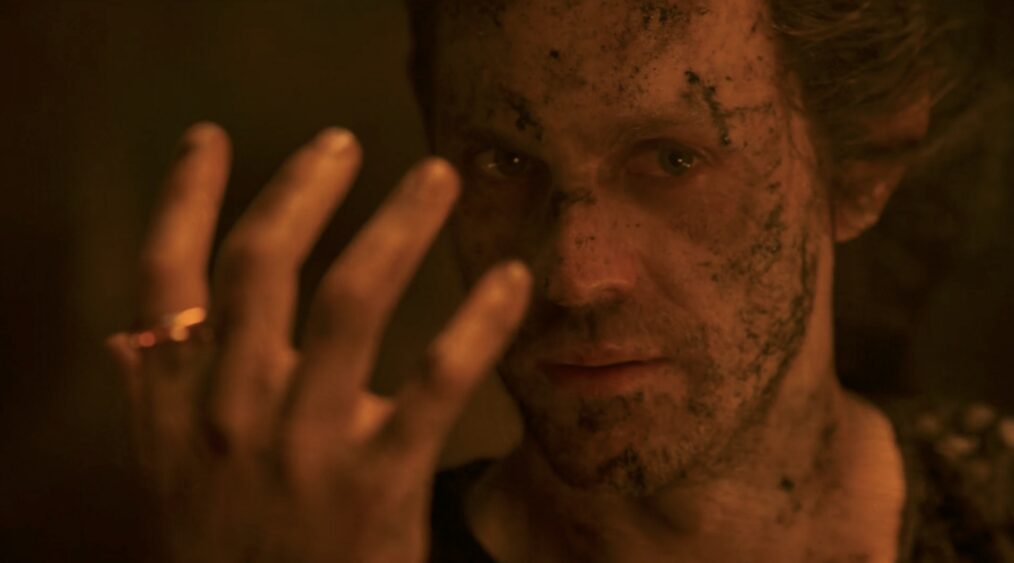
In that sequence, the moment I like the most is when the material coalesces on the anvil, and there’s a lens flare as the ring is closed for the first time. There’s yet more evolution before the ring is complete, but that’s a moment that I feel as a Lord of the Rings fan, I think it feels pretty epic.
Payne: For me, it’s right before that actually, where I tend to feel the most is you’re seeing the waves of sound and lava go out, come back in, go out again, and each time you’re seeing them get closer and closer to this circular form. There’s this one moment where it’s a close-up, and there’s three waves that come in at once. But you’re just like, oh my gosh, it’s happening, it’s happening, it’s happening.
And there’s this sense of that moment of this growing momentum and inevitability of Sauron’s victory in creating what he wants. And just at that moment, there’s something just so thrilling about the visuals and the sound and Charlie’s performance all coming together.
Prime Video
I actually was just before this interview re-watching that clip when the sound wave in the lava reverberates back, and right as it hits the anvil, that’s when that lens flare happens on the ring. It’s really cool to see how sound is making this happen. The vibration of sound is part of the magic, which is so Tolkien. Similar to the question about what was in the finale text, I want to know some details about the text for the ring forging scene because, as you said before, Patrick, there was eight pages, a short story basically describing what’s happening in Mount Doom.
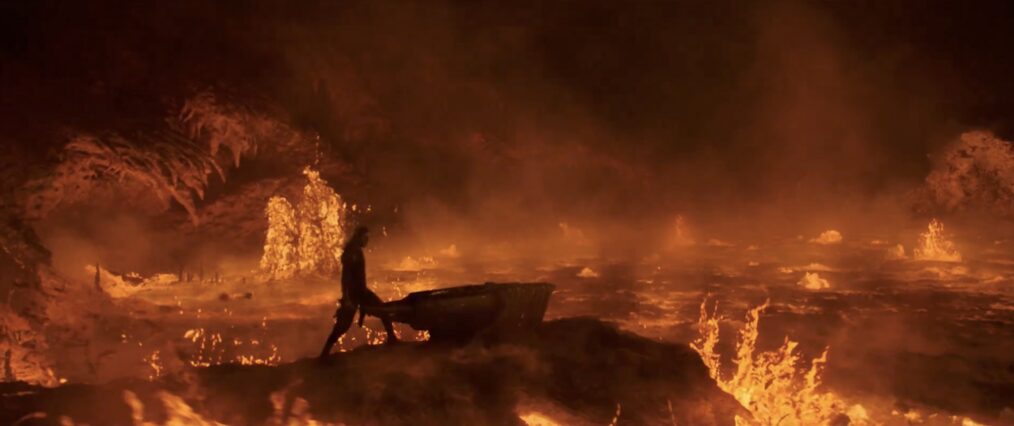
McKay: Yeah, it was an extended piece of prose. It’s like a short story between the opening sequence where he first goes in, which is the beginning of the episode, but that script which JD and I wrote with Justin Doble, fellow writer-producer on the show, the opening is just a series of descriptions of nature photography that is designed to build a character out of the mountain. And then you go and you harvest actual volcano footage, and you maybe doctor it a little bit to make it fit your world, and then that’s what we then make in the edit. But from that, through that opening, and then it’s like the last seven pages of a screenplay, all single-spaced; there’s no dialogue other than the commentary of the Balrog slipping in every now and then.
If you read it, it’s pretty close to where we ended up. There’s a lot of iteration and design work that comes on top of that to bring it to the screen and things that need to work a certain way, but I remember Justin wrote the first draft of it and it was like even reading that, if you read that first draft, there’s a really clear through line all the way to what dropped on the platform yesterday. It’ll feel like the same thing. You’ll get the same feeling of infernal forces and a demigod giving his life.
That was the core idea was that he would have to die to bring the ring into being and understand sacrifice in a way he hadn’t yet to create something. It always ended with that little montage and with his hand going up and the volcano. We call it the Bellagio fountain [laughs].
Prime Video
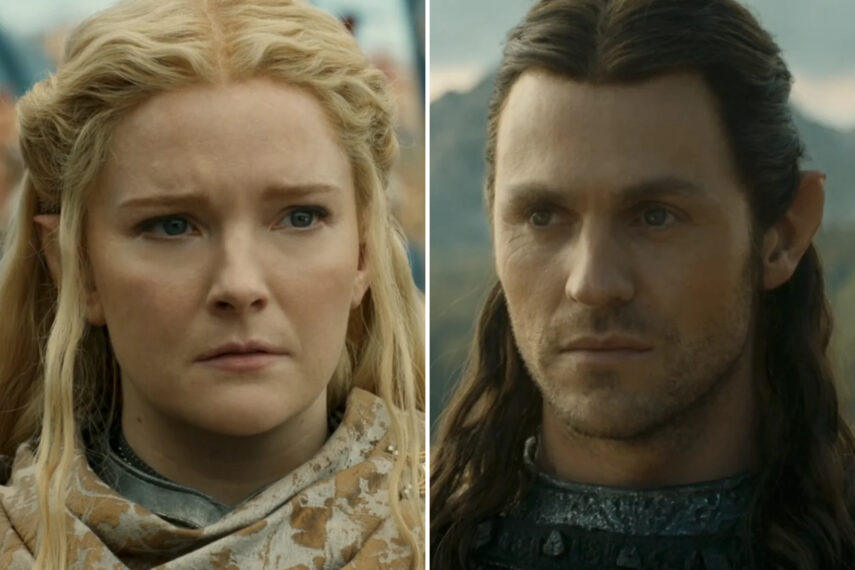
Now for some Galadriel, Celeborn, Sauron stuff. It’s not a love triangle, but it’s a twisted triangle for sure. Now that Galadriel and Celeborn have recommitted themselves to each other after their centuries of separation, how is this united front between them going to become even more of a problem for Sauron? Will he ever really let go of his goal to get Galadriel on his side?
Payne: Well, we know that he won’t because she tells us in the Third Age that he hasn’t. In some ways, that was where this entire idea came from in the beginning was a close reading of something that Galadriel says to Frodo, where she says, “I perceive the Dark Lord. I know his mind,” or at least all of his mind that concerns the elves, “and ever does he grope after my mind to know me.” I’m paraphrasing, but that’s effectively the passage. So, even in the Third Age, disembodied Sauron is still groping after Galadriel to try to get inside of her head.
Having Celeborn back is going to make it all more challenging because when you have your partner with you, they’re able to help strengthen you and fortify you. The two of them are the yin to each other’s yang. Speaking of Celeborn and Galadriel, he’s able to talk to her about the joy that he was able to find in this deep peace of his soul, even in the horrors of his imprisonment. And that peace that is able to join with her and become her other half is going to be a deep well of strength that will help her continue in her journey as she eventually becomes the Lady of Lórien.
Prime Video
McKay: I have to comment on the love triangle thing because this is a fight I picked. In some interview, I was like, “Yep, love triangle.” It’s such a great bumper sticker for the season. I think it just took off a little bit. But really, this is a story of our villain, as we’ve adapted him in this story, is someone who is so convinced that he knows better than everyone, that when someone tells him no or won’t submit to him and he can’t deceive them and control them, he goes insane that he can’t handle it. It breaks his brain. [Galadriel’s] the one that got away, not because he’s in love with her. Love is not a thing he, as a demigod, possesses or is interested in, but he’s fascinated with people who have things he doesn’t.
He gets angry at them. They poke at his insecurities. Celebrimbor [Charles Edwards], there’s a similar thing. Celebrimbor’s voice is in his head all season telling him he’s not good enough. Celeborn and Galadriel have something that Sauron cannot have and can never understand. And I think you see this season that motivates him to want to destroy and possess it and take it away so they can’t have it either.
If you’re someone as dangerous and deeply damaged as Sauron is, I don’t know that you ever give up on wanting to dominate someone who resists you or who tells you no or who disagrees with your assessment that you know better than anyone. So, that will always be a tension in the show is people who push back against him, he’s never going to give up the hope of humiliating them and breaking them. He’s twisted.
Prime Video
I can’t think of anything that’s more textbook definition of good versus evil.
McKay: Sure, but hopefully it’s a complex evil.
Of course.
McKay: And one that you even see in our world. Clinical narcissism and trauma and the way people see control, those are universal maxims. They’re not just in Middle-earth.
It’s perfectly explored through fantasy, and that’s what’s so great about Tolkien because it’s such human truths explored through inhuman characters.
McKay: Totally.
Prime Video
That’s why I love fantasy. I don’t want to see a car. I can see a car when I look outside. Show me a dragon!
McKay: Here, here.
Payne: Amen, amen.
Can we expect another time jump between seasons? It was five years between Seasons 2 and 3. Or are we going to pick up where it left off next time?
Payne: Maybe not between seasons, but maybe I’d say there will likely be time jumps between now and the end of the series, and maybe inside of seasons, whether it happens at the beginning of the season, you’ll have to wait and see. Is that fair?
McKay: The time jump is a potent weapon of the dramatist trying to tell a story that aspires to the epic, and it will be one we use again in this show, but you got to stay tuned. I don’t want to ruin the surprise.
The Lord of the Rings: The Rings of Power, Season 3 Finale Streaming Now, Prime Video

Morfydd Clark
Robert Aramayo
Cynthia Addai-Robinson
Owain Arthur

Maxim Baldry

Nazanin Boniadi
Ismael Cruz Córdova
Charles Edwards
Trystan Gravelle
Lenny Henry
Ema Horvath

Markella Kavenagh
Tyroe Muhafidin
Sophia Nomvete
Lloyd Owen

Megan Richards
Dylan Smith
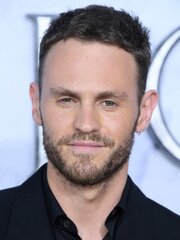
Charlie Vickers
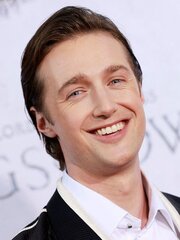
Leon Wadham
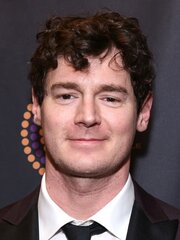
Benjamin Walker
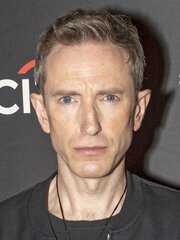
Daniel Weyman
Sara Zwangobani
Joseph Mawle
⨁Full Cast & Crew



Conversation
Please read the TV Insider Community Guidelines.
Register or sign in to join the conversation.