
‘Nocturne’s Stephen Graham & Rory Culkin Explain Jurek’s Manipulation of Karl


Spoiler Alert
What To Know
- Nocturne kicks off with a search for a missing girl in the first two episodes.
- Stars Liev Schreiber, Zazie Beetz, Stephen Graham, and Rory Culkin and co-showrunner John Hlavin break down the big moments and decisions.
When it becomes clear that serial killer Jurek (Stephen Graham), locked up in a psychiatric hospital, is the key to finding a missing girl, Jonah (Liev Schreiber) must not only revisit the rough time of his life linked to that original case but also be OK with his goddaughter, Saga (Zazie Beetz), going undercover as the thrills of Nocturne begin. Meanwhile, Jurek begins manipulating one of the hospital’s workers (Rory Culkin‘s Karl). TV Insider spoke with Schreiber, Beetz, Graham, Culkin, and co-showrunner John Hlavin about that decision and more. Warning: Spoilers for Nocturne Season 1 Episodes 1 and 2 ahead!
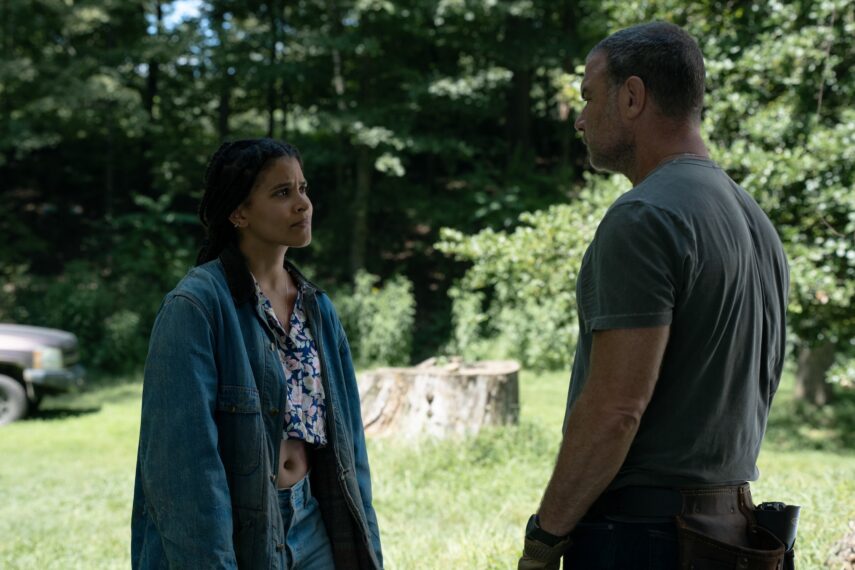
Michael Frost, who went missing with his sister three years ago, is found; there’s no sign of Felicia. Jonah worked the case originally and thought that Jurek had an accomplice — Michael describes a woman who matches Jonah’s former partner’s wife, who went missing after they initially arrested the killer — especially since he had an alibi for the Frosts’ kidnapping. He and the FBI’s Quinn (Poorna Jagannathan) go to see Jurek together, and he claims he knows who took Felicia, but he’ll only give a “truth for a truth,” looking at Jonah. Saga decides that someone needs to get inside, be close enough to see what’s going on, and she’s not asking for Jonah’s permission. But he does insist that they make sure she’s safe, and so only the two of them, Quinn, and a detective, Nathan (Gary Carr), know, and when she goes in, she wears a micro-transmitter in a cross necklace she should get back after she’s processed.
Apple TV
Saga is “very certain” in her ability to pull this off, Beetz says. “Probably more certain than she should be. It comes with the job of her feeling like, ‘I need to be able to do this. I need to hold it together and I can, and I’ve trained for this, and I’m ready.'”
For Jonah, “that’s a really tough decision,” Schreiber admits. “I think he does acknowledge and accept that she’s probably the best person for the job, but he’s so terrified of Jurek, and he has a history with Jurek. I mean, he’s lost a partner, he’s lost a friend, and I don’t think he wants to make that mistake again. But then it gets interesting later on when more is revealed about our past and our history and what’s actually at stake in her doing what she does.”
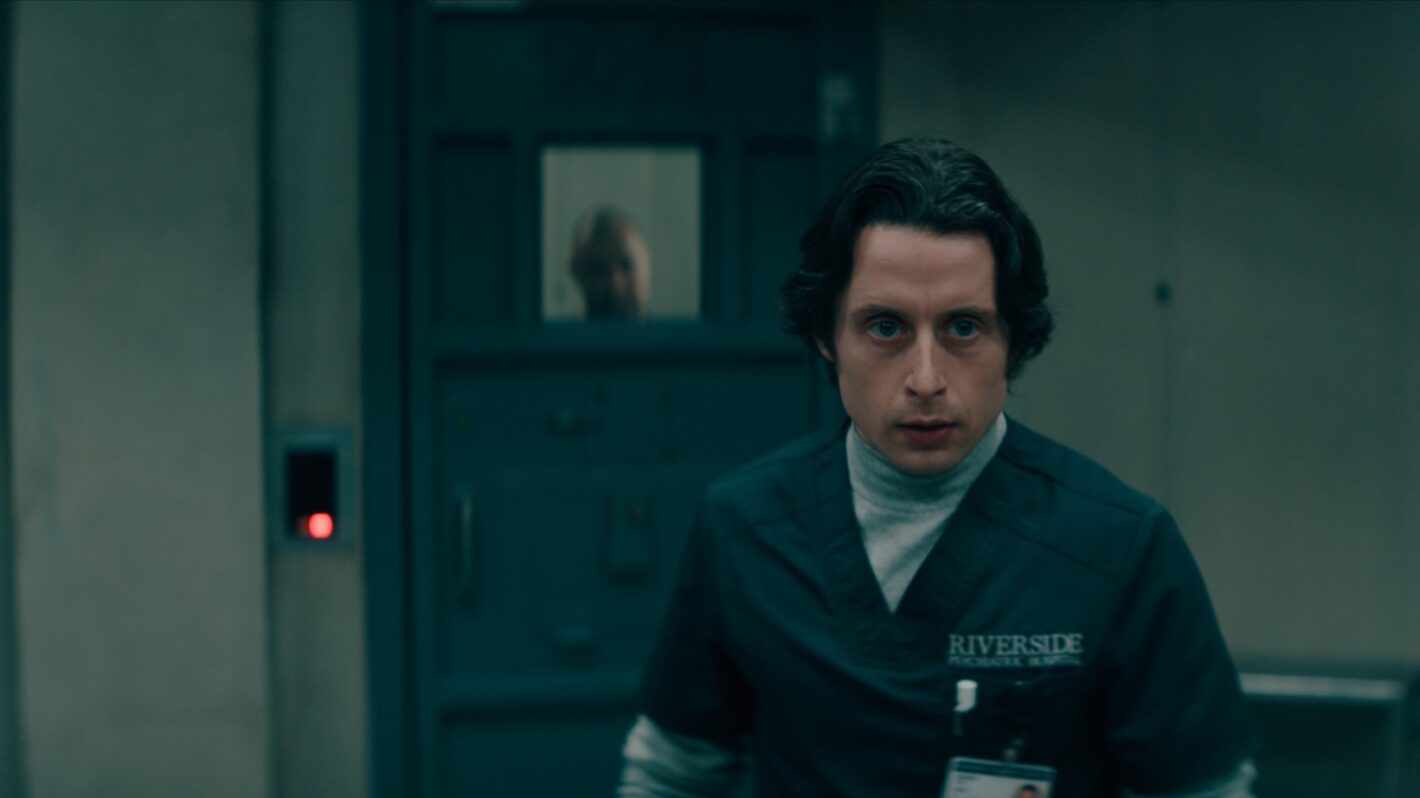
The series begins with Jurek’s machinations, leading to the man locked up next to him running headfirst into the wall. Six months after his death, Karl is moved to the restricted housing unit (RHU), where Jurek is the only permanent resident. Karl’s warned not to listen to anything he says or tell him anything about himself. It doesn’t take long for Karl to completely ignore all of that as Jurek draws him in, getting the nurse to tell him his favorite song and mail something to his lawyer for him on the sly. Jurek then sets up another nurse to look guilty when the unit director becomes suspicious and points out to Karl he’s lucky to have a friend in a place like this. Karl thanks him. Uh-oh!
So what does Jurek see in Karl that he can exploit?
“We spoke a lot about this, and what I think he sees in Karl is that kind of vulnerability and that naivety, but also he sees Karl as being a little deer who’s doe-eyed and has a sense of wonder. And he works this out quite quickly,” Graham tells TV Insider. “Because don’t forget, he’s been patiently, patiently, patiently waiting in that cell in a kind of meditative contemplation, waiting for the right person to strike. So I think he notices in Karl a massive vulnerability, but also an opportunity to be able to persuade him.”
On Karl’s side, he finds Jurek “fascinating” and “really wants to help people,” explains Culkin. “This is a really big challenge for him to try to help this serial killer. And then he’s just this fascinating creature. He’s this predatory animal in an enclosure, but he’s also gentle. I mean, they have that moment where they interact, he throws them against the wall, and he lets go of him, and he asks for help. So I think Karl is just fascinated by this guy.”
He adds that the same is true offscreen. “Rory is fascinated by Stephen. He’s a really alluring, disarming kind of guy. I just introduced him to my daughter, who’s four months old, and she typically smiles at people, or she cries, when she saw him, she furrowed her brow, just kind of staring at him and trying to make sense of him,” he shares. “I was like, ‘Yeah, I know. I feel the same way.'”
Hlavin credits Graham and Culkin for what ultimately ended up on-screen.
“Although we had scripted it very closely to what it ended up being, Stephen and Rory met for the first time before the table read. [Executive producer and director] Tim Van Patten took them into a room to rehearse because they had fairly big scenes and they had not met yet, and what came out of that rehearsal was the dynamic that you end up seeing on the screen, the kind of alpha-beta, the wolf ideology that all developed in terms of the vibe of their relationship in that room,” he says.
“I think everyone’s very familiar with Stephen as an actor, certainly of late, but Rory blew us out of the water. And I think the way he sort of Lego clicked into Stephen and the way those two characters clicked together was one of the more interesting and more exciting aspects of that first block of episodes because suddenly we saw a relationship that could have been fairly procedural and could have been fairly obviously manipulative, whereas Stephen and Rory took it to a place that felt like it was moving into a different direction,” he continues. “It was actually much more interesting, and that was all very much performance-based.”
Before everyone becomes immersed in this case, when Nathan shows up at Saga’s, she thinks he’s there to talk about their relationship, whatever it is. “That’s kind of an on and off, not a real thing,” according to Beetz.
But that moment is more indicative of who she is than the two of them.
“I think it is really more of a reflection of her emotionally closed nature and that she’s not really willing to truly open up and allow herself to become vulnerable because of her own past trauma and also the nature of her work,” Beetz tells us. “I think there’s a lot of getting lost and finding purpose in your work versus in living your day-to-day. I think the only person she feels vulnerable with or allows herself to be with is Jonah, and that relationship is kind of having tension during some of the show. It’s more of a character nod of she’s not willing to really open up.”
What did you think of the first two episodes? Let us know in the comments section below.
Nocturne, Fridays, Apple TV








Conversation
Please read the TV Insider Community Guidelines.
Register or sign in to join the conversation.