
Ashley Tisdale’s Husband Christopher French Talks Personal Struggles, Married Life & New Podcast



Exclusive
What To Know
- Christopher French launches the podcast Recovering with Christopher French to explore stories of recovery and resilience after life’s toughest moments.
- The show debuts on September 30 with a conversation his wife Ashley Tisdale discussing postpartum depression.
- French hopes the podcast will foster community, provide resources, and highlight that recovery is a universal, deeply human experience accessible to everyone.
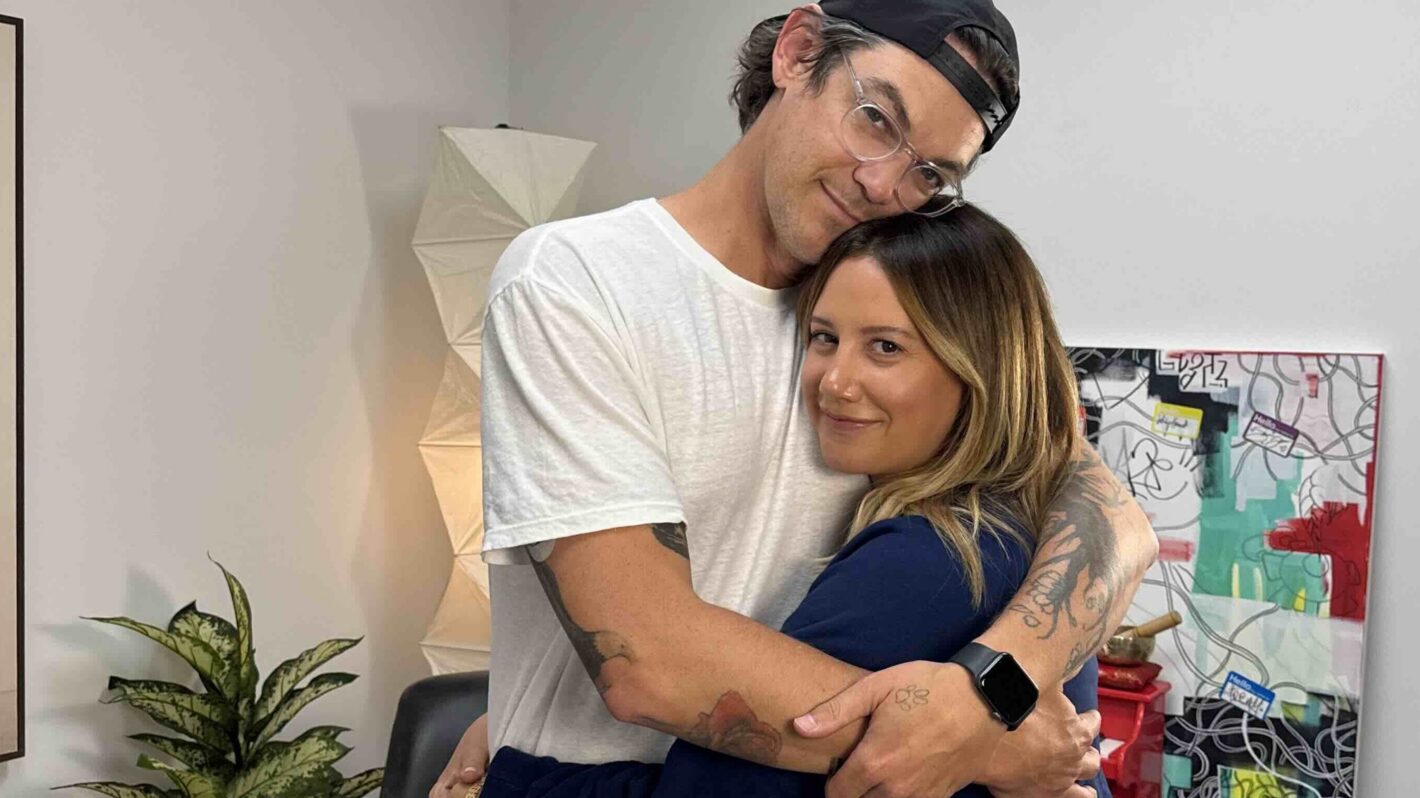
Every day a wave of gratitude and appreciation pours over Christopher French. The husband of Ashley Tisdale has lived in sobriety for 20 years. Run-ins in juvenile detention, homelessness, addiction and severe mental health struggles could have led to him becoming a cautionary tale. Instead the 44-year-old made it to the other side. The musician and artist hopes to help others with his new podcast series Recovering with Christopher French. Through the 12 episodes of the first season, he looks to explore what happens after life’s toughest moments and how each guest moves forward.
The premiere drops September 30 on International Podcast Day during National Recovery Month with Part 1 of a two-part interview with his wife Tisdale. The High School Musical star reflects on her experience with postpartum depression. The couple have two children Jupiter (5) and Emerson (2). This project marks the inaugural series from Channel Zero, French’s new digital media platform and YouTube channel. Other guests to come: Christina Perri, John Feldmann, Sabrina Jalees, and more. They’ll share their stories of survival with addiction, illness, PTSD to grief, cults and conversion therapy.
Here French opens up about what led him to start the podcast, having Tisdale as his first guest, and the key to their successful marriage.
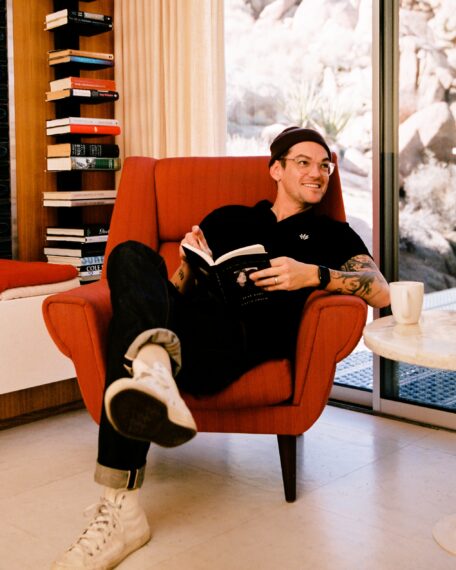
Photo by Bryce Glenn
What inspired you to launch a podcast?
Christopher French: Can I be completely honest? I never wanted to launch this as a podcast. Who wants to hear another white guy in his 40s on a podcast, you know? I was trying to find new ways of being creative. I was coming up with some ideas. I’ve been sober for almost 20 years now from drugs and alcohol. I’ve been acutely aware of how much suffering and pain there is in the world, especially right now. People feel just so alone and isolated. I’ve been there. I know that feeling. I know what it’s like to experience deep depression and face extreme hardship in our lives. I was coming up with ideas for a show, some way of doing something completely different from music, which is honestly just terrifying for me. That was the voice in my head when I was trying to come up with something new to experiment with. “Nobody’s going to want to listen to a podcast with you. Who cares about what you have to say?” All of these self-doubt voices in my head. Maybe it’s a midlife crisis. I’m kind of trying to be like, who am I? What matters to me? I’ve been a musician basically my entire life. It’s all I’ve basically ever done.
I was talking to my therapist about it, who said my feelings mean it is something that I should try. Maybe nobody will ever listen to it or watch it. Maybe everyone will hate it, but you’ll have pushed through some of that self doubt. You will have done something new. For the first time in a really long time, the only new thing that I’ve done in the last 20 years is go from making records and touring in bands to making music for film and TV, which is what I do now as a composer. And that’s not really that different. It’s, you know, basically the same thing. So, doing something this new and totally different was really scary, but has been so transformative for me.
What are your hopes for the project?
Maybe to alleviate even a little bit of that suffering that’s in the world. Maybe it helps the other person to be able to share their story from these conversations. Maybe someone will watch it and be able to relate, or is going through the same thing, and then sees in the show notes all of the links to resources that we’ll have in every episode, linking to ways to get actual help because I’m not an expert or a professional. In this field, I’m just a guy with a couple of decades of experience with the ongoing process of recovering from my own sh*t. I’m excited to even have conversations with other people about what they’re going through and ask honest questions and stay in the room for their honest answers.
Congratulations on your 20 years of sobriety. What was the moment for you that you wanted to make that big change?
I definitely would not have made it this far if I hadn’t reached out for help and found a community, and found out that there were people out there ready and willing and eager even to help me. It is really what I’ve found about all these different things. That’s a big part about the messaging I try to get across in each episode. No matter what you’re going through, there’s a community out there waiting to help you because that was my experience. I was so lost.
I was 23 years old. I was a working musician. I had always wanted to be doing what I was doing with my life. But I was miserable. I was drinking and using every single day. I couldn’t even do it anymore. Like, I was just so lost, and confused, and miserable, and depressed. I had gotten to the point I had kind of this intense experience where for a period of time I had gotten to sort of the end of my rope. I was at that crossroads where many people are facing extreme hardship, but especially addiction, over time being ready to sort of end it, you know. I opened up my computer, and I literally Googled how to get help in L.A.
I don’t honestly know why I did that. I don’t know why I clicked on the link to a group that was meeting somewhat close by that afternoon. I don’t know why I went, but I did. That’s the main thing. It seems like the hardest part is to reach out and follow a little bit of guidance, but it’s actually the easiest part. It ends up being the easiest part of the process because for 20 years I’ve been through a lot of very awesome, beautiful things in my life, and some really, really hard things. But it’s that foundation of following some guidance, building the tools established in a community that I can draw from no matter what’s going on in my life. I stay connected. I have this insane life. I can’t even begin to explain how different my life is now. I did some time in juvenile hall and I spent a while sleeping on the streets and like. Now to see where my life is now, it’s unbelievable. It starts with reaching out for help. And that’s a big part of why this show mattered to me, was creating a space where people can talk about all different kinds of issues that they’re recovering from, like the first episode.
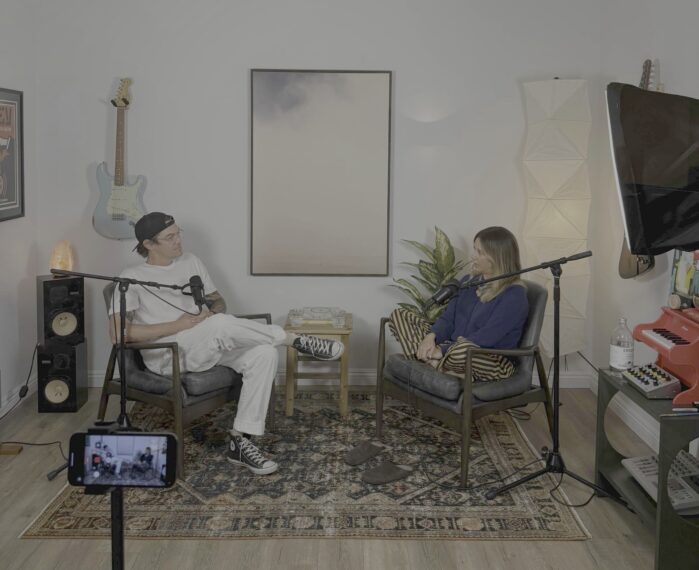
Christopher French and Ashley Tisdale (‘Recovery with Christopher French’)
What does it mean to have your wife Ashley first in the hot seat? You’re essentially having this deeply personal conversation in front of the world.
It’s amazing to have the support of someone that you love, being open and honest about my own experience. I don’t know what I’d do without her, you know. That said, it was weird. It was fun and strange, and we laugh a bit in the episode about how weird it is that we’re talking here with cameras here. We’re a very private family, couple. So doing something like this is odd. It feels a little awkward. And I think that’s part of maybe what ended up being the charm of it. I think that may end up being the charm of the show in general. I am a little bit awkward. I’m not super comfortable talking about myself. like hearing other people’s stories and giving them an opportunity to tell their story. I’m very interested in other people. But I’m very honest with how uncomfortable I am. But it was fun and cool to have her. She was like, “Well, I have to be the first episode.” She was really excited to do it. She was excited for me to be doing something totally new, which is out there and terrifying for me in the first place, but also she was really excited to share her story. To open up about this issue she feels really passionate about, because it was a brutal experience. Postpartum depression, if you think about the birth rates in the country. How many babies are born a day, and then the statistics on how common postpartum depression is, you realize how common this issue is. There’s a story right now.
I think of the case that’s going on with Lindsay Clancy. It’s interesting that you’re having this conversation during this moment in time.
It is funny because this was recorded before that. We’ve talked about it since then. Our societal awareness of this issue is beginning to really break open in a way that I think is very beneficial overall. It’s a confusing topic, which I think is part of why it’s been so under-discussed.
But also part of why it’s so important to discuss it because it matters. Mothers matter. The experience that so many moms have after such a beautiful thing like having a baby, it’s gnarly, man. It’s hard to even comprehend what that must be like, even having watched it firsthand. I don’t think we as men will ever understand that.
You two have been married for 12 years. What has been the secret to your success given the breakup and divorce rates of couples in the public eye?
Yeah, you’re so right. Our secret? Great question. Therapy? I think that might be it. I’ve been in therapy a long time. I was kind of hardcore with it with Ash when we got together and got engaged. I was like, “Okay, so now we have to go find a therapist because even if we don’t have issues yet, we will at some point. If you don’t have a therapist when the sh*t hits the fan, it’s going to be really hard to get through it.” Establishing a relationship with someone you can talk to, like a third party before stuff gets really hard is so key, which I think has helped us a lot because we’ve had the same therapist since then. I think taking ourselves a little bit less seriously has been really helpful for us as a couple. I struggle with that. I have this tendency to take myself way too seriously. I’m just always in my head think being able to be lighthearted is one of those things that I think not very many people talk about, but is invaluable. It lets you flow with life in a way that is very freeing and allows for relationships to flourish without all the baggage of taking things so personally, and holding on to grudges, and all of that. Being lighthearted, taking ourselves a bit less seriously has been really helpful for us.
What other guests are you most excited for people to hear from on the podcast?
Christina Perri comes on for an episode, and I was just honored to even be in the room to hear her tell. Her story is so incredible, and that’s going to also be a two-part episode as well. John Feldmann is also someone I’ve also known for almost 20 years. Sabrina Jalees is another close friend, comedian, actor and writer. Her episode is amazing as well. But we do have a number of people who I’ve connected with over time who are not well-known, which I think is really the crux of what this show aims to be. We all will go through these different versions of things, and it’s important to remember it’s not just celebrities that get through it. This is ordinary stuff. This is the stuff that unites us all, universally, on a very fundamental, deeply human level.
Who are some of those?
We have an amazing conversation with a guy named Will who, he and his family lost their home in the Altadena fire. He talks about what that was like. I was just blown away by his description of the experience of literally by hand saving his parents’ house. While his house burned down, with his neighbor, with buckets of water, unreal. How, what that actually is like. Being a very caring and caregiving person, having to accept the help he needed. To be cared for after that.
Having to go to these community events where they could get toothbrushes, have a place to sleep, or get some fresh socks. Then there is learning the complexities of insurance coverage after a natural disaster and what the recovery process of that is like, it’s astounding. Another great episode features advocate, activist, and author Blake Cooper Griffin, who talks about his experience as a gay man. Growing up in a different part of the country and being sent to a conversion therapy experience. What that was like and how he got through that and how he mended that experience with his family. It’s amazing having conversations. Everyone is the hero of their own journey. And it’s so incredible to be able to kind of hold a space to allow people to tell their story. You know, it’s an honor.
Lastly, do you have a dream get who you would want to sit down with now that you have this show?
I’d actually say a first responder, Someone who’s maybe a firefighter or ambulance driver. Somebody who could speak to the kind of experiences that they have, the trauma that they experience with their work. I’d love to talk to Anthony Kiedis from Red Hot Chili Peppers about his experience with drugs and alcohol, and losing his best friend early on in their career. There are many. Everyone is so interesting to me. It has been an inspiring ride so far. I can’t wait to see what happens next.
Recovering with Christopher French is available where you listen to your podcasts and YouTube.
Conversation
Please read the TV Insider Community Guidelines.
Register or sign in to join the conversation.
 Watchlist Easy access to only the shows you care about — all in one simple place
 Alerts Only important notifications — when a show is returning, when it becomes available to stream, and more.
 Special Offers Exclusive products we release related to your favorite shows and streaming services