
‘Star Trek: Strange New Worlds’: Celia Rose Gooding Is Proud of Uhura in Film Noir Episode



Spoiler Alert
What To Know
- The latest episode of Star Trek: Strange New Worlds places Uhura, Una, and M’Benga in a black-and-white film noir adventure on a Klingon-occupied planet.
- Celia Rose Gooding talks to TV Insider about Uhura having to pretend to be someone she’s not and more.
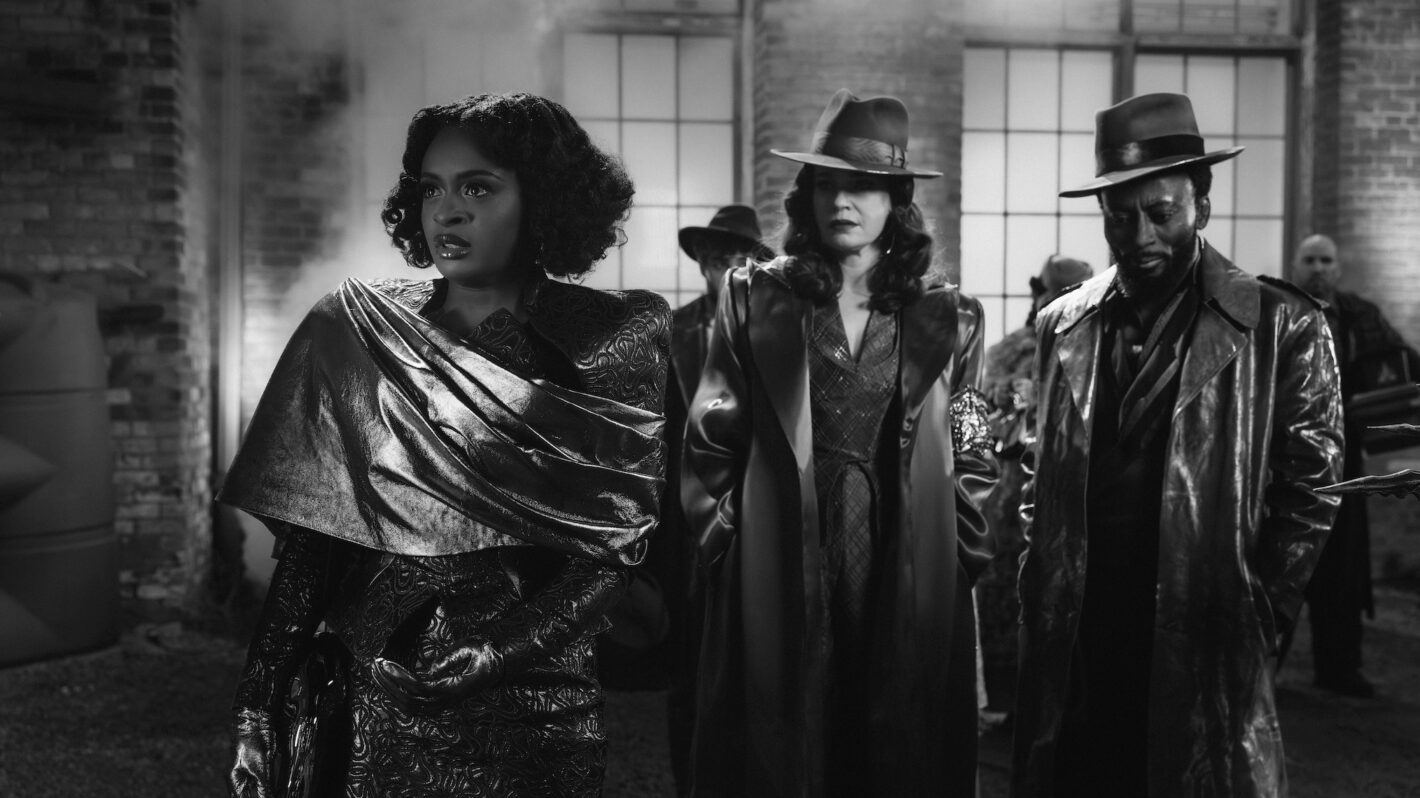
Star Trek‘s most entertaining Paramount+ series is all about dropping its characters into new adventures and situations each episode, and with the one out as of Thursday, August 13, Uhura (Celia Rose Gooding), Una (Rebecca Romijn), and M’Benga (Babs Olusanmokun) were thrust into a film noir, on a Klingon-occupied planet — in black and white! TV Insider spoke with Celia Rose Gooding about Uhura’s not-so-fun time there. Warning: Spoilers for Star Trek: Strange New Worlds Season 4 Episode 4 ahead!
At first, the three Enterprise crew members plan to hide as long as they’re on the planet — until they discover Una is the doppelgänger of a double agent, helping the resistance while pretending to be a collaborator. Then, at a checkpoint, Uhura is taken in when she doesn’t have an ID — and she uses M’Benga’s advice to use something close to the truth when coming up with an alias and lying as she’s questioned by the Klingons. She also uses her skills with language to listen in on a conversation and learn about a planned attack.
Below, Celia Rose Gooding takes us inside this episode.
Something that’s especially fun about Strange New Worlds is that it drops these characters into a new adventure each week, so you get episodes like this where it’s like a film noir and it looked gorgeous.
Celia Rose Gooding: I mean, it was so fun despite the week of outdoor night shoots in freezing cold Hamilton, Canada. It was really interesting. There hasn’t been a sort of film noir episode of Star Trek to come out yet, and Strange New Worlds is so good at being at the sort of forefront of genre diversity in Trek. Visually, as someone who is such an aesthetic junkie, I loved what Uhura got to wear this episode, her little bronze, gorgeous, sculptural, I call it her first lady look.
But yeah, I think there’s so much of the beauty of the episode that happened in post because when we shot it, things were in color. Things had a very vast diversity of color. Sometimes there were color combinations that would not go together in person, but they just pop and shimmer in black and white. And the lighting of the episode, the very classic panels of light over people’s faces or highlighting a Klingon’s teeth, it was just so visually rich and exciting. And so when I got to see the episode in its fullness, I was like, wow, it blows you away.

My part in filming it was actually not that different than shooting any other episode of Star Trek, even though they are all vastly different, no more so in this season. But still the same. Show up, read the words, try not waste anybody’s time, go home, do it all over again the next day. And so yeah, it was incredibly different and it was incredibly unique shooting experience and it makes for a very unique episode.
So how was it for Uhura to be put in this situation completely new to her, having to pretend to be someone she’s not in the worst place possible, and then seeing how well she handled it because she did well.
She didn’t do too bad. I’m incredibly proud of her. I think that — well, I know because I was sort of in her body, it was hard for Uhura, of course. I think that because she’s come so far, she really wants to remain on top of her game. And so to be thrown into the circumstance where she is so far removed from her comfort zone, it was definitely a challenge, but she is not alone. She’s moving with two of the best people to handle a mission like this. And she’s with two officers that she has a great amount of love and respect for.
I think that in the end, she walks away from it with a couple scars and a couple bruises and a little bit of, I won’t go so far as to call it PTSD, but when I think of episodes in The Original Series where Uhura is a bit more of a battle cat and she isn’t nearly as terrified as young Uhura was to be in situations where she’s so far out of her control, I think of “Mirror, Mirror” where she is such this fierce badass, I’ll cut you type diva. And I like to think that the experiences that she had in 404 in this black and white film noir episode inspire that. I feel like as mature individuals, we look back at younger versions of ourselves and be like, damn, I wish I knew then what I know now, and I wish I could have used the knowledge that I currently have to inform and defend myself better when I was younger, but hindsight is 20/20 and we don’t have that technology just yet. And so yeah, it was, I think, a really interesting way to provide further context for a personality trait that is so recognizable for the future version of Nichelle’s Uhura.
And I think what she kind of lucked out is that language, her knowledge of language really came into play here.
Yeah, yeah.
Which I loved seeing.
Me too. She finds her little pockets of where she’s able to be useful. And I think that utility and that reminder of what she has to offer at the end of what is an incredibly triggering and traumatizing experience to be tortured by Klingons — to be tortured period, by anyone, not ideal. And so at the end of that, when her head is down and she’s trying to stay in her body enough to listen, but stay out of her body enough to not get trapped, her ability to find and maintain her purpose or her professional obligation was really inspiring.
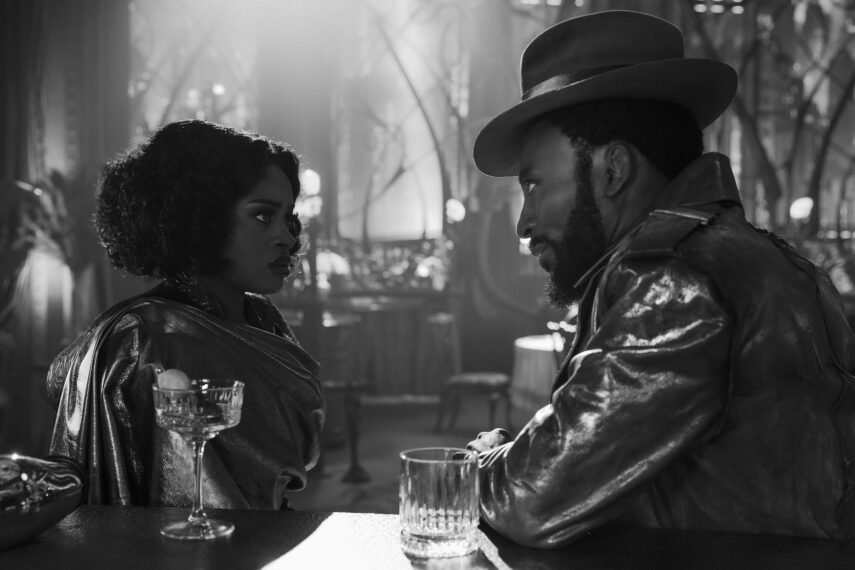
And then I loved what we got with M’Benga teaching her and giving her some guidance and advice. So how much does that help her? Because also just I love those two together and I need more of them.
Me too! I was actually talking about it earlier. It’s very interesting how they sort of unspokenly fill voids of their respective grief and traumas. Uhura hasn’t had a father in a really long time and M’Benga hasn’t had a daughter in a really long time. And so even though it’s unspoken and we don’t really address it, it is really beautiful subconscious storytelling of Uhura. As far as she has come, she’s still just a kid at the end of the day. I think anybody under the age of 30 is a child. And so she is still very young and needing of guidance in a way that maybe she has not been able to admit because she’s come so far.
Jan Thijs/Paramount+
But I, Celia, have such an incredible amount of respect for Babs. I have adored him for a really long time, but he is such a just grounded and centered and he’s so solid. He’s a solid, cool guide. He’s the perfect person to play Dr. M’Benga because he has that crackling undercurrent of badassery. And you can tell him I said that, exactly like that actually.
I think my admiration that I have for Babs as an actor, but also as a human being is very similar to the admiration that Uhura has for Dr. M’Benga because while she does not know all of his history and does not know all of his past, I think that she, whether she chooses to verbalize it or know, is really desperate for a paternal energy. And she’s not asking Dr. M’Benga to be her dad by any means, but there’s something that I think is soothing her subconscious to have this sort of relationship with Dr. M’Benga, to hear that he of all people, someone who is also going on an incredibly difficult grief journey to be able to lean on him and have him turn around and lean on her and get to play that role. I can’t speak on Babs’ process, so I won’t dare. But I like to think that just as Uhura gained something she couldn’t verbalize from Dr. M’Benga, I like to think that Dr. M’Benga got to exercise an energy and a type of tutelage that he hasn’t been able to in a long time.
At one point in M’Benga remarks it’s odd that they haven’t found their doppelgangers before. So what do you think Uhura’s doppelganger is like?
I don’t know. I think because Uhura is so femme in presentation — I think there’s something really interesting about opposites and contradictions. I like the idea that Uhura’s doppelganger is a butch blue collar, very soft-spoken woman of few words type of person just pushing carts and keeping lights on as opposed to Uhura’s very feminine, very chatterboxy polyglot type energy. I think that doppel-Uhura is more similar to… Actually, I don’t think there’s anybody in the Star Trek universe that I’d compare her to.
Star Trek: Strange New Worlds, Thursdays, Paramount+
Where No One Has Gone Before
Get absolutely everything about Star Trek: Strange New Worlds in your inbox!
Where to Stream









Conversation
Please read the TV Insider Community Guidelines.
Register or sign in to join the conversation.
 Watchlist Easy access to only the shows you care about — all in one simple place
 Alerts Only important notifications — when a show is returning, when it becomes available to stream, and more.
 Special Offers Exclusive products we release related to your favorite shows and streaming services