
‘Downton Abbey’ Star Kevin Doyle Talks Memories of Mr. Molesley & Maggie Smith




Exclusive
PBS has given fans of Downton Abbey a nice walk down memory lane with chronological episode airings of the Masterpiece modern classic Sunday nights. Those new to the award-winning British historical drama have gotten to know many beloved characters including Joseph Molesley, played by the delightful Kevin Doyle.
He was first introduced as the butler and valet serving Matthew Crawley (Dan Stevens) and his mother Isobel (Penelope Wilton). Doyle knew the job entailed being the comic relief more times than not. However, over the six seasons of the show and three movies, the role became more. The English actor brought depth and heart to the role as Mr. Molesley moved through his many jobs, evolving to laborer, footman, and seeing dreams realized as teacher and screenwriter. He even found love along the way with Raquel Cassidy’s Phyllis Baxter.
Here Doyle looks back on Molesley’s journey and if the 2025 film Downton Abbey: The Grand Finale was truly the end.
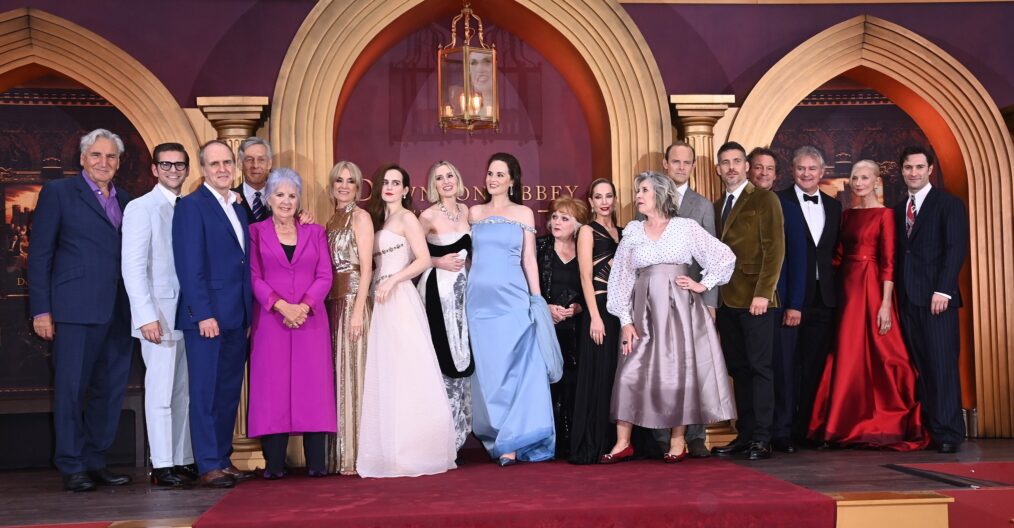
(L-R) Jim Carter, Allen Leech, Kevin Doyle, Douglas Reith, Dame Penelope Wilton, Raquel Cassidy, Sophie McShera, Laura Carmichael, Michelle Dockery, Lesley Nicol, Joanne Froggatt, Phyllis Logan, Harry Hadden-Paton, Rob James-Collier, Dominic West, Hugh Bonneville, Joely Richardsonand Arty Froushan attend the World Premiere of “Downton Abbey: The Grand Finale” on September 03, 2025 in London, England. (Photo by Alan Chapman/Dave Benett/WireImage)
This is just a testament to the show’s connection to the fans that PBS would want to bring it back as a weekly re-watch. What does it mean to you to see the show resonate still like it has?
Kevin Doyle: It’s fantastic. I mean, I guess there’s a new generation encountering it for the first time perhaps. Certainly I get mail from people in which that is the case. People are seeing it for the first time because one just takes it for granted that people have already seen it and they’re onto their sixth or seventh viewing, but there are young people especially who are coming to it for the first time. And I think that’s really lovely. And I’m really glad that PBS is putting it out in that way, episodically, so that you can’t get three or four at a time. You just have to wait and then maybe discuss it with your family or your friends and everything and see what happens next week, which of course is the way that everybody initially encountered it. You had to wait until the following week to see what would happen next. And I think that’s a wonderful thing about television actually.
And one of the fun things about this is you also get to see characters like yourself evolve over time. Talk about how you look at his evolution over time.
Yeah. I mean, I’m sure if you were to ask any of the actors in the company about the evolution of their characters, they’d all have something to say about it because Julian [Fellowes] was an actor as well in a former life. He appreciates what actors can bring to a part and can respond accordingly. I remember having conversations with actors like Allen Leech, who played [Tom] Branson. I think our understanding was that it was only going to be a small part and would only last for maybe two or three episodes at most. And so it’s very gratifying that the writers and Julian and the producers saw something in what we could bring to those parts and rewarded us with, as you say, a longer, richer narrative.
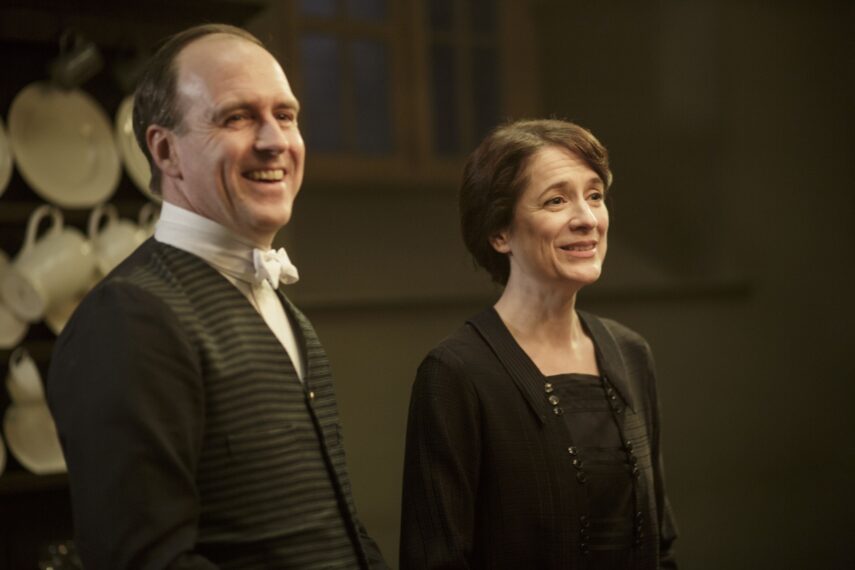
(C) Nick Briggs/Carnival Film & Television Limited 2015 for MASTERPIECE
And also a love story was born out of that too with Phyllis. Talk about just seeing that come to fruition and working with Raquel and building up that fun onscreen chemistry between the two of you.
It wasn’t so much fun. It was sort of pretty fraught actually. I mean, considering the situation that she found herself in. I think she came in halfway through, I think it must have been Season 4. I knew Raquel’s work very well. And so it was lovely to see her being cast in the role. Of course, none of us had any idea where that relationship was going to go if indeed there was any kind of relationship at all. I was just sort of glad that she was on board in the company really because she’s such a lovely actor. And so I remember going to see her first…I went to see her first few scenes that she was recording. I remember sitting next to Liz [Trubridge], our producer, and saying, “Oh, she’s brilliant in this part. She’s going to be wonderful.” She kind of winked at me and said, “Oh, we have plans for the two of you. ” And that was the first I knew about it. So that was, “Oh, that’d be nice. It’d be lovely to work with Raquel more.” As I said, I’d been a fan of hers for quite a while. So I was delighted. I loved the way the very tentative relationship evolved with people who were quite shy of one another and shy of the world in some respects, I suppose. And it was very tentative, very slow steps forward and I thought that was delightful.
What do you remember on those first days on set? Did you get an inkling that this was something different from what you’ve been working on before?
No, not at all. Not at all. I mean, I didn’t come into it until the second episode. I wasn’t there for the initial stages. I wasn’t there for early rehearsals or table readings or anything like that. So I had no idea what I was coming into. And in fact, I’ve told the story before, but I was quite busy doing a play at the time at the National Theater, and we were just about to open the play to the public. So, I didn’t really want to have to put my mind somewhere else when my agents rang and said, “We’ve got this meeting for this thing called Downton something or other.” And so I was kind of reluctant to go just because my head was in a different space, but I did go along. I managed to get a couple of hours off rehearsal and I went along.
My understanding was that it was a small part, and it would be for maybe two or three episodes. And so I got a couple of pages. I got a lovely little scene actually where he is quietly humiliated, which became a recurring theme in Molesley’s life, “quietly humiliated.” And I thought, “Oh, this is more interesting than I was expecting.” Also, more interesting in terms of, you probably don’t realize this, but at the time, this is going back to 2010, period dramas really weren’t very popular at all. They’d kind of gone out of fashion 20, 30 years earlier and it was all about gritty cop shows and things like that. There didn’t seem to be very much of an appetite for period dramas. And so the stuff that I was sent, I thought, oh, this is a little different to what I was expecting.
Yeah, I did the audition and I was in a room with three or four other actors who I thought were clearly better than me for playing that part. I thought, “Oh well, he’s bound to get it.” So I was quite relaxed about the whole thing. When I did start filming it, there was no kind of sense that it was anything other than a nice Sunday night television drama. We certainly didn’t have any idea about how it was going to develop.
Do you have a favorite memory of working with the late Maggie Smith?
It’s interesting about Maggie…I worked with her a few times in quite a lot of scenes, but I was mostly serving her food, I didn’t really get to interact very much with her. So unlike the family, as you can imagine, over 15 years, well, certainly over the six years that we did the TV series and then also the films, which took another six or seven years, over that period, that family (The Crawleys) became very close. I think Maggie particularly loved the girls, Michelle [Dockery] and Laura [Carmichael] and they were just really very closely bonded. For the rest of us to some extent, I mean, it was Maggie Smith, a legend really. And my relationship with her never really got past that. I mean, she was lovely to be with and I had heard some stories from her and things like that, but it was more of a step back as far as I could say, which meant that I could just, whenever I was on set with her, I could just enjoy watching her work actually.
I mean, it was just remarkable. I mean, I couldn’t ever really forget the baggage that she brought with her, the Oscar wins, but not only that, just the amount of stuff that she’d done over her 60 years in the business. It was an extraordinary privilege to be around her, and I think we all felt that. But as I said to you earlier, the relationship between her and the family was particularly close to it. I think as she got older and maybe a little frailer, she didn’t rely on it, but she cherished it even more, I think.
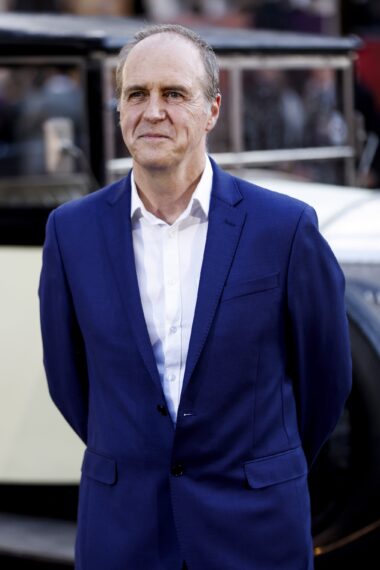
John Phillips/Getty Images
What are you going to miss most about playing the character?
Yeah, I don’t think I’ll particularly miss it. I mean, I lived with that character for 15 years. So by the end I was kind of…It’s interesting because when we came to the end of the TV show, we all said goodbye to our parts, those roles. There’d been talk about movies, but it’s not something that we could ever rely on, particularly over here in Britain because the transition from television to cinema is not a great success story over here. I didn’t think that there’d be the appetite for any further installments, to be honest with you.
And so in 2015, when we said goodbye to the TV show, we said goodbye to it. And so the further iterations of it, the three movies that we did were all sort of a pleasant surprise. And because there were sufficient gaps between them, I think there were three years between each movie. It meant that when we came back to it, we came back to it with a great deal of enthusiasm and we’d clearly over that long period of time as a company developed a shorthand and quite close relationship with one another. And so if I miss anything, I suppose if I miss the camaraderie of the company really,. it’s nearly always the people who are involved which make it special
Did you take anything from the sets that you’re going to cherish?
No, but I know a lot of people did. I never felt as if I was able to do that. Partly it’s probably maybe because of the role I was playing, but I think the downstairs people didn’t really take very much. I think the upstairs lot probably took quite a lot. I know Hugh [Bonneville] took bits and pieces from his writing desk and I’m sure Laura and Michelle took stuff, but no, I didn’t sort of feel it. I mean, I had my eye in the Servants’ Hall, there’s that lovely big bell thing which rings whenever anybody upstairs wants a cup of tea or something. I thought, “Oh, that would be nice to have.” But I think last year there was an auction of all of the props for charity, all of the costumes and props and everything. I think it went for some ridiculous amount of money, like hundreds and hundreds of thousands of pounds. So I’m glad I didn’t bother putting a bid in.
Do you stay in touch with a lot of members of the cast? I mean, is there a text string still that’s being used or anything like that?
There’s a WhatsApp group and so we keep up to date with births and marriages and things like that. And if people are doing a play or something, then we’ll try and get together. So yeah, that’s kind of still going. There’s quite a strong network of connections still. And so if anything happens, we hear about it.
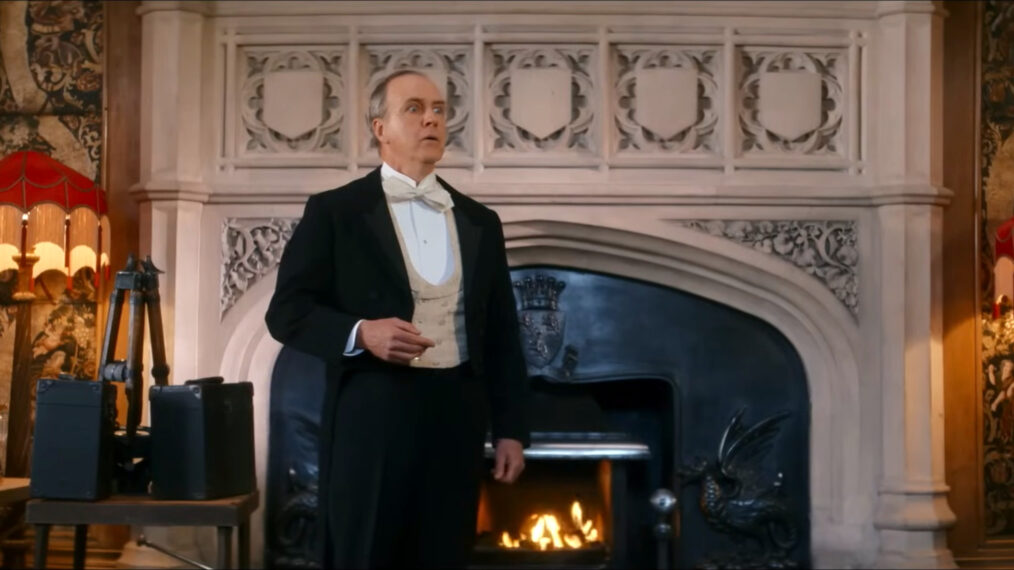
Focus Features
Do you think in this world of The Gilded Age and Bridgerton and so many that have come after, do you think that we’ve seen the last of this series in some form or another?
I don’t know. I think you’ve seen the last of these particular characters, yes. But whether there’s something else in the Downton world, I don’t know. Maybe there’ll be something, I haven’t been privy to it to anything, so I’m only guessing, but there might be something before that period or there may be something afterwards. Each iteration would obviously have very different styles and very different challenges, I suppose. Particularly if you think about those big houses after the war especially, they went through pretty tough times. They just became very expensive to run. And so they haven’t disappeared so much, but they’re no longer in the hands of those families. They’re no longer in the hands of the Crawley family, for instance, those big homes, very few of them are. So that would be interesting to see how that would develop if Downton moved into the 1950s or something like that, but who knows? That would be cool. Yeah.
Put into words what this character, this opportunity did for your career as you look at it today, and what you’re doing today?
Oh, gosh. Well, I think it changed everybody’s career. I think all the way down the line, it changed everybody’s career. It even changed Maggie’s career. I remember her saying that she could quite happily go to the supermarket and not be bothered at all, but as soon as Downton Abbey came out, she was being pestered all the time, and that’s strange considering who she was and what she’d achieved in her life. So yes, I mean, if that happened to Maggie, then it certainly happened to absolutely everybody else.
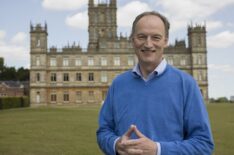
It opens doors to possible other projects, and it certainly makes life more comfortable financially. So that’s a good thing. But one has to be very careful that the next choice that you make isn’t like the one you’ve just made. So I remember going, I finished Downton Abbey, and I moved on to something completely different. I think that’s the joy of being an actor apart from anything else. You want to step into somebody else’s shoes and experience something very different to what you’ve just done. But it enables me to be able to explore those other characters much easier.
Downtown Abbey, Sundays, 10/9c, PBS
Conversation
Please read the TV Insider Community Guidelines.
Register or sign in to join the conversation.
 Watchlist Easy access to only the shows you care about — all in one simple place
 Alerts Only important notifications — when a show is returning, when it becomes available to stream, and more.
 Special Offers Exclusive products we release related to your favorite shows and streaming services