
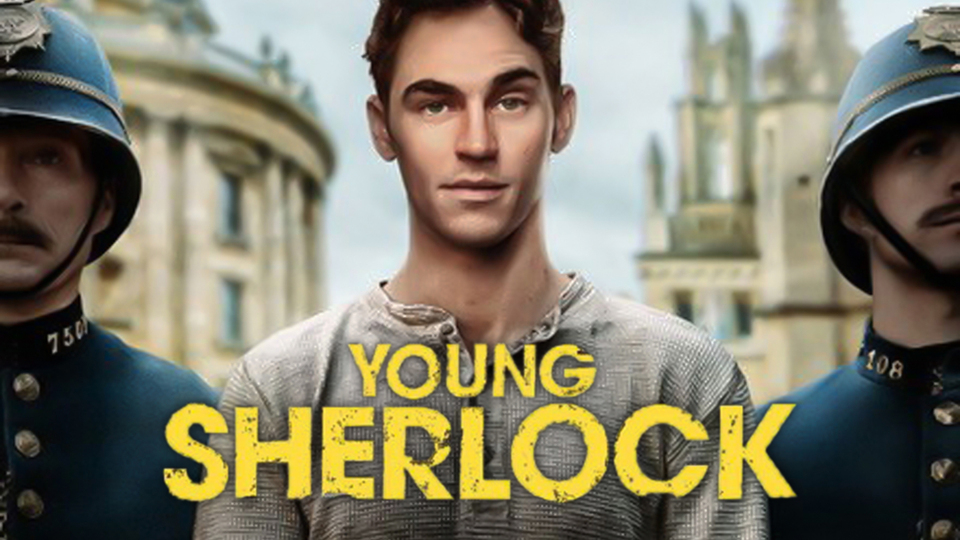
Who is the Big Bad of ‘Young Sherlock’? The Shocking Twist Explained



What To Know
- The true villain of Young Sherlock orchestrated a conspiracy involving chemical weapons, manipulated Sherlock’s family, and faked his daughter’s death for personal gain.
- The season sets the stage for his future as a detective shaped by betrayal and loss.
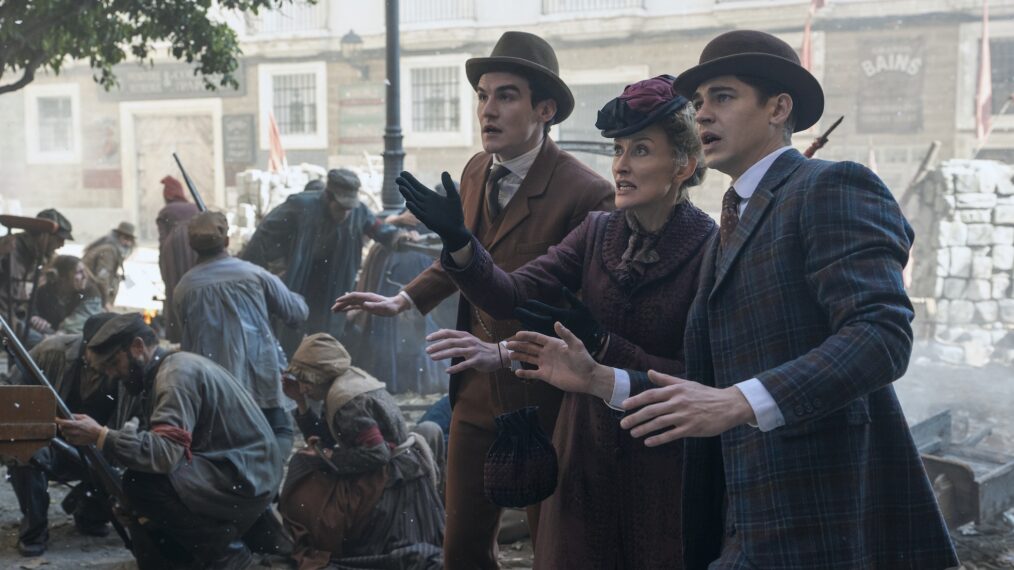
After following young Sherlock Holmes (Hero Fiennes Tiffin) and his best friend James Moriarty (Dónal Finn) around the globe as they attempt to solve the mystery behind the assassination of the Four Apostles, four professors at Oxford, Young Sherlock audiences were left agog when the season’s true villain was finally revealed after several misdirects.
The twist reframes everything that came before it, turning what appeared to be a straightforward conspiracy into something far more personal and far more dangerous for the young sleuth, as it warped Sherlock’s family, his future, and his sense of being, while possibly warping best buddy Moriarty into the man he would later become. Warning: Spoilers ahead.
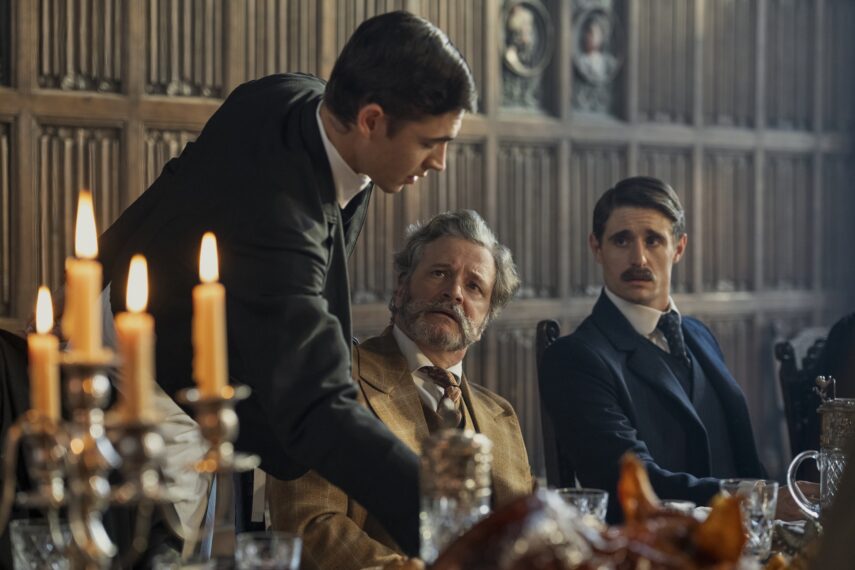
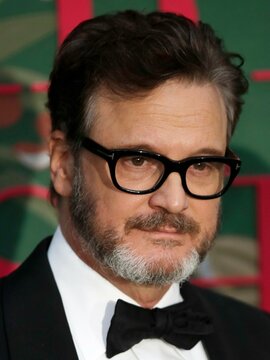
The imposter Princess Gulun Shou’an (Zine Tseng) is on a revenge mission after her village was destroyed during a secret chemical weapons test. The gas, known as “creeping death,” was developed from a rare mineral beneath her homeland in a covert program funded by the British government and overseen by powerful figures tied to Oxford. Believing the four professors were responsible for the program, she hunts them down one by one. As Sherlock and Moriarty pursue her across England, their investigation uncovers a far larger conspiracy connected to Bucephalus Hodge (Colin Firth), the influential benefactor behind Oxford’s new science program.
Daniel Smith/Prime
Meanwhile, Sherlock’s own family life begins to unravel. His mother Cordelia (Natascha McElhone), who has been confined to an asylum since the death of his little sister Beatrice, claims she is being spied upon. But Sherlock soon discovers this is far from a delusion as recording equipment is found hidden in her room, and he and James break her out of the asylum.
The mystery becomes even more personal when Sherlock begins investigating the death of his sister Beatrice, who died under suspicious circumstances. Sherlock had long blamed himself, believing she ran away after he ignored her. However, he and Moriarty discover evidence suggesting she may have been murdered, hidden away, or taken. Digging up her grave reveals the shocking truth: the body buried there is not Beatrice.
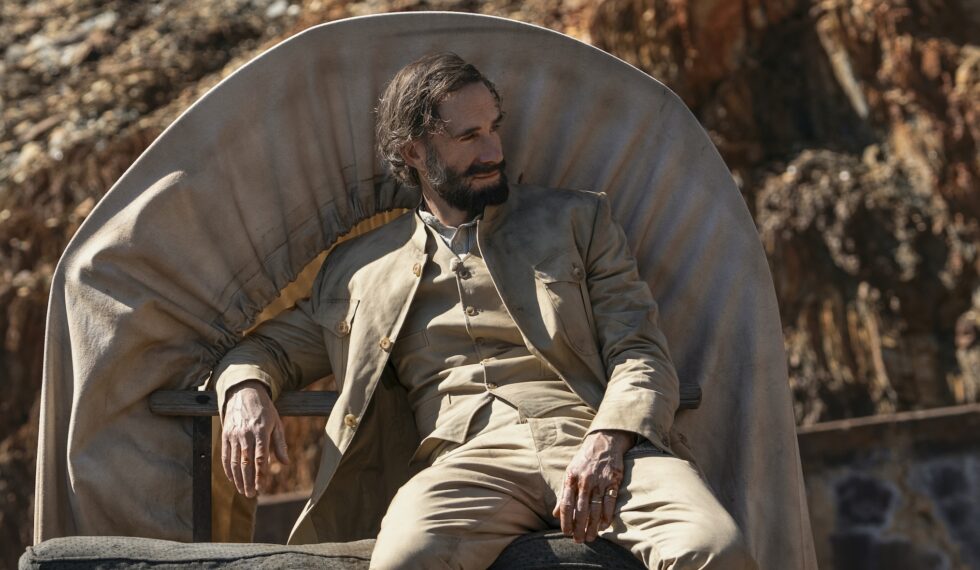
Following the trail leads them to several revelations, the first of which was that Sherlock’s father, Silas Holmes (Joseph Fiennes), is a seemingly respectable man who has secretly been involved in the chemical weapons program. Silas partnered with Professor Malik (Ravi Aujla) to refine the deadly gas and sell it to the highest bidder as a weapon of mass destruction.
But the biggest shocker was that Beatrice is alive. Masquerading as Hodge’s assistant (Holly Cattle), she has been working with their father all along, having grown into a manipulative and emotionally detached woman who shares his ambition. As a child, Silas faked her death to drive Cordelia to insanity and seize control of her vast fortune, secretly placing Beatrice with the groundskeeper’s family, while the rest of the Holmes family believed she was dead. Keeping Cordelia drugged and confused and Sherlock away from the house, Silas was able to take over the family fortune and do as he pleased.
Over time, Silas recognized the same ruthless moral indifference in his daughter and groomed her as an ally, feeding her lies that her mother was an abusive harpy who never cared for her.
Daniel Smith/Prime
With that revelation, Silas emerges as the true antagonist of Young Sherlock. He manipulates his family at every turn, driving his wife to the brink of madness, sending his grieving son away to boarding school, and deceiving his daughter to serve his ambitions. Gaslighting and manipulation are his tools, used to maintain control of both his family and the conspiracy surrounding the deadly weapon. By having Cordelia institutionalized and taking control of the estate, Silas ensures Sherlock remains isolated and uncertain of his own instincts while he consolidates power.
As the conspiracy unravels, Shou’an succeeds in killing Malik and avenging her village, while Sherlock confronts his father and learns the suffering within their family was the result of Silas’s calculated manipulations.
Daniel Smith/Prime
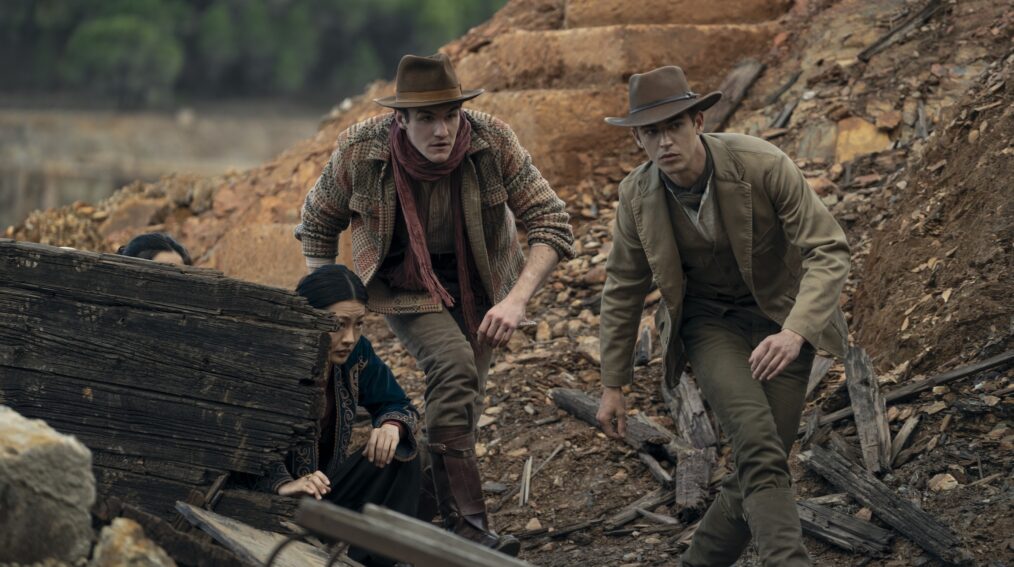
The story culminates at the mining operation where the chemical weapon is produced. As the lab is destroyed, Beatrice turns on her father, and Sherlock and Silas clash on a cliffside in a moment that echoes the future: Reichenbach Falls. Silas ultimately falls to his death (or seemingly so), ending his control.
Though the story ends with the villain’s death, it is only the beginning of Sherlock’s story.
“I just think Silas is such a horrible man, and I think Sherlock is going to need a lot of therapy to get through [this.] I don’t know if he ever will,” said star Hero Fiennes Tiffin about the villain reveal. “But then, at the very end, the final episode…[in] Silas’s death, even then he takes the control away from Sherlock, and Sherlock puts himself in front of him and says, ‘No, you can’t kill this man in cold blood,’ because Sherlock got such great morality that he believes that that everyone can kind of repent and just and, you know, become a good person. And even then, Silas uses him as a hostage. And then Silas is the one to make the decision himself. So even in that last dying moment, he takes control.”
“And I don’t know how Sherlock is going to live with it. I even watched the series back, and I start to just think, damn, Sherlock has it tough,” confided Fiennes Tiffin.
For Moriarty, a young man who had begun to see Silas as a mentor, the discovery that he was far from the brilliant visionary he pretended to be doesn’t really change anything for him. Instead of a mastermind worthy of admiration, Moriarty finds Silas to be a manipulative opportunist, a realization that helps reshape how the young prodigy begins to view power, ambition, and the men who wield it, and not for the better.
“Moriarty’s had to learn to fight to where he’s gotten to in the world, and that he learns quickly that the world isn’t fair, and that once you’ve learned that, ‘There is an argument to say, like, Well, if the world isn’t fair, what use is there in playing fair?’ explained Donal Finn.
Narratively, Silas represents the dark mirror of Sherlock’s potential. Both men are brilliant strategists who can see several moves ahead, but they choose different paths. Silas believes intelligence justifies domination. Sherlock believes it should uncover the truth.
Young Sherlock, Streaming now, Prime Video




Where to Stream





 Watchlist Easy access to only the shows you care about — all in one simple place
 Alerts Only important notifications — when a show is returning, when it becomes available to stream, and more.
 Special Offers Exclusive products we release related to your favorite shows and streaming services