
‘Spartacus: House of Ashur’ Boss Warns ‘Anybody Could Die at Any Time’



Q&A
What To Know
- Spartacus: House of Ashur focuses on the complex character of Ashur and introduces Achillia, the series’ first female gladiator.
- Creator Steven S. DeKnight does a deep dive with TV Insider into the show, its characters, and much more.
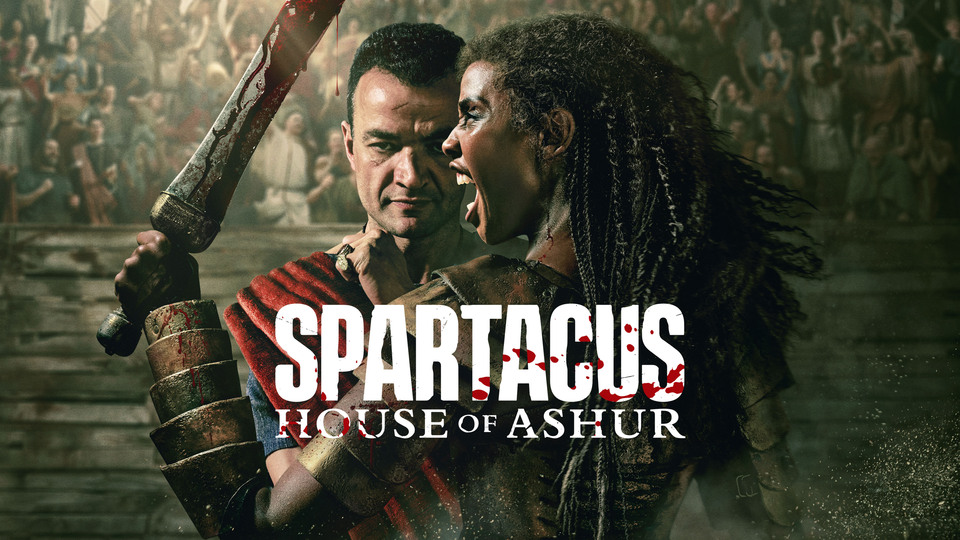
After more than a decade, the Spartacus universe is back with its first spinoff, Spartacus: House of Ashur.
Creator Steven S. DeKnight is no stranger to TV, having previously worked on shows like Buffy the Vampire Slayer and Angel. Yet, it wasn’t until the 2010s that he created something solely his own with Spartacus, the blood-soaked series that turned Starz into one of modern television’s most successful companies. Inspired by the historical figure of the same name, the series focused on the gladiator as he led a major slave uprising against the Roman Republic and was infamous for its brash violence and raw sex scenes.
Below, as Season 1 of House of Ashur reaches its halfway mark, DeKnight opens up about how the spin-off series came to fruition, the show’s shocking fifth episode, and what fans can expect from the rest of its gripping first season.
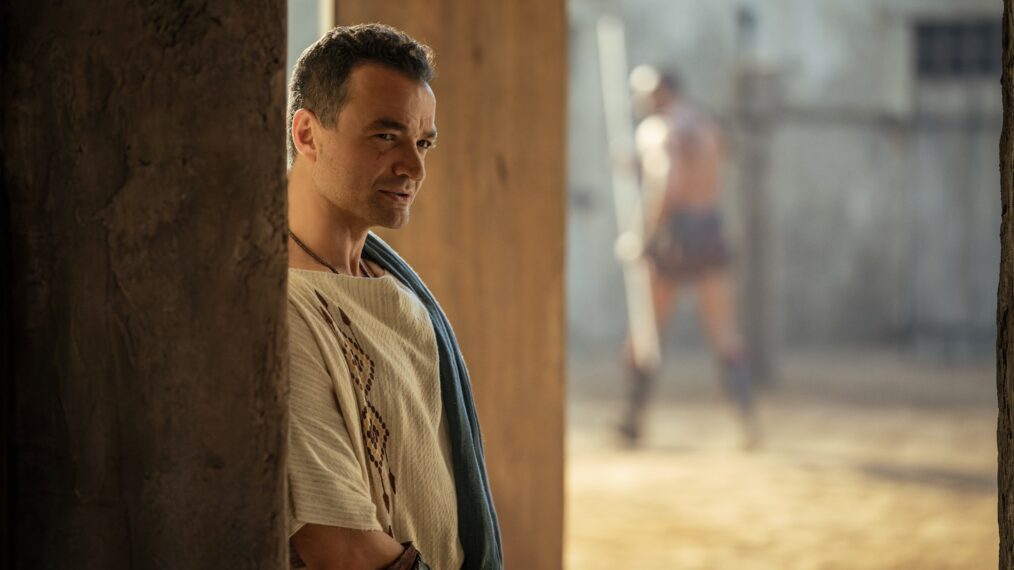
Ashur (Nick Tarabay) is perhaps the least likely of characters that fans would’ve thought would get a spinoff. What is it about him that made you want to focus on him this time around?
Steven S. DeKnight: Well, first and foremost, I just loved working with Nick Tarabay. He’s a great collaborator. He’s a real pro, phenomenal talent. And I felt like the story of Ashur, there was more to dig into. In Gods of the Arena, the prequel series, you got a hint of how he started out. … And I always say that if Ashur had just gotten a hug back then, he would’ve turned into a completely different person.
But instead he was mocked, he was ridiculed, he was forced into a position where he got the mark of the brotherhood in kind of an underhanded way, but it wasn’t his choice. So he just turned bitter and hard and mean and lashed out at everyone around him. And I find that kind of character really interesting, that, given a second chance, can a guy like that become a better person?
Starz
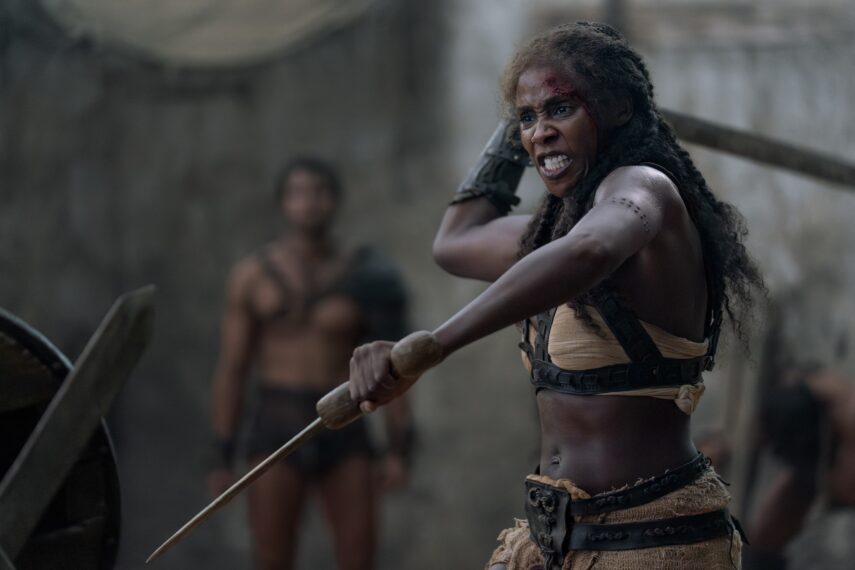
Not only does this spinoff focus on Ashur, it also focuses on Achillia (Tenika Davis), the series’ first female gladiator. It’s a really bold move and one that got some grading pushback when the first trailer came out.
[Laughs] A little bit.
Just a little bit. Did you ever think the spectacle of her presence in the show’s narrative would bleed out into the real world?
No, I really never even considered it. First and foremost, I just want to tell a good, interesting story. And with House of Ashur, I was really looking for new angles that we hadn’t explored in the original series. And in the original Spartacus series, Rob Tappert and I, we always wanted to introduce the Gladiatrix, the female Gladiator, into the show. … Historically, the female gladiators didn’t appear on the scene until around 80 years later. So we were a little bit outside that time period. So that’s another reason I was excited about this “what if” concept, where I can break away from history because Ashur being alive will start to change history. And you can see how that one event, that kind of butterfly event, will change what happens next.
We get glimpses of Achillia’s past, often when she’s fighting her fellow gladiators. What is it about acts of violence specifically that connect her to these fragmented memories?
There is an act of violence in her past that you’re seeing flashes of, and you will find out more about later in the season. So that’s why it tends to be when she’s training or in some kind of violent confrontation that she flashes back to this horrible event that happened and set in motion her becoming a slave of the Roman Republic and eventually a Gladiatrix for Ashur.
Is there a deeper connection between Ashur and Achillia because of their shared beginnings, or is it strictly just him using her as a tool to get what he wants?
Absolutely. She very much mirrors him. They’re both outsiders. They’re both forced into a situation beyond their control. So he sees a lot of himself in her. And the end of Episode 3, where he has that speech to her that the past is not who we are, that’s as much telling himself as her that you have to move on from the past and be the person that you need to be. Their stories are very entwined as these two outsiders trying to rise above their station.
It’s a really fascinating dynamic, especially because we think of Ashur as somebody who doesn’t really have feelings.
That’s another thing I love about the character. He has deep, deep feelings. You could see it in the original series. … Nobody ever stood for him. So he’s a deeply wounded person, and you’ll see his feelings and emotions start to revive as the series continues on.
In Episode 5, we watch as Achillia wins her first Gladiator match. What does this mean for her character beyond potentially regaining her freedom?
For her, it’s really moving beyond that past event, that tragic event, which in [Episode 6] you’ll find out more about. We also wanted to make it clear, [that] her journey is brutal, just like Spartacus’ was. [Achillia] almost dies in her first fight. She gets seriously wounded. So yeah, for her, it’s cathartic. She’s kind of reclaiming her power in her life from this event that happened, this scarring event, but it’s not easy. We wanted to make sure that nothing in this world is easy and anybody could die at any time. That’s another thing. Nick Tarabay and I always joke that even Ashur could die at any time. It’s a brutal, brutal world. So anybody could go at any moment.
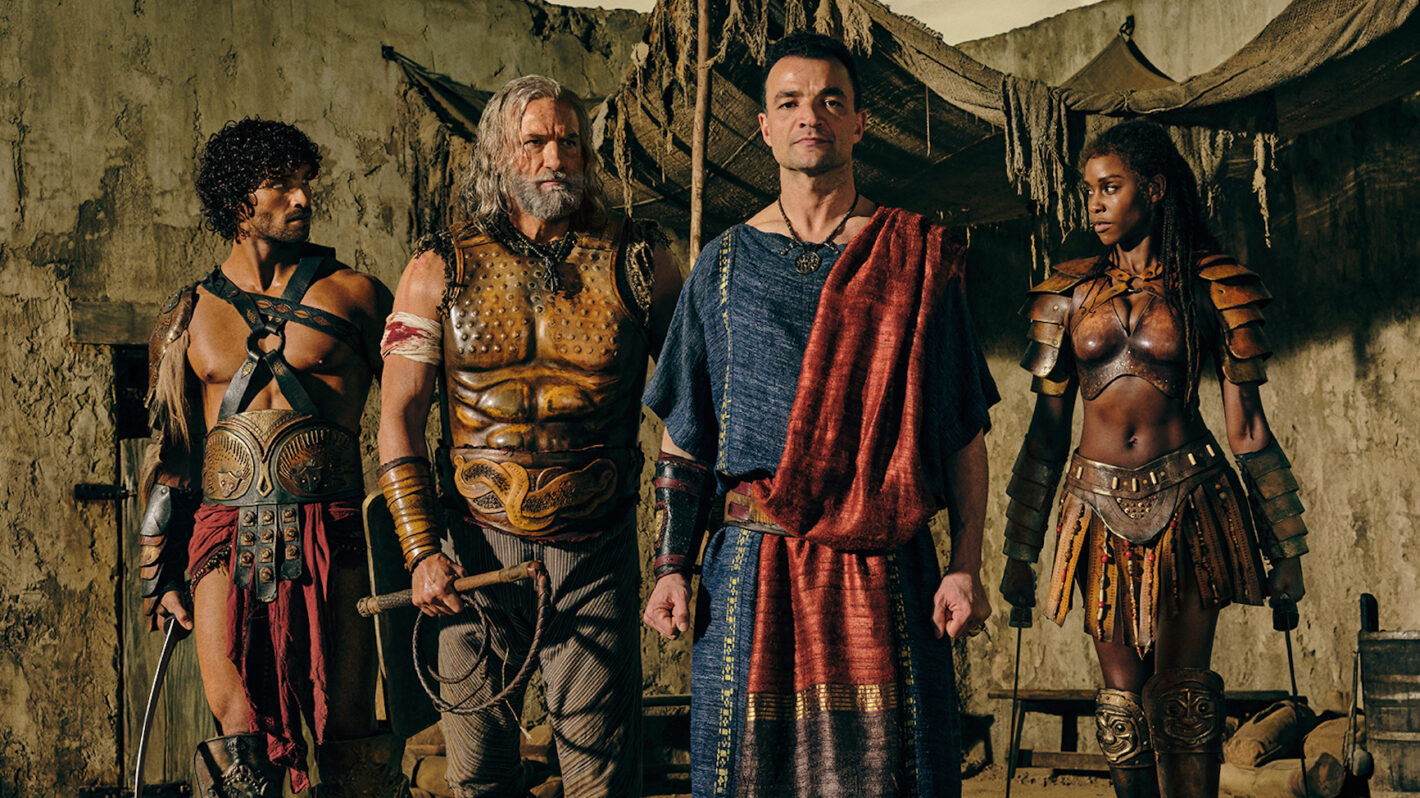
That’s something that’s very refreshing about this series. I feel like we live in an age where television almost plays it too safe and shows keep people around that should be gone.
Yeah. And I can say there’s a very good chance [that] by the end of the season, some people, some characters that the audience loves, we’re going to murder. It gets kind of like the Varro [Jai Courtney] effect from the original series. I still get angry missives about killing Varro, but that just means it worked. You want the audience to feel something, and you want the audience not to be ahead of the story. You want them to be surprised.
In Episode 5, Achillia and Celadus (Dan Hamill) consummate this burgeoning relationship between them. How will this relationship proceed, especially after her big win?
Everything in the Spartacus world, you get a little bit of good, you get a little bit of bad. It’s always a very rocky journey. So with Celadus and Achillia, it’s the same path. It’s very complicated, especially when you throw in Celadus’ son, Tarchon [Jordi Webber], who believes that he should be champion and not her. So that kind of interpersonal dynamic, throwing in the family element, it’s very, very messy, which is another thing I love about the show.
Nothing’s clean. Everybody is trying to vie for some different goal or angle. We really wanted that relationship not to be, “Oh, I love you. Oh, I love you so much.” It’s much more a relationship of need of the moment. She thinks she’s going to die and wants some kind of comfort. And he’s a guy who’s kind of pushed the idea of romance out of his head because that’s just not his world.
It’s one of the most fascinating dynamics in the show, but the other one is between Ashur and Korris (Graham McTavish). What do you think it is about these two that makes them so devoted to each other, especially as the season progresses?
It starts out as a need. Korris is in his twilight years of being useful as a gladiator, and the only job he could get was with Ashur training his men. Our Doctores in the original show, they were all slaves where Korris is a free man. He doesn’t have to put up with this, but as Ashur points out, where [is he] going to go? The Ashur [and] Korris dynamic is one that I was really excited about, especially since I wrote the role of Korris for Graham McTavish, and you’ll almost never get the guy you write [a role] for. I thought [McTavish and Tarabay] would play really well off each other. It’s almost like an odd couple pairing, but deep down — Ashur would never admit it — Korris is really the closest thing he has to a friend.
I think it’s a similar thing for Korris. As much as he may not like some of Ashur’s maneuverings and schemes, there’s still this friendship that develops. They get closer, they get torn apart, they get put back together…deep down on a cellular level, I think they both crave this kind of true male friendship. … Where their relationship goes, I think, is really quite beautiful.
Something that always struck me when watching the original series was how unabashedly queer it was. This thankfully continues with Korris and Opiter’s (Arlo Gibson) story. How did the relationship between the two come to be when you were developing the show?
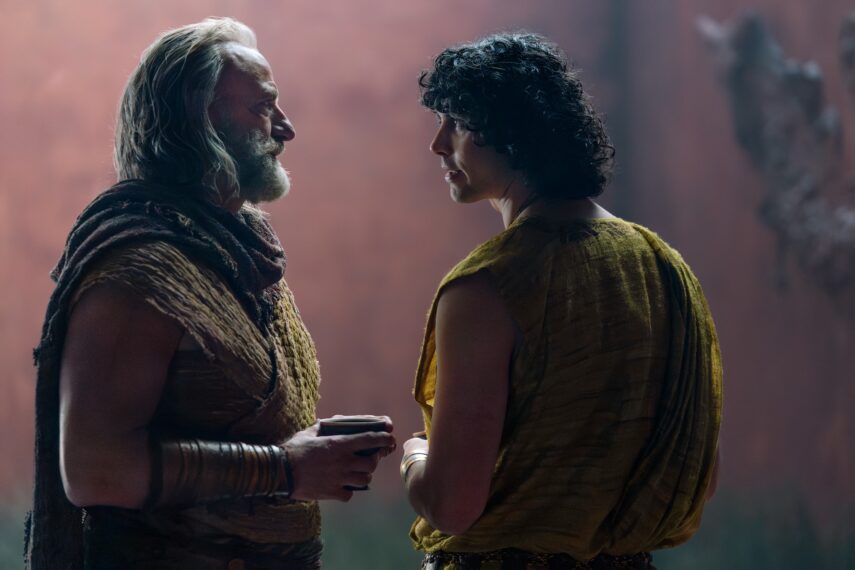
I always say there are no coming out stories in Spartacus because nobody cares. I knew I wanted to continue that in a slightly different manner, and I focused it on Korris. Here’s this tough, grizzled, old gladiator, and does anybody care that he’s gay? No, nobody cares. But I wanted again to explore a guy who long ago gave up on any kind of concept of intimacy or vulnerability with a partner. And to see that be reawakened in him in a person that he was dismissive of originally … his heart opens up. There’s a lot of themes this time around people rediscovering their humanity in their heart, which it wasn’t intended to be a message for the times, but it just seemed to have worked out that way.
When I was originally talking to Graham McTavish about the role, I said, “Look, I just want to make sure you’re OK that it’s a gay role and there will be kissing and whatnot.” And of course, like any reasonable person, he said, “Yeah, great.” His response was actually, “I never get any romantic roles, so this is great.” The bathtub scene with Korris and Opiter … it was so sweet and gentle and awkward in the best kind of way. I thought Arlo [and] Graham just did an amazing job with that scene.
Starz
Both Korris and Opiter initially seem like men who don’t often think of others beyond themselves. How does the relationship between them change their separate outlooks on life?
With Korris, it opens him up to a different possibility, a different path for his life. He was very much of the mindset, “I’m going to be training gladiators until I die. This is my life. This is what I know.” And Opiter opens his eyes. For Opiter, there’s extenuating circumstances, but it also helps him make a decision that maybe this gladiator thing is not for [him]. There’s too much intrigue and danger and uncertainty. And it also pushes him to come to realize that maybe he just wants a quiet life where he’s loved.
Along with the depiction of queerness, Spartacus was famous for its quite raw depictions of sex. House of Ashur is coming out in a new television landscape where television feels more conservative than it did when Spartacus was originally airing—
Oh, definitely.
Was it more challenging to make something so explicit in this new era of TV?
I was very fortunate to be with Lionsgate and Starz for this because Starz … they wanted the adult content. I never got one note about, “Oh, hey, can you turn that down?” If anything, it was the reverse. It’s like, “Can you turn that up a little bit?” So that was wonderful and quite surprising because I thought I was going to have bigger fights on my hand. And the same thing for, it’s a very graphically violent show, and I was worried that, in this day and age, they’d want that toned down. … I feel very, very blessed and fortunate working with Lionsgate and Starz where the sexual content, the violence, they want to recapture that feel and excitement of the original show. So there’s no creative handcuffs.
As the show has unfolded, we’ve seen Ashur become much more empathetic to those around him. How is Achillia’s win going to change Ashur’s perspective on those he holds close?
Well, in Episode 6, there’s a very powerful scene with Ashur and Achillia and Korris, not to give it away.
You really see the depth of not only what Ashur is feeling, but the pressure he’s under, but it goes beyond that. There [are] deeper feelings here because, again, she does reflect his own journey. So you get to see a lot more of his emotional state and his feelings that he keeps hidden, as you will as he continues to get closer and closer to Viridia [India Shaw-Smith]. He’s also a man who is often consumed by his own hubris and his passions will get the better of him. He’ll do things that he shouldn’t have done … but that’s just who he is. It’s almost like a man learning how to interact with others again and how to really make human connections, which is another reason I was fascinated by this particular storyline.
You really feel for him because he’s trying so hard, and it’s just not working because of his past. But something beautiful comes from it because then he has these other relationships with people who are more like-minded.
And boy, I don’t think anybody could have done it except Nick Tarabay. He plays everything just so perfectly … I was so moved by his performance this season, and we’re just scratching the surface. It gets even deeper as we go along, but Nick Tarabay, just [a] prince among men. If he had said no, or he wasn’t available, I would’ve scrapped the idea. There’s no way I could have recast Ashur.
Spartacus: House of Ashur, Fridays, Starz






Where to Stream






Latest Headlines
- Climbing High With Alex Honnold, Annaleigh Ashford Brings Cheer to ‘Stumble’ and ‘Drag Race,’ More Mel Brooks
- 'Spartacus' Stars Talk 'White-Hot Vengeance' After [Spoiler's] Death
- Andrew Lincoln in ‘Coldwater,’ ‘Thousand Blows’ Returns, Peach Bowl, TMZ on the Reiner Murders




 Watchlist Easy access to only the shows you care about — all in one simple place
 Alerts Only important notifications — when a show is returning, when it becomes available to stream, and more.
 Special Offers Exclusive products we release related to your favorite shows and streaming services