
‘Blade Runner 2099’ Easter Eggs, Callbacks & References to the Original Films Explained


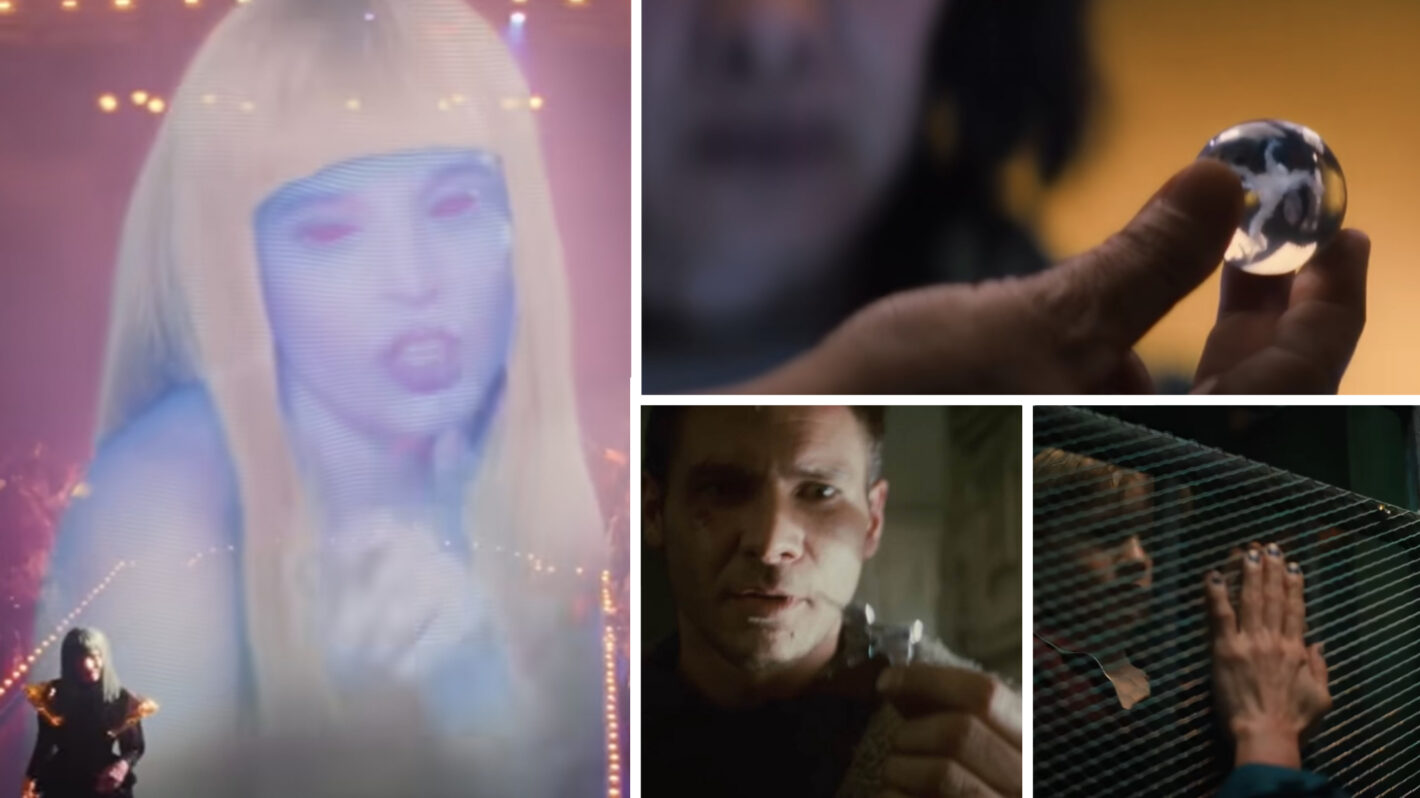
Prime Video’s Blade Runner 2099 doesn’t just expand the dystopian world first introduced in Ridley Scott‘s 1982 sci-fi classic. It also pays tribute to the franchise’s past, packing its eight episodes with callbacks, Easter eggs, and references to the films, as well as Philip K. Dick’s novel Do Androids Dream of Electric Sheep?, which started it all.
Set 50 years after the events of Blade Runner 2049 and 80 years after Blade Runner, the series turns the franchise’s familiar power structure upside down. Replicants now rule Los Angeles, while humans have been reduced to second-class citizens. At the center of the story are Cora (Hunter Schafer), a human fugitive posing as a Blade Runner in an effort to escape the city with her brother Elias (Lewis Gribben), and Olwen (Michelle Yeoh), a dying replicant Blade Runner on a mission to hunt one of her own.
But while the world of 2099 is vastly different from the one Rick Deckard (Harrison Ford) and Officer K (Ryan Gosling) inhabited, the series hasn’t forgotten where it came from. From familiar imagery to deeper connections to replicant lore, here are some of the biggest callbacks and Easter eggs you might have missed in Blade Runner 2099.
Blade Runner 2099, Now streaming, Prime Video
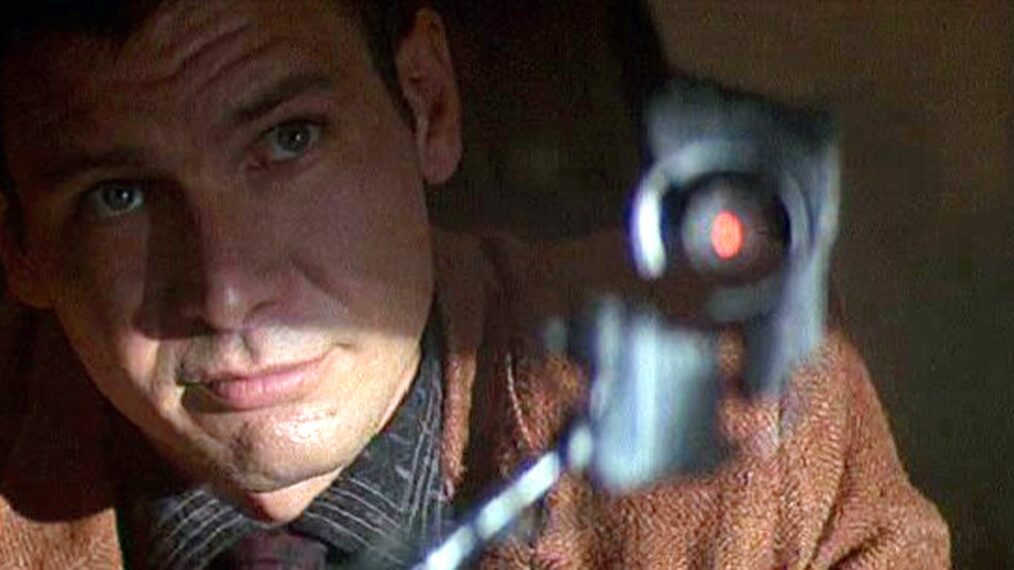
The Voight-Kampff test gets turned upside down
In the original Blade Runner, the Voight-Kampff test measures emotional responses to determine whether someone is human or a replicant. Deckard famously administers the test to Rachael, who doesn’t realize she’s a replicant.
In 2099, the system has been reversed. Replicants now rule Los Angeles, and the LAPD uses an Index test to identify humans by their emotional responses. Episode 5 even takes viewers back to the Pavlov Institute in Alaska, where the young human girl who administers the tests, Greta (Katelyn Rose Downey), is trained to recognize and target human empathy.
The same emotional qualities that once distinguished humans from replicants have become evidence of suspicious behavior. It also recalls the baseline testing of Officer K (Ryan Gosling) in 2049, which monitors whether a replicant is maintaining the emotional stability expected of him.
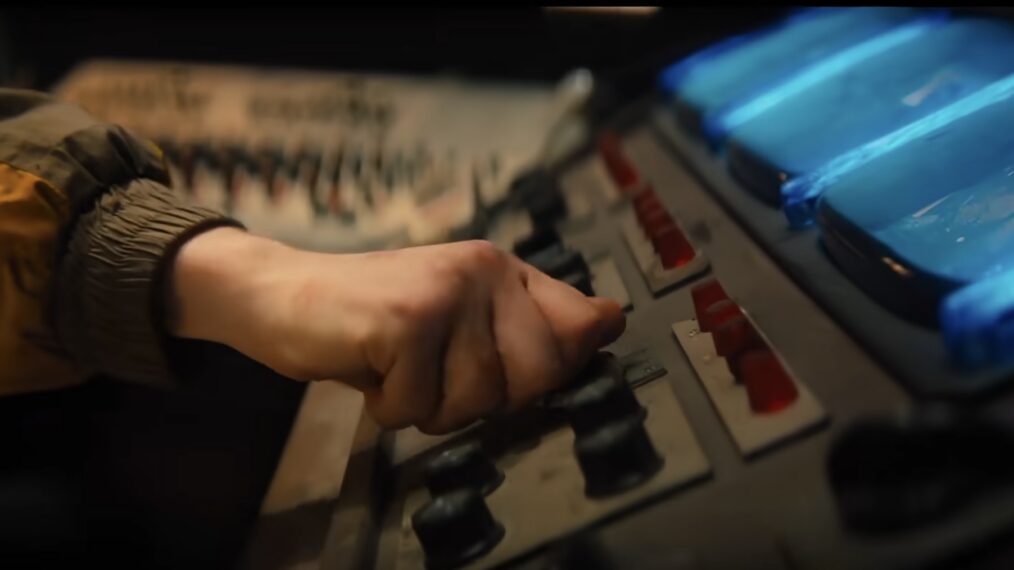
1980s "cassette futurism" aesthetic
Despite taking place more than a century in the future, Blade Runner 2099 retains the retrofuturistic aesthetic of Ridley Scott’s 1982 original. Known as “cassette futurism,” the style combines advanced technology with bulky analog equipment and clunky computer interfaces. Rather than adopting the sleek, minimalist technology most people associate with the modern world, 2099 preserves the franchise’s distinctly 1980s vision of the future, where even the most sophisticated machines look like they belong in a world of VHS tapes and CRT monitors.
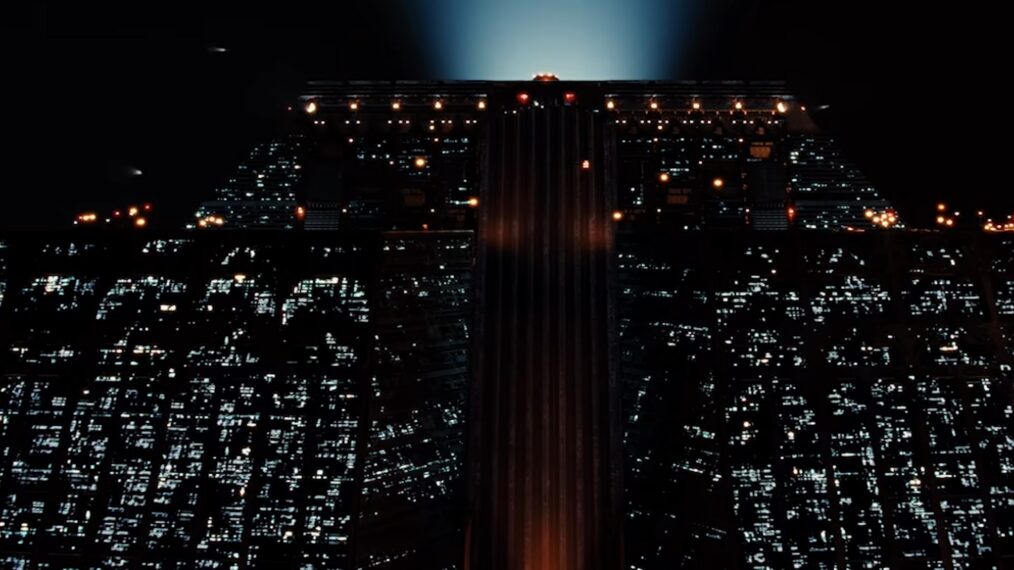
The Tyrell Corporation and its iconic pyramid
The Tyrell Corporation has loomed over the franchise since the original film, where Dr. Eldon Tyrell (Joe Turkel) created the Nexus replicants in his massive pyramid-shaped headquarters, one of the defining images of Ridley Scott’s dystopian Los Angeles. In 2099, the corporation’s legacy comes full circle when Julius (Sam C. Wilson) and Clotilde (Amy Lennox) return to the facility in Episode 7, searching for the genetic secrets to extending replicant lifespans. But when Julius finds what he is looking for, he destroys the facility, severing one of the last remaining ties to their creator.

The giant statues
The massive, deteriorating female statues seen in Episode 4 outside Mexico recall the towering nude sculptures from Blade Runner 2049. In the film, Officer K (Ryan Gosling) travels through the radiation-scarred ruins of Las Vegas while searching for Rick Deckard (Harrison Ford), passing enormous, decaying statues in the orange-hazed desert. Beyond the visual callback, the statues symbolize the fallen idols of a civilization consumed by humanity’s ambition to play god. Think “Ozymandias” (the poem, not the Breaking Bad episode).
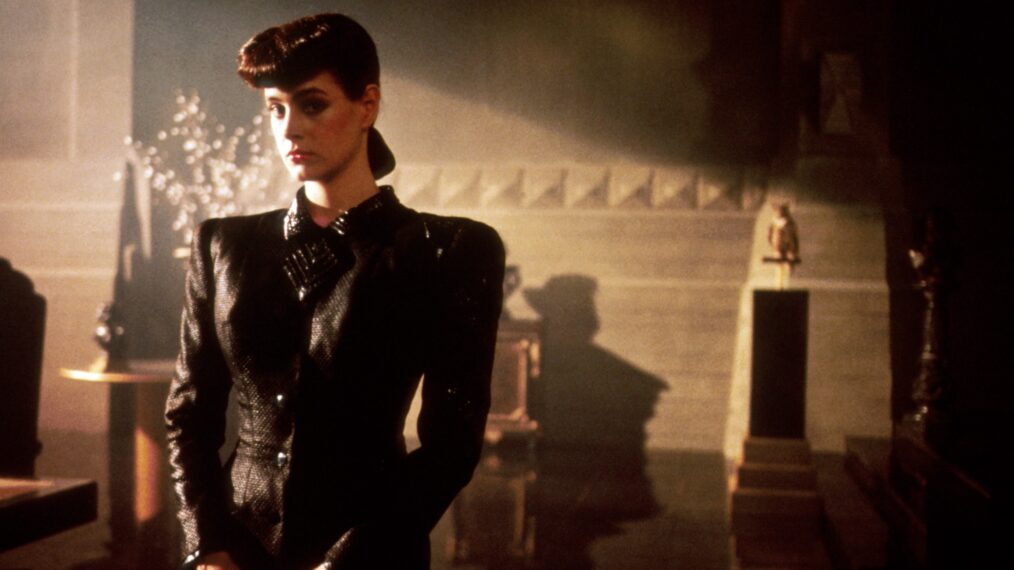
Rachael's spider memory
In Episode 4, a couple in the abandoned Mexico City watches a recorded childhood memory belonging to Rachael (Sean Young), the Nexus-7 replicant from the original Blade Runner. In the film, Rachael recalls watching a spider’s eggs hatch, only for the babies to devour their mother. Deckard (Harrison Ford) reveals the memory actually belongs to Tyrell’s niece, exposing Rachael’s artificial identity. The callback reinforces the franchise’s questions about identity and implanted memories, which 2099 expands through its thriving market for recorded memories and the hunt for Tyrell’s own.
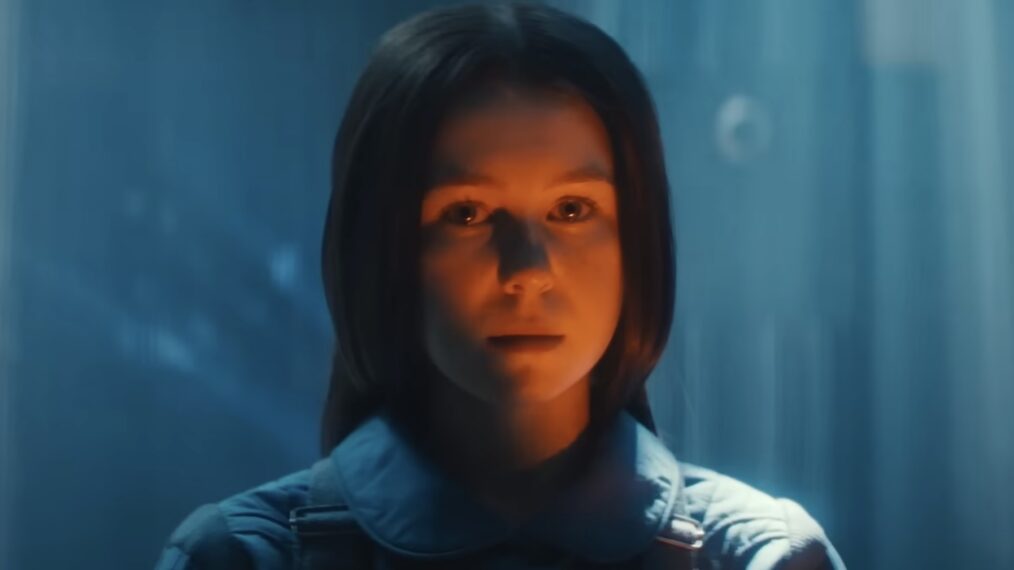
The toy robot "My Lord"
Episode 5 “My Lord” features Greta’s toy robot named My Lord, a reference to Philip K. Dick’s 1952 short story “The Little Movement.” The story is about a toy that attempts to exert control over its human owner. In the show, it is her last connection to her family.

"The Power of Mercer" and the Mercerites
In Episode 6, an old billboard advertising the “Power of Mercer,” as well as the abandoned Mercer Monastery where Cora grew up, references Philip K. Dick’s novel Do Androids Dream of Electric Sheep? In the book, Mercerism is a religion centered on Wilbur Mercer, whose followers use empathy boxes to share his suffering and experience a collective emotional connection. At the monastery, Cora and Olwen encounter a surviving Mercerite who uses an empathy box made from the last walnut tree to subject Olwen to electrical shocks.
Largely absent from the films, Mercerism brings the franchise’s exploration of empathy and humanity back to its literary roots.
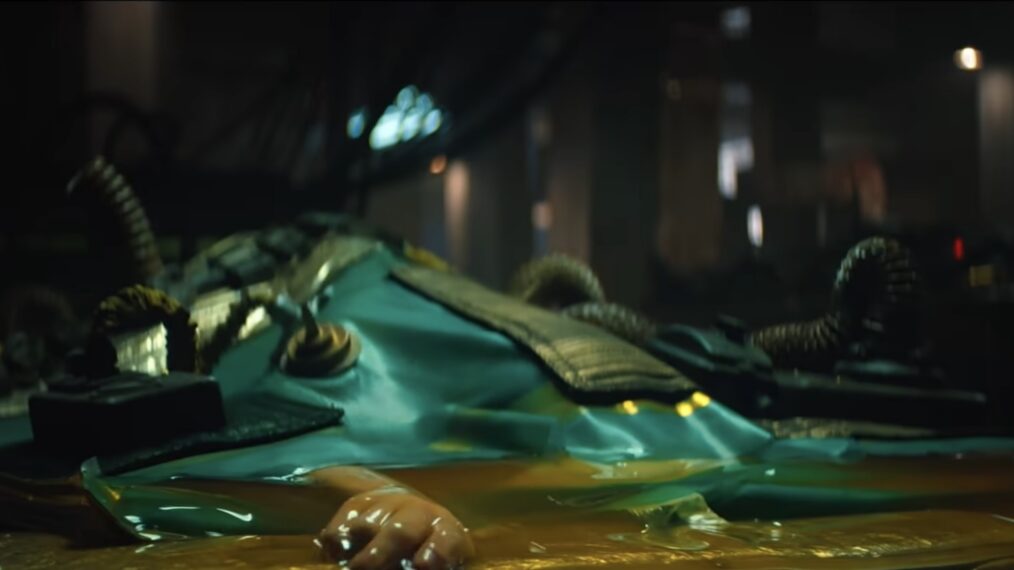
The Nexus-9 replicants and their rebellion
The opening text of the series establishes that the Nexus-9 replicants eventually overthrew their human creators and took control of Los Angeles. In Blade Runner 2049, the Nexus-9 models were manufactured by Niander Wallace (Jared Leto) to be obedient to human commands. Officer K is one of these models, and his ability to act independently challenges the notion that replicants can be perfectly controlled. The uprising in 2099 represents the ultimate failure of the obedience Wallace believed he had engineered into his creations.
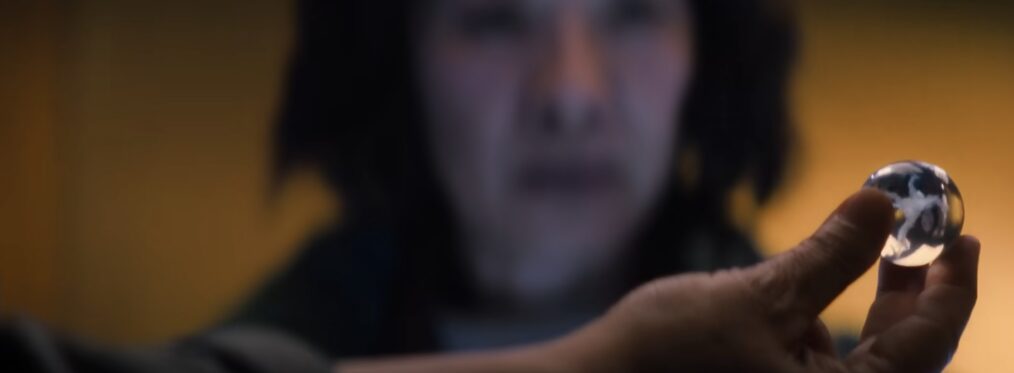
Synthetic memories and the memory makers
In Blade Runner 2049, Decker and Rachael’s daughter, Dr. Ana Stelline (Carla Juri) creates artificial memories for replicants, including one that leads Officer K (Ryan Gosling) to question his identity. In 2099, memory technology has become a thriving industry, with collectors buying, selling, and preserving recorded memories. Ida (Lucy Russell) explains that newborn replicants receive synthetic memories to control their behavior and promote stability. Cora and Olwen’s hunt for Tyrell’s lost memory mirrors K’s investigation, with a seemingly personal recollection holding the key to replicant origins.
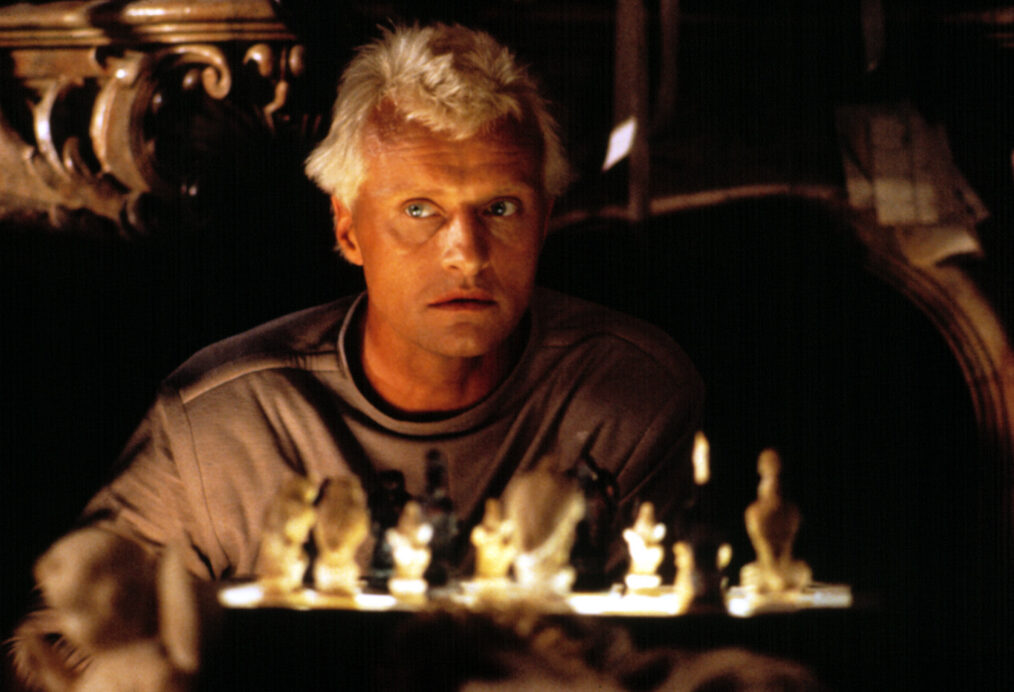
A nice game of chess
In Episode 4, Olwen and Cora watch a memory of a father and son playing chess, which harkens back to the game between Tyrell (Joe Turkel) and J.F. Sebastian (William Sanderson) in the original Blade Runner. Sebastian uses the game to gain access to Tyrell, allowing Roy Batty (Rutger Hauer) to confront his creator. In 2099, the scene also highlights the differences between Olwen and Cora. Olwen believes the son is smarter than his father, while Cora sees a father deliberately losing to build his son’s confidence, reflecting their contrasting views of competition and human affection.
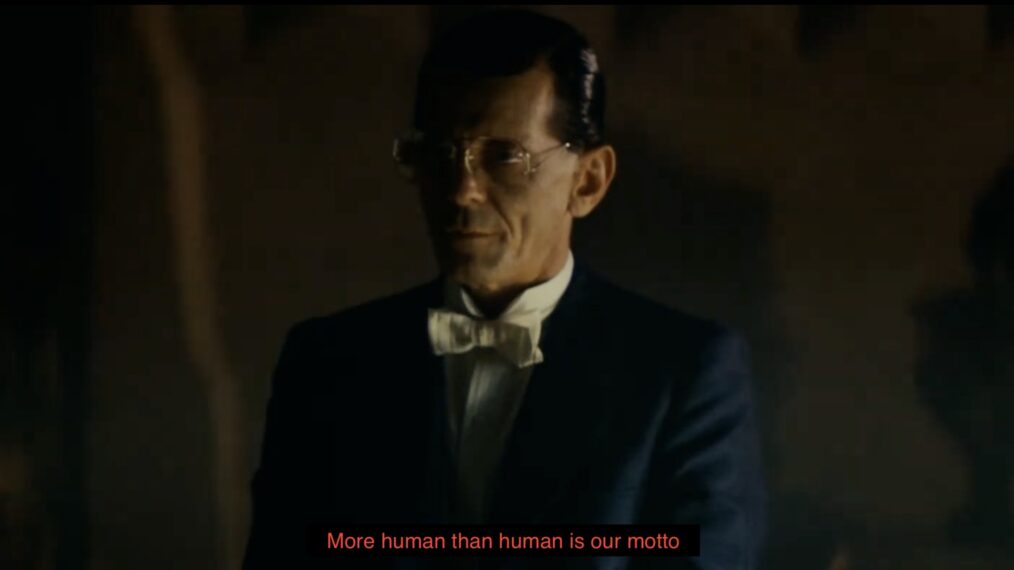
"More human than human"
“More human than human” was the Tyrell Corporation’s corporate motto in the original Blade Runner, reflecting its ambition to create artificial beings that could surpass humanity. In Episode 6 of 2099, Julius (Sam C. Wilson) calls the slogan a “shackle,” arguing that replicants are the next stage of evolution and shouldn’t be measured against their creators. The phrase returns in Episode 8 in an old Nexus-1 advertisement alongside the promise of “The Next Us,” reinforcing Tyrell’s original vision of replicants as humanity’s successors.
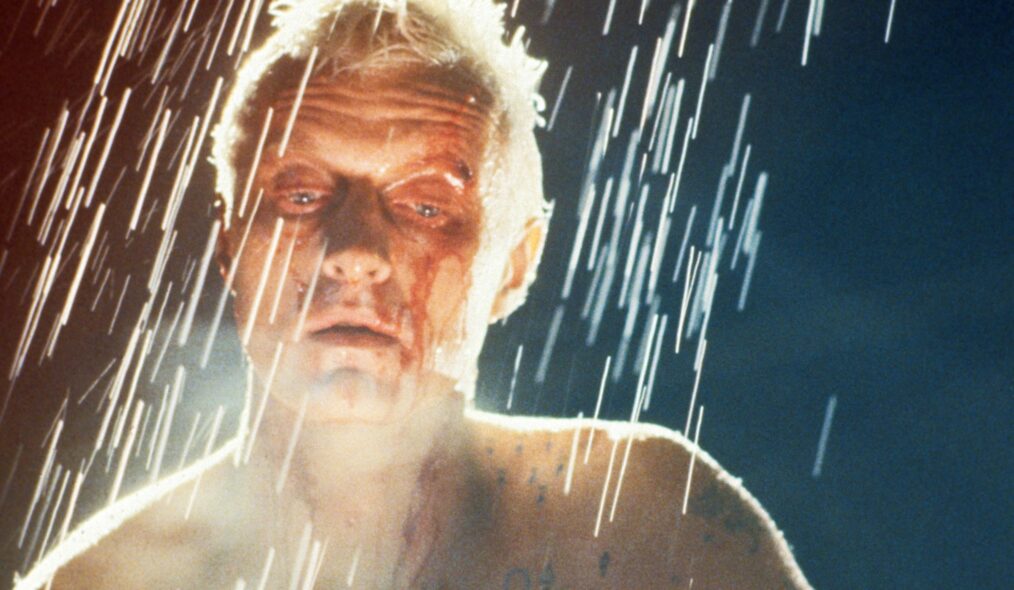
"Time to die"
In Episode 8, “Share the Fantasy,” Hodge (Wil Coban), one of Julius’ followers, tells Olwen (Yeoh) and Cora (Schafer), “Time to die,” a direct callback not just to replicant Leon Kowalski’s (Brion James) sinister warning to Decker, but Roy Batty’s (Rutger Hauer) famous final “Tears in the Rain” monologue in the original Blade Runner. As Roy approaches the end of his lifespan, he reflects on his extraordinary experiences before accepting death, having just spared Deckard’s (Harrison Ford) life.
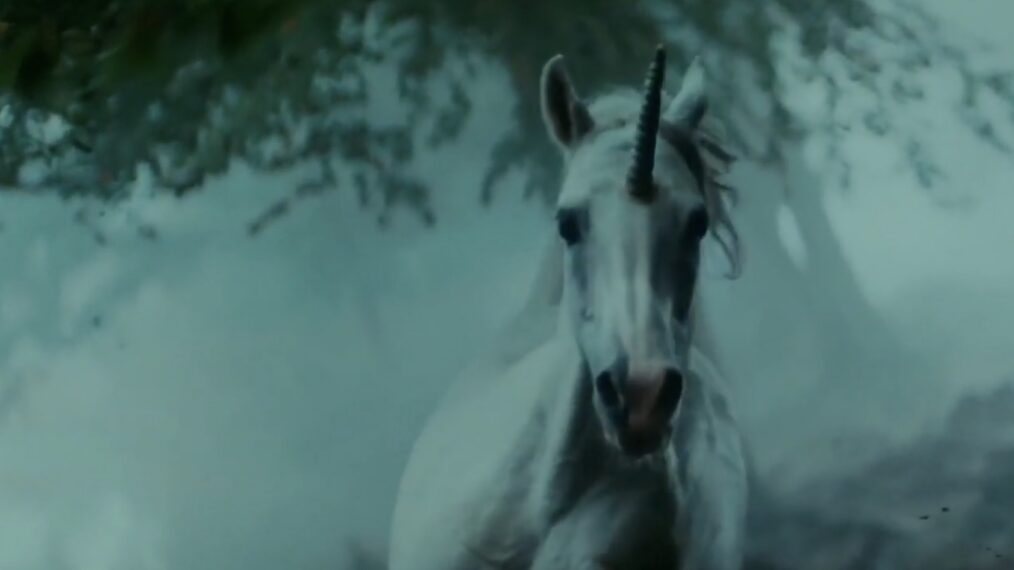
The unicorn
A unicorn briefly appears on one of the screens in the Los Angeles cityscape in Episode 7 “One More Kiss, Dear.” The image recalls Deckard’s unicorn dream in the director’s and final cuts of the original film, as well as Gaff’s (Edward James Olmos) origami unicorn that questions Deckard’s humanity.
The unicorn remains one of the most debated symbols in Blade Runner. Gaff’s apparent knowledge of Deckard’s dream suggests that Deckard’s memories or thoughts might be artificial.
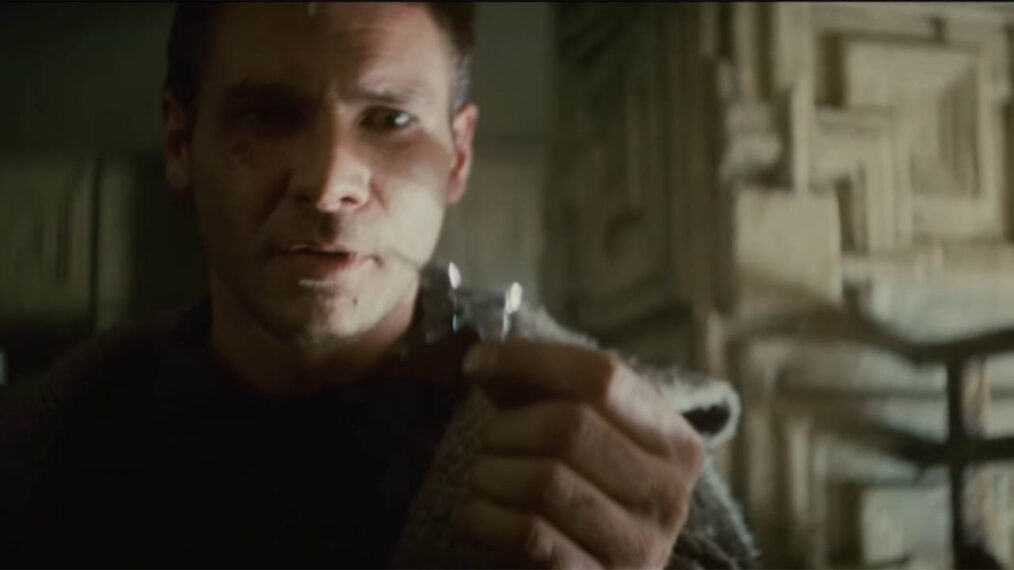
The origami animal
In Episode 6, Cora discovers an origami animal hidden alongside her family’s belongin at the abandoned Mercer Monastery, a callback to Gaff (Edward James Olmos), the LAPD officer who leaves folded figures throughout the original Blade Runner. His most famous creation, a unicorn left outside Deckard’s apartment, fueled decades of debate over whether Deckard was himself a replicant. In 2099, the discovery comes as Cora uncovers the truth about Helena (Sheila Atim), the woman who raised her, and her connection to the original Nexus-1 replicants.
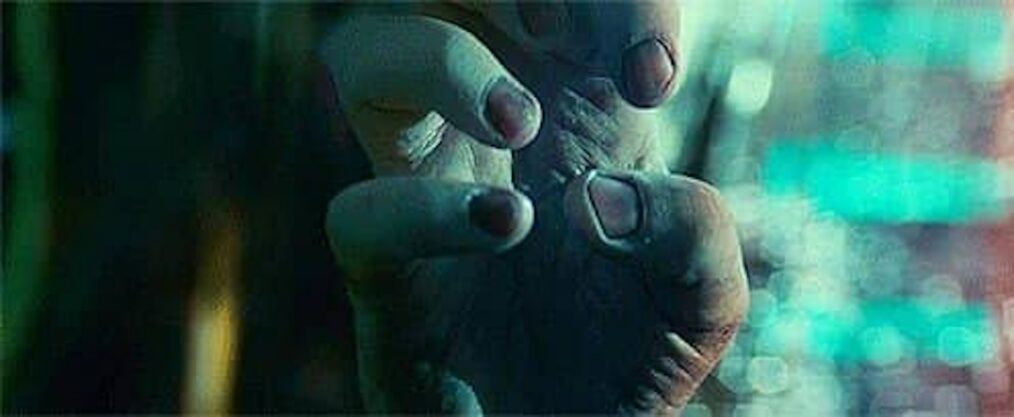
Olwen's deteriorating body and Roy Batty's failing hands
As Olwen approaches the end of her lifespan, her physical deterioration recalls Roy Batty’s (Rutger Hauer) final hours in the original film. Roy’s body begins failing as his expiration date approaches, culminating in the memorable moment when he drives a nail through his hand to keep it functioning.
Showrunner Silka Luisa has connected the blue discoloration around Olwen’s nails to the close-ups of Roy’s failing hands. Olwen’s physical decline isn’t merely a reminder of her impending death. It establishes a direct visual connection to Roy, whose struggle with mortality helped define the franchise.
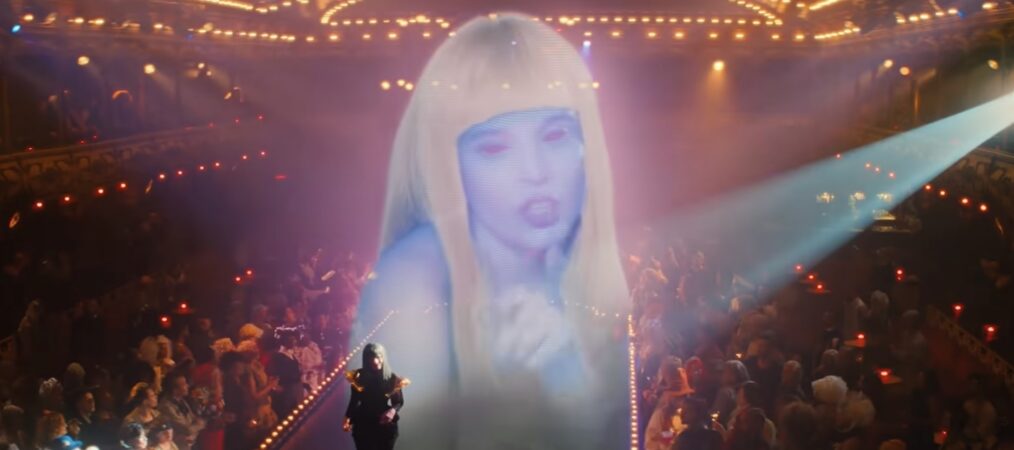
The original Joi
In Episode 3, Bebeto (Dimitri Abold) and Elias (Lewis Gribben) encounter the woman who was the model for Joi (Ana de Armas), the mass-produced holographic companion from Blade Runner 2049. In the film, Officer K (Ryan Gosling) develops a romantic relationship with his personal Joi, believing their connection makes him special. The original inspiration for Joi reappears in Episode 8 of 2099, when Bebeto and Elias seek her help locating Ray, revealing the human face behind one of the franchise’s most recognizable artificial personalities.
Conversation
Please read the TV Insider Community Guidelines.
Register or sign in to join the conversation.