
‘One Last Shot’: Tisha Campbell Shares Heartbreaking Inspiration Behind Powerful Lifetime Movie


Exclusive
What To Know
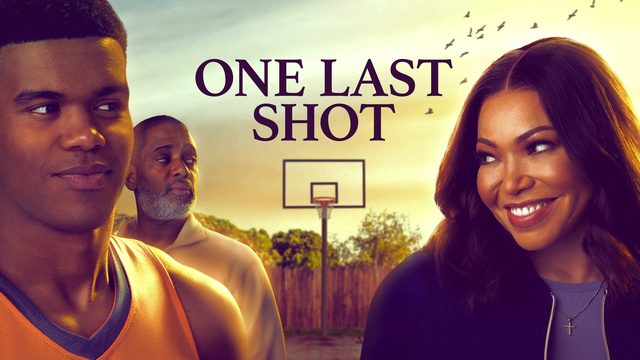
- Tisha Campbell stars in, co-wrote and executive produced Lifetime’s One Last Shot, premiering November 14.
- The drama follows a mother caring for her teenage son after he is diagnosed with an aggressive brain tumor.
- Inspired by the death of Campbell’s cousin and her aunt’s grief, the film explores caregiving, forgiveness and hope.
Tisha Campbell is known much of her career for comedies like Martin and My Wife and Kids, However, the NAACP Image Award-winning actress takes a dramatic turn in Lifetime’s One Last Shot. She not only stars in the powerful original movie premiering November 14. Campbell helped write and executive produced the deeply personal project with a cast also including Charles Malik Whitfield, Jaden Lucas Miller and A.J. Johnson. This serves as a reunion of sorts with Johnson and Campbell previously working together on the House Party movie back in 1990.
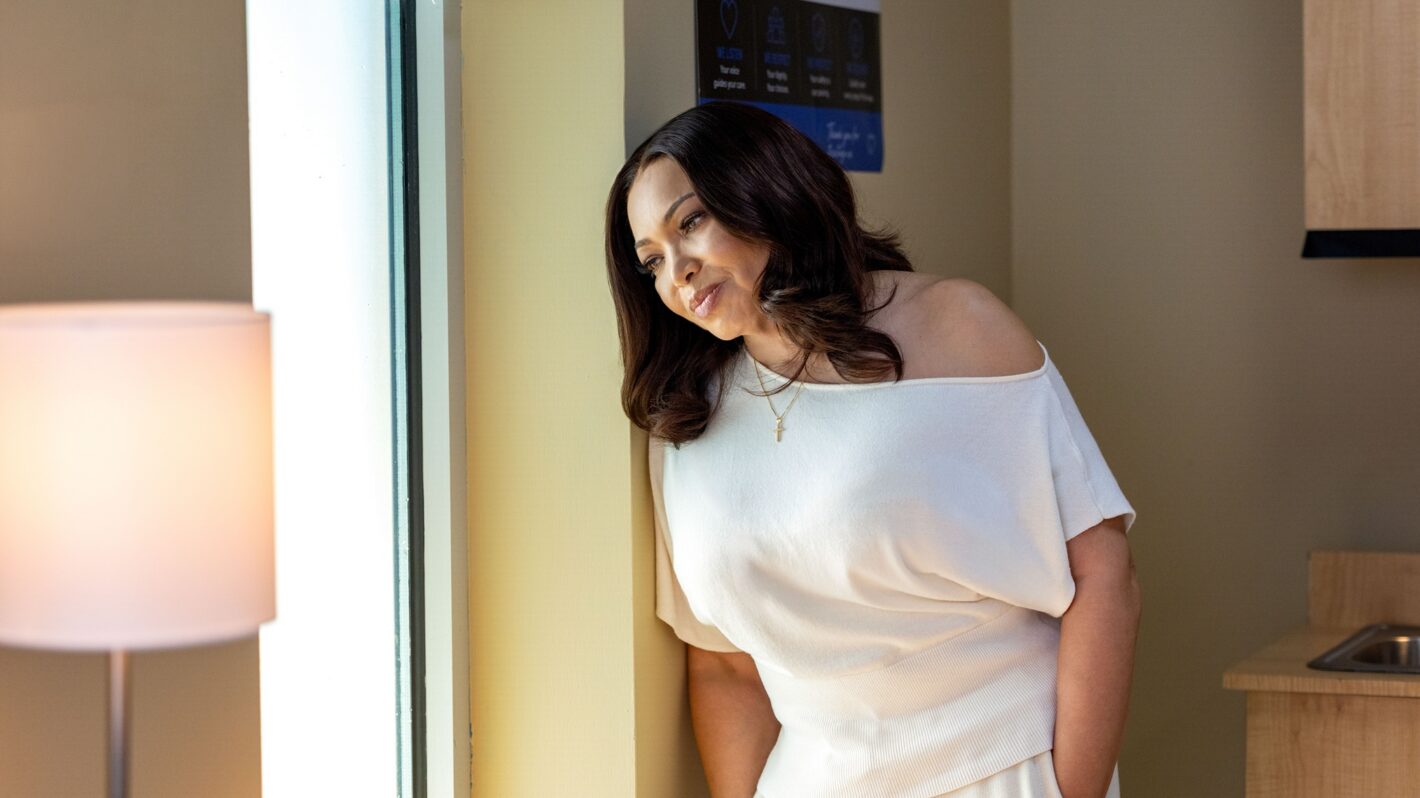
The film centers on a mother Joy Walker (Campbell) whose life is upended after her teenage son Chaz (Miller), a high school star basketball player, was diagnosed with an aggressive brain tumor. Joy puts all her energy into caring for him, dealing with doctors and tackling mounting. Her ex Royce (Whitfield) with a checkered past comes back into the picture to navigate the new normal. As Chaz’s health deteriorates, Joy begins to realize that a lifetime of living for others has left her with no idea who she is on her own
Here Campbell, who has two sons with ex-husband Duane Martin, opens up about why this particular role hits close to home.
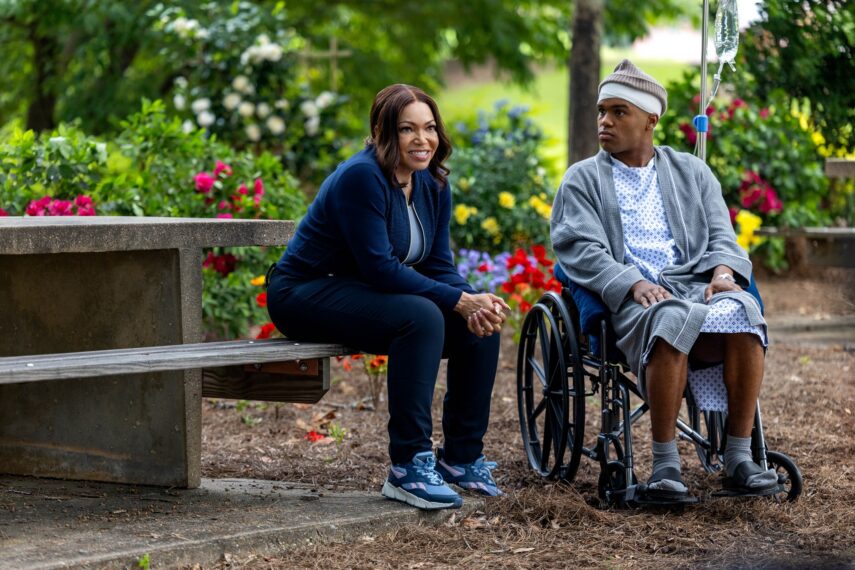
Tisha Campbell and Jaden Lucas Miller (Lifetime)
You tackle heavy subject matter with One Last Shot. Where did the inspiration come from?
Tisha Campbell: It’s very personal. It actually derived from my writing partner [and co-executive producer], Dani Wright. She really wanted to explore a lot of the different types of grief that I had been through, and she said, “I really want us to write something specifically for the Lifetime network.” And I was like, “You want to explore all the grief? I just wrote a book for God’s sake, give me a break, okay?” I then thought let’s kind of hone in on the types of grief because there’s different types. There’s loss of a relationship, loss of a family member, loss of a job. Let’s just concentrate on one, and it just so happened that I lost my cousin Eddie, and watched his mother, my Aunt Sharon, go through all the different stages just trying to navigate grief in itself. I had us concentrate on that. It is kind of dedicated to my cousin Eddie and his mother. And so that’s where One Last Shot kind of derived.
You see all the struggles that Joy goes through with her son. As a mother, she does all she can for him. But that comes at a price, sacrificing much of her own well-being, not thinking about what the hardship is doing to her.
That was the theme that we really wanted to explore. Women in general, and especially African American women, we give, give, give, give. I personally have always leaned into the strong black woman tropes where we’re not allowed to feel grief, or sorrow, or anger, or fear, or joy. Something happens, and we just keep it moving. I wanted this to be a love letter to us. To explore the fact that we have to allow ourselves to be human beings, and just to feel. And even in the worst situations, we have to find ourselves through it, and navigate through it. I’m still exploring all the grief that I’ve been through, but we kind of just honed in on one specific thing.
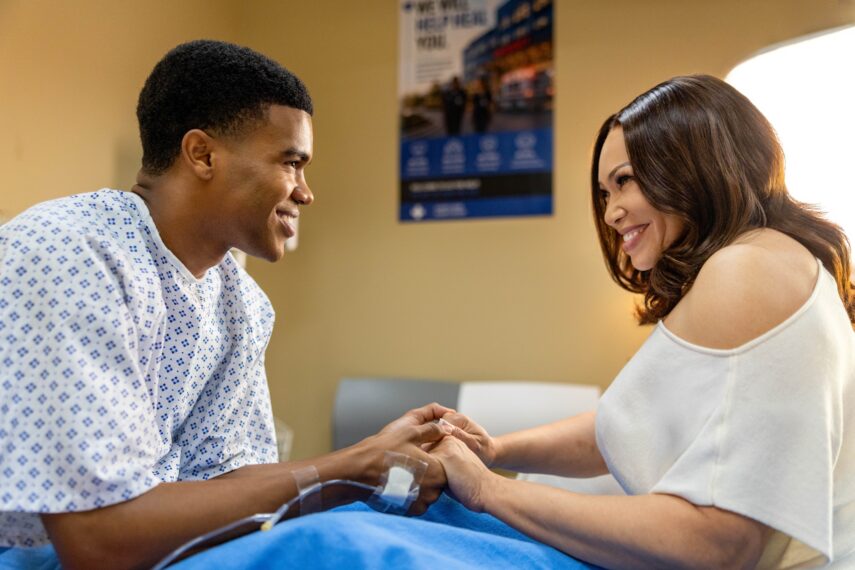
Jaden Lucas Miller and Tisha Campbell (Lifetime)
There is also the complicated relationship dynamic between Joy and her ex, who comes back into the picture after you’re going through this hard time. After being largely written off, he actually steps up a little bit.
I’m so glad you brought that up because although this is a love letter to women, we thought it was very important that the male counterpart had a full arc. That we could really explore it. We didn’t want to start beating up men in this film, although it’s a little bit of a red herring in the beginning where you don’t know where this is going. He has a whole redemption song throughout the whole entire thing. There is an underlying theme, as well, of forgiveness between him and his son, forgiveness between us, forgiveness of oneself when they’re going through things and addictions. By the end of it, people are really on their side. Lifetime allowed us to screen this film at the Peachtree Village International Film Festival in Atlanta. To see it on the big screen is one thing, but another thing is to see the audience, a diverse audience of genders and male and female, all having similar reactions. The men were crying just as much as the women, or the men were applauding when he got into clinical trials, just as with everyone was invested. No one felt left out, and that’s the kind of stuff that Dani and I are crafting.
How is it for you to show your range as an actress? We’re so used to seeing you in the sitcom world where here you show your dramatic side.
It’s interesting because a lot of people put what they deem comedic actors in a box, and they look at us like we don’t have the depth. Now, I started out doing theater. I started out in drama. I couldn’t get arrested doing comedy in the beginning of my career. I had to figure out what comedy was, and comedy, to me, is way harder than doing drama. Again, Lifetime takes chances on women, whether it’s behind the scenes or in front of the camera. This year I filmed a movie called Be Happy from Mary J. Blige for Lifetime. That’s how our relationship started. They took a chance on me in doing a drama. I’m so grateful to that network to be open enough to see us and to see our stories and to give filmmakers and artists like me a chance.I love working with this network, and I love having the opportunities that they give us.
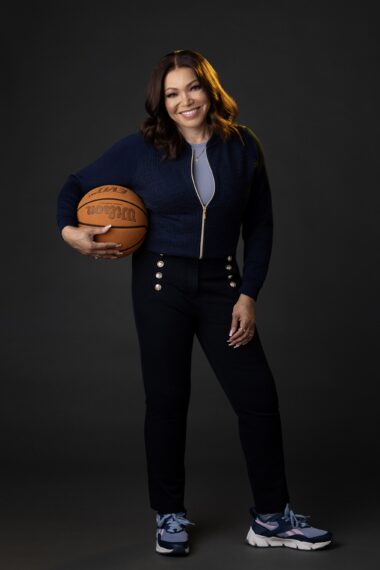
Lifetime
How is it working on screen with A.J. again? Does it take you back to those House Party days?
Yes! Well, we were kids during House Party. I think I was maybe 20, and she was just, just slightly older than me. This is the first time that we were able to do a movie together since House Party. It was different because we’re all grown up, and we’ve been through our own individual challenges, and we’ve been friends all these years. We’ve seen each other through. So asking her to portray Toni, who is there for my character… Nobody knows me better. It was like we were playing out parts of our lives in front of people. It felt safe. So being able to do this with her made me feel safer.
You’re a mom of two. Did playing the role make you look at being a mother any different?
Yeah, motherhood comes first to me. Beyond the red carpet, and the cameras, and the lights, and microphones being shoved in your face, motherhood has always been first. I even kept my kids as far away from Hollyweird as possible because I felt it was more important for them to know that what mommy does is just a job, and they need to know me as mommy. Everything that I do, I want them to be proud of me.
Are they starting to understand more and appreciate your work as they get older?
I think I did the keeping away from that too well because they don’t care. They don’t care! I’m including them a little bit more in that aspect of my life though. My youngest calls me Gina! Although I kept them as far away from all of the work that I’ve done, you know, one babysitter showed him the Martin show when he was three, and so he has been calling me Gina ever since. He doesn’t even call me Mommy. But other than that, they don’t really watch my work. I did bring them to the screening, the LA screening of One Last Shot. My eldest son came up to me, and he was like, “Mom, this is kind of the best work that I’ve ever seen you do. Your relationship with your son on screen reminds me of our relationship.” So I thought, wow, that was the biggest compliment I got.
What do you think this movie says in terms of the health care system?
We only touched on that. We didn’t even go into the deepness of the disparities, especially of African Americans in the health care system. There’s so many disparities when being treated in the same way as some others. I just wanted to tap in on it because we were trying to tell the story of the devastating loss of a mother and a son, the loss of a son. We kind of hinted at it, but it’s definitely something that should be talked about and explored more.
Do you want to play more in the drama space? Would you do another sitcom?
Yes, I love doing it all, even the verticals, I want to do it all. I absolutely love what I do because I really look at myself as an artist, and someone who’s in servitude to the public. And I want to affect people, and I always have. This has always been my journey. I don’t like to choose because every single thing gives me a different high whether I’m in front of the camera or behind the scenes.Writing is something that I’m very passionate about, even executive producing. There were so many people in my ear when I was younger who told me that I shouldn’t, I couldn’t, and telling me what I could or could not do. And finally, at 58 years old, I am doing everything that I’ve ever wanted to do. Dani and I also wrote some of the music for the soundtrack of One Last Shot. We’re both singing on it. The only thing that I won’t do is direct because I don’t think I have the patience for all of that. I’d be in jail for cussing out an actor, and it’s not going to work out for me.

If there was one set for a TV show or anything that you could have been on longer than an episode or two because of the character or experience, what would that have been?
It would have been for a show called Uncoupled. It was with Neil Patrick Harris. It was like a gay Sex and the City. It was created by the same person who created Sex and the City, and it was one of my favorite pieces I’ve ever done. The writing on that show was great. It was just wonderful to play, working opposite Neil Patrick Harris. I knew we would be great because we were both child actors, and we understood our chemistry was crazy. So, if there was any set or anything that I wish I could be doing longer, it would be that particular show.
Lastly, what do you want to say to viewers when they watch One Last Shot? So often, you think you’re going to get the happy ending in a traditional sense, but here, there is a happy ending. Only it’s not the one that you think it will be.
Exactly. There is a happy ending there, but it’s not going to be the one you think it is. At the same time I tried very hard to still incorporate hope. These things that we are saying in this film is something that I wish I could have said to my aunt when she was going through the initial process. But there is hope in the end. If you hang in there, just hang in there one more day, one more second, one more minute, there’s some light. I’m really excited for people to see. It’s like a black Terms of Endearment.
One Last Shot premiere, November 14, 8/7c, Lifetime



Conversation
Please read the TV Insider Community Guidelines.
Register or sign in to join the conversation.