
‘The Terminal List’ Season 2: Luke Hemsworth Breaks Down Landry’s Dark Past & Final Torture Scene


Q&A
What To Know
- Season 2 of The Terminal List delves deeper into Jules Landry’s dark past, revealing his manipulative and sociopathic nature.
- Luke Hemsworth describes the intense physical and psychological preparation for the character’s unraveling and ultimate downfall.
In the world of The Terminal List, Jules Landry (Luke Hemsworth) has always been a wild card ever since we was first introduced in Dark Wolf. But in Season 2 of The Terminal List, he shows fans exactly how dangerous he is. Warning: Spoilers ahead for The Terminal List Season 2.
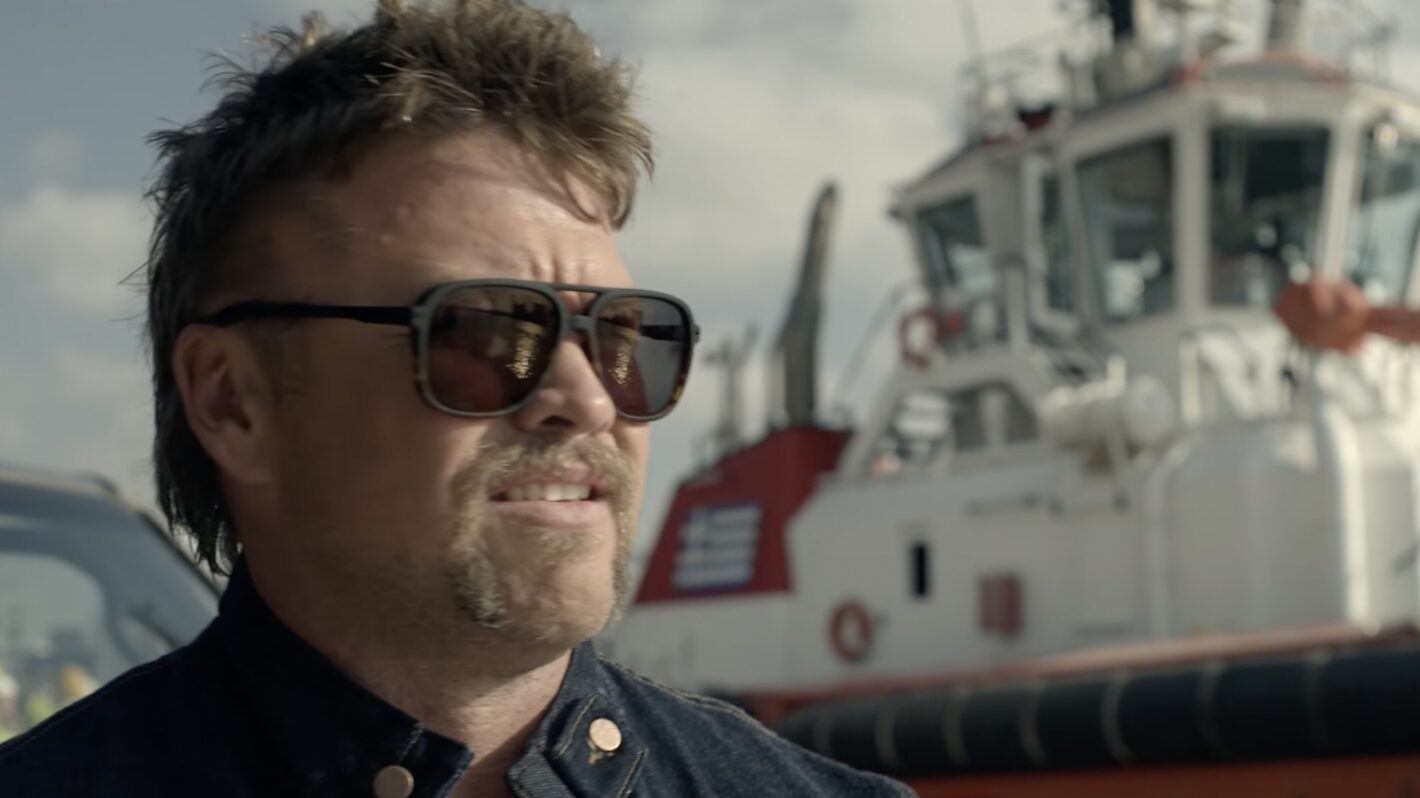
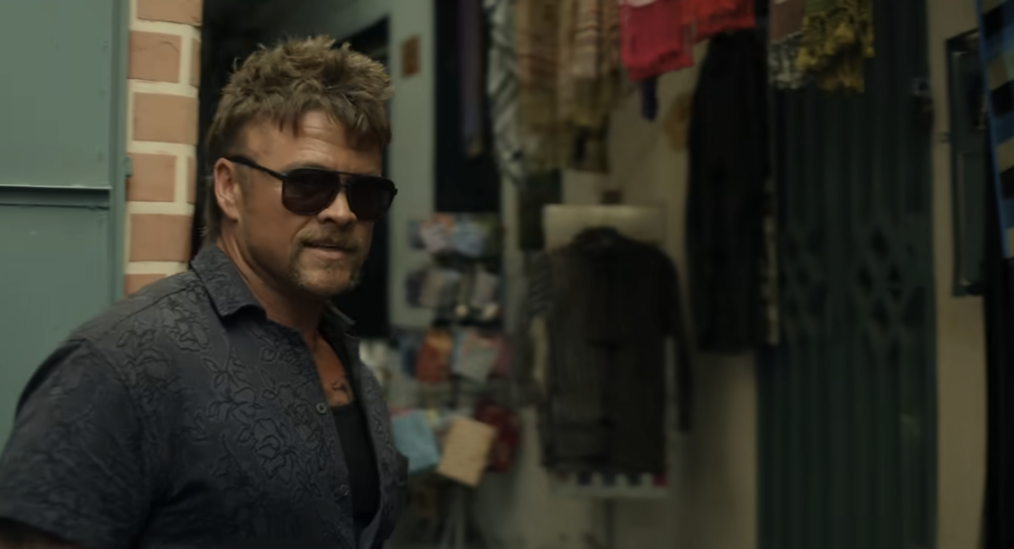
After Dark Wolf offered a glimpse into his earlier career, the second season pulls back the curtain to reveal a man whose talent for manipulation is matched only by his capacity for cruelty. Not only does he look more threatening, sporting a new physique, a casual attitude towards human life, and a mullet, but as the series progresses, the audience learns exactly how much of a master manipulator the man can be.
And in Episode 6, “Rats in a Maze,” Landry’s past finally catches up with him. As James Reece (Chris Pratt) closes in on the truth, the episode exposes the disturbing history behind Landry’s corruption, culminating in a brutal confrontation and an even more gruesome end for the character.
TV Insider spoke with Hemsworth about Landry’s transformation from Dark Wolf to The Terminal List, his admiration for Ben Edwards (Taylor Kitsch), and the twisted relationship with Mo (Dar Salim) or any poor soul who trusts him for any period of time. Plus, the actor breaks down the intense physical preparation behind Landry’s final scenes.
Prime Video/YouTube
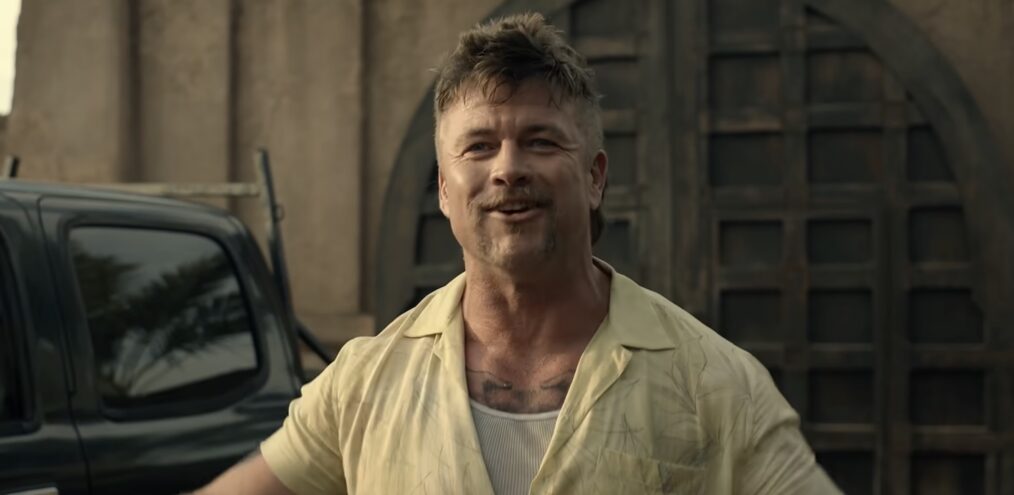
In Dark Wolf, we see how the intelligence community can turn against its own people. By Terminal List Season 2, Landry has become one of the people exploiting that system. What separates him from someone like Ben Edwards, who also ends up betraying the men he once served alongside?
Luke Hemsworth: I think Landry would love to be Ben Edwards. I think that is what he has modeled his career on. I think he was someone that Landry put on a pedestal right from the beginning. He was a consummate operator, a master of weapons, a master manipulator.
And I think Landry’s sort of never given the credit for how good of a manipulator he is. I always wanted to play him with the idea that he was actually presenting something to the world that was a facade all the time, and that his physicality, his look, was a way to disarm people, or to intimidate people, and that was the way that he got in — pull people in certain directions, people like Mo, people like the agency, and he always assumed that he was one step ahead of everyone, whether that’s right or not.
From where he was in Dark Wolf to where he is now, do you see him as a transformation due to a gradual erosion of principles, or was he just always bad to the bone?
Both, I think. I really wanted to show this transformation. Physically, there’s a physicality in [Season 2] that’s not there, I think, in Dark Wolf, and I wanted to use that as a guide, so the bigger physically, the harder he got physically, the more his mind is unraveling, and there’s the haircut!
Prime Video/YouTube
He’s pushing the limits of what’s acceptable in the agency, what they can get away with, what’s code, the mustache and everything. I really feel like Season 2 is the last of the unraveling of this character.
The idea was to go back and fill in all of those gaps between where we knew we had to get to in True Believer, which was this incredible ending for him. And then we would have been able to pull apart that whole psychology and figure out exactly what those touchstone moments are, which led, really, to Landry’s unraveling.
In the series, we watch Landry manipulate Mo masterfully and how Mo is nearly destroyed by it. What does their relationship reveal about how Landry views anybody that he works with or anybody that trusts him?
I think he’s a bit of a sociopath. There is no one who is sacred, and the only person he trusts is himself… everyone else is kind of cannon fodder and available for his manipulation, for his pleasure, for his benefit. I think that’s the way that he looks at the world and has for a long time. What I was really looking forward to was us exploring the Landry-Mo relationship.
Episode 6 reveals a much darker side of Landry, from drugging people for sex to the revelation that he raped a woman he claimed to love. Knowing that his capacity for cruelty begins before his career, how does that change our understanding of his corruption?
I think the nature of those things he’s done was always there, but the irony is the military gave him access. You put him in all these situations where he is dominant at all times, and I think that’s why he loved being in the military, never wanted to get out of the military, and then consequently goes into this role in the ground branch, which allows him to be a manipulator and further all of these dark things that he does. It’s a tough thing to wrestle with; it’s a tough thing to come to terms with. It’s a tough thing to have in your head as an actor.
What did it take to prepare for that hand-to-hand combat fight in Episode 6 with Chris Pratt, and then how did you prep for the final scene, both with practical effects and the physicality used, where we see your ultimate end?
So the fight scene was like any fight scene, lots and lots of choreography with Chris Romrell, who is Chris Pratt’s stunt double, who’s just an absolute weapon. Martial arts and stunting and falling and all that sort of stuff. A lot of work with him, and then a few days of shooting on the set in Morocco, crashing through tables and crashing into tables and bruises and all that sort of stuff. It’s very physical.

The physicality and the preparation [for the torture scene] was about a week. I was in that cell for, I think — we were shooting for about a week in there, all up. I really wanted to push my comfort levels out the window. I was very specific in asking all the people who kept coming up and saying, “Are you OK? Are you alright? Can I get you anything?” I’m like, “Can you just leave me? Let me sit in this uncomfortable wet.”
And I was literally handcuffed to the floor! I had to have proper handcuffs because the fake handcuffs kept popping apart because my shoulders are just not flexible enough. So I’m actually handcuffed to the floor, and I’m wet and cold, or hot, and I just needed to sit in that for as long as I could, conceptualize exactly, or get an approximation of, what it’s like to be there. Obviously, we’re still going home and eating our chicken and veggies for lunch, but I wanted more, like, “Just heap it on me! Come on, come on! Don’t come and powder my nose! Don’t come and dry me off. Just let me sit here.” And they did. They ended up leaving me alone a lot, which was confronting and terrifying. But yeah, I think a lot of that sort of comes across, which is really cool.
The Terminal List, Season 2, Now Streaming, Prime Video









Conversation
Please read the TV Insider Community Guidelines.
Register or sign in to join the conversation.
 Watchlist Easy access to only the shows you care about — all in one simple place
 Alerts Only important notifications — when a show is returning, when it becomes available to stream, and more.
 Special Offers Exclusive products we release related to your favorite shows and streaming services