
‘Gold Rush’: Parker Schnabel Speaks Out as He Faces Shutting Down Business




Spoiler Alert
What To Know
- Parker Schnabel’s mining operation faced major threats from wildfires near Dominion Creek.
- Tony Beets contended with equipment breakdowns and nearby fires at Indian River.
- Rick Ness struggled to make a decision on whether to abandon Lightning Creek for Vegas Valley.
[Warning: The below contains spoilers for Gold Rush Season 16.]
Things were heating up in more ways than one on Gold Rush. During the January 9 episode of the Discovery Channel hit series, the miners faced the threat of wildfires in the Yukon believed to be caused by lightning. In all there were more than 90 of these raging infernos across 250,000 acres. At Dominion Creek, fires moved three or four miles from camp. Parker Schnabel was inching toward 3,000 ounces so far for Season 16, but intense wildfires could shut him down at any moment.
Though, much like the mining prodigy, Tony Beets wanted to build on momentum and showed no signs of stopping. With gold prices at all-time highs, there was a lot on the line. Rick Ness also felt the heat. He wanted to deliver at Lightning Creek while his crew questioned the decision not to move immediately to Duncan Creek after the water license was renewed.
Let’s dig into what happened this week.
Parker Schnabel

Discovery Channel
Amid the threat of wildfires in the backdrop, Parker moved forward running at Sulphur Creek. That meant it was a race against time for foreman Mitch Blaschke to finish up there before the water license expired there in two weeks. “The worst thing that could happen is the roads are engulfed in flames,” Parker told Mitch. I don’t know how encouraging those words were, but it was pretty much business as usual. Thankfully, rain helped extinguish the blazes. Parker had to leave for five days, which was the timeline Mitch felt he needed to finish sluicing the stockpile pay and move Roxanne 25 miles to Ken and Stuart’s. Transporting Roxanne proved easier said than done thanks to a narrow bridge. After completing their mission, the team met up for the weigh-in. The last of the Sulphur pay brought in 221.02 ounces. Next up the Gold Mile Cut generated 273.15 ounces with another 216.50 ounces for the Bridge Cut. An all around good 710.05 ounce finish worth $2.5 million. This contributed to their season total of more than 4,200 ounces headed to their 10,000 once goal.
Tony Beets
Tony Beets/Discovery Channel
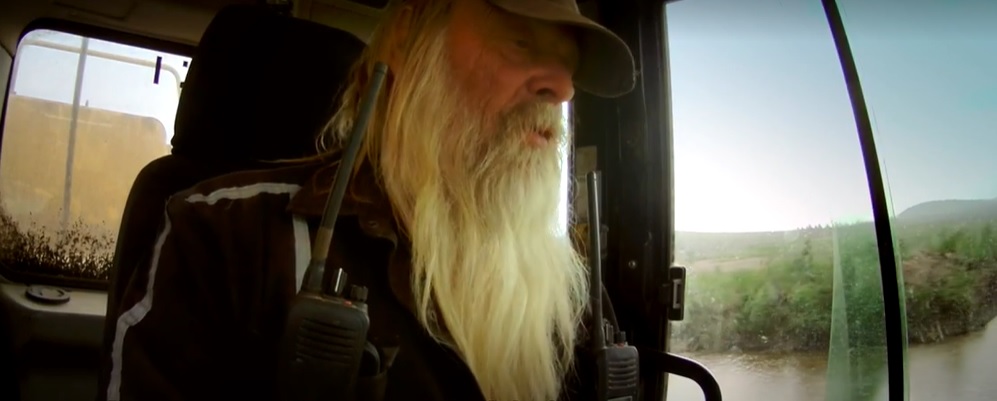
At Indian River, Tony was undeterred by the fires, which were two miles nearby. The “King of the Klondike” looked to build generational wealth, and this season would certainly help get him there. Son Mike struggled at Paradise Hill running Harold going through old timer tailings. However, the one paying the bills was Sluice-A-Lot at Indian River. So when the wash plant started smoking and had to be shut down, that proved a big deal. It turned out the wiring burnt out and the motor overheated. The crew replaced the 600-pound motor, but the plant remained inoperable. Stumped, Tony called in an electrician. They needed a generator to help get the equipment going again. Every hour without gold production cost Tony around $8,000 an hour. Overall, the plant ran for two days and two nights and brought in 121.10 ounces worth $420,000. Mike’s sluicing at Paradise Hill generated 36.88 ounces over five days. The more than $100,000 wouldn’t’ be enough in Tony’s eyes to get him to goal. He wanted Mike to now concentrate on the Trommel for big hauls.
Rick Ness

Rick Ness/Discovery Channel
Rick found himself in a tug-of-war with his crew. He already invested money and time in Lightning Creek. He owed 100 ounces to buy the claim outright, even though it only net him 29 ounces thus far in the weeks there. The underdog mine boss received good news the water license went through at the Vegas Valley claim, meaning he could head back to Duncan Creek for the sure thing there. Much to the chagrin of his crew, Rick also didn’t want to abandon Lightning Creek. He planned to split his crew, but mechanic Ryan Kent noticed issues with a 700 excavator. The whole engine needed a rebuild. After sluicing for a few more delays,

Rick ultimately decided to move resources to Vegas Valley and finish up at Lightning Creek. Some of the team prepared a pump for Monster Rd to run the stockpile, which was also a process. Rick’s last weigh- in at Lightning Creek came in at 50.40 ounces. This combined with past collections still meant he was 20 ounces short to pay off Troy Taylor. Though Rick knew there was a light at the end of the tunnel in the form of Vegas Valley.
Gold Rush, Fridays, 8/7c, Discovery Channel


Parker Schnabel

Rick Ness

Tony Beets

Kevin Beets

Karla Charlton

Freddy Dodge
Carl Rosk
Brian Zaremba
Ryan Hofer
Terry Franklin
Ben Hudack
Ken Tatlow
Jeff Balle
Chad Paullus
Mitch Blaschke
Chris Doumitt
Nancy Schnabel
Roger Schnabel
Tyson Lee
Monica Beets
Minnie Beets
Michael Beets
Len Hoekstra
Wendell Malmberg

Juan Ibarra
Sheamus Christie
Paul Christie
⨁Full Cast & CrewWhere to Stream












Latest Headlines
- 'Gold Rush': Rick Ness Reveals Dangerous Health Issue in Dramatic Season 17 Premiere
- Worth Watching: Alan Cumming and David Morrissey in 'Tip Toe,' Catherine Zeta-Jones in 'Kill Jackie,' Return to 'Oz,' Go Deep Into Africa
- 'Gold Rush': Parker Schnabel on Tony Beets Rivalry & Season 17 Challenges
Conversation2 Comments
Please read the TV Insider Community Guidelines.
Register or sign in to join the conversation.
-
S
The math don't math, don't add up, beets says he looses $8,000 a hour when the plant is down, but he's only bringing in under 1 oz a hour, it's only making $4,500 a hour, so how ya loosing $8,000 a hour, if you only bring in $4500 a hour ? They don't actually share the true run hours, and how many hours of run time for the gold weigh in. Looks to me, something with the math is way off. Either gold is being hidden or hiding the production hour are way off on the gold weigh in. If beets was loosing $8,000 a hour, a plant is down a hour, then that's saying he makes 2oz a hour, if that was true he would be bringing in darn near 2,000 oz a week, not like 300 oz a week. Again math don't add up. Reveal the real actual hours of run time.
-
O
Uhhh...
2oz/hour * 168 Hours/Week = 336oz, and that's non stop 24 hours/day. I don't know where you're getting 2000oz.
Also "losing" means cost from 0 down. Ie If tony is pulling in 1oz/$4500 an hour, but his plant is down, he is still paying payroll/worker's comp/insurance for that time, not to mention fuel because even if the plant is down they're still clearing, digging and stacking pay. I could believe it adds up to an 8k/hour loss.
-
 Watchlist Easy access to only the shows you care about — all in one simple place
 Alerts Only important notifications — when a show is returning, when it becomes available to stream, and more.
 Special Offers Exclusive products we release related to your favorite shows and streaming services