
‘My Strange Addiction’ Turns 15: Learn About Disorders the TLC Show Spotlit



A decade and a half ago, TLC turned a voyeuristic lens to everyday people with unusual habits in the reality show My Strange Addiction.
But the show more often than not covered obsessions rather than addictions, as experts explained around the time of the series premiere on December 29, 2010.
“These obsessions are things that, in general, alleviate anxiety, and it has a place in the person’s psyche,” Dr. Peter Martin, professor of psychiatry and pharmacology at the Vanderbilt University School of Medicine, told ABC News. That activity relaxes them. It’s something that they do because they’re worried that something terrible may happen.”
Added Bio Behavioral Institute psychologist Sony Khemlani-Patel, “People with these rituals don’t want to do them. They do them to avoid anxiety, and that’s not the same as doing something to get a high as addicts do.”
And though My Strange Addiction came off more sensationalistic than educational, the show did raise awareness of various compulsive disorders, including the ones explained below.
With the caveat that we’re television experts here at TV Insider and not medical experts — and that anyone concerned about their mental health should seek attention from a professional — here are disorders that got moments in the spotlight via My Strange Addiction.
Body dysmorphic disorder
Spending hundreds of thousands of dollars to make oneself look like Justin Bieber or to undergo nearly two dozen breast augmentations — like people profiled on My Strange Addiction — may be symptoms of body dysmorphic disorder, or BDD.
Body dysmorphic disorder is a mental health condition — common in young people but affecting people of all ages — in which a person worries about flaws they perceive in their appearance, according to the U.K.’s National Health Service. People with BDD might worry about specific areas of their body, compulsively compare their appearance to those of others, fixate on or avoid mirrors, and go to extreme lengths to conceal the flaws they perceive.
Dermatillomania
Other My Strange Addiction cases involved one woman “addicted” to picking at her scabs and another who compulsively picked at her ears.
Dermatillomania is a mental health condition under the category of obsessive-compulsive disorders (OCD), the Cleveland Clinic reports. People with dermatillomania have a compulsion to pick or scratch their skin, and that compulsive behavior can lead to injuries or scarring. And such injuries or scars can make the person embarrassed or ashamed to bare their skin to others.
Exercise bulimia
One episode of the show followed a man who exercised for six hours a day, even to the point of needing hospitalization.
Exercise bulimia is an extreme pathological behavior — one possibly related to OCD or BDD — marked by overexercise in an effort to burn fat and calories, according to Healthline. Such an excess of exercise can lead to heart, bone, and joint problems, as well as issues with one’s respiratory and immune systems.
Paraphilic disorders
My Strange Addiction viewers might remember the man who had intimate encounters with his car or the woman who was sexually attracted to balloons.
A paraphilia is a persistent and recurrent sexual interest or behavior involving atypical objects, activities, and situations, and a paraphilic disorder can emerge if a paraphilia causes harm, distress, or functional impairment, according to a study by researchers at Aventura Medical Center and Case Western Reserve University.
Pica
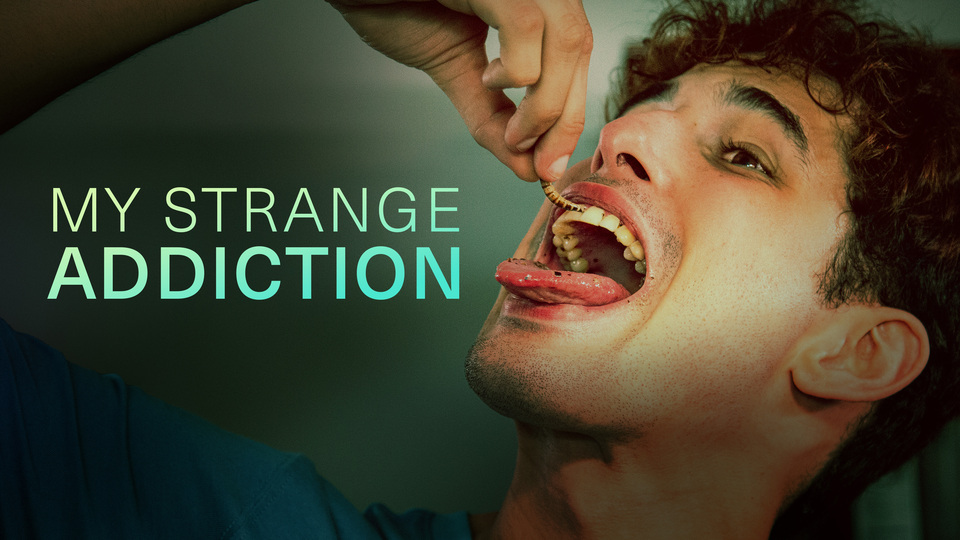
In just the first season of My Strange Addiction alone, viewers saw subjects who compulsively ate chalk, toilet paper, household cleanser, detergent, couch cushions, glass, pottery, and cigarette ashes.
Pica is an eating disorder in which a person eats substances that are not food, and it’s sometimes caused by iron-deficiency anemia and malnutrition, according to the National Eating Disorders Association. And pica can cause poisoning, infection, parasitic infestations, gastrointestinal issues, and dental issues.
Trichotillomania
Another My Strange Addiction Season 1 installment featured a woman who had been pulling out her hair for years.
Trichotillomania, alternatively known as hair-pulling disorder, is a mental health condition in which a person has frequent and intense urges to pull hair from their scalp, eyebrows, or other areas of the body, Mayo Clinic reports. Such behavior can leave a person with bald spots that can cause distress and embarrassment — but, like other conditions in this list, can be treated by qualified professionals.
If you or someone you know needs help with mental health, contact the Crisis Text Line by texting HOME to 741741, contact the National Alliance on Mental Illness at 1-800-950-NAMI (6264). If you or a loved one are in immediate danger, call 911.





















 Watchlist Easy access to only the shows you care about — all in one simple place
 Alerts Only important notifications — when a show is returning, when it becomes available to stream, and more.
 Special Offers Exclusive products we release related to your favorite shows and streaming services