
How ‘Rocky’ Got Made After a Highly Risky Gamble on Sylvester Stallone


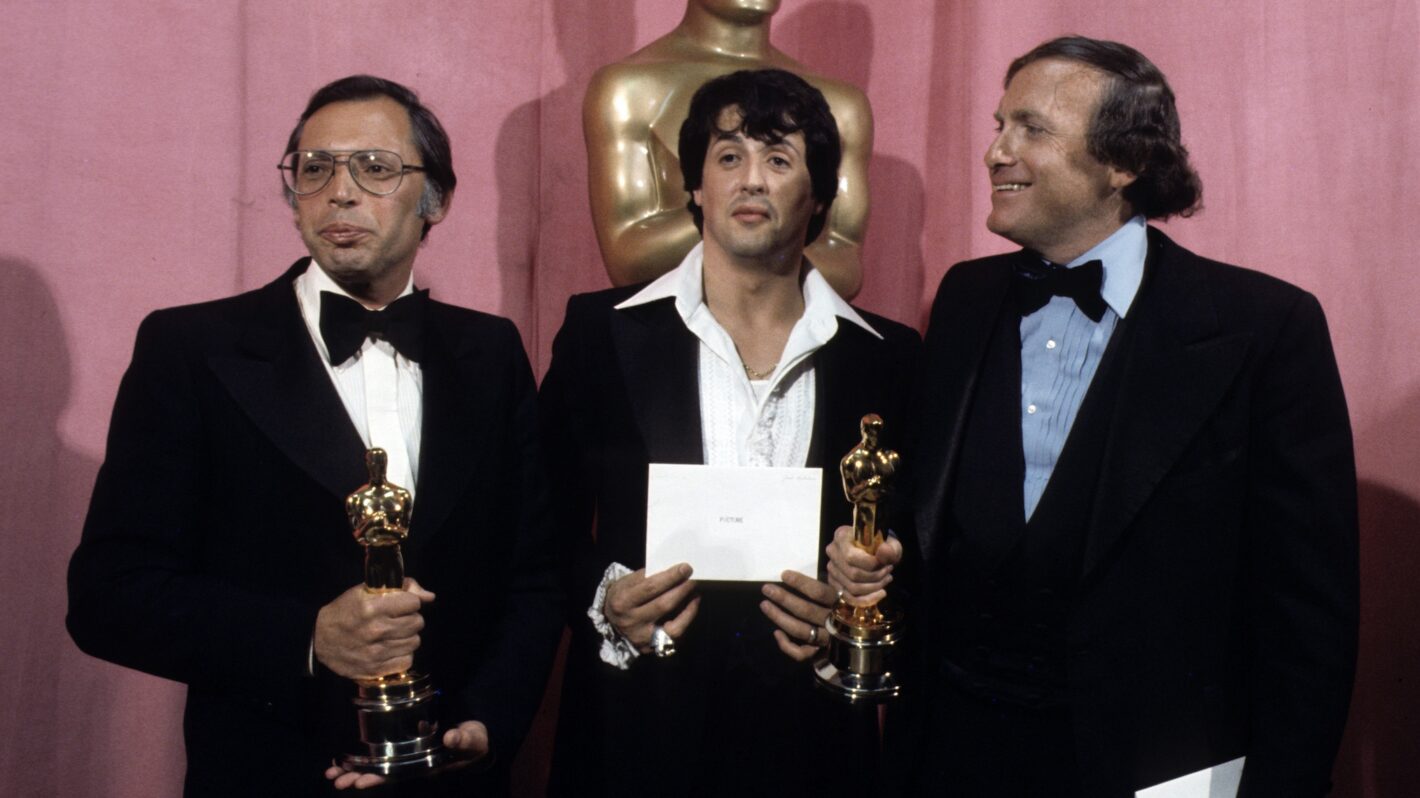
In the late 1960s and early ’70s, Robert Chartoff and Irwin Winkler were already successful producers known for taking on challenging films that were often considered risky, from 1967’s Double Trouble, starring Elvis Presley, to Sydney Pollack‘s 1969 drama They Shoot Horses, Don’t They?
Neither could have foreseen that their biggest gamble — and most celebrated film — would be brought through their door in 1975 by a struggling young actor who’d sold his dog just to make ends meet.
As the late Chartoff told it, they found Sylvester Stallone intriguing but didn’t have any roles for him. “We had nothing in the works that would be appropriate for him as an actor,” Chartoff recalled in 2006. “Sylvester had his hands on the door knob to leave; he turned and said, ‘I also write.’”
And write he did, famously creating the first draft of Rocky in three and a half days. Just weeks later, Stallone brought a more polished Rocky script to Winkler and Chartoff. They loved it, offering him first $60,000, which eventually ballooned into $360,000 — a windfall for the struggling actor who barely had any money to his name. The catch? A much bigger star would have to be the leading man.
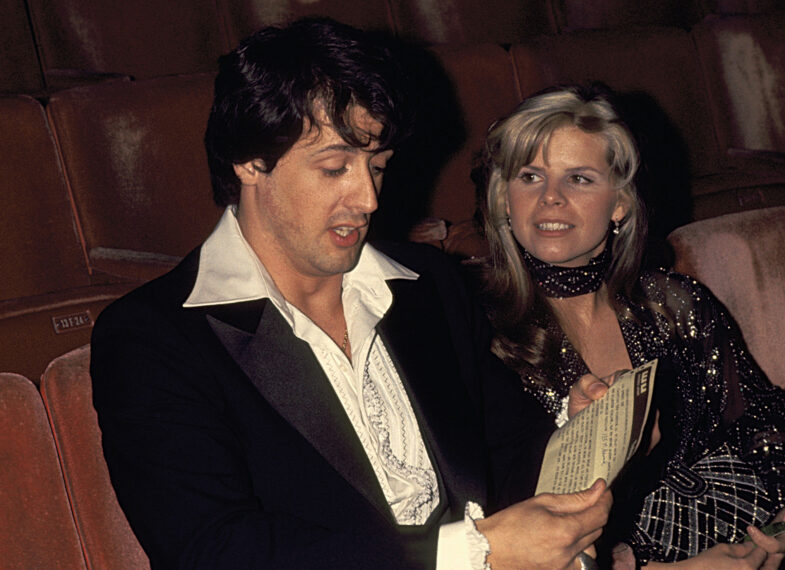
Ron Galella/Ron Galella Collection via Getty Images
Despite having $106 in the bank, no car, and no dog, Stallone couldn’t bear the thought of someone else playing Rocky. “I knew in the back of my mind that if I sell this script and it does very, very well, I’m going to jump off a building if I’m not in it,” Stallone recalled in one interview.
Stallone turned down the payday and held his ground, believing in both the character he’d created and himself in the role. Eventually Chartoff and Winkler agreed, with Stallone earning just $35,000 upfront to write and star.
“We had a three-year first-look deal with [United Artists],” Chartoff has said, “and the first picture we brought to them was this project with ‘Sylvester who?’… UA was reluctant to make the picture because fight films weren’t in demand; even though Rocky was going to be a low-budget film.”
That budget was just $1 million. “They would only give us a limited amount of money, and they said that we had to put up our houses as collateral,” Winkler said in 1986. “We really mortgaged ourselves.”
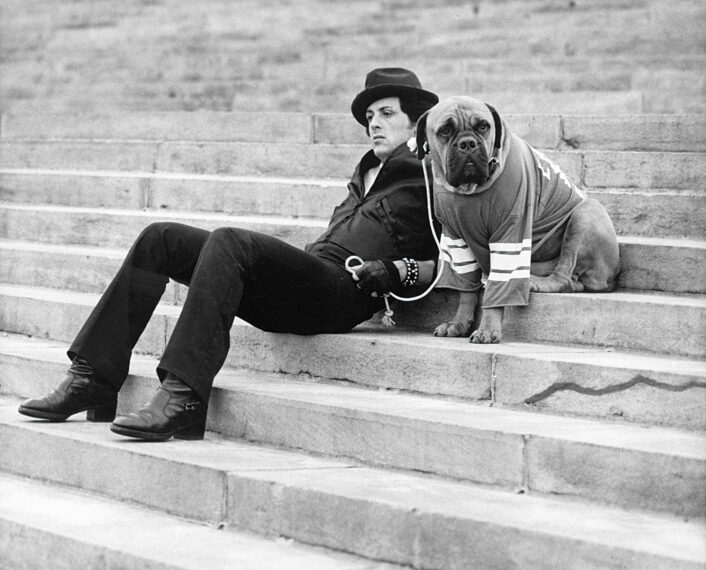
United Artists/Courtesy of Getty Images
By casting friends and family and shooting mostly in single takes, Stallone, Chartoff, and Winkler ensured Rocky came in on time and under budget. And then that risky little boxing film starring some guy named “Sylvester something” became the highest-grossing film of 1976, making $225 million. For gambling on himself, Stallone walked away with millions — more than enough to buy back his dog. And for taking a chance on Stallone, Chartoff and Winkler brought home the Oscar for Best Picture.
Rocky would go on to spawn five sequels, all successful and all of which would again be produced by the pair. Beginning in 2015, Winkler produced the Creed spinoffs as well, the first of which Chartoff was also credited with prior to his death. More recently, Stallone has publicly feuded with Winkler over his lack of ownership in the franchise, and Stallone was notably absent from Creed III. Though their relationship may have soured over time, it’s an undeniable fact that their Rocky gamble has been paying off for half a century, and it continues to do so even today.
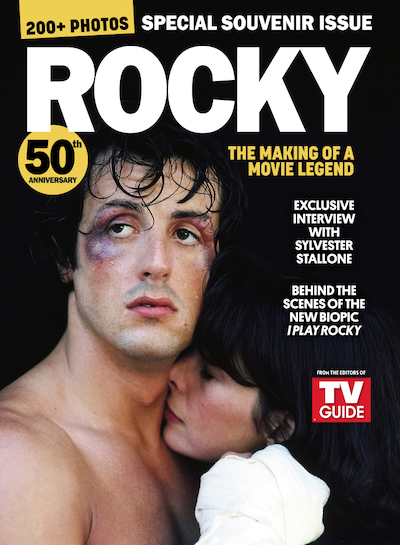
TV Guide Magazine’s Rocky 50th Anniversary Special Issue is available for order online now at Rocky.TVBooks.com, and for purchase on newsstands nationwide.


Sylvester Stallone

Talia Shire
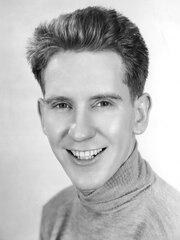
Burgess Meredith
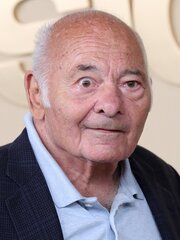
Burt Young
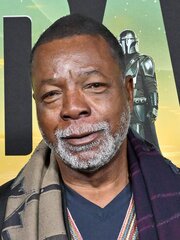
Carl Weathers
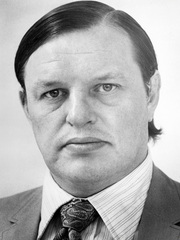
Thayer David

Joe Spinell
James Gambina
Al Silvani
George Memmoli
Bill Baldwin
Jodi Letizia
Diana Lewis
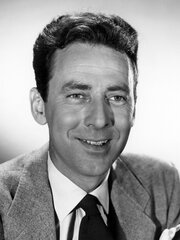
George O'Hanlon
Larry Carroll
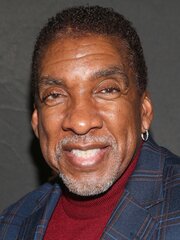
Stan Shaw
Don Sherman
Billy Sands
Pedro Lovell
DeForest Covan
Simmy Bow
Tony Burton
Hank Rolike
Shirley O'Hara
Kathleen Parker
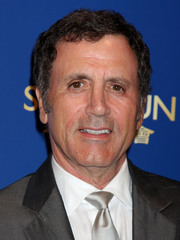
Frank Stallone
Lloyd Kaufman
Jane Marla Robbins
Jack Hollander
Frankie Van
Lou Fillipo
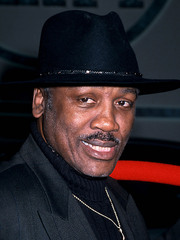
Joe Frazier
⨁Full Cast & Crew
















Conversation
Please read the TV Insider Community Guidelines.
Register or sign in to join the conversation.