
‘Below’ Bosses Explain Finale Ending — Will There Be a Season 2?



Spoiler Alert
What To Know
- The Netflix limited series Below wraps up some things (like the squid) but leaves the door open for more.
- Executive producers Jesse McKeown and Jessica Rhoades break down the ending and share if there are plans for another season.
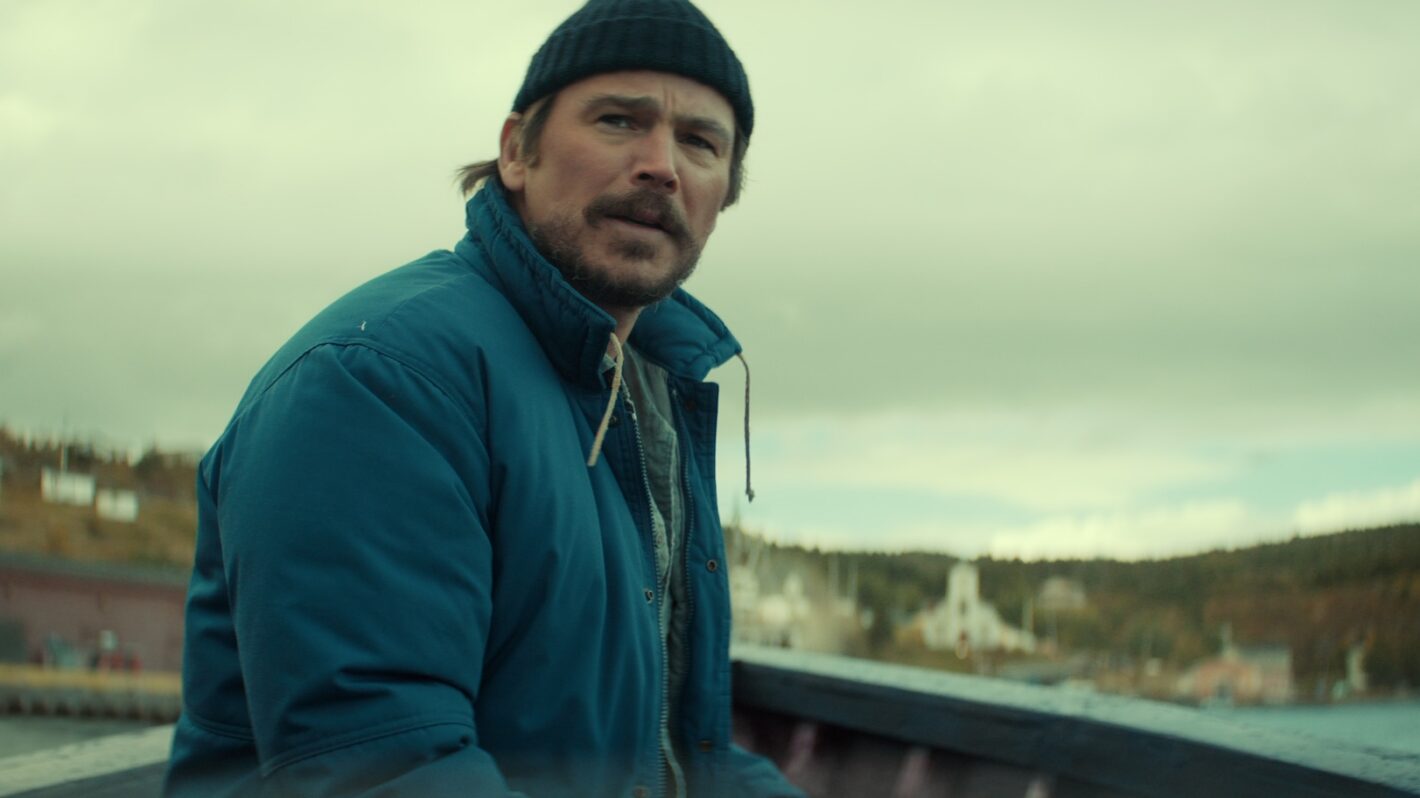
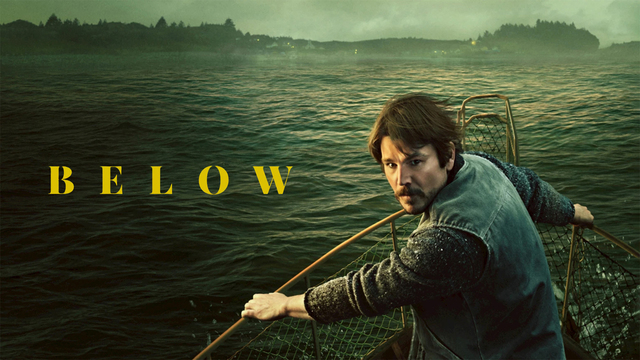
Not everything is as it seems. That’s at the heart of Below, a six-episode series now streaming on Netflix that follows a Newfoundland town under attack from a sea creature … and those who would love to take their land to make a profit. And in the end, Calvin (Josh Hartnett) comes to a realization about the squid that has been such a major part of his life going back to his childhood. TV Insider spoke with executive producers Jesse McKeown and Jessica Rhoades about the series, how it ends, and if there will be a Season 2. Warning: Spoilers for Below ahead!
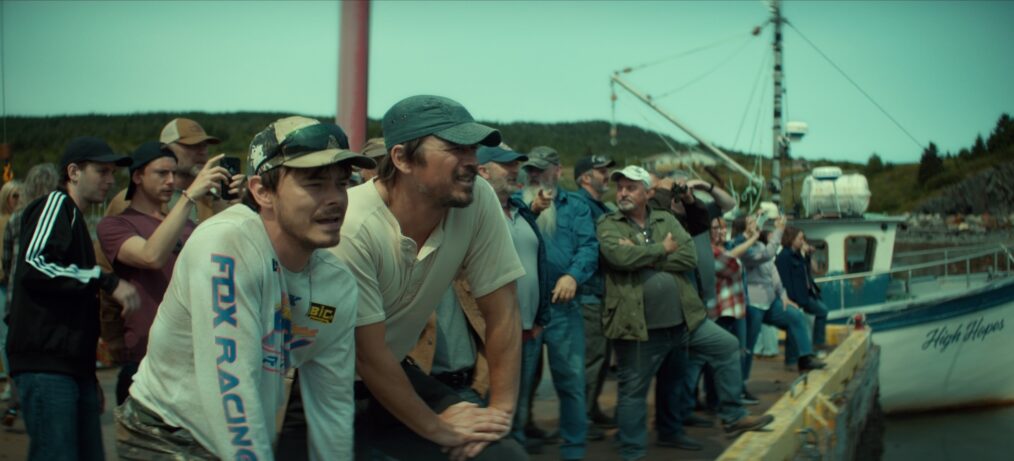
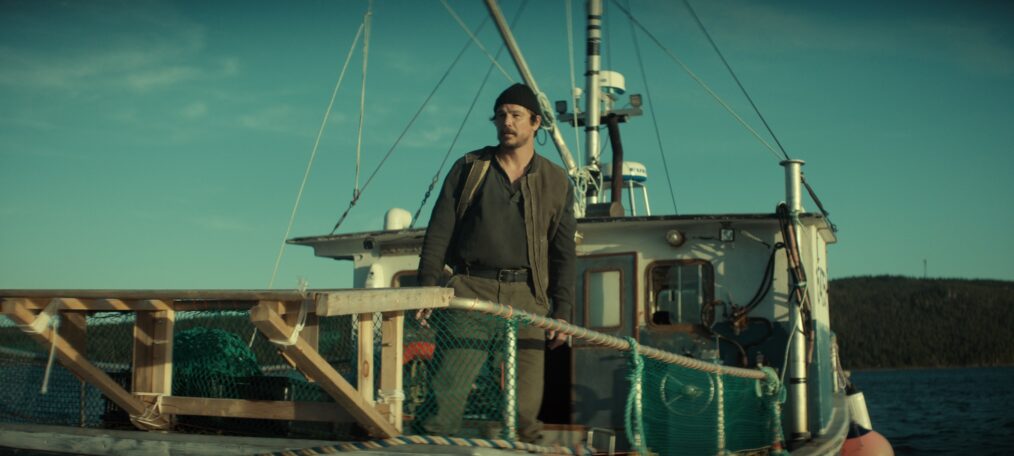
As Calvin, his family, and marine researcher Fonda (Mackenzie Davis) discover, the squid is trying to protect her babies, with the ice sack frozen in the iceberg. And so while the military is ready to drop a bomb on the town after evacuating everyone, they do what they can to break apart the iceberg and move the squid and her young out to the open water. Then, the military has no choice but to stand down, even as the Crockers protest. And so in the end, the Crockers are the ones down on their luck (but not completely gone), Calvin and his family are in a much better place, and life is looking up. But then Calvin and his son Wade (Charlie Heaton) go out on a boat and find more icebergs…
Below, executive producers Jesse McKeown and Jessica Rhoades break down the ending of what they insist is a “complete story.”
The end of the finale clearly sets up a second season with what Calvin and Wade find. First of all, when did you know that was how you were going to end the finale?
Jesse McKeown: Well, that was always there from the beginning, that image as a final image, that was always there. And so yeah, we were sort of building to that, but also trying to tell a complete story at the beginning, middle, and end, by leaving it open in terms of climate change and everything that may be coming for us.
Courtesy of Netflix
Did you consider anything else to have as to end the season or to set up a second season?
McKeown: Well, I mean, this is a limited series. So no, I just wanted to tell a complete story and wanted it to feel really satisfying and didn’t want to leave too many things angling, but I also don’t like a neat ending, and I don’t think Jessica does either. We don’t like things to be too wrapped up in —
Jessica Rhoades: Tied up in a bow.
McKeown: So we wanted it to feel a little bit messy and a little bit real life.
So you said limited series, but I feel like there have been limited series in the past that then got a second season. So could there be a second season? Are you ruling that out?
Rhoades: We’ve really genuinely been so focused on the best six episode story. Jesse’s scripts were and are so brilliant and so precise, and there’s so much story building and character building and place building. It was so important to get this right that we did just keep our heads focused on the mission. I love that people are like, what’s next? Because it’s also, to Jesse’s point, a story about global warm. We are like, climate change is coming for us. What is next? Is a good question to be asking at the end of the series.
Did you know the kind of sea creature it would be from the beginning or did you ever consider anything else?
McKeown: No, I never considered anything else because as soon as the idea came to me, it was like the world of the giant squid kind of opened up in front of me. It was like, oh, it’s been there the whole time and it’s such an important — the history of it and the discovery of it and the science of it is all so important to Newfoundland. And so once we committed to that idea, it was like then we could just see it everywhere. It was part of the folklore, part of the history. You would see it all over the place.
Rhoades: He’s so right about seeing everywhere. I don’t think I ever saw a squid. I don’t think I just saw it in my day-to-day life. And once you open your eyes, they’re everywhere. They follow you, they haunt you. We send each other cupcakes from Cape Cod and photos from Spain. They’re everywhere once you pay attention.
By the time that Calvin helped save the squid, he’s freed himself from it and all the pain it brought to him. And you have those moments where he says they’re more alike than he expected and then looks into its eye.
McKeown: I feel like it’s set up in the very first scene of the show, it’s set up that there is a connection between him and this creature that he doesn’t understand at all at first. And then he represses it and people pretend that that never happened. And so it’s always been within him, but he’s been lied to and he’s not trusted his own life experience because of that. And then once that is rectified and once he realizes, oh, that was true and that did really happen to me, then everything starts to make a lot more sense. So it made sense to us to circle back to that moment again at the end and with him having a different relationship to that creature.
Courtesy of Netflix
Can you confirm that the squid then does die like Fonda says cephalopods do?
McKeown: Squid does die. Yeah, that’s what they do.
Rhoades: It’s a heartbreak. They give everything for their youngins.
Did you always know you wanted to have that be told on screen versus just leaving that open-ended or you could have had Fonda tell that story, but we don’t actually see it. So did you always knew you wanted to show that moment?
McKeown: Yes. I mean, there’s always discussions about everything. You always think, OK, would it be better to… How much do you want to show and how much do you want to hold back? But I think that just from a thematic point of view, it was important to tell the story of her sacrifice and what she was doing for her youngsters, which I found really moving and inspiring. And again, it made that connection between her and Calvin.
And then thanks to the sea creature attacks, Calvin and his kids are brought back together and they’re in a much better place at the end of the finale. Where did you want to leave those relationships?
McKeown: I mean, what I love is that in the first episode, he makes this pitch to his kids. That’s really all he wants is for all his family to come back and for them to all be together. And it seems so ludicrous and so pie in the sky, and he does seem a little bit delusional that he thinks his kids are going to move back, but I love that in a roundabout way, he ends up getting what he wants at the end. I don’t know. Jessica probably has her own answer, but I don’t know if they’re going to stay forever. Who knows what will happen, but it was nice to give Calvin a win at the end.
Rhoades: Yeah. I mean, there’s a moment in the first episode when he makes his big pitch and there’s a moment between the kids when they look at each other like, “Dad’s lost it.” And it’s one of my favorite moments because it doesn’t matter what side you’ve been on in a family relationship. I can empathize with him. I can empathize with both of them. You just understand that also, what are we going to do with him? And I just love that when they show up for him in the —Well, they show up for the town, but they show up for him, they show up for the family and for his cause. And I feel like that’s the moment that we know they’re going to be on a path.
The town is doing well at the end as well. But there was that thing about the Crockers pushing for another vote. So are you ruling out that that would actually be a threat to them and that now the town will just be together on this versus the Crockers versus when there was a bit of a divide on who’s going to say yes, who’s going to say no?
McKeown: Well, I mean, all of this is left to the viewer’s imagination, but the Crockers, they are billions of dollars in the ground there. And so I don’t think they’re going to give up just because Calvin got in their way one time. So I do think they’ll be back. There are towns, many towns in Newfoundland, small towns like Snook’s Arm, that have been on the precipice of being resettled for decades, and so this issue always comes back. I love that Calvin has started his little brewery in his distillery, but who knows if it’s going to succeed and who knows if that’ll be enough to convince people to stay. I think it’s more like, I don’t know. Again, people can use their imaginations, but I think they’ll be back and I think they’ll probably raise their offer. I think the money will go up and maybe that’s why some of the people are sticking around.
Rhoades: Yeah. I think it’s one of those things that talking about not a tight bow. It’s really easy to say, “Oh, this is the answer, this is the change.” But one of the things I love about the show and Jesse’s writing and the characters, but it also says how close to the margin most families are and what is a life-changing offer. And you can say all you want about short-term versus long-term and who’s going to help save the world, but you have to make decisions for your family. And I think you understand hopefully why some of them might be tempted, even if the future is a lot of money in the ground.
McKeown: And just to add, I mean, something I love about just the optimism and the resilience of the people of Newfoundland, when Paddy Fitz [Frank Holden] at the end is saying the cod stocks are up again. The cod stocks are always going up and down and whenever they’re up, people are like, “This is it. We’re back.” But it’s not always the case and the water is getting warmer. And so I think like all of us, I think we have to have our eyes wide open about the future.
Courtesy of Netflix
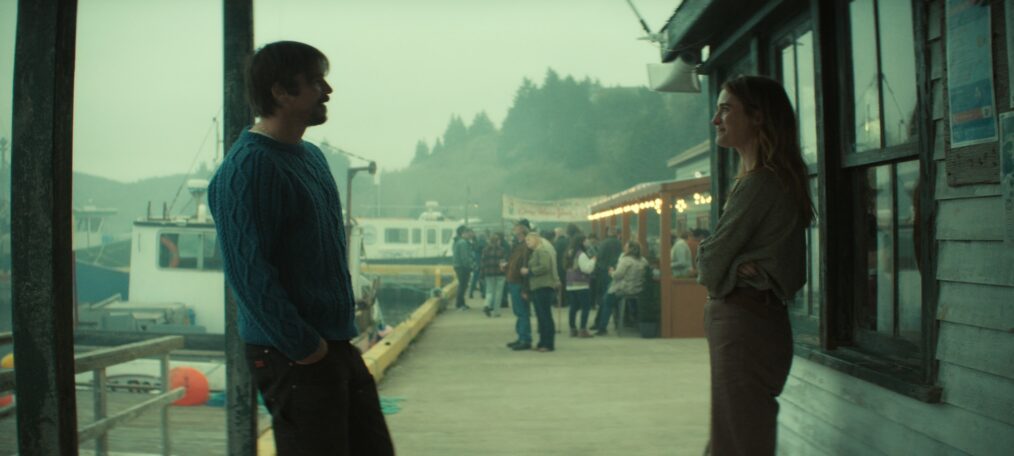
Calvin and Fonda have that moment at the end, and it seems like something could happen between them. What had you wanted to do with them this season and why didn’t they get together, especially since you’re talking about this as a limited series?
Rhoades: Again, it’s one of the things I loved so much about Jesse’s scripts is that it wasn’t a perfect bow. We weren’t actively shipping them. They just were interested in what each other were doing. I think Fonda has her own journey as does Calvin. And at the end there’s a mutual admiration and a twinkle in their eye and sort of a sense that maybe there’s something here, but you know what? He’s got to go see about something else. And that is the relationship that is more established and more valuable for him.
McKeown: Yeah. And these are two lonely people, you know what I mean? And they found each other. And I think Fonda took a step towards the community that she hadn’t really because of everything that happened. And I think Calvin is slightly more open to maybe having a friend and that’s enough for me.
Also, there wasn’t really time for it either because they were dealing with much more important things that you would’ve had to find a place for something to happen.
Rhoades: Sure. And look, it can happen and stories are well told with it, but it didn’t feel like it fit in ours. This was the beginning of the next chapter of their lives, wherever that takes them.
I did love that Fonda was the one to deal with Janet and her father though.
McKeown: Oh, good. I’m glad. Yeah. Well, it was always kind of building to that and from the very beginning, if you notice, it’s like the Crocker Foundation is putting up a lot of the money for what she does. And I think she, like a lot of us, is living in a kind of slight state of denial about that, about where her money is coming from. But then she’s forced to reckon with that by the end. And she makes a decision that she can’t come back from.
The fifth episode was particularly a standout, I have to say, with everything with Calvin and Wade and to put them in the place you needed them to be in the finale. So talk about crafting the episode and having it at that point in the season.
McKeown: Well, I love penultimate episodes. I feel like that’s usually when hopefully you end up in a place you never imagined that the story was going to take you. We always knew that we wanted to go to Little Pot Rock and tell the story there. It always made sense for Calvin to revisit his childhood, to be confronted with all that right before he goes home for his final sort of heroic push. So yeah, we always knew that we wanted to do a version of a sort of bottle episode, but set in Little Pot Rock.
Rhoades: Well, just some of the fun of that episode, too, was really being able to go for Broke and make it its own world. And we were able to have a local Newfoundland director — I mean, he’s now established elsewhere as well, but born and bred in Newfoundland, Stephen Dunn really sink his teeth in. And I think it had this emotional resonance because of that as well.
McKeown: Yeah, he paid so much attention to the detail. The church that sort of collapsed there, that’s based on a famous photo of a resettled community, and he really cares about that issue deeply. And he was able to work with these actors who we all admire, but he had a really great relationship with Andy Jones and Shawn Doyle who played the Budgells. So it was a great experience.
Because you only had the six episodes, is there anything that you didn’t get to include that you wanted to, anything that you had to cut?
McKeown: There’s always decisions that have to be made. I don’t think we cut anything that I missed. I think there was little trims in it. It was such a big story, and I think we were all very ambitious in terms of the story that we wanted to tell and that we’re not just telling a story of Calvin. It is Calvin’s story, but it’s a story also of his family and it’s a story of this community. So I wanted it to feel rich and lived in and filled with detail. And then it was just a matter of shooting all that and capturing it so then we can make those decisions in the edit of like, OK, how do we tell that story possible?

How would you say Calvin is doing at the end and what would surprise the Calvin that we first meet in the premiere the most about who he is by the end of the six episodes?
McKeown: I think he would surprise himself that he was even at this little beer garden party. Even though he’s separate, he’s kind of off to the side. He’s still not in the crowd, you know what I mean? But I think the fact that he’s even there to oversee that I think would surprise him. He’s such a sort of loner and I think he’s respected in the community, but he’s not the head of the community. As Ruth [Willow Kean] says earlier, he usually likes to skip these community events. So I think the fact that he was there would surprise him.
Rhoades: I think he’d also be surprised that he let Wade on a boat. I think whatever those walls are, whatever protections, whether real or kind of imagined, that he’s out there with Wade.
McKeown: Well, and that’s a great point and it goes back to the trust. I think now that he knows the truth, he’s able to trust himself and his own instincts and then it’s like he wasn’t able to trust Wade before because he couldn’t trust himself and now he can’t.
If say Netflix called and said, “We want to do a second season,” is there anything that either of you would want to explore going forward?
Rhoades: Oh my God. I think we really told — and I’m not trying to give a political answer, I’m so proud of the story we told. I’m so proud of what Jesse’s vision allowed us to encompass. And I’ll say that there’s a few images, really distinct Newfoundland images, like iconography that I didn’t even know exist. They weren’t on my radar before we started the process and Jesse had used them over the time as references. And you want to make a show that any audience can watch, and I think we’ve done that. I do think Newfoundlanders are going to enjoy certain winks and nods, and there’s a small little, OK, a large basket left of those, but I’m really proud of the story we told.
McKeown: Yeah. And these characters, six episodes is a lot, but it also goes by so fast. I love these characters and I love this cast, and so you never know. But there’s no easy answer to this because it’s also like I don’t watch Jaws 2 very often. You know what I mean? I like Jaws, but I don’t really like Jaws 2.
Below, Streaming Now, Netflix







Conversation
Please read the TV Insider Community Guidelines.
Register or sign in to join the conversation.
 Watchlist Easy access to only the shows you care about — all in one simple place
 Alerts Only important notifications — when a show is returning, when it becomes available to stream, and more.
 Special Offers Exclusive products we release related to your favorite shows and streaming services