
New Jimmy Buffett Documentary Explores Origin Story of Beloved Singer & His Band


Exclusive
What To Know
- The upcoming documentary Occupational Hazard: The First Coral Reefers is narrated by Jeff Bridges and explores the origins and early years of Jimmy Buffett’s Coral Reefer Band.
- Director John H. Cunningham aimed to authentically capture the band’s 1970s and 1980s era.
- The film premieres in major cities starting in Key West on September 5.
Jimmy Buffett taught the world that sometimes you just need to waste away in Margaritaville because, after all, it’s five o’clock somewhere. The late singer-songwriter, who passed in 2023 at age 76, remains beloved among Parrot Heads everywhere. His success was largely rooted in Buffett’s band as chronicled in the upcoming documentary Occupational Hazard: The First Coral Reefers. The film, rolling out in major cities starting September 5, timed to Jimmy Buffett Day on September 4, traces their journey back to the 1970s and 1980s.
The origin story of the Coral Reefer Band explores the musicians, friendships, touring years, and studio sessions that helped shape Buffett’s legendary sound. Narrated by Jeff Bridges, who got to know Buffett while working on Rancho Deluxe, the project features never-before-seen archival footage and deeply personal interviews with founding members, tour managers, producers and music legends. Among them are fellow beach country superstar Kenny Chesney, Coral Reefer Mac McAnally, and songwriter Keith Sykes.
Here Director John H. Cunningham, a prolific adventure novelist, talked about what went into the making of the doc.
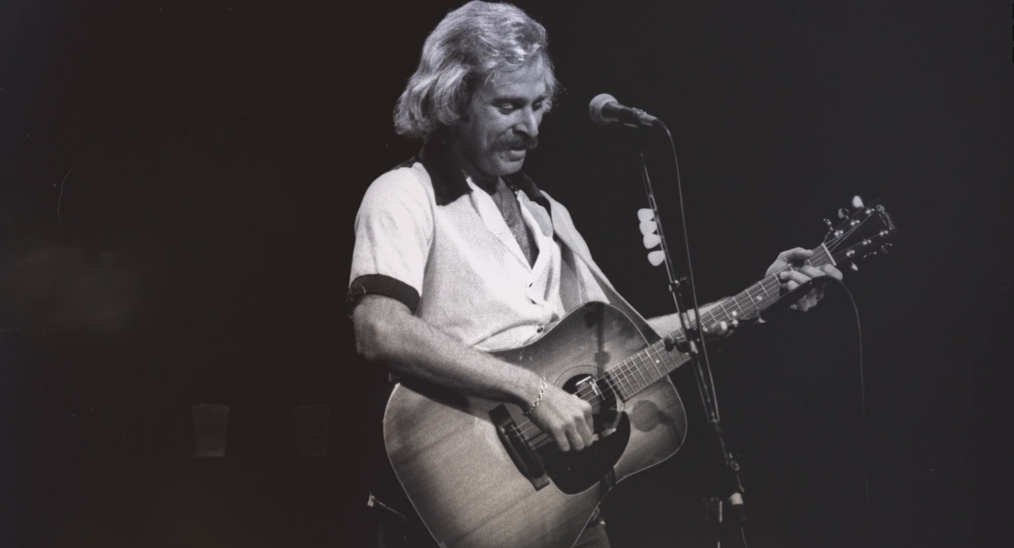
Jimmy Buffett Archive Photo ‘Occupational Hazard: The First Coral Reefers’ (Credit: Michael Ochs Archive)
People know Jimmy Buffett, but I think what’s great about this documentary is it digs a little deeper into the whole origins of the band, and getting to know some of the other personalities. What were your initial thoughts on the project?
John H. Cunningham: That really was the main basis of wanting to do this film. We wanted to tell the first Coral Reefers stories, the band members themselves, and as Jimmy conceived the band, or his conception of the band originally was fake names. People who didn’t exist. But because so many of the band members, including Jimmy, who may have passed away, we realized that this time period from the 1970s, there’s not a lot of people left who can tell those stories. I’ve seen Jimmy Buffett concerts every decade. The last 20, 30 years, they always had a big fun vibe. They were a lot of fun. But I do remember seeing some in the late 70s and early 80s. It was a whole different thing. So we wanted to capture the magic of that moment, the origin story of how the band came together, and what their experiences were together.
I think what’s crazy for me is when you think of the band, it’s very laid back beach vibes. You don’t think of them as these wild partiers.
Yeah, for sure because people don’t know those stories. They don’t think of that group being that way. Let’s face it. The band of the last 30 years Jimmy engineered a group of really competent, successful, great musicians, nice people. Good touring partners. The first bunch, they were wild. They were a little wild and unhinged, but that was the 70s. They were all in their 20s, so it was what it was.
How did members of the group feel about being part of this project?
They enjoyed it and were extremely gracious about how much they appreciate having their contributions and period covered, even though they’re all very modest about their contributions. Several of them had been out of the band for a very long time, but they stayed close with Jimmy. A lot of the songs that some of these folks wrote like Keith Sykes with “Costa Marseilles,” “Volcano,” Things like that remain mainstays of Jimmy’s concert performances for decades. So they certainly did contribute a lot. They really enjoyed it. I think not just the original producers and tour managers and band members, but, you know, they’re the folks who got involved. Mac was extremely gracious. You know, we sat with him for two hours. With Kenny Chesney, we went to his house, filmed him for two hours. He was very kind and passionate about what Jimmy and the band meant to him. It was pretty special.
It’s not every day that Kenny Chesney sits down for a project, so that really shows how much he appreciated and was inspired by Jimmy and the band.
He had wonderful comments. He was very candid about how when he first discovered the music. He was born in 1968, so the 70s really wasn’t a thing for him, but he discovered it in the early 80s. It always became an important part of his life. We did 25 hours of interviews all together for a 92-minute film. We have a lot of things we didn’t use, but we’re going to probably release bonus material, but Kenny talked about how he would listen to Bob Marley. He would sit on his boat and listen to Jimmy, and talk about how that music really spoke to him. He was very sincere. It was really nice to have them involved with it.
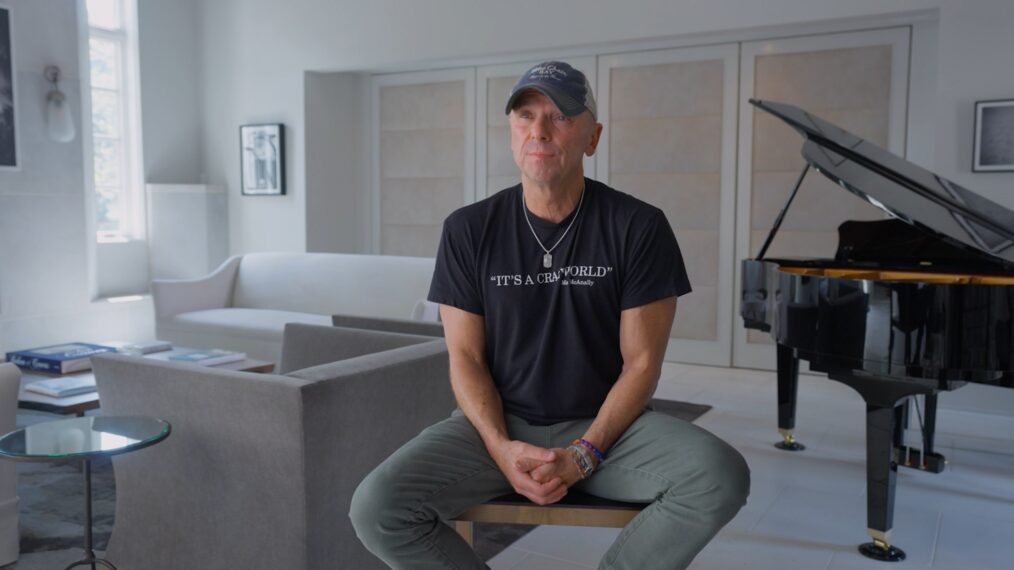
Kenny Chesney in ‘Occupational Hazard: The First Coral Reefers.’ (Credit: Greene Street Entertainment, Confluence Productions).
What went into getting Jeff Bridges to be the narrator? Talk about a game changer.
No, it really was. We were already deep into the edit last summer and were thinking about who would be the ideal narrator. As we’d learn more about Rancho Deluxe and their friendship and things of that nature. Thomas McGuane, Jimmy’s brother-in-law, wrote the film. It was all done out in Montana. We decided Jeff would be great. How do we get Jeff? It turns out I have a mutual friend with Robert Duvall, and Robert Duvall, rest his soul, he has passed away since. But he became interested in the project, and he made an introduction to Jeff. He wrote us a nice letter of introduction, and that got us in the door. Then we were able to work with his agent, his team, and they said, “Jeff’s very passionate about this.” He loved Jimmy. He loved everything about it. It was a real honor to have him involved. This is my first feature length film, and I’ve now directed one actor, and that’s Jeff Bridges. So, I started out at a pretty good place.
My request to him when we started filming was, “Look, I just want you to be you, you know?” We went through the script. We did five or six takes with 60 lines that he had in the narration. He made it his own. He also shared some of his old comments. He put some things into his own words where he talked about meeting his wife and things like that, which is an extra special aspect of having him involved.
What was the most challenging part of the process with this being your first foray into directing?
That made it hard to begin with because I had no reputation or anything else to fall back on. Fortunately, I knew a couple of them. I knew Keith and others. They were interested in doing it and were very supportive. They helped make some other introductions because we’re focused on a subject in the 1970s, so it was about finding great archives so you feel like you’re at that time. We didn’t want it to be like we rehashed or used fake AI or anything else. We wanted to be as authentic as we could, so we were able to find a wonderful archival producer, a fellow named Adam Lawrence. I met him through another great producer. And I mean, this guy was like a dog with a bone. He went deep. We went to so many different colleges where Buffett had played all types of things to find photographs, video archives, things of that nature. So that is really an important part of the authenticity of the story. That you feel like you’re there. You feel like you’re in Key West in the 1970s, because we wanted the Key West story to be an important part of it as well.
Some things that people might find surprising was that Jimmy Buffett was a journalist before he went down to Key West and everything organically happened. But what surprised you?
Norbert Putnam had some great revelations. Norbert’s a fascinating person. Somebody should do a documentary on him. He is a wonderful person. He had already produced Joan Baez’s first gold album and a bunch of other great albums. He was a well-known bass player, both a session player at Muscle Shoals, and he was on 170 Elvis recordings. A fascinating guy, but his recollections and stories about introducing Jimmy as the journalist to Jared Jeff Walker, and then later, when he decided he would produce Jimmy’s album, “Changes in Latitudes, Changes in Attitudes” suggesting to Jimmy, maybe you should have Indigenous instruments of the Caribbean in your music, which Jimmy rejected initially. Guess what? Good call. So, there were just a lot of surprises along the way, but probably the greatest one was how everybody felt about Jimmy, even after some were let go from the band. Everybody had very strong opinions about Jimmy and their time with him. I’ll let people watch it, but all were extremely positive.

As an author coming into this doc making world, how much pressure did you feel to get the backstory right?
We’re always worried asking, “Did we get something wrong? Are we going to hear about it?” Nothing so far, so that’s good. We felt a responsibility for a number of fronts. To cover that time period accurately, get the voices of the people who were involved, who are still alive, you know, get their thoughts and impressions, and tell a story that makes sense. And then do it in a time period where, you know, this is going to get done at a good pace. We did it in record time. We did the whole thing in about a year-and-a-half. We started it two years ago now. It was never intended to be an expose or these are the bad things they did on the road. It was a joy for them to be in the band. It was a joy for them to create music and do something that people love. And that’s what we wanted to cover, but get into the deeper details of the stories behind all that. Maybe being a writer and doing a lot of research and doing novels helped. I’ve always been into history. I was a history minor. So the history aspect I appreciate and getting that right. That’s a responsibility. That was a big focus of mine to try to accomplish that.
Occupational Hazard: The First Coral Reefers will have a national digital release in November after a theatrical release starting September 5.
Conversation
Please read the TV Insider Community Guidelines.
Register or sign in to join the conversation.
 Watchlist Easy access to only the shows you care about — all in one simple place
 Alerts Only important notifications — when a show is returning, when it becomes available to stream, and more.
 Special Offers Exclusive products we release related to your favorite shows and streaming services