
‘Hooters Murders’ Documentary Investigates Targeted Killings of Waitresses at Restaurant Chain


Exclusive
What To Know
- Hooters Murders: Deadly Shift explores a series of targeted killings of Hooters employees from 2001-2010,.
- Showrunner Kevin Brennecke and his team conducted extensive research and interviews with victims’ families, former staff, and journalists to shed light on these underreported tragedies.
- The doc aims to humanize the victims, challenge stigmas associated with their employment, and encourage reflection on corporate responsibility and support for vulnerable workers.
Hooters built an empire based around hot waitresses and chicken wings. However, the chain often categorized as a “breastaurant” also saw a number of employees preyed upon and the victim of targeted killings. These slayings over the course of nearly a decade starting in 2001 are explored in Hooters Murders: Deadly Shift, a new two-hour documentary premiering September 7 on Oxygen.
Among the cases examined is of Alissa Blanton, a 23-year-old from Florida who was shot and killed by Roger Troy in the Orlando parking lot where she worked. The 61-year-old stalked and harassed her, even when she quit Hooters in 2008. He killed Blanton before turning the gun on himself in a murder-suicide. The same year Prisma Contreras, a 21-year-old who worked at Hooters Casino Hotel in Las Vegas, was kidnapped, sexually assaulted, and murdered by Gregory Hover. He received a life sentence.
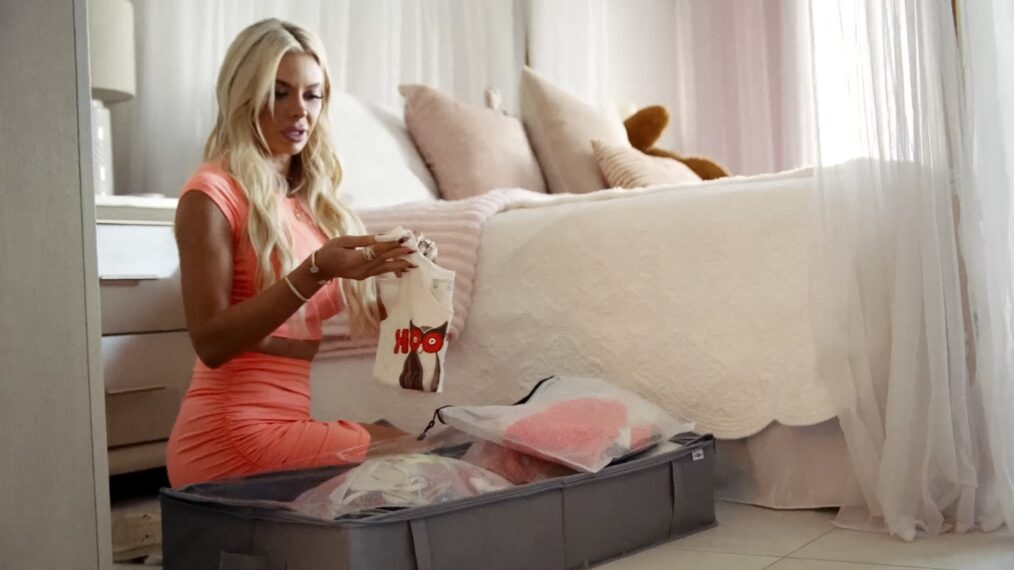
The Hooters Murders: Deadly Shift, Tara Nelson, Hooters waitress from 2007 to 2010, in the new two-hour documentary exploring a series of targeted killings. Credit: OXYGEN TRUE CRIME © VERSANT MEDIA. All rights reserved
Contreras’ sister Denise Espitia sat down to relive the horrific events Others close to the women including former coworkers, reporters, and law enforcement were interviewed for the documentary. Here, showrunner Kevin Brennecke reveals some of the shocking elements of the project.
How did the documentary come together? It is certainly timely with everything going on with the company.
Kevin Brennecke: It is very much a present day story with Hooters filing for the 2025 bankruptcy, and what they called the re-Hooterization with the original founders taking back control. So, they are sort of ushering in a new era of Hooters. I think it was especially timely to sort of look back at their history, and look into the individual cases that we covered. In terms of how the project started, partnering with The Intellectual Property Corporation (IPC) and Expectation on this, they did a very wonderful job developing this along before I came in. There was an immense amount of research that was already done.
Then my team and I did a ton more research, deep diving into each one of the individual cases and figuring out which ones were going to sort of make the most impact. The evolution kind of happened naturally. I think it’s always tricky when approaching a story like this that is sort of multifaceted and layered, where you’re telling individual stories about individual cases that are all very different with the one commonality and the one unifying point being that they all worked at the same place. What I love about being a storyteller and a showrunner, is large-scope stories where you figure out the narrative structure. It’s a puzzle in a way where you want to find what unifies all of these stories while not shying away from their differences. Because I think the differences in each one of the cases is really what makes such a collective experience watching it all, and what really drives the conversation behind it.
Reporter Kate Taylor is featured in the documentary. During her career she’s covered a lot of stories about Hooters but the murders were news to her, almost as if they had been largely ignored previously…
That’s right, yeah. There was a shockingly low amount of coverage with each one of these cases and each one of these victims. And that’s a conversation that Kate and I had, that the whole team had at numerous points. We were trying to figure out why they weren’t covered more. Alissa Blanton really being the exception because her case was covered nationally, but that’s because of her injunction being denied. Not because of what happened to her and the fact that she was stalked for a year-and-a-half after working at Hooters for a few months. Kate being involved in the documentary was obviously huge. She’s a remarkable reporter and journalist. She was incredibly surprised that after covering Hooters as many times as she has that she hadn’t heard of these stories, but I think once she was able to dive back in is when she was really able to identify a lot of patterns among the past and present employees that she was able to speak with.
How hard was it getting Prisma’s sister to sit down with you for the doc?
Denise was very hesitant at first. It took a while to even have a conversation. Going into a story like that, we’re very sensitive and delicate with how we approach people and have these conversations because we’re asking them to revisit the single most painful moment of their life. But after we were able to have conversations, I think she trusted that we wanted to tell an impactful story and use her sister’s story to hopefully leave the audience with the very important lesson. That was her motivation for finally speaking. She’s turned down many documentaries before, but she did decide to speak on this one because she realized that it is timely, it is important, and ultimately I think she wants her sister’s story to be told with dignity and wants it to be used to help others.
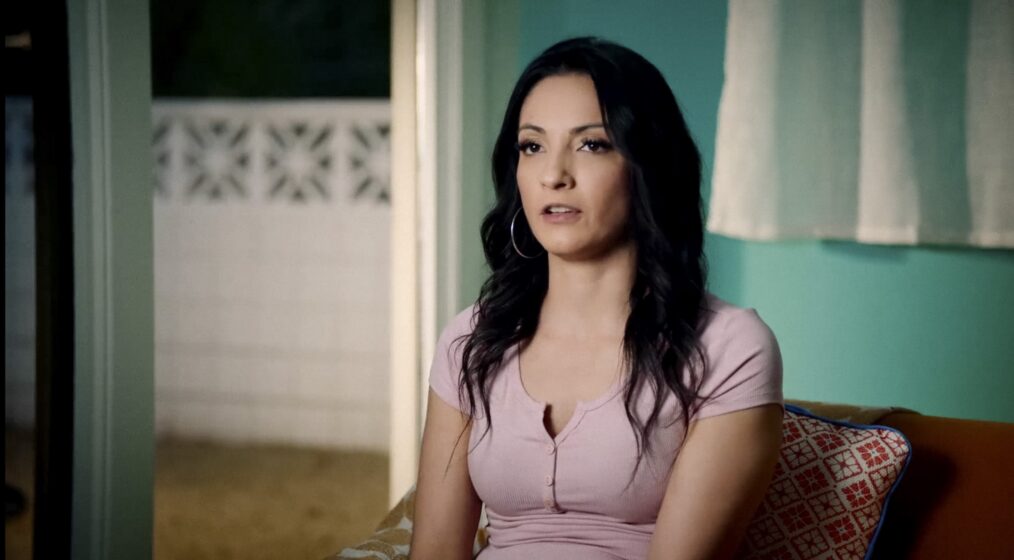
The Hooters Murders: Deadly Shift, Denise Espitia, Sister of Prisma, in the new two-hour documentary exploring a series of targeted killings. Credit: OXYGEN TRUE CRIME © VERSANT MEDIA. All rights reserved
You have former staff who share their experiences. One heavily featured character is Tara Nelson. Talk about the importance of having her for this.
I think Tara was a critical subject for the documentary. She’s an incredibly important subject for the documentary. I think the first conversation we ever had with her, she sort of started to reveal a lot from her own experience behind the scenes working at the Merritt Island location that Alissa Blanton worked at. Because it’s her own story, it also sort of reflects the story of many Hooters girls from the 2000s period, and many that we spoke to off-camera that we didn’t even include in the documentary about their experience in the 2000s. We knew her interview was really going to give us a lot of helpful context in terms of what it was about Hooters that drew so many young women in. This sort of aspirational path that could be taken as a Hooters girl, particularly in the 2000s, and she really sort of bared it all for that interview. I think that was very valiant of her. I recognize how difficult it is to put yourself out there like that. But I’m glad that people saw the value in including their voice.
What were the surprising or shocking parts of the doc? For me, one was hearing the acknowledgement form form the women agree to when they start working there,
That was certainly one of the more shocking stones we turned over. There were too many to count. Another really sort of shocking allegation to me was when the former manager from Merritt Island told his story. He sent an email regarding Roger Troy, and the response to that email that he says he received from Hooters. I think that was probably the most surprising I felt in any of the pre-interviews. When we learned that detail, and then Kate called him, and he told that story, I was very surprised.
Have you heard from Hooters heading into the premiere?
We have not received a response to the letter that was sent to them. I think, generally speaking, every institution, every corporation, every organization in our country has a responsibility to reflect and to hear the experiences of the individuals that work for them. They would go, “Is there anything we can do better?” And I think this is no different. I hope Hooters is able to watch this and be able to speak with everybody that currently works for them and find out about their present day collective experience. There are some changes that they can make to make that experience better than. That’s what I hope happens.

What would you say the doc brings to the forefront? What do you want viewers to take away from watching?
It was a challenge to pack all of this into a two-hour documentary. I feel like as a filmmaker, it’s like you always wish you had more time. But I’m very happy with how it turned out, and I think we really treated the stories and the individual cases with care. We really spent time displaying who the victims were, particularly Alissa and Prisma. I think that’s really where it lies. What I want people to see from this. Is that these young women, were mothers, they were daughters, they were wives, they were best friends, they were the single most important person in so many other people’s lives. And their lives were taken far too early simply because of the fact that they happen to be working at a particular place at a particular time.
A journalist I interviewed for one of these cases, I asked what was the community response to her murder? And he said, “You know, tragically the community, much of the community, had a response of, well, she worked at Hooters. What did she expect?” And that, to me, is absolutely devastating because these were young women. who In some cases, had children, had families, had friends, had a whole rich, beautiful life ahead of them. It’s sad that a stigma was placed on them that even lasted into their own death. I hope people can see and appreciate the young women who were victimized in this and use that in their lives to look around them. Is there anybody around in need? To me, that’s an important lesson to take away.
The Hooters Murders: Deadly Shift documentary premiere, September 7, 8/7c, Oxygen
Where to Stream


Conversation
Please read the TV Insider Community Guidelines.
Register or sign in to join the conversation.
 Watchlist Easy access to only the shows you care about — all in one simple place
 Alerts Only important notifications — when a show is returning, when it becomes available to stream, and more.
 Special Offers Exclusive products we release related to your favorite shows and streaming services