
‘Lion’: The Amazing Story Behind National Geographic’s Epic Docuseries




Exclusive
What To Know
- The four-part National Geographic docuseries Lion, premiering August 19, follows the real-life coming-of-age journey of a lion cub named Kio.
- The project was executive produced by Jon Favreau and Mike Gunton.
- The filmmakers aimed to highlight the emotional depth, family dynamics, and unique personalities of lions.
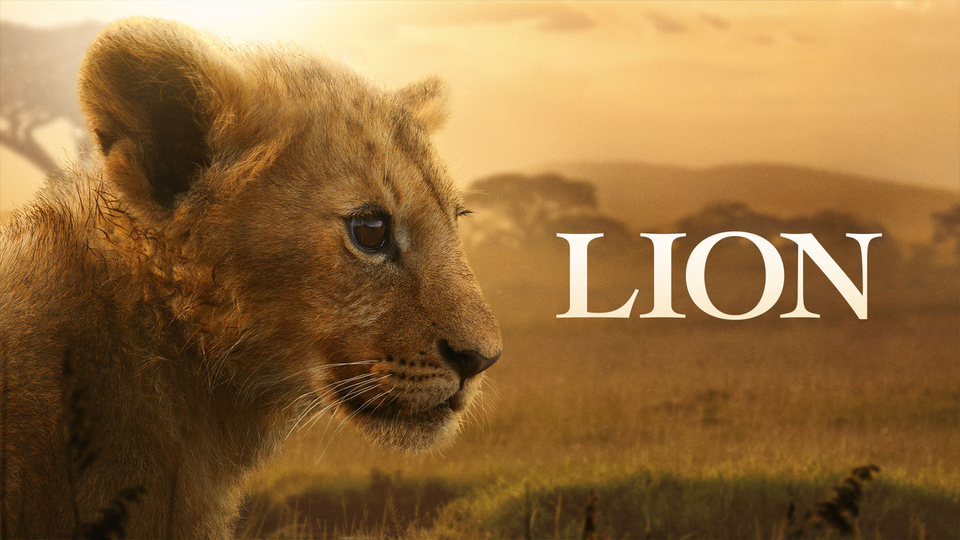
DocueseriesA king of the jungle’s path to the throne is told through a roaring docuseries Lion. The four-part series follows a cub named Kio, and his incredible journey through a real-life circle of life, clawing his way every step of the way to fulfilling his royal destiny in Kenya. The project premiering August 19 on National Geographic is executive produced by The Lion King director Jon Favreau and BBC Studios Natural Studios Natural History Unit’s Mike Gunton.
Complementing the cinematic scenes is a score composed by Hans Zimmer’s Bleeding Fingers Music Group with narration from O.J. Lynch. Adding even more connective tissue to iconic Simba story is the fact Lynch played Mufasa in the stage production of The Lion King. Filmmakers had the arduous task of pulling from hours of footage across almost 1,400 filming days across 52 shoots over four years, the most time spent in the field exclusively following a single pride. The finished product is a captivating coming-of-age tale that truly tugs at the heart strings. Here Simon Blakeney, co-executive producer, breaks down what went into the making of the project.
With such an expansive project like this, talk about what went into fine-tuning Kio’s story over the course of these four parts.
Simon Blakeney: I think one of the most exciting things is we never knew what was going to happen next. We went out each day to see what we’ve found with the lions and watch the story unfold in front of us. Obviously, we wanted to put Kio’s story front and center because of the amazing development over the course of it. But really the story wrote itself. The story of his life and how he grew and developed and how he overcame the challenges he faced wrote itself. I’m not saying it was an easy process. We had a huge amount of footage. It was really enjoyable to be able to bring his story to the screen.
How was it for you to have O.J. Lynch as the narrator?
O.J. was incredible. He has such a lovely voice, but also he really bought into the project and bought into the sort of both the nostalgia and parallels to The Lion King and also the intimacy and emotion of what Kio goes through. I think both his voice and his ability to convey emotion was really special and so important to the series.
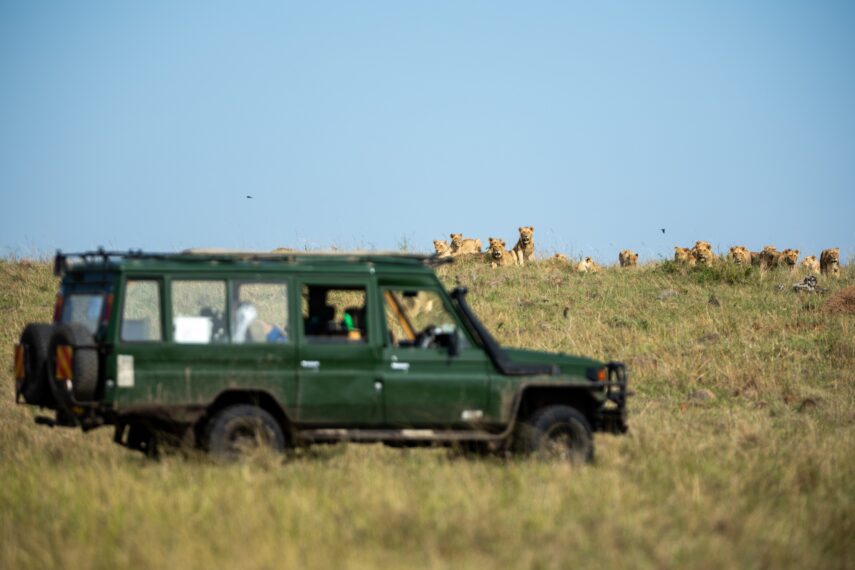
The film vehicle waits below as members of Summer’s Pride rest on higher ground within their territory. (National Geographic/Simon Blakeney)
For me, I think that when we know lions for their strength and fearlessness, but this docuseries really also demonstrates their vulnerability as well. How important was it for you to show that in the series?
I’ve been lucky enough to be filming lions for about 10 years through various different projects. That word is perfect. The fact that it came across for you on the show is really heartwarming to me. We really wanted to show them that they are powerful, majestic, they’re huge. They are big. They are cannibals. They are also in danger from an enormous amount of things. So being able to tell the real story of how they live their lives. It’s a really fine line between survival or not. I think getting that across the core aims for us wanting to do the series.
Kio’s mom Summer was the heroine in my eyes. This really pushes the importance of the female lioness, and how much work they do.
Yeah, female lions are the real heroes of the lion kingdom. They are powerful, strong, but they are strong. They are also incredibly tender. She would go from one moment hunting a zebra, wildebeest, or buffalo, or something, to the next moment becoming incredibly gentle with Kio. I think that combination of power and tenderness really draws me to lions.
What went into breaking this into four parts and making sure the story is cohesive?
We logged nearly 1,400 days in the field. We had a huge amount of footage, but the key story moments really clearly stood out as we went on this journey with Kio. So, it was a matter of arranging those that made sense to the audience. You do learn things about the lions along the way you would expect to from a documentary, but through the emotion and events that happen rather than some sort of lecture or a fact file about lions. It’s about the story and growing to see how the events that happened earlier in Kio’s life and others and how that influences decisions they make later in their lives.
Was there any point the crew felt they were in danger?
Mostly the way to keep safe is to treat these animals with respect. That’s with everything from lions to hippos to elephants. They are big powerful animals, but if you treat them with respect, you come out fine. There was one moment where there was another lion pride that was next door to our camp when they brought some cubs into a bush beside one of the buildings where some of the crew were staying. So, we had to move that crew that day. Mostly it’s about giving the animals space and making sure they feel stressed because if we in any way interrupt their natural lives we don’t get to film what they need to film. So it’s totally crucial we work without disturbing them at all. They basically spend most of their lives ignoring us.
How was it deciding on how to end it and hope you get to that last scene under a deadline?
When we saw Kio and his brotherhood taking over this neighboring pride of females we thought, “Wouldn’t it be amazing if they had cubs, and we get to see the full circle.” We did extend the filming period thanks to the trust Nat Geo management gave us as filmmakers and eventually we had the luck and the cubs emerged. That was the perfect ensign for us.
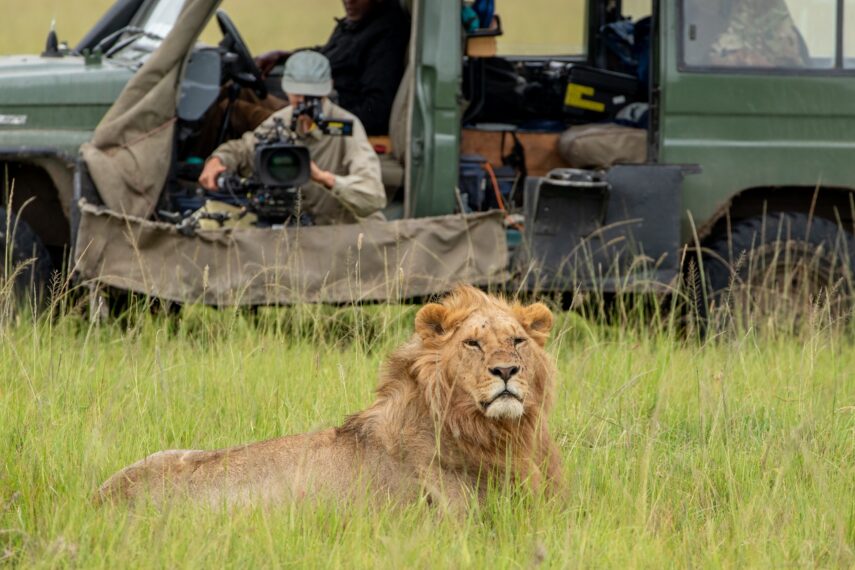
Director of Photography Sophie Darlington looks down the lens as one of Kio’s brothers rests right in front of her in the film vehicle. (National Geographic/Laura McCamley)
Anything about the experience surprised you?
If we sat back and wrote a script for this, we could never have written the moments that happened because we would never have expected them to happen. It was always surprising constantly, sometimes not in a good way, maybe if they were spending the week doing nothing but sleeping. Other times it was surprising in a good way from the tenderness between families to the dramatic hunts or dramatic points in their lives. The thing I can take away is every day is different with lions. You can start making lion series tomorrow and it would be no less enthralled, but it would be different. I think that is what is really exciting.
The visuals that are captured are also incredible. What can you say about what went into getting those detailed shots?
Cameras and things like drones have made huge jumps in the last 20 years since I’ve been making wildlife films. What mattered most was less about technology and more about making sure we were in their world. Making sure cameras were in their eyeline. We used everything from long lens camera gear to drones to cameras that were slung off the side of vehicles to get down in the grass so we got to see it from Kio’s perspective. When we get to see it from Kio’s perspective, when we see it from his perspective we understand why he makes the decisions he does.
How important are these projects given the world of AI and CGI we live in today?
You couldn’t make this story up. It was constantly surprising. It’s so true that the natural world comes up with stories that most could never even imagine. I think there is still a huge amount that can be done with these incredible animals we share the world with.
What do you want people to walk away with from watching the doc?
To understand how all these lions are different and how they have different characteristics. The relationship between them and their families and individually is all what gets them through day-to-day. And that is what makes them such special animals.
Lion docuseries premiere, August 19, 9/8c, National Geographic (Streams August 20 on Disney+ and Hulu)








Conversation1 Comment
Please read the TV Insider Community Guidelines.
Register or sign in to join the conversation.
-
K
Such an amazing series. I watch wildlife documentaries a lot and this is by far the best. You cannot help but feel transported to each moment.
 Watchlist Easy access to only the shows you care about — all in one simple place
 Alerts Only important notifications — when a show is returning, when it becomes available to stream, and more.
 Special Offers Exclusive products we release related to your favorite shows and streaming services