
PBS’ Lucy Worsley on Tackling American Revolution From Different Angle for New Documentary Series



Exclusive
What To Know
- Lucy Worsley’s new PBS miniseries, Lucy Worsley Investigates: The American Revolution, explores the American Revolution from a British perspective.
- Worsley examines artifacts, interviews historians, and highlights overlooked stories such as British support for revolutionaries, espionage, and revolutionary violence on British soil.
- Worsley hopes the series will inspire viewers to see history from multiple viewpoints.
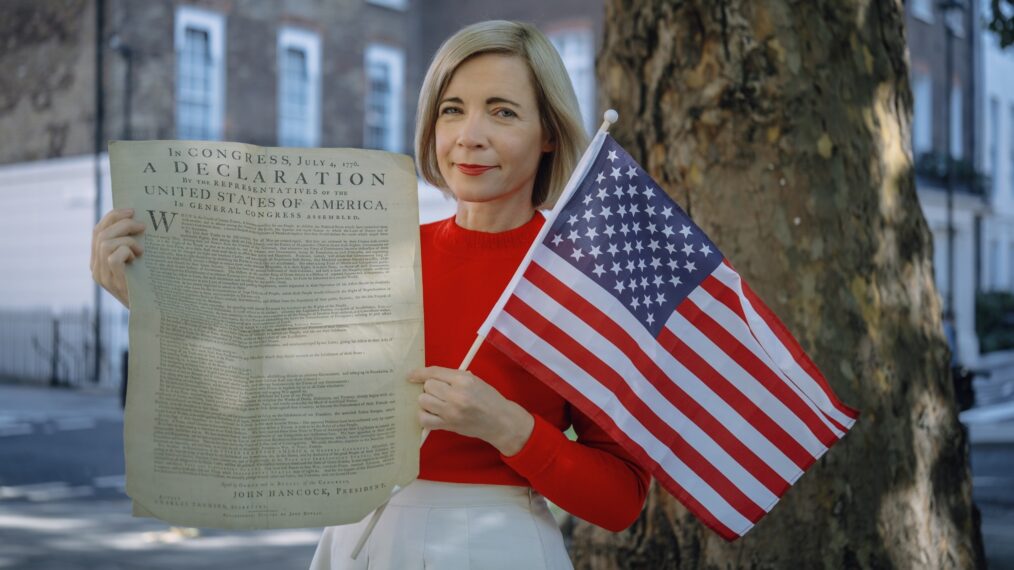
There is nobody who dives into history with today’s relatable lens quite like Lucy Worsley. She brings this trademark approach and fashionable looks to her latest PBS special Lucy Worsley Investigates: The American Revolution. The two-part miniseries premiering April 7 digs deeper into a landmark piece of United States history from the perspective of Britain. A milestone born from one of messiest divorces as the 13 colonies broke up with Britain through the written word. The equivalent of ending a relationship via cell phone text message. Well maybe not, but in the same spirit with what was written in the Declaration of Independence.
As America gets ready to celebrate its 250th anniversary, Worsley logs miles not only across the United Kingdom and Ireland, but the United States as well. The beloved host sits down with historians and handles artifacts to better understand why the British Empire lost the war against those American rebels.
Here Worsley reveals eye-opening takeaways and opens up about what she took from her travels for the project.
I loved getting that different vantage point because we hear so much on the American side that we didn’t get that British perspective.
Lucy Worsley: Yes, I hope that even British people, because they will get to watch this show in Britain. Even British people won’t know about what the American Revolution’s effect on Britain was. We just don’t know enough about the American Revolution in general over here. So it’s been lovely to go into this story that deserves to be much better known.
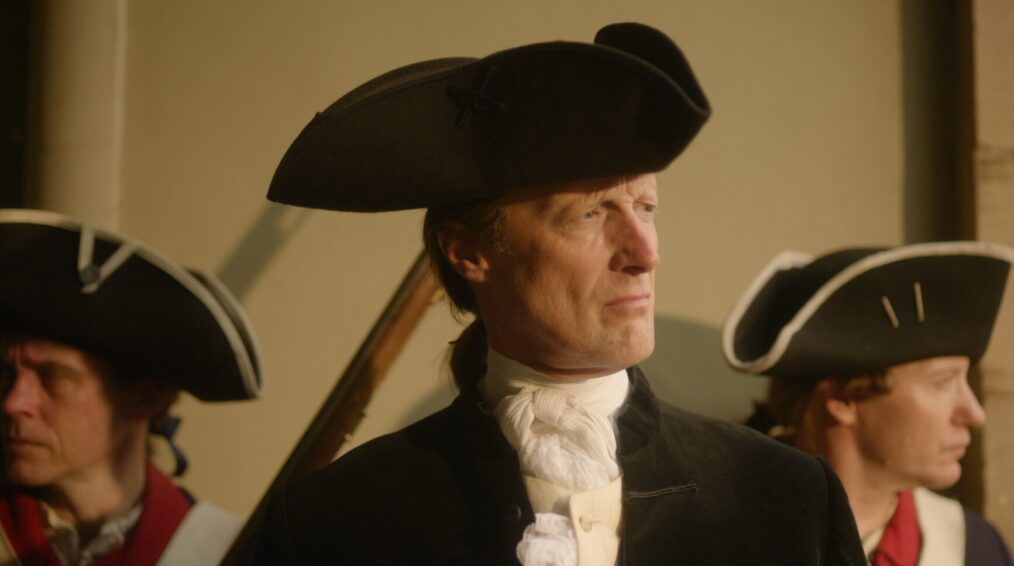
George Washington played by Charlie Jeffrey/Credit Carlo D’Alessandro
What was it like traveling to places within the United States and Europe for this?
We did quite a lot of traveling, being on both sides and going to some wonderful places and seeing some wonderful things. Like what was really strange that we saw these revolutionary teapots that they have in the museum in Manchester. They showed that some people in Britain were really on the side of the revolutionaries. I mean, it’s silly to talk about sides in this story because everybody’s kind of really mixed up until really late on in the story. Until Britain and America, until the countries absolutely separate towards the end of the story.
And in New York, we were really happy. I was so delighted to see the remains of this really famous statue pulled down from an incident that happened in 1776. It was when the statue of George III at the tip of Manhattan was smashed. It’s good to know people have been smashing statues for centuries, isn’t it? I had been aware vaguely that his head and body were turned into musket balls to be used by the revolutionary troops. I had been aware of that, but I didn’t know that the tail of his horse survived. And it’s in the New York Historical Society, and I went to have a look at it. It was the weirdest item in the world to see. And here’s something I will tell you that perhaps I shouldn’t, but here’s a bit of private information.
When we were filming it, I had jet lag. It was really hot, and I was given a drink called Gatorade. Do you know Gatorade? Yeah. It’s the devil’s work, Scott. I’m afraid. I regurgitated the Gatorade on the steps of the New York Historical Society. I think I’ve probably been banned for life in that place now for what appeared to be really good behavior.
They’re good for electrolytes though.
My stomach does not like that stuff. It was a horrible violent pink. I should have learned from the color not to drink it.
Have you ever done any documentaries that were focused on the United States the way this one is, or is this a first for you?
It is a first. I have before made a series about American history, but it was very much for British viewers. So you didn’t get to see it over there because it would’ve been too basic for you. It was a sort of introduction for British people to American history. So this is the first time that I’ve had the temerity to touch upon American history, but I hope that coming at it through this idea of it being the British perspective on events means that that’s going to be acceptable to all the people who know a lot more about American history than I do.
Are there any ramifications that could be taken into today’s global situation with what you learned doing this documentary?
I think it shows how everything can turn on the spin of a coin because the story of the American Revolution, as I was sort of retreading it, it struck me that there were so many points where things could have gone the other way. And the way we describe it in the program in order to make it seem a bit more personal is that we describe it as a breakup, a divorce between two people who were together and who have decided to separate. And there were so many different points where a little bit more understanding could have been shown, a little bit more toleration, a little bit more compassion sometimes. And I think the world’s a big and complicated place then and now. And it was really interesting for me to see these global forces working on individuals. And if everybody had just known more about what everybody else’s point of view was, and this is massively relevant to the world today, I think, it could have had a less violent outcome.
A lot of people died in this war. It didn’t need to happen. But yeah, that’s something I’d like everybody to think about today, to walk in the shoes with the other person and try to see the world as they see it. I think it also shows really, even 250 years ago, how interconnected the world was because this is a really international story here. We’ve got Britain, we’ve got America, we’ve got Ireland, we’ve got France, we’ve got Spain, and I’ve got the feeling there’s a lot of people who will think, yes, the fighting in the American Revolution happened in America. There were all the big battles that we know about. There was Lexington, there was the Battle of Long Island, there was Yorktown, but I don’t think people will be aware that there was revolutionary violence happening on our side of the Atlantic too. There was terrorism in the Royal Naval Dockyards of Portsmouth.
There’s bombs set off there. There was the invasion of Jersey, the Island of Jersey, which is only just off the South coast of England. It was so close to home. And then there was rioting in London. It was fueled. It was in response to the American Revolution, six days of some of the worst rioting that there’s ever been in Britain. So if the world was interconnected then, it’s even more so now. And I think that you’ve just got to be so aware that something that happens in one place is going to have unintended consequences somewhere else.
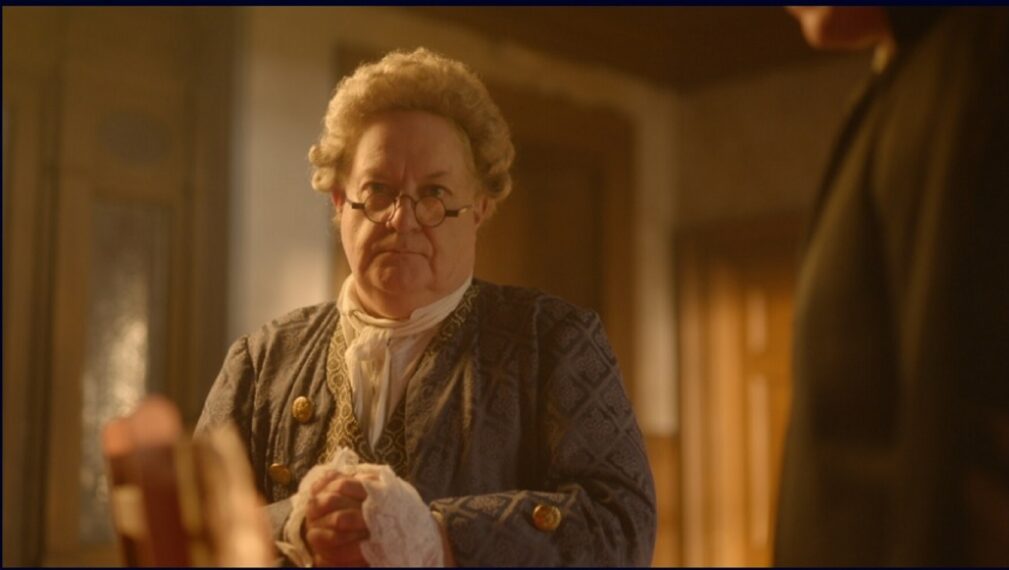
Benjamin Franklin played by Liam Rudden. Photo Credit: Carlo D’Alessandro
One of the fascinating parts of this for me is towards the end where George III had written this letter. You’re reading through it, and he’s talking about the potential of leaving and retiring per se. I mean, how did you take that in when you were reading it?
It was amazing. What you couldn’t see was just how amazing it is to enter Windsor Castle, to go through all of this security and to go deep into the castle into this amazing library. That was one extraordinary thing to get to do. And then to hold this piece of paper that he had actually touched and written and to be with him, to be in his brain at this really key, vulnerable moment in his life when he was actually thinking about hanging up his crown, saying, “I give up. I can’t do this. I’m resigning my job. It’s all over for me. ” It reminded me that he was human. A lot of people think of George III as, and actually Hamilton the musical has played its part in this as the bad guy, the tyrant, this sort of unstoppable monster. But what we tried to do in the series actually is to use evidence from diaries and letters and things to show you that these were human beings who were making these choices and that sometimes they struggled with them.
I felt a bit sorry for him in that particular moment when this clearly had … It was a life-defining failure for him and he had to work out how best to react to it. And I think that the American Revolution chastised him. He was a different person after that. It chastised Britain. Britain was a different country after that. It was clear that taking a hard line with the colonists hadn’t worked, and that’s why Britain started to take a slightly softer line. This is all very relative with other places like Ireland. So revolution spreads. That’s the message of the series as well. Ideologies that set the world aflame. They set the world aflame. You can’t contain ideologies to one particular part of society and who is particularly responsible for this, but a very British person, Thomas Paine, who wrote Common Sense that kind of set fire to the intellectual parts of the American Revolution.
On the one hand, it was all about tax and we want more money. But then along comes Thomas Paine, this really inspirational, amazing firecracker of a writer who’s British, but goes to live in America. And he writes Common Sense that says to the American people, “You should really consider not having a king. That might help you. ” Before that, they’d thought, well, we just want a different kind of relationship with the king. We’re quite happy to be part of the British Empire. We just don’t want to pay the tax. But it’s Thomas Paine who really turns the dial and allows America to think of itself as a separate thing.
Was there an “Aha!” moment for you when you were working on this project?
There were many. This is hard for me because I have to choose between terrorists and spies, and both of them are very interesting. Can I take two? Firstly, I was amazed when I discovered that this terrorist called John the Painter had successfully planted a bomb in the Royal Navy dockyard in Portsmouth because he was doing that to disrupt the British Navy that was sending troops and food over to the American war. So I had no idea that that kind of violence was happening on British soil. And then secondly, something that really made me sit up and take notice was this fantastic espionage work that was done at the time by a spy called Edward Bancroft. And he was right at the heart of Benjamin Franklin’s negotiations with the French, because I know you all appreciate in America that you won your war of independence with the help of the French, which was negotiated for you by Benjamin Franklin.
But I was unaware that the British knew exactly what was going on in the salons of Paris when he was negotiating this because they had a spy on the ground who was sending these really detailed reports back to George II saying, “Look, the Americans and the French are going to make a deal. The French are secretly sending supplies to the Americans. What are you going to do about that? ” And I was told by our espionage expert in the program, Rory Cormac, that one problem that spies have is that it’s really hard for them to tell the people who employ them stuff they don’t want to hear. So he sent back all these reports. Rory told me that the people who were his spymasters said, “Nah, nah, you’re exaggerating. Not going to happen. We’ll be fine.” You should listen to your spies. That’s a message I take away from this.
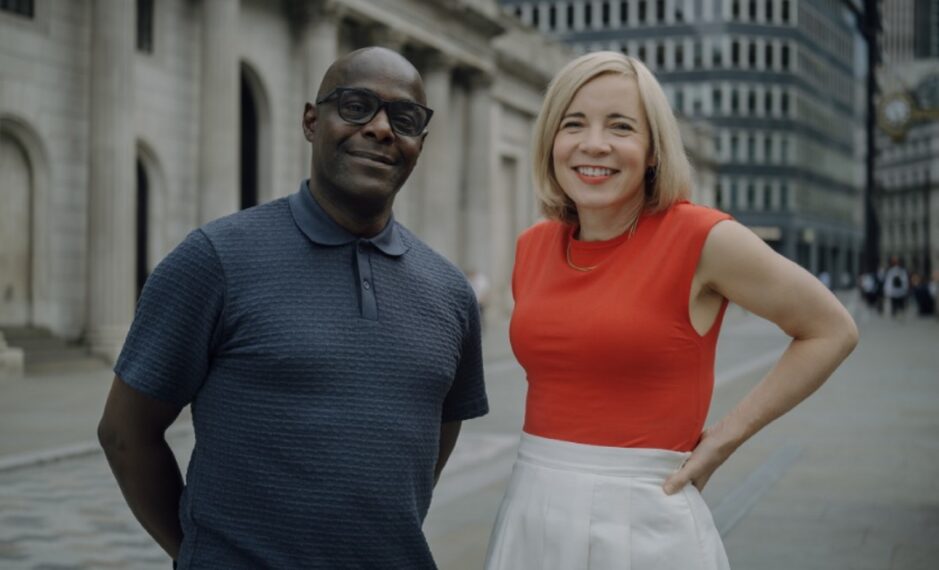
Paterson Joseph and Lucy Worsley (Credit: Tom Hayward)
One of the things that impresses me about your shows is how you get access to these wonderful documents and places and castles. Has there ever been one that refused you?
I’m sure that there has. It’s a delicate negotiation because the people who have these amazing documents, these amazing artifacts, they have to limit access to them for conservation reasons. I mean, it was just amazing to go to the National Archives and actually see the Stamp Act. The thing that causes the American Revolution is this actual act of parliament, but they don’t want to get it out of the archives because of the atmospheric conditions. It’s a foundational document of our national history. They want to keep it in the climate controlled room. So they have to think that your project is worth doing. It’s something they want to be associated with. They want to think that this is going to be a good way to share what they’ve got with the world. And the argument for them letting you see the document is that now millions of people will see the document too, will get access to it virtually through the form of this program that otherwise they wouldn’t have got.
But there’s a lot to balance. And there’s a whole negotiation that the viewers don’t see as well about the schedule and the budget and how much travel we’re able to do, who’s available on what day. I’ve just finished a project where we had to film a lot at the chateau of Versailles, and you can only film there on Mondays because it’s open to the visitors for the rest of the time. So we kept having to go to Paris, which doesn’t sound that bad, does it? We kept having to go back to Paris in order to film at Versailles on Mondays. And I can tell you, we had to work pretty hard on those days to get everything done.
What is your hope for audiences to take away from this?
I hope that some kids will become historians because they’ll see what fun I have getting to do history. I hope that people will feel the intellectual satisfaction of following the argument, putting the pieces of the puzzle together to try to understand what happened. There’s much more to the American Revolutionary War than the battles. I mean, I don’t even cover the battles. I’m explaining the reasons for the battles in this show. I think that’s really intellectually satisfying. I hope it’ll tickle people’s brains, but I also hope that people will come with me on a journey through a story so things ramp up. There are twists, there are turns, there’s the break up itself, and then there’s the war. I hope people will get a sense of the emotion of it all as well. That’s what I really, really hope that some kids will become historians, that people will get intellectual satisfaction and people will find it emotionally engaging too.
Because I don’t think you can ask people to put their mind to something intellectually unless they care. I want them to … So both things have to work together, the brain and the heart, I think, in order to make a program that I hope will be informative, but also entertaining.
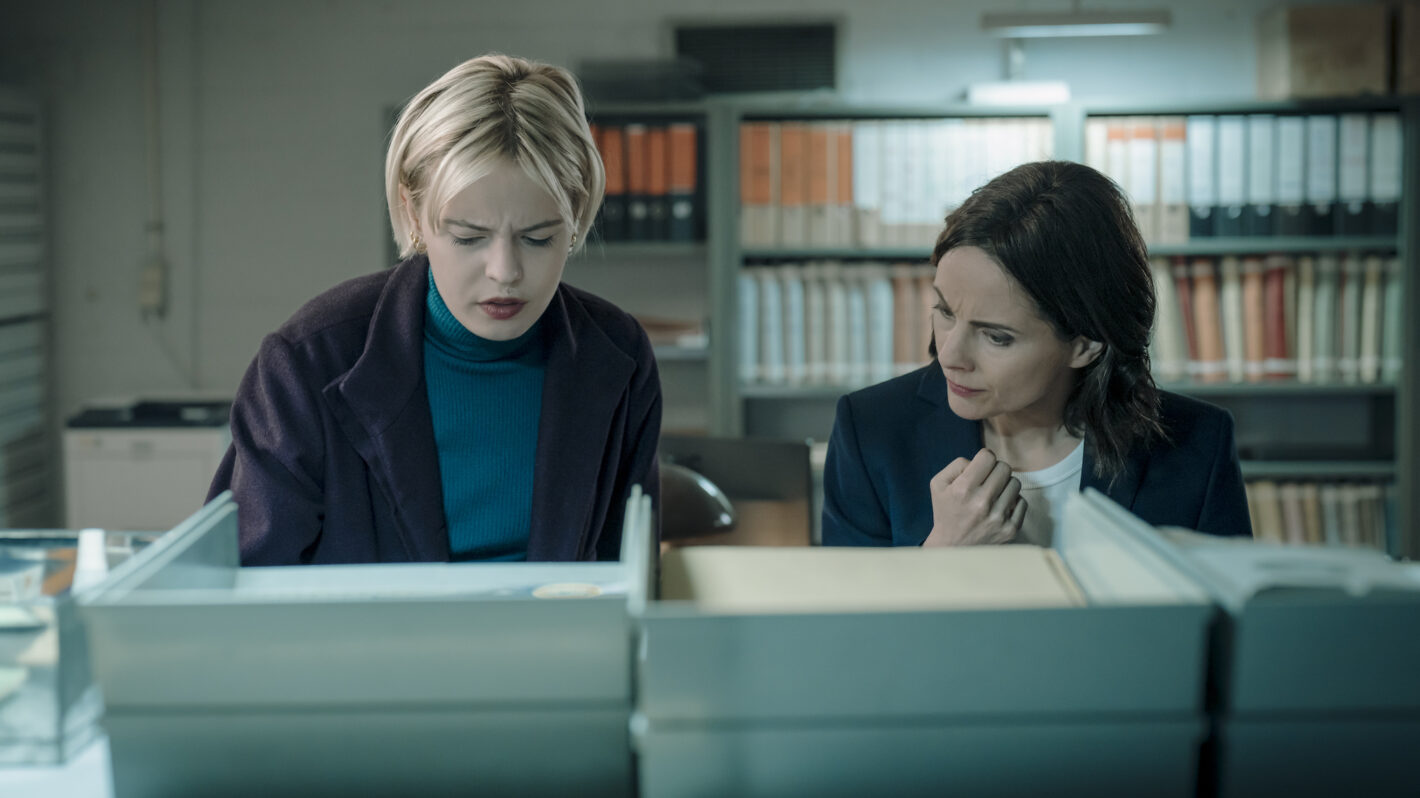
How was it worked spending some time with Paterson Joseph talking about scholarly projects outside his acting career?
I’m just the biggest fan of actor Paterson Joseph. It was amazing. And I know him particularly from a show called Peep Show. And at first, I couldn’t see past his character. I was like, “You’re the creepy weird boss.” But it is fabulous that he has this real personal engagement in history. He really is interested in this black Londoner called Ignatius Sancho, who’s a foundational figure in British history. He was born on a slave ship, but he ended up living in London and he sort of became a member of the establishment. He was prominent in abolition. He was a campaigner for the abolition of the slave trade. He was a composer, and he ended up as a shopkeeper, and he’s also a wonderful writer. We’ve got his diaries.
Paterson Joseph just became obsessed with this 18th century black Londoner and created a show about him and wrote a book about him and probably is now the foremost historian of him. He’s really got sucked into Ignatius Sancho’s world. And now Joseph Paterson is my friend who I talked to Ignatius Sancho about, rather than just being the sort of Hollywood actor figure. It’s amazing. I love it when somebody who is known for one thing also turns out to have a real serious interest in history. And it happens quite a lot.
What are you dying to do that you haven’t done?
Go to Japan. I’ve never been to the country of Japan, and I would love to do that. This year I achieved a lifetime ambition by going to Egypt because the history that I know about is mainly British and that I sort of do a bit of European, but the wider world than that, that’s all for me to have the pleasure of discovering. That’s something that I love to do and look forward to doing more of in the years ahead.
Lucy Worsley Investigates: The American Revolution premiere, April 7, 9/8c, PBS



 Watchlist Easy access to only the shows you care about — all in one simple place
 Alerts Only important notifications — when a show is returning, when it becomes available to stream, and more.
 Special Offers Exclusive products we release related to your favorite shows and streaming services