
Will Smith Reveals Which ‘Pole to Pole’ Adventures Scared Him the Most — Watch Sneak Peek (VIDEO)



What To Know
- Will Smith embarks on a 100-day expedition from the South to North Poles in the NatGeo docuseries “Pole to Pole,” facing extreme physical and mental challenges with scientists and local experts.
- Smith shares his most frightening moments, including scuba diving under North Pole ice and handling a massive anaconda in the Amazon, while emphasizing vulnerability and personal growth throughout the journey.
- The series highlights the importance of cultural preservation, environmental awareness, and the value of embracing life’s uncertainties with curiosity and resilience.
“I’ve only seen an anaconda in a Jennifer Lopez movie,” Will Smith quips in this seven-part docuseries that challenges the actor/comedian/rapper/environmental philanthropist physically and mentally on a 100-day expedition from the South to North Poles.
In Pole to Pole, his third project for NatGeo, following One Strange Rock and Welcome to Earth, Smith helps and gets help from scientists, explorers, and local experts in the Himalayas, African desert, Amazon jungle and more. Check out our exclusive clip from the premiere (above) to see Smith and polar athlete Richard Parks discuss what it takes to spend hours a day isolated in extreme environments. Below, Smith shares more with TV Insider about his challenging journey.
What did you do to train?
Will Smith: I purposely didn’t know what we were doing from episode to episode. I wanted to be surprised [like for] the [300′] ice climb and cross-country ski at the South Pole.
You’re very open about your life challenges in this series. Why be so vulnerable?
I realized that everybody is having a hard time. Anybody in the supermarket, anybody on the freeway. Life is undefeated. Life is whooping on everybody. It is a disservice to pretend like it’s easy to have the life I have.
When were you most scared?
Scuba diving under the ice at the North Pole [to collect climate research samples with a polar ecologist]. It’s a bizarre sensation when you go up to get out, but you hit ice. You have to find your tether and pull to get back to where the hole is.
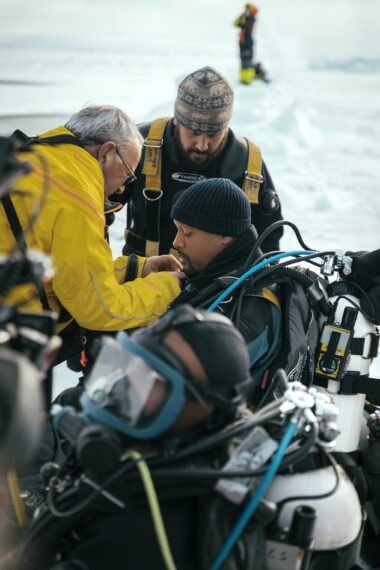
National Geographic/Freddie Claire
The anaconda in the Amazon must have been a close second!
The snake is twice my height! It’s bigger than two hands around it. It’s just all muscle. If it decides that you are tasty looking, you’re not getting away from an Anaconda. So that was scary.
You helped handle it to remove just one scale of its skin for a research project. Every episode has a higher purpose. What was a big takeaway from helping linguist Mary Walworth, who was documenting a dying language in Papua New Guinea?
She explained that for a flower, the translation could be “cure for cancer.” You don’t know the language, you don’t realize. That blew my mind. I never thought about language as a way to hold the culture of a group of people. It never dawned on me prior to that episode that me being from Philly, there is a language that contains an energy and an attitude of a specific time growing up in Philly.
Now we need a Philly example!
A fun example is a catch-all word. If somebody says, “jawn” you know they’re from Philly. Yo, that jawn is crazy. Yo, what you going to do with that jawn? What time is the jawn later? It is a word unique to Philly.
You give credit to your late mentor, Dr. Allen Counter, a world traveler, for inspiring this series. How did you meet?
When I first moved to Los Angeles, through Debbie Allen, 1990 or something like that. Debbie Allen directed the pilot of The Fresh Prince of Bel Air. I became friends with Debbie, and she was like, if you’re going to make it in this business, this is going to be about who you surround yourself with. You need to meet this man. He is one of the most unique Black men you will ever meet. She introduced me to him as a mentor and as a thought partner outside of Hollywood.
What do you hope viewers take away from this series?
[Seeing] the vastness of our planet, and that answers do exist. You may not be able to find them in your neighborhood, but any suffering, any misunderstanding, any confusion that is causing you difficulty in your life, I promise you there is an answer if you’re brave enough to venture. I hope people watch with their families [and have] discussions from episode to episode between parents and kids.
Yes, you tell some solid Dad jokes and make fun of yourself even when you are doing things you never imagined — like using your phone to film giant spiders up close.
There is some of the most spectacular cinematography you will ever see on a television show intercut with handheld cell phone video. I think it makes it really human, but at the same time, majestic.
What did you learn? And would you ever make a dramatic film inspired by this documentary?
One real takeaway for me: We are not in control. As much as we want to be in control life and this world, we are subservient to reality. The highest way to be here is an attitude of joyful surrender. I’ve spent many years grinding toward a goal, and now I’m finding myself less certain about where I’m going and more surfing the tides of reality. I’m trying to follow the will of the divine more than the will of Will. All of that to say, I will create the art that is in the cards and the clouds for me to create. I would love to do a fictional project in the world of Pole to Pole, but I will take what I get.
Would you ever milk an Amazonian cave-dwelling tarantula to extract potential disease-fighting venom again?
I’m just glad the tarantula looked like he enjoyed it! Listen, lemme tell you that that tarantula was as surprised to be milked as I was to milk him!
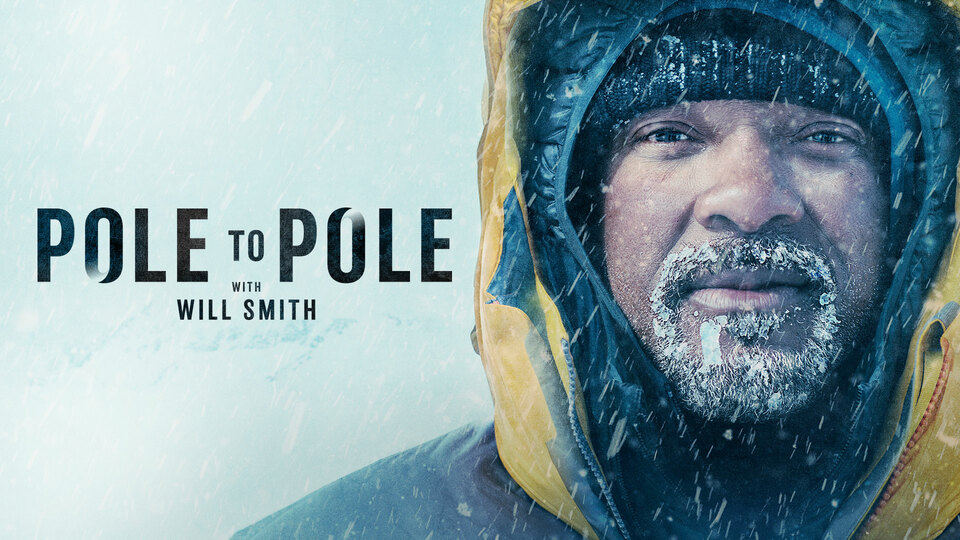
Pole to Pole With Will Smith, Series Premiere, Tuesday, January 13, 10/9c, National Geographic

Where to Stream









Latest Headlines
- Marvel Goes Hollywood in ‘Wonder Man,’ ‘High Potential’ Ex Factor, Colbert Visits ‘Late Night’
- ‘Star Search’ Reborn, ‘Doc’ in the Hot Seat, Doggie Doings on ‘Will Trent,’ Will Smith Goes Low and High
- On the Road With Will Smith, On the Run With Glen Powell, Will Trent MIA, Medical Drama and Comedy on Fox


 Watchlist Easy access to only the shows you care about — all in one simple place
 Alerts Only important notifications — when a show is returning, when it becomes available to stream, and more.
 Special Offers Exclusive products we release related to your favorite shows and streaming services